





 Portuguese
  English
  Spanish
  6 min of reading
  0 comments


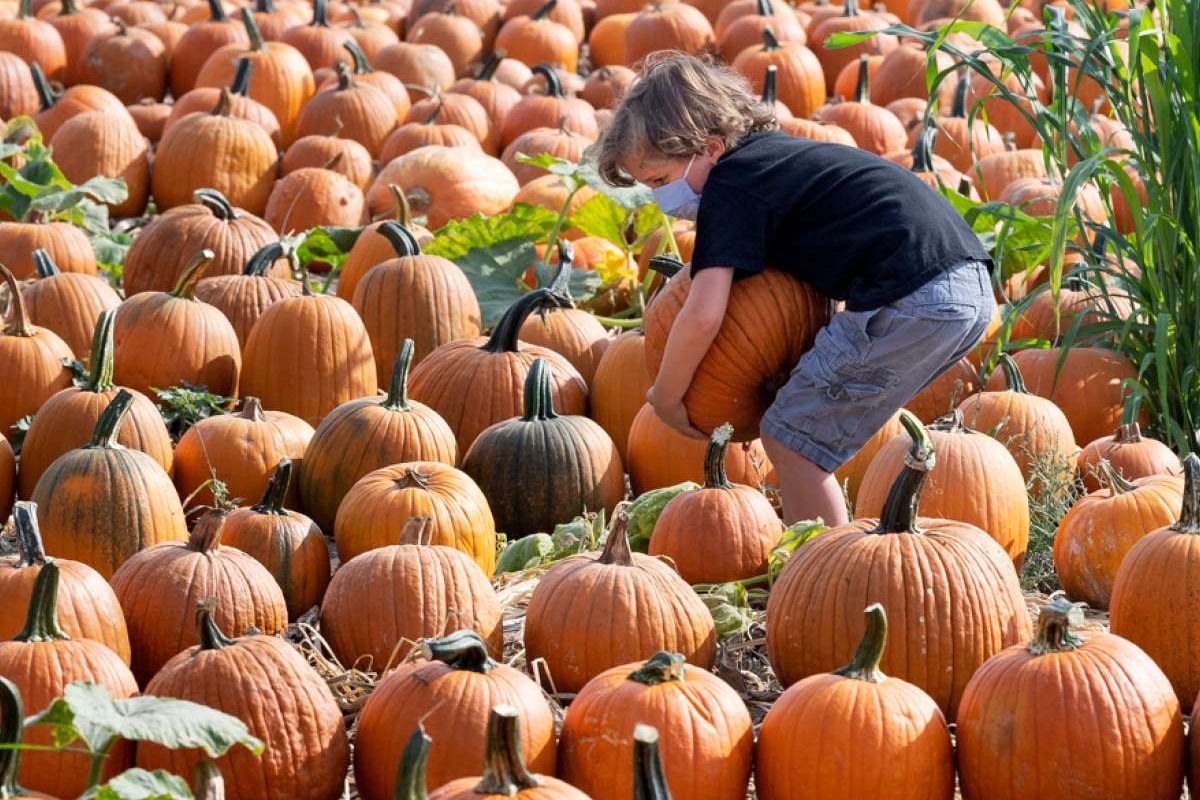
In The Pumpkin Capital, Morton Gathers 18 Thousand Residents, But Welcomes 118 Thousand Visitors In The First Week Of September. The Gear Is The Libby’s Factory Opened In 1925 That Canned 85% Of The Pumpkin In The World And Maintains 200 Jobs, With Farms Less Than 40 Km On Average.
The phrase pumpkin capital seems exaggerated until you look at Morton’s math: a city of about 18 thousand residents in Illinois that, in the first week of September, becomes the stage for a festival capable of attracting 118 thousand people in 2024, seven times the local population.
What supports the label is not just folklore. An Industrial Food Complex, the Libby’s factory, has operated in the city since 1925, concentrates jobs, purchases regional production, and anchors a chain that goes from farming to event tourism, in a scenario where Rust Belt cities have lost factories and revenue.
September Transforms Morton Into Showcase And Test Of Urban Capacity

At the beginning of September, Morton changes scale.
-
Larger than entire cities in Brazil: BYD is building a 4.6 km² complex in Bahia with a capacity for 600,000 vehicles per year, but the discovery of 163 workers in conditions analogous to slavery has shaken the entire project.

-
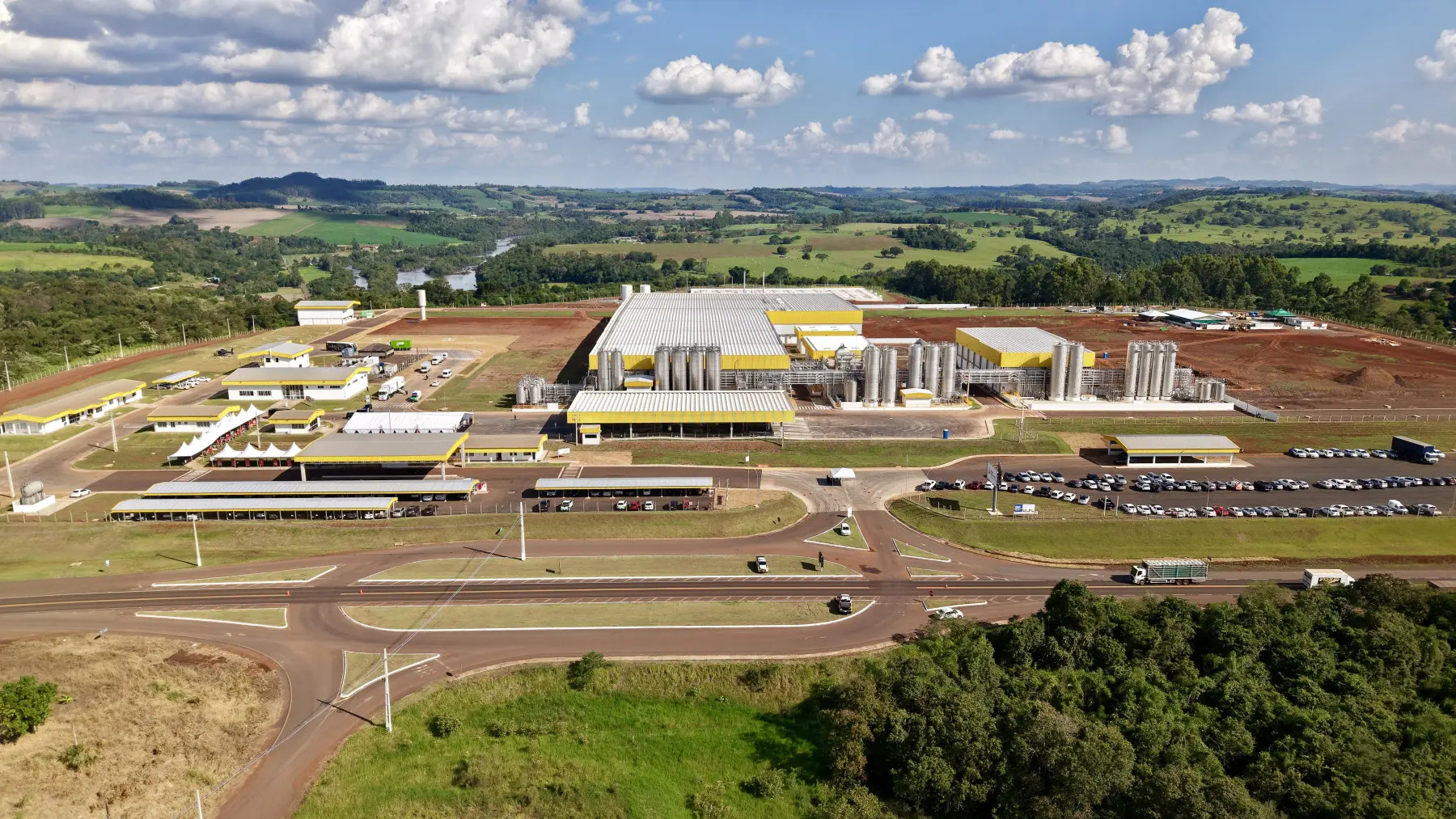
With an investment of R$ 612 million, a capacity to process 1.2 million liters of milk per day, Piracanjuba inaugurates a mega cheese factory that increases national production, reduces dependence on imports, and repositions Brazil on the global dairy map.
-
Brazilian city gains industrial hub for 85 companies that is equivalent to 55 football fields.

-
Peugeot and Citroën factory in Argentina cuts production by half and opens a layoff program for more than 2,000 employees after Brazil drastically reduced purchases of Argentine vehicles.


Main Street gains themed displays, residents dress up in pumpkin motifs for the parade, and the festival grounds become a mix of park and food court, with stalls serving pumpkin chili, pancakes, pie, and ice cream.
The program even includes cooking classes for dogs with a pumpkin theme and t-shirts with the phrase “only good pumpkin vibes.” It’s a week when the city practically measures its capacity to host a crowd.
The detail that becomes a reference is the smell in the air: about 50 thousand pumpkin donuts produced for the week, a figure cited as a hallmark of the event. In 2024, organizers claimed that 118 thousand people passed through Morton during the festival, reinforcing the contrast between temporary flow and permanent population.
Bridget Wood, who won the Pumpkin Princess contest in 2005 singing “On The Good Ship Lollipop” dressed as Shirley Temple, is now among the four people organizing the festival. She describes a logistics effort that begins in October of the previous year, with the theme defined in advance, like a past edition called the Pumpkin of the Century Festival.
The opening ceremony includes the “vine cutting,” when parade organizers cut the vine to mark the official start of activities. Behind the scenes, 1,500 volunteers appear, judging contests and coordinating tasks that repeat each edition.
Libby’s Factory Turns 100 And Defines The Rhythm Of The Local Economy

Morton is located near Peoria and, despite its size, hosts a rare industrial asset by the standards of many Midwestern cities: the Libby’s factory, which turns 100 and is described as a remnant of America prior to the decline of the Rust Belt.
The location offers about 200 jobs and acts as an income anchor that spreads through commerce. The centennial doesn’t change the essential equation: the dependence on a single industrial complex is both strength and risk.
Libby’s processes about 85% of the world’s canned pumpkin, supplying supermarket shelves with a product that appears in mass during Thanksgiving in the United States. This scale concentrates purchasing power and defines the regional agricultural calendar.
The factory opened in 1925 and originally processed corn, green beans, and peas. Over the decades, the focus shifted until operations concentrated on pumpkin, leaving behind other industrial crops and betting on volume and standardization.
The Orange Belt And The 40 Kilometer Rule In The Production Chain


Location is treated as a technical advantage. John Ackerman, a pumpkin producer in Morton, calls the region the “orange belt” for being at a point where the climate is not too hot to encourage diseases nor too cold to shorten the growing season.
Ackerman lives in a house designed by his great-grandfather and works fields cultivated by the family for generations. He transitioned from livestock to pumpkins in the 1980s, after a drop in commodity prices and droughts he describes as “a real bloodbath for agriculture.”
Today, he claims to grow 160 different varieties, hand-harvests 30 thousand pumpkins a year, and operates a store on the farm, which opens to the public during the festival season and even offers goats for petting. Part of his land is also leased to Nestlé, which grows pumpkins intended for the Libby’s factory.
In industrial logistics, the company states that the pumpkins travel, on average, less than 40 kilometers between the field and the can. This reduces transport time, simplifies storage, and brings agricultural income closer to industrial employment in Morton.
The Festival Started In 1967, Almost Failed At Launch, And Became A Tradition
The Morton festival started in 1967 as a harvest celebration. During the week of the first festival, it rained for four consecutive days, and the initiative did not turn a profit, but 7 thousand pumpkin pies were distributed for free, and the local newspaper classified the event as a success.
From there, the city consolidated rituals and attractions. One notable example is the pie-eating contest: 18 adults, using garbage bags, compete to see who can eat the most in two minutes without using their hands.
When the pandemic interrupted the celebration, the competition migrated to an online format. The following year, a professional competitor from Chicago took home the trophy, reinforcing that the festival already operates beyond the local audience.
In 1970, a pumpkin factory in the neighboring town of Eureka closed, and operations were centralized in Morton. A few years later, Libby’s was acquired by Nestlé, consolidating the integration between contracted farming and industrial processing.
The Dispute For The Title And Official Recognition In Illinois
Morton defends the title of pumpkin capital with a volume argument. Ackerman summarizes the competition with cities in California and Texas saying, “they’re good people, but they’re mistaken,” and adds, “terribly mistaken.”
In 1978, the state governor declared Morton the pumpkin capital. At that time, 85% of the world’s canned pumpkin was processed at Libby’s. A Nestlé spokesperson avoided confirming if that number still holds but mentioned that over the last 17 years, more than 2 million tons of pumpkin were harvested in Morton.
Today, the company sells enough canned pumpkin to produce, on average, 72 million pies each year. In a local store, everyday marketing is direct: mugs, keychains, postcards, t-shirts, beverage holders, bibs, and Christmas ornaments, all anchored in the idea of the pumpkin capital.
Territorial Economy, Industry And The Multiplier Effect Of Jobs
For Gary Winslett, associate professor of political science and director of the international political and economic program at Middlebury College, industrial jurisdictions tend to thrive when they combine cheap energy, affordable housing, low-cost land, rapid permitting, low taxes, and immigration, in addition to right-to-work laws.
The backdrop is the industrial transformation of the U.S. Midwest. Winslett described in the Washington Post that the Rust Belt once produced nearly half of the nation’s manufacturing exports and now produces less than a quarter, while the South produces twice as much. Industrial employment has recovered slightly since 2020, but southern states are advancing faster.
In Morton, the debate manifests practically as the multiplier effect of industry. Research cited in the survey varies in exact numbers but points out that one manufacturing job can generate another 1.59 jobs in associated sectors or even up to 2.2 jobs, and that every dollar spent in industry can have a total impact of US$ 2.64 in the economy.
This logic helps explain why about 200 direct jobs at the Libby’s factory become a central theme of local policies and collective anxiety. The city sees pumpkin as an economic asset, not just a cultural symbol.
The Fear Of Closure And The Ongoing Bet On The Pumpkin Cycle, Factory And Festival
Even with Morton’s prominence, vulnerability is real. Ackerman says the worry about a possible closure of the Libby’s factory is always present, and that the cost of living has made it less viable to keep some activities open to the public, such as his corn maze, which he will set up for the last time.
At the same time, the festival maintains a cycle of income for the city, with the Chamber of Commerce using the September week as the main driver of visibility and indirect revenue. For Wood, “it was the pumpkins that started the festival, and it’s the festival that really keeps us operational” in the entity.
In practice, Morton sustains the brand of pumpkin capital by combining three pieces: fertile land and generational experience in Illinois, a centennial industrial hub of Libby’s, and a festival that transforms agricultural numbers into flows of people, services, and money.
Do you think the title of pumpkin capital should rely more on the industrial volume of Libby’s or the impact of the festival in Morton?








-

-

-

-

-

-

72 pessoas reagiram a isso.