





 Portuguese
  English
  Spanish
  4 min of reading
  0 comments


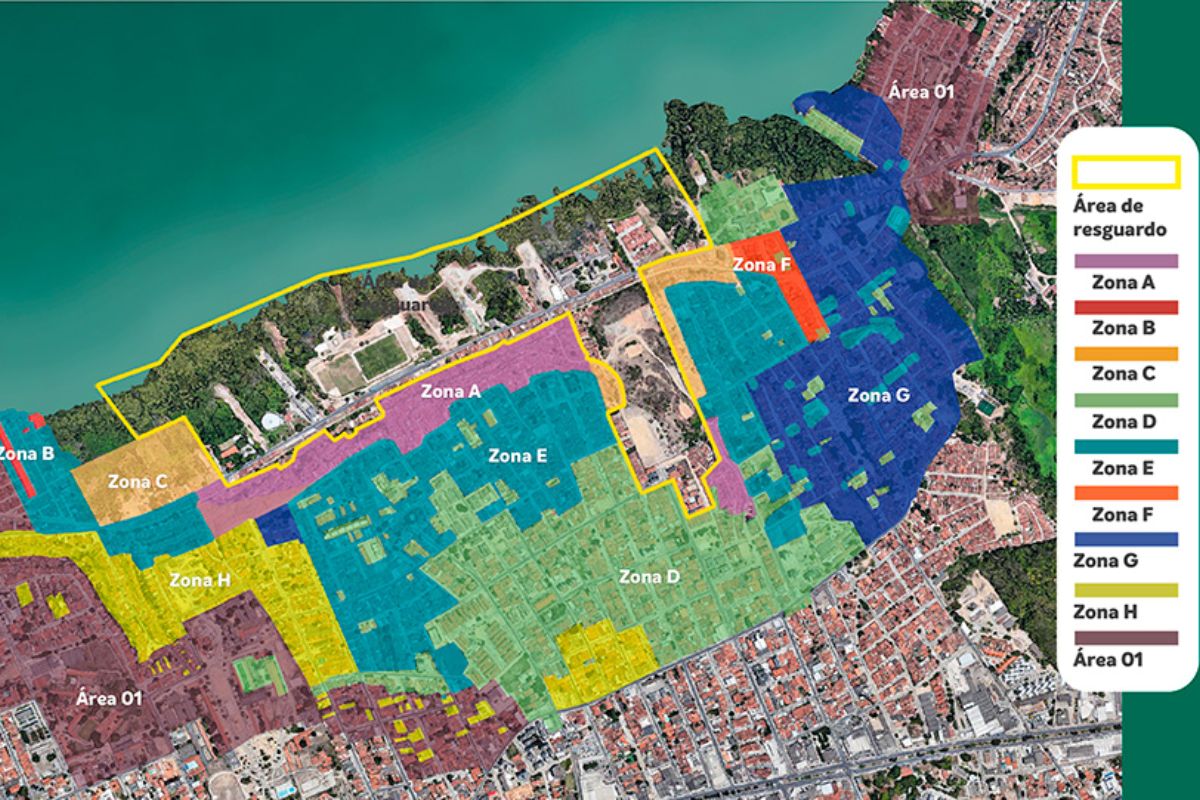
The Exploration of Rock Salt for Decades Under Maceió, Capital of the Northeast of Alagoas, Triggered One of the Largest Urban Disasters in Brazil, Forcing the Evacuation of Tens of Thousands of People and Leaving a Trail of Destruction and Uncertainty.
Maceió, the vibrant northeastern capital of the state of Alagoas, became the epicenter of a socio-environmental tragedy of alarming proportions in Brazil. For decades, the mining of rock salt carried out beneath the city created a silent danger that culminated in the progressive sinking of the ground in several neighborhoods. This human-induced disaster forced more than 60,000 people to abandon their homes and their stories.
This article investigates the geological and operational causes, the chronology of events, and the profound consequences of this induced urban disaster, which transformed part of the northeastern capital into “ghost neighborhoods” and raised serious questions about corporate responsibility and state oversight.
The Geology of Maceió and the Long History of Rock Salt Mining in the Northeastern Capital
The underground of the Maceió region is characterized by extensive and thick layers of halite, known as rock salt. This natural resource attracted the chemical industry, with exploration starting in 1976 by Salgema Indústrias Químicas S.A., a company that, after mergers, was incorporated by Braskem S.A. in 2002.
-
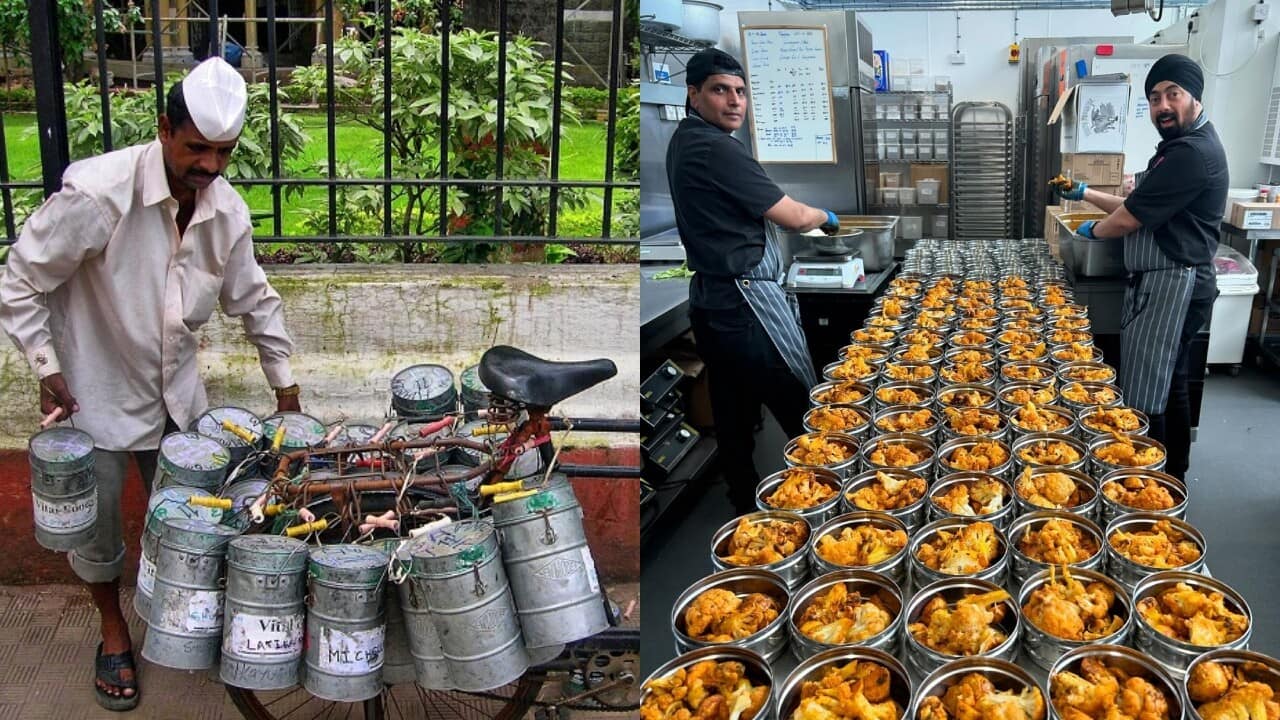
How 5,000 Indian dabbawalas manage to deliver around 200,000 lunchboxes a day in Mumbai for over 130 years using bicycles, crowded trains, and a manual system that continues to operate with impressive accuracy.
-
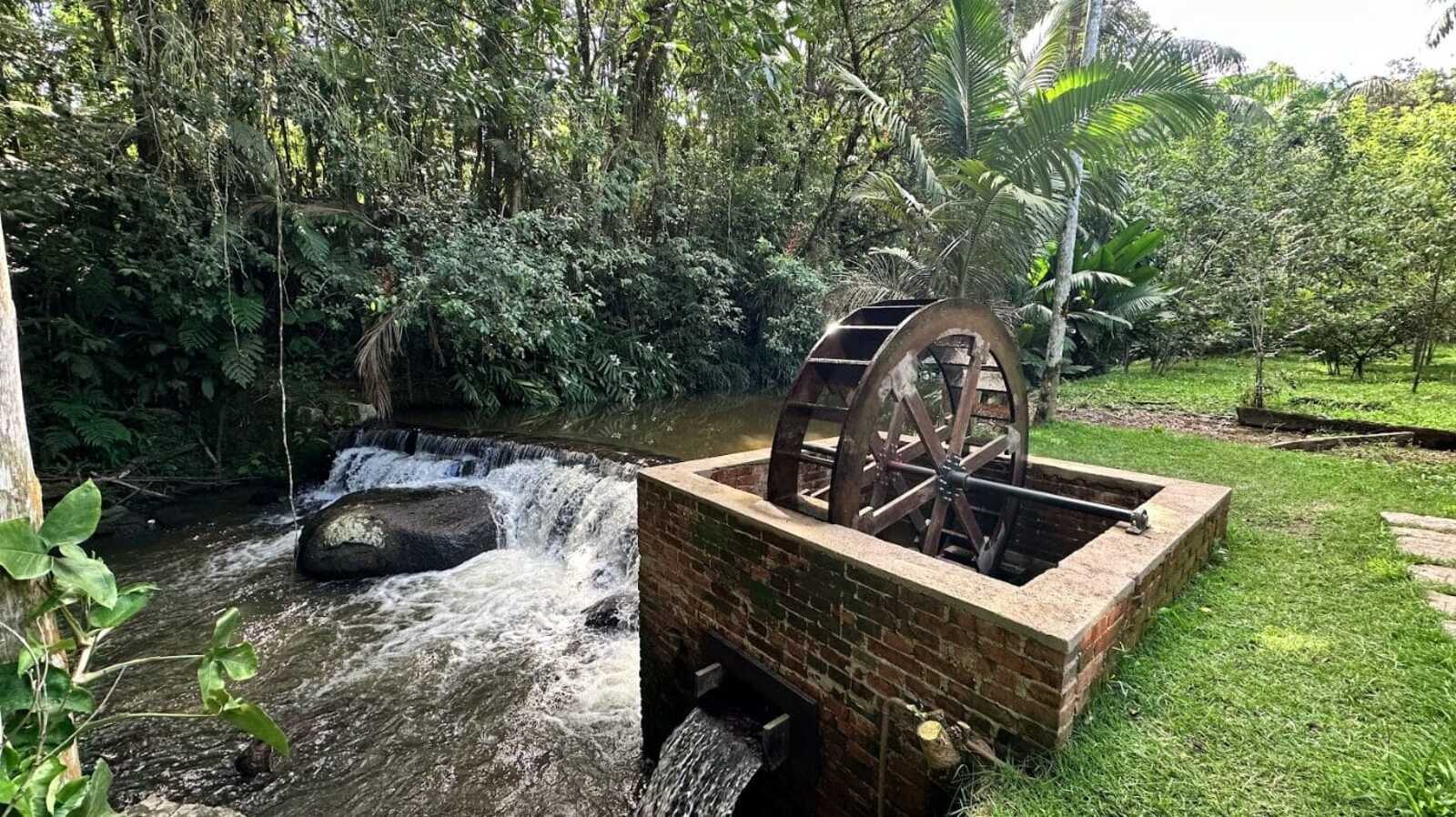
While restoring a historic mansion from 1910, a brick structure with an old turbine that generated energy from the Rio do Testo emerged, along with a hidden door and a rare floor concealed under layers of wax.
-
Italian researchers have detected what appears to be a second Sphinx buried under the sands of Egypt, and satellite scans reveal a gigantic underground megastructure hidden beneath the Giza Plateau for over 3,000 years.

-
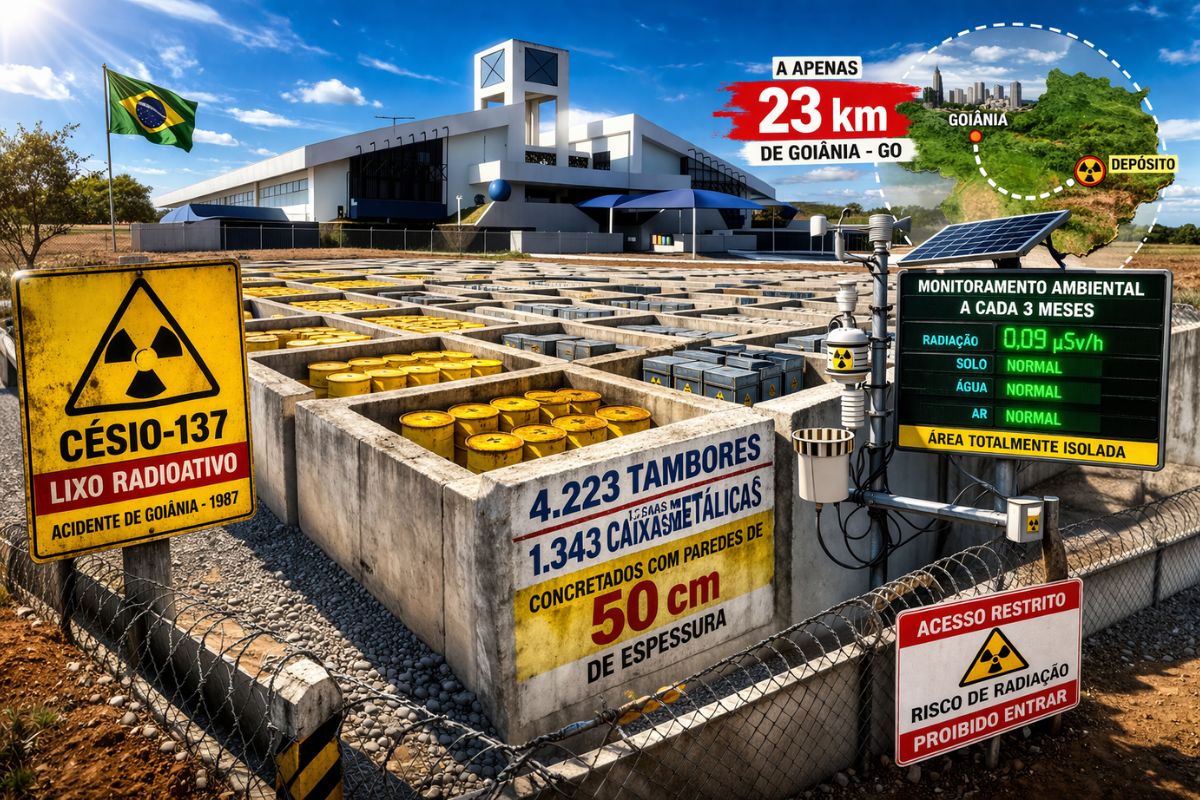
There are 4,223 drums and 1,343 metal boxes concreted with 50-centimeter walls that store the radioactive waste from Cesium-137 in the worst radiological accident in Brazil, just 23 kilometers from Goiânia, with environmental monitoring every three months.

The method used was dissolution mining, which involves injecting water to dissolve the salt and pumping the resulting brine. Over more than four decades, this process created dozens of large underground cavities beneath the urban fabric of this northeastern capital, a factor exacerbated by the presence of geological faults in the area.
The First Signs of the Disaster in Maceió and the Crucial Scientific Confirmation

In 2018, the latent problems began to manifest. After heavy rains in February and a seismic tremor of magnitude 2.5 in March, cracks and fissures intensified in properties and streets in the neighborhoods of Pinheiro, Mutange, and Bebedouro, generating panic among the population. The city government declared a state of emergency.
In light of the escalation, the Geological Service of Brazil (CPRM) began studies. In May 2019, the CPRM report concluded that rock salt mining by Braskem was the main cause of the subsidence. Confronted, Braskem halted extraction in May 2019 and announced the permanent closure of the mines in November of the same year, beginning preventive evacuations.
A Deformed Northeastern Capital, Thousands of Lives Interrupted, and the Environmental Impact
The most painful consequence was the mass displacement: approximately 60,000 people were forced to leave their homes, and over 14,000 properties were affected in the neighborhoods of Pinheiro, Mutange, Bebedouro, Bom Parto, and part of Farol. These areas transformed into “ghost neighborhoods,” with profound psychological and social impacts.
The urban infrastructure, including schools and hospitals, was ruined. The environmental damages were also significant, affecting the Mundaú-Manguaba Lagoon Estuarine Complex (CELMM), with risks of hypersalinization of Lagoa Mundaú and destruction of mangroves, impacting artisanal fishing.
The Role of the State, Agreements with Braskem, and the Voice of the Affected Community
Various state bodies, such as Civil Defense, Public Ministries (MPF and MPE), and Public Defenders (DPU and DPE), acted in the crisis. Agreements were made with Braskem to create the Financial Compensation and Relocation Support Program (PCF), aiming to compensate the victims and remediate the damages.
Residents’ associations, such as SOS Pinheiro, played a crucial role in mobilizing for rights and justice. In May 2024, the Parliamentary Commission of Inquiry (CPI) of Braskem in the Federal Senate concluded that the sinking was a “crime” resulting from the company’s irresponsible exploitation and serious failures in state oversight by agencies such as the National Mining Agency (ANM) and the Environment Institute of Alagoas (IMA).
The Challenges of Stabilization, Complex Recovery, and the Difficult Lessons of Maceió


The plan for the closure of the 35 mines, with infilling of the cavities and monitoring, is a long and complex process, with setbacks such as the ongoing concern with Mine 18 in Mutange. The recovery of the evacuated areas and the full restoration of the affected lives are monumental challenges for this northeastern capital.
The disaster in Maceió serves as a severe warning for Brazil about the dangers of mining in urban areas and the necessity for rigorous oversight, transparency, and prioritization of the precautionary principle. The lessons from this tragedy, classified as a crime by the CPI, should guide future policies to ensure that the pursuit of natural resources does not override the safety and dignity of communities.






Seja o primeiro a reagir!