





 Português
  Inglês
  Espanhol
  4 min de leitura
  0 comentários


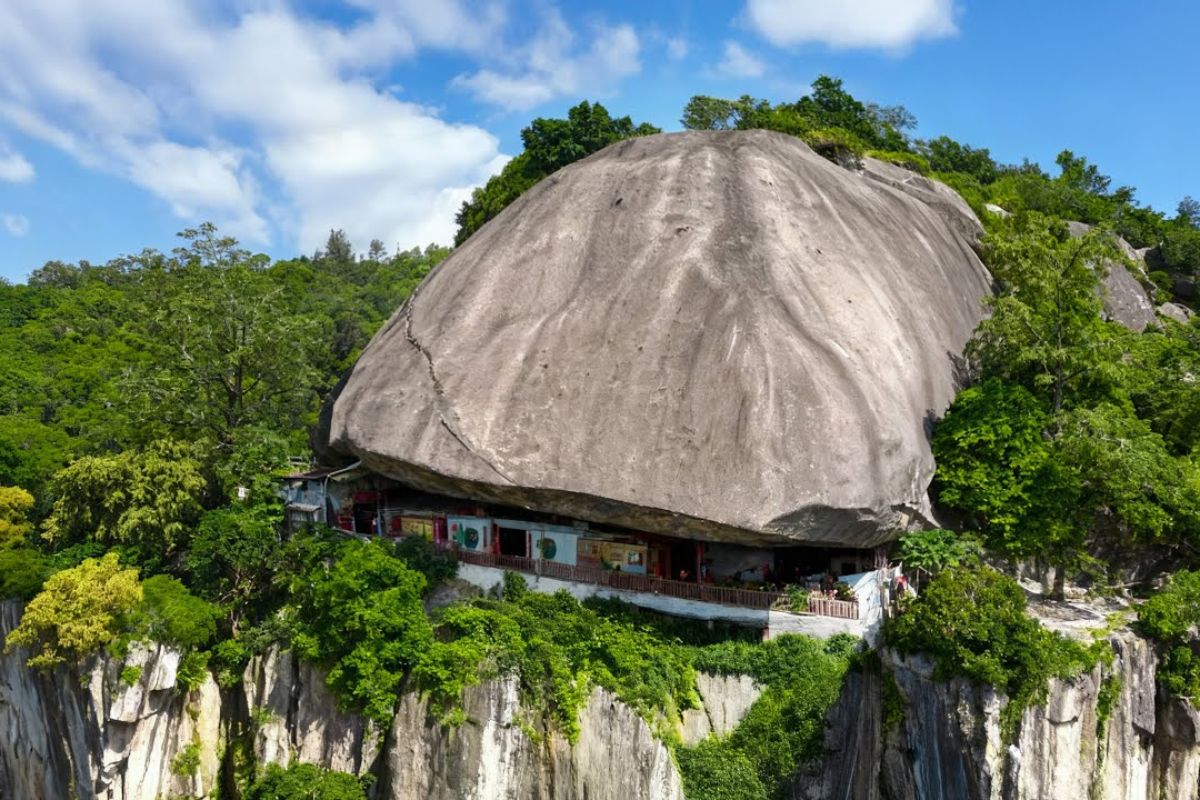
In The Middle Of The Mountain In Chao’an, Chaozhou, A House Built Under A Rock Dominates The Remote Cliff, Said To Be Natural And Smooth, Surrounded By Temple, Offerings And Reports Of Meteorite, While Elders Live On The Site And Visitors Pay 15 Yuan For A Meal And Climb To Meditate On The Stone At The Bottom.
A House Built Under A Rock In The Chao’an District Of Chaozhou, Guangdong Province, Has Become A Point Of Silent Curiosity In An Area Described As Remote.
Access Is Narrated As An Arrival By Car And Then A Climb Through Vegetation And Slope.
From A Distance, The First Reaction Is Instinctive.
-
Scientists transform sawdust into fire-resistant panels, stabilize the compound with an enzyme extracted from watermelon seeds, and turn waste into promising material for construction.
-
Forget concrete: architects are replacing tons of concrete with giant blocks of expanded polystyrene to build the roofs of houses and reduce structural weight by up to 50%, cut costs, improve thermal insulation, and speed up construction.
-
The Brazilian state enters the center of the global race for critical minerals by starting the construction of the largest underground nickel mine in Latin America, a mineral essential for electric car batteries that the entire world is competing for at this moment.
-
New CCR concrete paving technology promises roads up to 3x more durable, less maintenance, and cost reduction in Brazil.

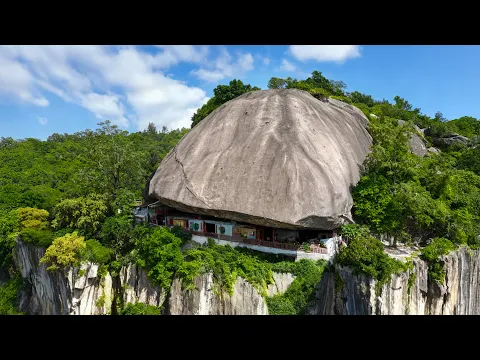
The Rock Is Huge.
The Sense Of Risk Appears Even Before Getting Close.
On The Site, Residents Repeat That The Formation Is About 500 Years Old.
They Themselves Say They Cannot Affirm Whether The Rock Was Worked By Humans.
The Contrast That Fuels The Mystery Is In The Detail.
The Surface Is Described As So Smooth That It Looks Cut, But Defended As Natural By Those Who Live There, Which Matches The Tourist Descriptions Of The Ganlu Temple Talking About A Stone “With A Flat Base As If It Had Been Carved.”
An Isolated Cliff And The Arrival At The House

The Journey To The House Built Under A Rock Is Often Narrated As A Sequence Of Physical Effort And Visual Surprise.
Already Halfway Up The Mountain, The Climb Requires Navigating Through Vegetation And Facing The Slope.
Until The Gigantic Rock Finally Comes Into View.
With The House “Right Beneath It,” According To The Description Repeated By Visitors.
Upon Arrival, The Scale Of The Block Dominates Everything.
There Are Reports That Not Even A Wide Angle Lens Could Capture The Whole Set.
The Entrance Reinforces The Idea Of Imbalance.
An Enormous Stone Is Positioned As If It Were Stacked In A Game.
The Final Impression Is Direct.
The House Built Under A Rock Challenges Common Logic.
Local Legends And The Meteorite Hypothesis

The Most Dramatic Popular Explanation Appears In The Form Of A Legend.
A Meteorite Is Said To Have Fallen From The Sky And Created The Natural Cavity.
This Narrative Circulates As Part Of The Local Repertoire.
It Does Not Appear As Geological Proof In The Most Common Tourist Materials, Which Describe The Place As A Temple Built Under A Large Natural Rock Chamber.
Even Those Who Bet On The Natural Origin Recognize The Psychological Effect Of The Size.
The Idea Of Such A Large Rock Above An Inhabited Space Provokes The Inevitable Question About Stability And Risk.
Still, The Site Is Treated As An Environment Of Peace By Those Who Frequent The Area.
Smooth Rock, Historical Doubt And The Technology Question

The Central Doubt Revolves Around The Appearance.
The Surface Described As Smooth Fuels The Suspicions Of Artificial Cutting.
The Defense Of The Residents Goes In The Opposite Direction.
They Claim That The House Built Under A Rock Formed Naturally.
And Argue That, 500 Years Ago, There Was Not Enough Technology To Cut A Structure Of That Size.
This Tension Between Visual Impression And Local Explanation Keeps The Debate Alive.
What Seems “Machine Work” Clashes With The Argument Of Historical Time.
And With The Insistence Of Those Who Live Nearby.
The Rock Is Natural, No Matter How Absurd It May Seem.
Temple, Offerings And Daily Life Under The Stone
The Religious Presence Adds Another Layer To The Place.
A Small Temple Was Built In The Area, Described As Part Of The Complex Known As Ganlu Temple In Chao’an.
The Site Is Associated With Offerings And Devotional Practices.
There Are Descriptions Of Visitors Leaving Fruits And Food As Offerings.
The Routine Around The House Built Under A Rock Includes Elderly Residents And A Simple Structure To Receive Arrivals.
There Is A Dining Area.
And There Is Local Information Of A Meal For About 15 Yuan.
The Meditation Stone And The “Sanctuary” Above
Besides The House, The Route Includes A Point Associated With Meditation.
Residents Describe The Climb As Revitalizing.
And Say That It Brings A Sense Of Calm.
Even With The Recommended Caution Due To Stair Sections And Narrow Passage.
In This Itinerary, The House Built Under A Rock Is Not Just An Object Of Doubt.
It Becomes The Axis That Connects Landscape, Belief And Habit.
The Whole Ensemble Functions As A Small Natural Sanctuary For The Mind.
Which Helps To Explain Why People Return, Despite The Isolation.
Aerial Images And The Mystery That Never Ends
The Account Culminates With The Mention Of Drone Images.
They Usually Reinforce The Scale Of The Cliff And The Rock.
And Show The Central Idea Of The Place.
A Building Nestled Under A Large Block Projected Outward, Described In Guides As “Suspended Rock” With A Flat Base.
Even So, What Remains Is Not A Definitive Answer.
There Is A Contrast Between Legend, Apparent Geology And Daily Life.
And The Technical Question That Bothers When The Stone Seems “Cut.”
Large Rocky Forms And Surfaces That Seem “Worked” May Arise From Natural Processes Of Weathering And Erosion In Fractured Rocks, As The USGS Explains When Describing Granitic Landforms And Spheroidal Weathering.
If You Were Standing In Front Of The House Built Under A Rock, Would You Trust The Explanation Of Natural Origin? Or Would You Think There Is Still A Missing Piece In This 500-Year-Old Story?








-

2 pessoas reagiram a isso.