





 Portuguese
  English
  Spanish
  8 min of reading
  0 comments


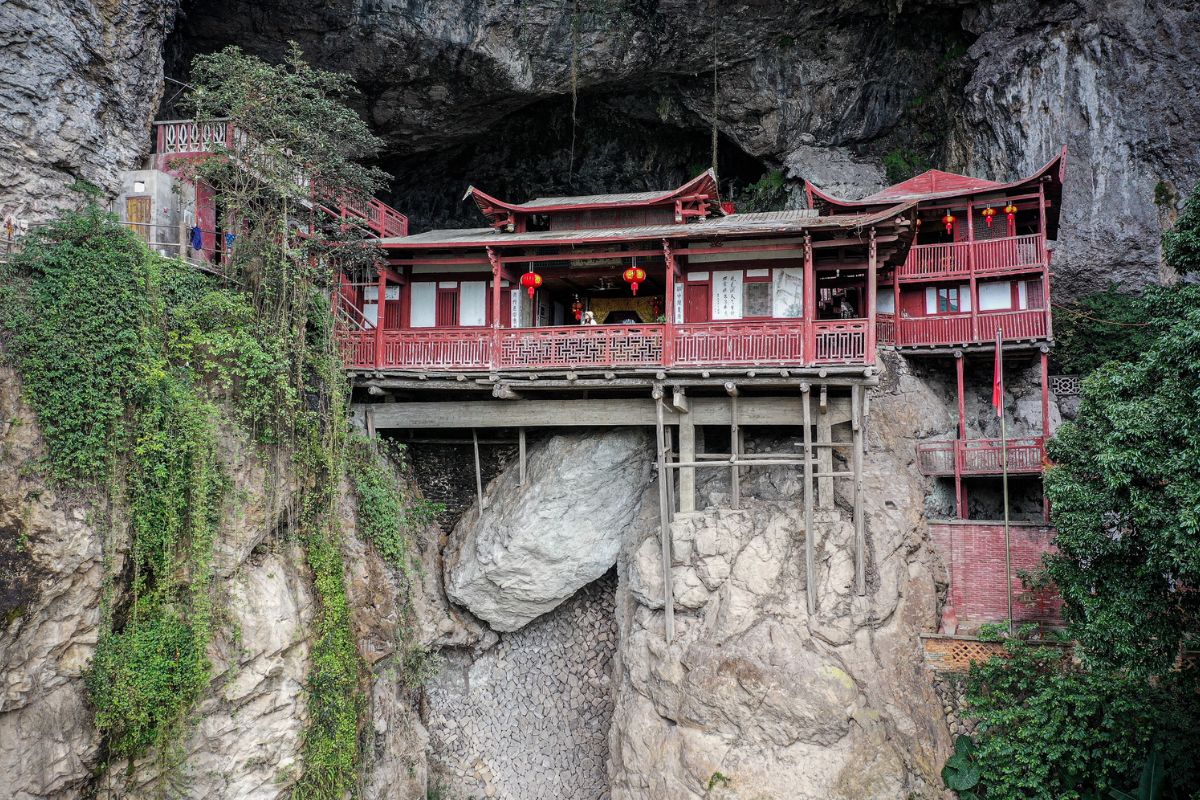
Built Over A Thousand Years Ago Inside A Cave 300 Meters High, The House On The Cliff Of Fangguangyan Combines Temple, Housing And Viewing Platform In A Radical Project That Tests The Limits Of Engineering, Safety And Faith In The Mountainous Region Of Fujian, Accessible Only By Long Stairs
The House On The Cliff Of Fangguangyan Is Located In Yongtai County, In The Mountainous Region Of Fuzhou, Fujian. There, an entire temple was fitted inside a cave opened in a rocky wall about 300 meters high, at a point where the slope practically drops into the void. Access Is Not Made Through Internal Roads Or Regular Public Transport. To Get There, You Must Drive To The Base Of The Mountain And Face A Sequence Of Steep Stairs That Substitute Any Type Of Modern Infrastructure.
Contrary To The Image Of a Simple Balcony Hanging From The Rock, This House On The Cliff Acts Like A Small Vertical Complex. Wood Structures, Prayer Rooms, Walkways And Balconies Were Built To Support Directly On The Inside Of The Cave, Occupying A Space That Seems To Have Been Custom Designed By The Geology Itself. All This In A Context Where, At The Time Of Construction, There Were No Machines, Drones Or Modeling Software, Only Empirical Calculations, Ropes, Primitive Scaffolding And A Lot Of Labor Under Extreme Conditions.
Ascent By Almost Vertical Steps To The House On The Cliff

The Path To The House On The Cliff Begins With What Visitors Call The “Stairs To Heaven.” It Is Not A Metaphor.
-
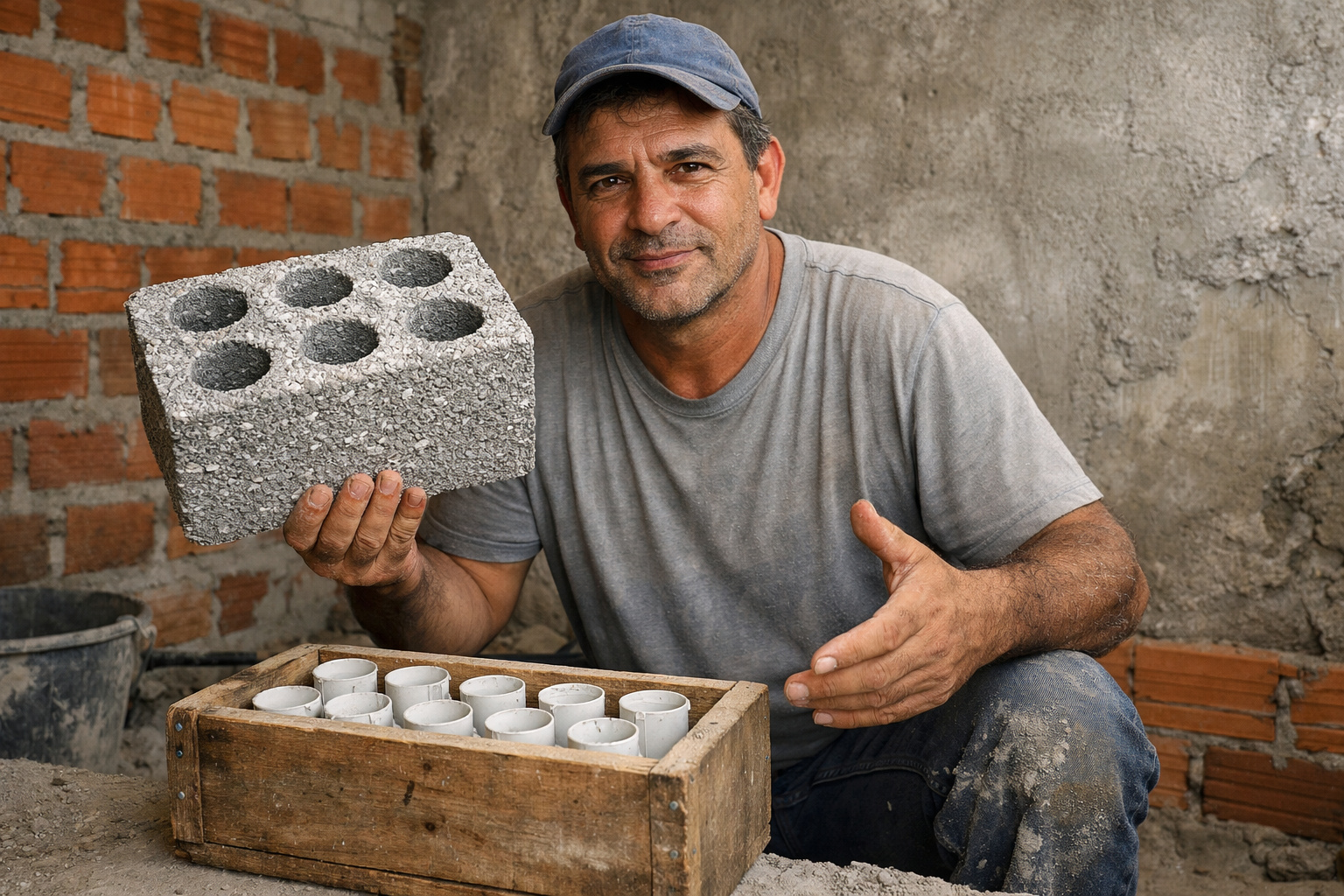
A thermal block costing only R$ 0.40 catches attention by reducing heat by up to 80% using recycled styrofoam, a common kitchen ingredient, and a manual technique capable of producing 50 blocks from a single bag of cement.
-
The item in the house that consumes the most water is not in the kitchen; it is in the smallest room of the house and can account for up to 30% of the expenditure on its own.

-
While Argentina relies on the USA to provide communications, data transmission, and electronic warfare for the F-16, Brazil is accelerating with the Gripen and integrating the Link-BR2, a national technology that strengthens air defense.

-
The daily shower that seems harmless now worries specialists: a shower uses 6 to 15 liters per minute and is at the center of the water crisis.


The Steps Reach Estimated Inclinations Of About 75 Degrees, Which In Practice Means Climbing Almost Vertically, Grabbing Handrails And Looking At The Abyss Right Next To You.
Basic Recommendations Like Bringing A Walking Stick And Taking Controlled Breaks Are Not An Exaggeration Of Sports, But A Matter Of Minimal Safety.
As You Climb, The Path Reveals How The Topography Of Fujian Is Dominated By Ridges And Steep Slopes.
Almost Everything Is Mountain, Which Explains Why This House On The Cliff Seems Logical There.
In The Middle Of The Ascent, Large Stone Blocks Display Characters Carved Directly Into The Rock, Marks Of Historical Periods When Recording The Passage Of Rulers, Monks Or Donors Was As Important As Erecting The Temple Itself.
Each Inscription On This Wall Functions As A Physical Record That This Ascent Is Part Of An Ancient Pilgrimage Route, Not Casual Tourism.
Suspended Structure: Wooden Pillars And Calculated Risk Engineering

The Frontal View Of The Cave Reveals The Heart Of The House On The Cliff.
Instead Of A Single Solid Volume, What You See Is A Set Of Wooden Floors Projecting Out Of The Inside Of The Rock, Supported By Dozens Of Pillars And Wooden Sticks That Descend To The Natural Floor Of The Cliff.
At Some Points, It Is Possible To Identify Sections Where Only A Few Columns Seem To Support Entire Volumes, Something That Intuitively Contradicts The Sense Of Stability.
From A Technical Point Of View, The Solution Is Radical But Not Random.
The Cave Offers A Protected Rocky “Ceiling” And A Natural Recess Against Wind And Rain.
The Wooden Pillars, In Turn, Act As Reinforcement And Locking, Distributing The Weight Of The House On The Cliff Across Several Points Of Contact With The Rock And The Base.
The Fact That This Structure Has Existed For Over A Thousand Years Without Visible Collapse Suggests A Very Fine Empirical Understanding Of Weight, Humidity, Expansion And Deformation Of Wood In An Extreme Environment, Even Without Formal Numerical Calculations Or Modern Standards.
In Recent Times, Some Internal Areas Have Been Renovated With Tiled Flooring, Which Contrasts With The Original Structure.
This Update Facilitates Maintenance, Reduces Wear Caused By Visitor Flow, And Helps Protect The Wood From Excessive Moisture.
Still, The Dominant Feeling Is Of An Old Building, Compact, With Narrow Corridors And Environments That Follow The Typical Proportions Of Traditional Chinese Temples, Just Transplanted Into A Void Dug Into The Mountain.
Interior Of The Cave: Temple, Shelter And Viewing Platform In The Same Volume
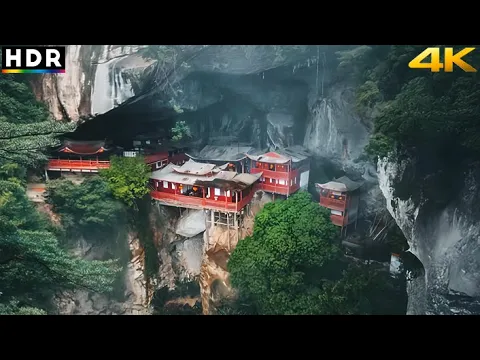

Upon Entering The House On The Cliff, The Visitor Realizes That The Space Serves Several Functions Simultaneously. There Are Areas For Worship, Small Rest Rooms, And Viewing Points Facing The Valley.
The Natural Dimness Of The Cave Filters The Light And Reinforces The Feeling Of Being In An Environment Isolated From The Rest Of The World, Even While Suspended Over A Void Of Hundreds Of Meters.
A Single Permanent Resident, Linked To The Religious Administration Of The Site, Usually Authorizes Circulation And Photos.
This Minimal Human Presence Is Enough To Maintain The Basic Routine Of The Temple, Monitor The Flow Of Visitors, And Ensure That The House On The Cliff Continues To Operate As A Worship Space, Not Just As A Tourist Attraction.
The Combination Of Religious Use And Architectural Curiosity Transforms Each Room Into A Point Of Tension Between Historical Conservation, Devotion, And Public Exposure.
In The Background, A Small Waterfall Plummets From The Upper Edge Of The Cliff And Crosses The Field Of Vision Of Those Inside The Cave.
The Water That Falls In An Almost Vertical Line Reinforces The Reading That The House On The Cliff Was Literally Planted Between Rock, Air, And Waterfall, Occupying A Boundary Place Between The Natural And The Built.
The Result Is A Visual Experience That Mixes The Sound Of Water, Fine Mist, And Constant Echo, Creating An Atmosphere That Many Describe As Close To A “Suspended Paradise.”
Upper View: Reading The Cave As An Architectural Set
A Set Of Stone Steps At The Back Leads To An Even Higher Level Inside The Cave.
From There, It Is Possible To Observe The House On The Cliff As If It Were A Full-Scale Model Fitted Into The Rocky Opening.
What Appears Up Close As A Sequence Of Small Isolated Environments Reveals Itself As A Coherent System Of Platforms, Supports, Roofs, And Balconies, All Articulated To Make The Most Of The Internal Volume Of The Cave.
This Upper View Also Highlights The Load Distribution Logic.
The Columns Are Positioned In Regions Of Greater Rock Thickness, Which Makes Clear The Points Where Weight Is Transferred To The Base.
At The Same Time, The Visitor Sees The Valley Up Front, With Successive Layered Mountains, Cut By Mist And Remnants Of Recent Rain.
On Humid Days, The Constructions Seem To Float Among Low Clouds, Which Reinforces The Impression That The House On The Cliff Belongs More To The Sky Than To The Earth.
The Contrast Between The Smooth Surfaces Of The Tiles And The Irregularity Of The Exposed Rock Shows How The Design Adapts To Physical Limitations, And Not The Other Way Around.
There Was No Attempt To Completely Tame The Geology.
Instead, The Architecture Fits Into The Imperfections Of The Cave, Accepting Recesses, Deviations, Crooked Corners, And Asymmetrical Openings.
Retreat Space: The Area Reserved For Monks At The Top Of The House On The Cliff
At An Even Higher Level, Accessed By Sections With An Incline Close To 80 Degrees, Is The Cultivation And Meditation Area Of The Monks.
This Part Of The House On The Cliff Is Usually Not Open To The Public.
Access Depends On Direct Authorization From The Responsible Abbot, Precisely Because It Is A Space Dedicated To Silence, Spiritual Practice, And The Internal Routine Of The Monks.
The Path Is Narrow, Exposed, And Physically Demanding.
Each Step Reminds Us That, Before Being A Visual Attraction, The House On The Cliff Was Designed As A Place Of Radical Retreat, Where The Difficulty Of Access Serves As A Natural Filter, Keeping Away Casual Curious People And Favoring Those Willing To Face The Climb.
From The Top, The View Reinforces This Function. The Valley Opens In All Directions, The Sounds Of The Base Disappear, And Only The Distant Sound Of Water And Wind Remains.
In The Monk’s Rest Area, Small Details Like Pairs Of Shoes Aligned At The Door Help To Remind Us That The Structure Is Not A Ruin Or A Frozen Scene.
The House On The Cliff Continues Alive, With Continuous Use, Periodic Rituals, And A Routine That Must Coexist With The Growing Presence Of Visitors.
This Coexistence Requires A Permanent Balance Between Welcoming Those Who Arrive And Preserving The Introspective Character That Led Someone, Centuries Ago, To Build A Residence-temple On An Almost Inaccessible Cliff.
Between Risk, Tradition And Conservation: The Future Of This House On The Cliff
From A Technical Point Of View, The Maintenance Of This House On The Cliff Is A Constant Challenge. Wood Exposed To Mist, Wind, And Temperature Variations Tends To Suffer Deformations Over Time.
Each Renovation Needs To Respect The Original Design, Reinforce Critical Points, And At The Same Time, Not Disfigure The Millenary Logic Of A Suspended Temple Inside The Cave, Something That Requires Careful Decisions In Each Replacement Of A Piece Or Structural Adjustment.
At The Same Time, The Increased Interest In Extreme Destinations, Hiking Trails, And “Impossible” Constructions Pressures The Site For Larger Scale Visits.
The Exhausting Path, The Absence Of Public Transport, And The Need To Climb Almost Vertical Stairs Work, In Practice, As Natural Barriers, Reducing The Flow To A Still Manageable Amount.
But The Global Perception That This House On The Cliff Is One Of The Most Radical Architectures Ever Built In A Natural Environment Tends To Intensify Interest In The Coming Years.
From The Outside Looking In, This House On The Cliff Symbolizes A Rare Encounter Between Geology, Spirituality, And Empirical Engineering.
It Is A Case Where The Landscape Was Not Just A Setting, But A Physical And Symbolic Raw Material Of A Project That Has Spanned Centuries, Maintaining Its Religious Function And Visual Impact.
The Challenge Now Is To Ensure That This Balance Between Tradition, Risk, And Conservation Is Preserved, Even With The Increasingly Intense Gaze Of Visitors And Cameras.
Upon Learning The Story Of This House On The Cliff, It Becomes Clear That Not All Extreme Works Are Born Out Of Vanity Or Spectacle.
Often, They Are Born From A Silent Search For Isolation, Contemplation, And Continuity.
If You Are Interested In Architecture In Unlikely Places, It’s Worth Keeping An Eye On Other Constructions That, Like Fangguangyan, Test The Boundary Between The Possible And The Unbelievable.
And You, Would You Face The Ascent And Have The Courage To Visit Or Even Spend A Night In This House On The Cliff?








-

Uma pessoa reagiu a isso.