





 Portuguese
  English
  Spanish
  6 min of reading
  0 comments


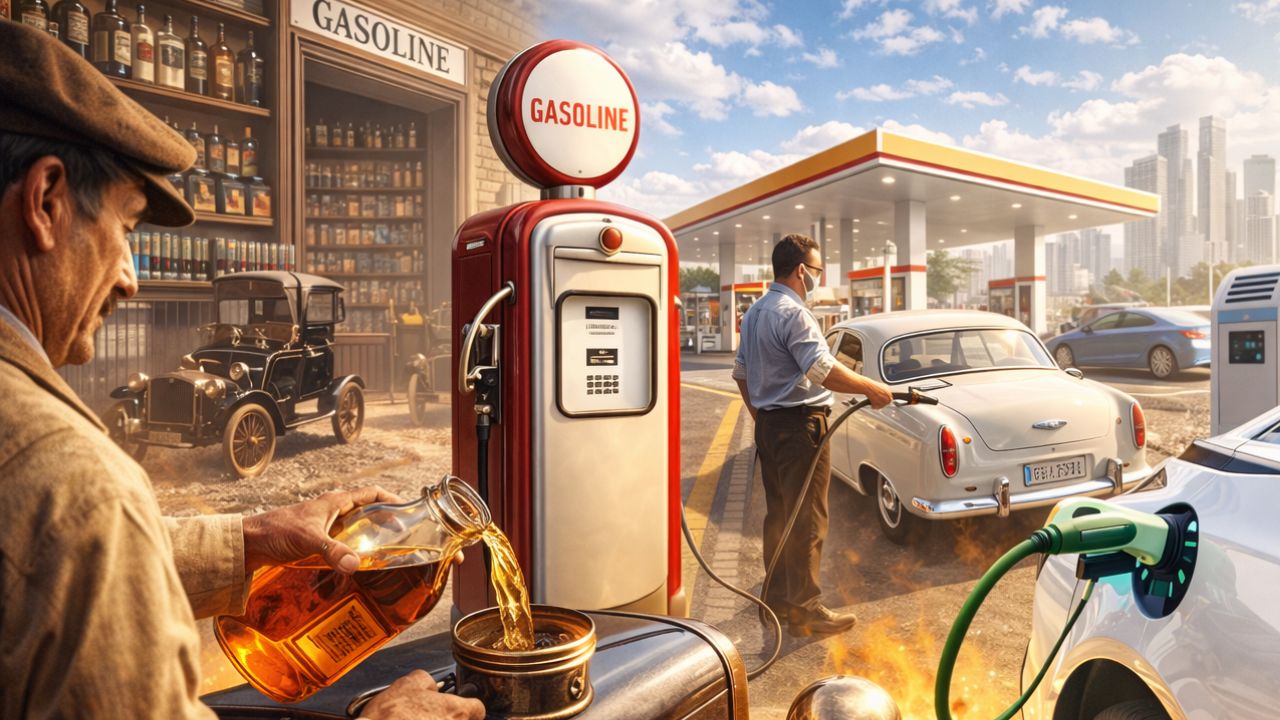
From 1880s Germany to the First Cars, The History of Gasoline in Pharmacies Shows How the Lack of Gas Stations Forced Drivers to Improvise and Paved the Way for a Global Supply Network.
The scene seems absurd today, but it was normal: gasoline in pharmacies was one of the most common ways to get fuel when automobiles began to circulate, and there were no gas stations.
Before modern pumps, attendants, and underground tanks, refueling was almost artisanal, unsafe, and relied on chance. The transformation of this improvised routine into a standardized service helps to understand how mobility evolved into the era of electric vehicles.
Gasoline was not even a product intended for cars, and the driver ended up being a mechanic, electrician, and the very supplier of what made the engine work.
-
The Argentine government celebrates the lowest poverty rate in 7 years, but experts warn that the methodology has changed, real wages have fallen, unemployment has risen, and the number of people on the streets of Buenos Aires has increased by 57% since Milei took office.

-
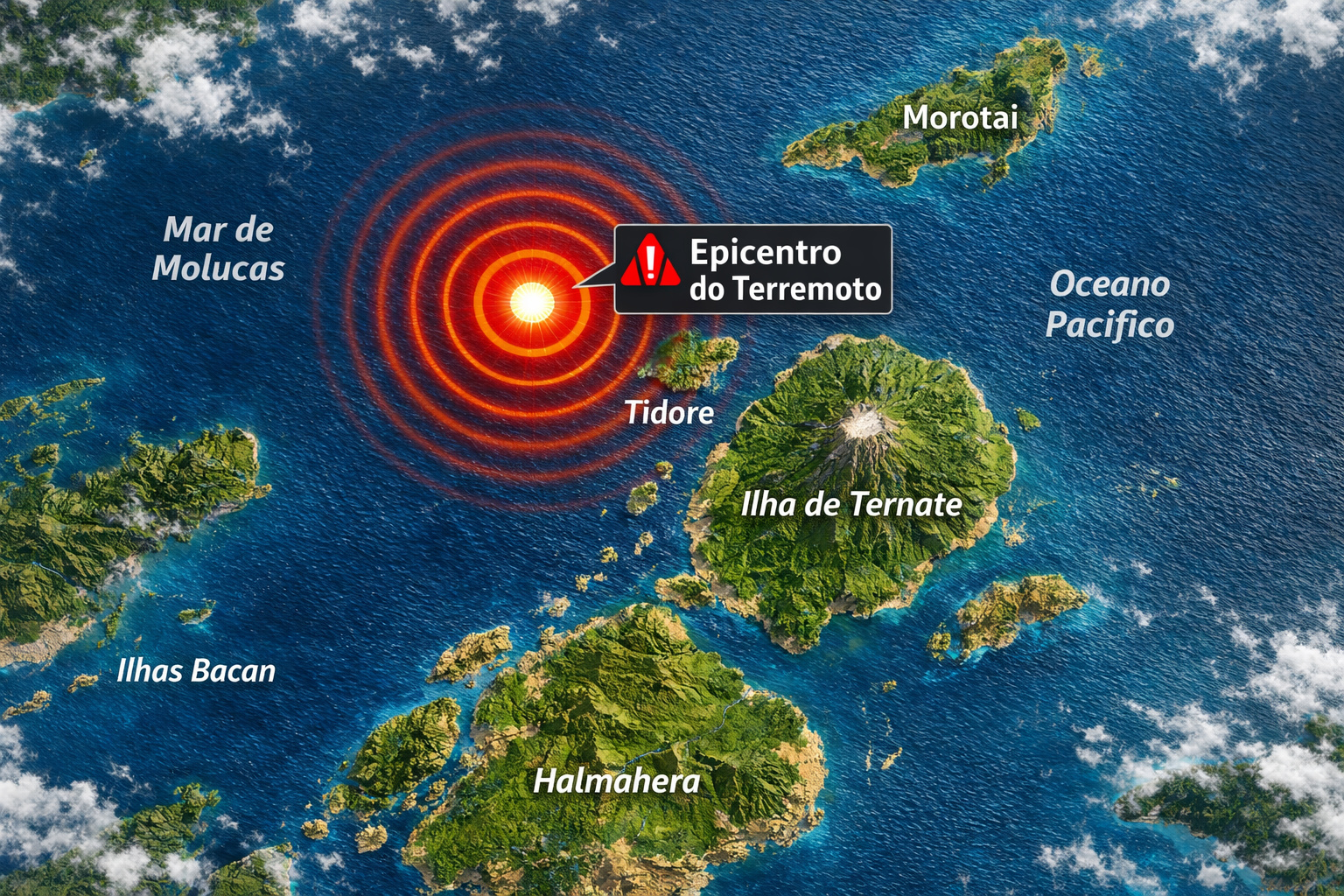
7.8 magnitude earthquake in Indonesia frightens the population, triggers tsunami alert, and hits an island with over 200,000 inhabitants this Thursday.
-
Google will finally let you change that embarrassing Gmail address you created in your teenage years without losing any accounts, logins, or old emails: the feature is already available in the United States.

-
Heading to Brazil in a Bonanza F33 single-engine aircraft: a couple departs from Florida on a visual flight, makes technical stops in the Caribbean to refuel and organize paperwork, and begins the staged crossing until they reach the country.


Understanding this beginning is to follow step by step how a daily improvisation became one of the most complex infrastructure systems on the planet, with technologies, services, and standards that changed the way we travel.
Why Gasoline Was Sold in Pharmacies and Random Places

At the end of the 19th century, gasoline was a little-valued byproduct of the chemical industry, often stored carelessly and without standardization.
When fuel was scarce, drivers turned to unlikely sources: pharmacies, general stores, blacksmiths, warehouses, and kerosene merchants.
In this context, gasoline in pharmacies was not a “curiosity”; it was a practical solution. Each place stored the fuel in its own way, often in repurposed cans, improvised barrels, and even reused bottles.
There was no reliable measurement, and safety was minimal, which turned the simple act of transferring fuel into a risk of spillage and fire.
1886 and the Car That Exposed the Supply Problem
The symbolic turning point occurs when, in 1886, Carl Benz patented one of the first automobiles powered by internal combustion. They were rudimentary vehicles, made practically piece by piece, with low reliability by today’s standards.
Any failure or lack of fuel could mean hours of work, and since there were no gas stations, improvisation was the rule. Gasoline in pharmacies fit into this world where “where to find fuel” was part of the driving challenge.
The Pump That Was Born for Kerosene and Helped Create Automotive Supply
Before there was a gas station, there was equipment. In 1885, American inventor Silvano F. Bower developed a manual pump initially intended for domestic kerosene, featuring measurement and a relatively precise transfer system.
When automobiles began to multiply, this pump became a reference for an activity that did not yet officially exist.
It was a silent yet decisive step: technology began to transform improvisation into a repeatable routine, reducing some of the chaos surrounding gasoline in pharmacies and other sales points.
The First Fixed Points and the Birth of the “Station” as an Idea
In the early years of the 20th century, with more manufacturers and a timid increase in individual transportation, small merchants began to offer gasoline in a semi-professional manner.
Around 1905, locations dedicated exclusively to selling fuel for cars emerged in Centeli, Missouri.
They were not yet gas stations as we know them. They were simple areas, often attached to existing stores, with a pump next to a tank.
Even so, they represented the first attempt to organize the supply and reduce dependence on gasoline in pharmacies.
1913 and the Modern Station: More Than Selling Fuel, Selling a Concept
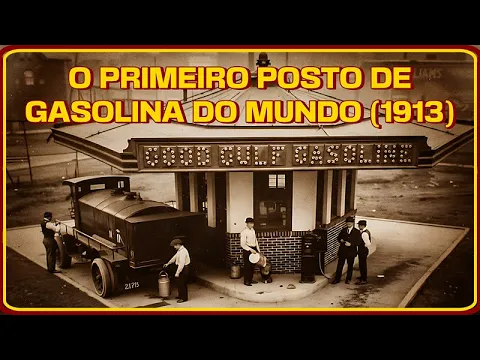
On December 1, 1913, Gulf opened what many historians consider the first modern gas station in Pittsburgh, Pennsylvania.
The innovation was not just in selling gasoline but in the concept: a building designed to serve motorists, with circulation areas, well-positioned pumps, space for maneuver, and trained staff.
The station offered free road maps, air for tires, water, lubrication, and clear visual communication. On the first day, it sold 30 gallons at 27 cents per gallon, a modest but symbolic volume.
From there, refueling would cease to be an improvised task and become a specialized and standardized service, reducing the role of gasoline in pharmacies as a primary solution.
Ford Model T and the Boom That Forced the Creation of a Reliable Network

The change coincided with the rise of the Ford Model T, launched in 1908, and the expansion of cars on the roads.
The new demand required predictability: people needed to know where to refuel, how much they would pay, and whether they could count on a reliable network.
Thus, gas stations multiplied at intersections, city entrances, along highways, and emerging tourist routes.
Improvisation gave way to infrastructure, and gasoline in pharmacies became a memory of an early phase.
From Manual Pump to Underground Tank: Technology and Safety Enter the Game
With the expansion of gas stations, new technologies emerged. Pumps stopped being manual and began to have electric mechanisms, with more accurate measurements. Tanks started being buried to reduce fire risks.
The architecture of gas stations also became more professionalized. Companies created striking visual styles, standardized facades, illuminated logos, and distinctive colors to draw attention from afar.
Refueling became an experience and a brand, something far removed from the time of gasoline in pharmacies and makeshift containers.
Self-Service, Convenience, and the Station as a Service Center
In the 1940s, self-service emerged in some regions of the United States. The idea was for the driver to refuel, reducing costs and speeding up the process, but cultural acceptance was slow.
Over time, this model would become standard in various places, driven by legislation and technological advances.
With the increase in road trips, gas stations began to offer additional services: convenience stores, water, food, basic supplies, car items, quick service stations, rest areas, and restrooms.
In some countries, they evolved into true roadside complexes. The station stopped selling only fuel and began selling mobility, something unthinkable in the context of gasoline in pharmacies.
And Brazil in This Story: From Santos to National Standardization
The evolution occurred differently around the world. In Germany, for example, there are records of gasoline in pharmacies in the 1880s, creating a distinct initial supply culture.
In Brazil, records indicate that one of the first dedicated gas stations emerged in 1920, in the city of Santos, still in a simple form, but already as a transition to a structured network.
With the growth of the fleet in the 1930s and 1950s, the country saw the emergence of networks, visual standardization, and additional services inspired by American and European models.
From Gasoline to Charging: The Reinvention in the Era of Electric Vehicles
More than a century later, refueling is undergoing another transformation. The rise of electric vehicles and the pursuit of cleaner energy require gas stations to reinvent themselves once again, with fast charging stations appearing alongside traditional pumps.
Companies are studying hybrid models that combine liquid fuels, electric energy, and, in the future, possibly hydrogen. The concept of “stopping to refuel” changes once again, just as it did when gasoline in pharmacies was the most accessible alternative.
And now the quick question: if you lived at that time, would you prefer to trust gasoline in pharmacies or would you drive further to find a fixed refueling point, even if it was more expensive and distant?







-

-

-

4 pessoas reagiram a isso.