





 Portuguese
  English
  Spanish
  4 min of reading
  0 comments


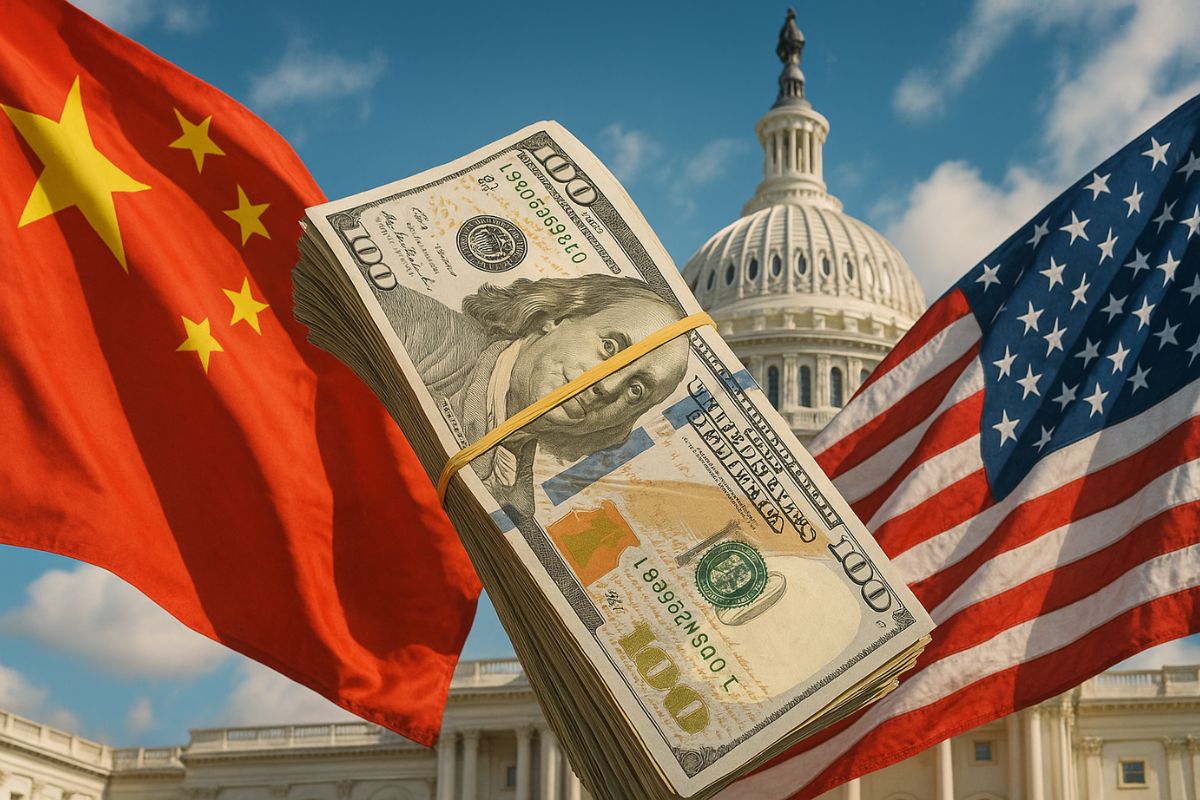
The Complex Relationship Between the Two Largest Powers in the World Shows That, Although China Is the Largest Foreign Creditor of the U.S., Its Economy Still Deeply Depends on American Consumer Appetite, Creating an Interdependence That Sustains Global Financial Balance
China Is the Largest Foreign Creditor of the U.S. and, paradoxically, the country that benefits the most from the strength of the American consumer market. This interdependence shapes one of the planet’s most strategic economic relationships, where the two largest powers need each other to sustain their own growth.
For decades, the Chinese model based on exports generated enormous trade surpluses, accumulating billion-dollar dollar reserves. Part of these resources was used to buy U.S. Treasury bonds, turning China into one of the main financiers of U.S. public debt.
How China Became a Creditor of the U.S.
China’s accelerated growth has been supported by a cycle of exports to the West.
-
Oil surged to $115 a barrel due to the war in the Middle East, and diesel in Brazil has already risen to R$ 7.45 per liter, while the United States…

-
Brazilian city bets on the business environment to generate jobs and attract investments in the energy sector — secretary reveals strategy at Macaé Energy 2026.

-
50 viaducts, 4 tunnels, 28 bridges, and 40 kilometers of bike paths: BR-262 in Espírito Santo will receive 8.6 billion reais for the largest engineering project in the state’s history, inspired by the Immigrant Highway in São Paulo.

-
Brazil produces too much clean energy and doesn’t know what to do with it: over 20% of solar and wind capacity was wasted in 2025 while investors flee and 509 renewable generation projects were abandoned in the last year.


Every dollar received from the sale of Chinese products was converted into international reserves, which in turn were invested in U.S. debt securities, considered safe and stable assets.
This movement gave China enormous influence over the American economy, while also strengthening the dollar against the yuan, making Chinese exports more competitive.
Although Japan has recently surpassed Beijing as the largest holder of bonds, China still holds about US$ 756 billion in Treasury securities, establishing itself as the second-largest foreign creditor of the country.
China’s Dependence on American Consumption
China’s economic success has been built on the ability to mass-produce for the foreign market, especially for the United States.
Chinese factories supply the American retail market with electronics, clothing, machinery, and components, boosting Beijing’s trade surplus.
This constant flow of exports has made American consumption an essential pillar of the Chinese economy.
In 2024, the U.S. trade deficit in goods with China was US$ 295.4 billion, revealing the weight of this relationship for both sides: while American consumers benefit from cheap products, the Chinese industry maintains its pace thanks to this demand.
The Delicate Balance Between Debt and Consumption
The apparent contradiction of being a creditor and dependent at the same time actually expresses a feedback cycle.
China lends to the U.S. by buying its debt securities; the U.S. uses this credit to maintain low interest rates and encourage domestic consumption; and this consumption, in turn, generates demand for Chinese products.
This arrangement has created an economic symbiosis that has sustained global growth for two decades.
However, it has also made both powers vulnerable: a drop in American confidence or a slowdown in Chinese industry could destabilize international markets.
What Each Country Gains From This Relationship
For China, the gains are clear: currency stability, financial security, and the maintenance of industrial jobs.
By keeping the yuan undervalued against the dollar, the country ensures competitiveness in exports and accumulates long-term, low-risk assets.
For the United States, the advantage lies in the ability to finance its debt at lower costs and continuous access to cheap products.
The flow of imported goods from China also helps to curb domestic inflation, even during periods of high demand.
Recent Changes and New Challenges
In recent years, trade and political tensions between Washington and Beijing have reconfigured this interdependence.
The trade war that began in 2018 and the increase in tariffs led to a slight reduction in trade volume, but did not eliminate the structural link between the economies.
China is now seeking to diversify its international reserves and reduce its dependence on the dollar, while also investing in technology sectors and new domestic consumer markets.
The United States, on the other hand, is trying to repatriate part of its industrial production and limit Chinese influence over critical supply chains like semiconductors and clean energy.
A Global Power Game That Exceeds Economics
The relationship between the two countries goes beyond the financial realm.
China’s economic rise has financed a military and technological modernization that challenges American hegemony in the Pacific and in sectors such as artificial intelligence and energy.
Meanwhile, the U.S. maintains the largest military budget in the world and tries to contain Chinese advancement through restrictions on strategic investments and exports.
Nevertheless, the economic dependence remains the link that prevents a complete break, as both know that a commercial collapse would affect the entire planet.









-

-

-

3 pessoas reagiram a isso.