





 Portuguese
  English
  Spanish
  3 min of reading
  5 comments


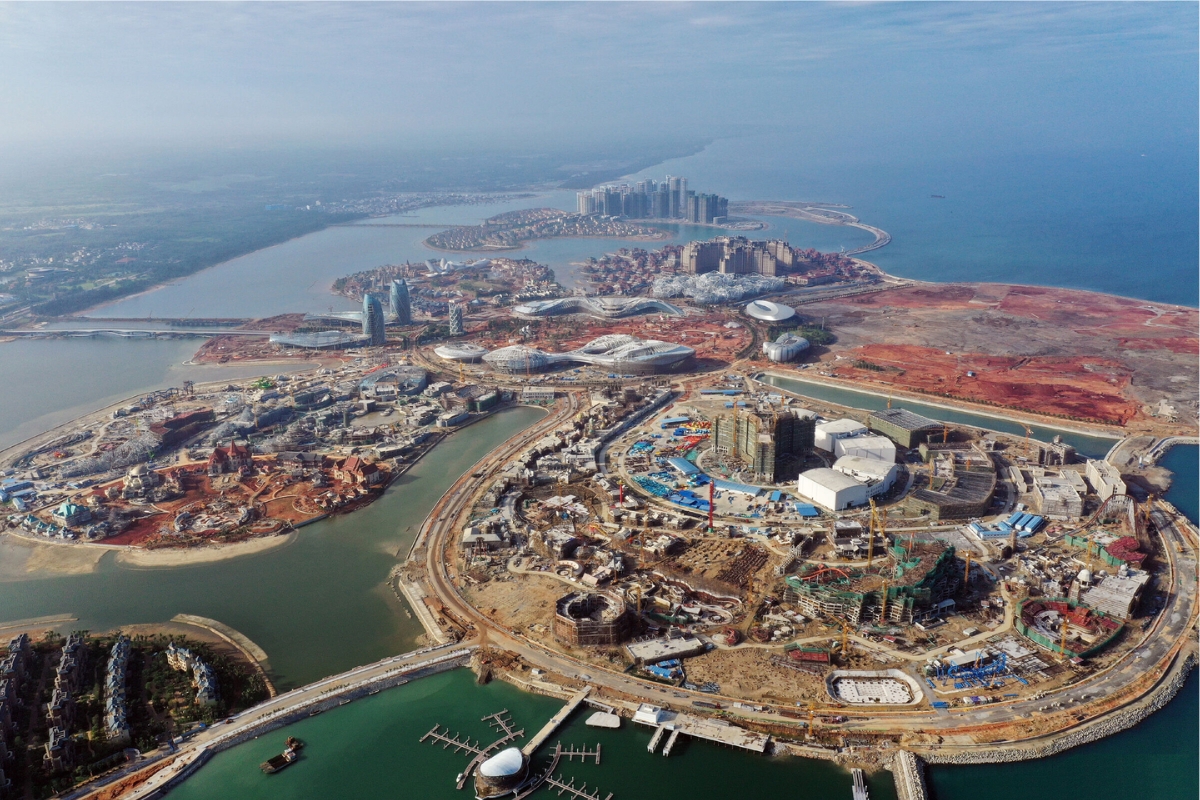


A $25 Billion Project Transforms China’s Coastline Into A Floating City With Futuristic Architecture, Bright Lights, And Structures That Seem To Defy Gravity
China is known for turning grand ideas into reality, and few projects represent this as well as Ocean Flower Island, an artificial island complex built on the coast of Hainan, which promised to be the “Eastern Dubai.” The project, envisioned by Chinese billionaire Su Shulin, began in 2012 and cost over $25 billion, becoming one of the largest urban constructions over the sea ever undertaken in Asia.
With a design inspired by a three-petal flower seen from space, the island was conceived to host resorts, theme parks, convention centers, museums, marinas, and luxury condominiums. Located in Danzhou, on the northern coast of Hainan, Ocean Flower Island covers an area of 381 hectares and was entirely built on reclaimed land.
A Technological “Flower” Over The Ocean
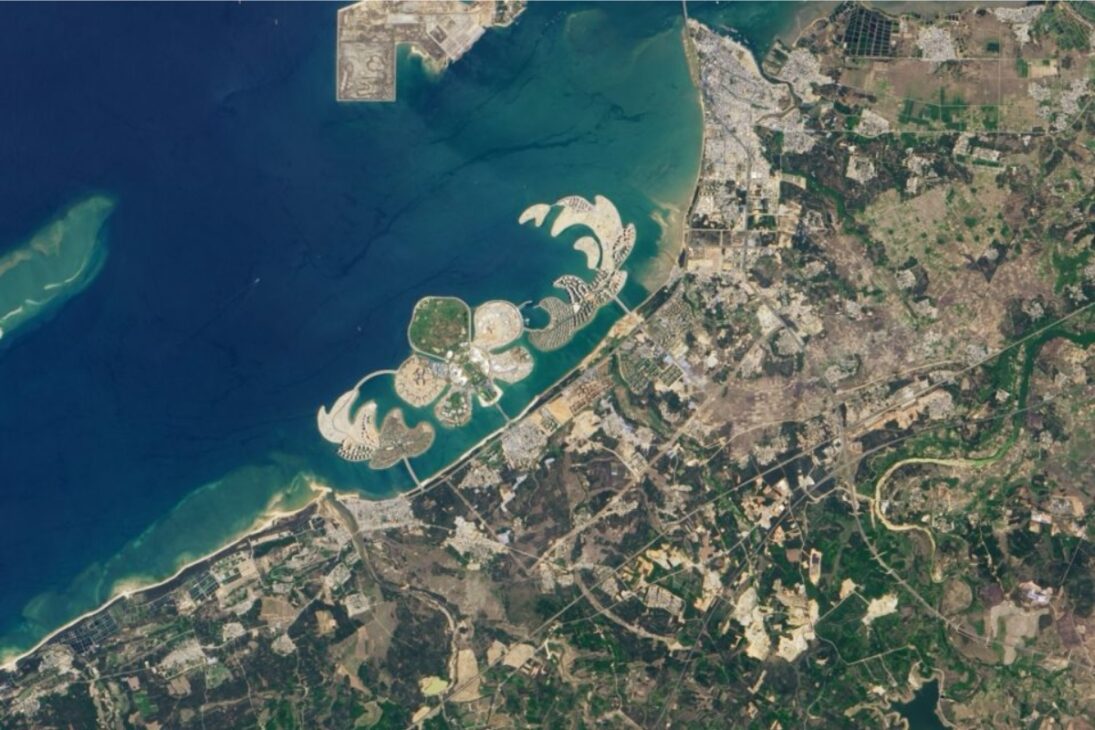
The engineering behind Ocean Flower Island is as bold as its visual concept. Each of the three islands is interconnected by bridges and equipped with underground drainage systems, deep foundations, and maritime barriers capable of withstanding typhoons and rising sea levels.
-
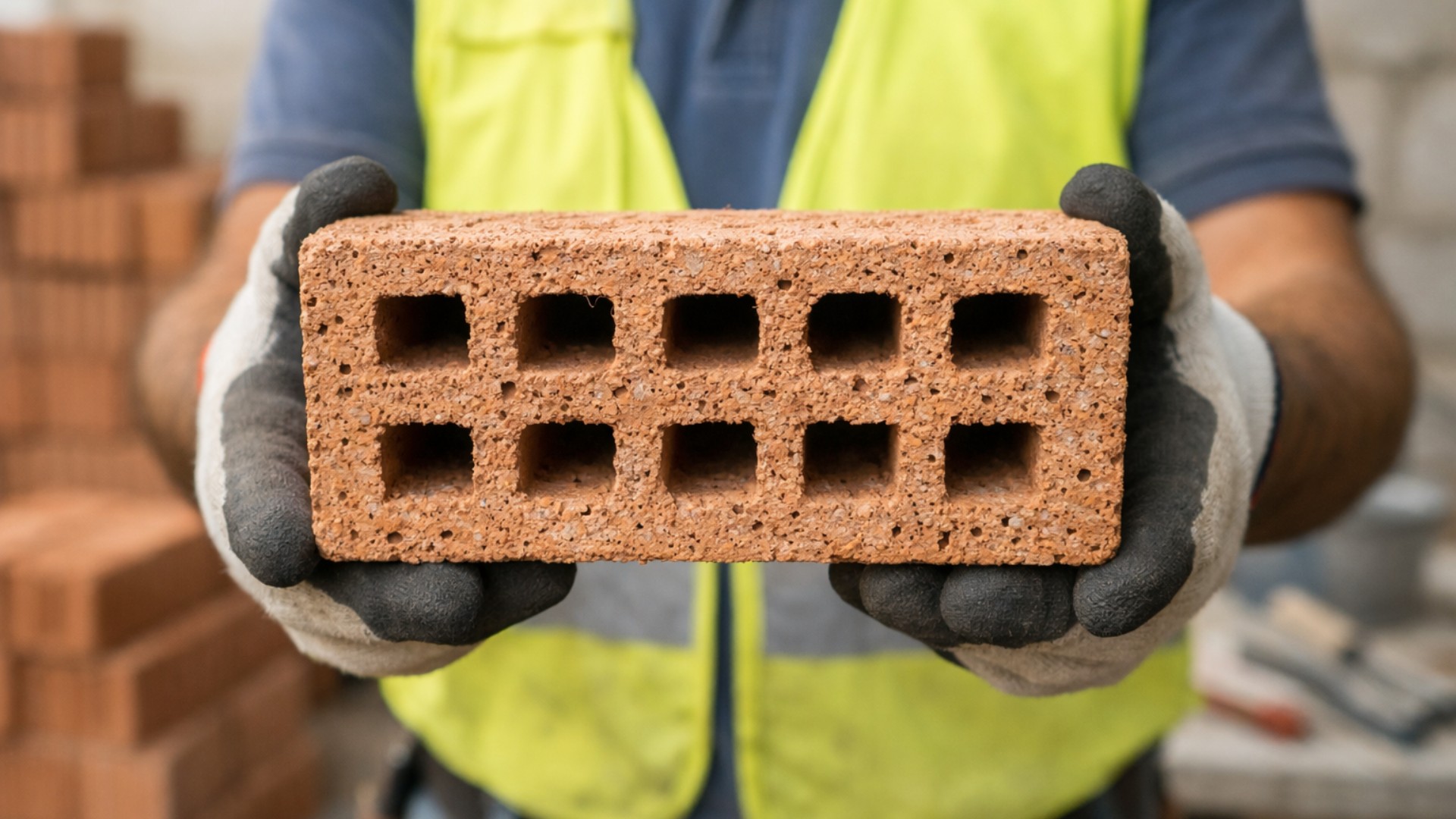
Scientists use sawdust mixed with clay to create a lighter brick, promising efficient thermal insulation and impressing by transforming waste into a solution for construction.
-
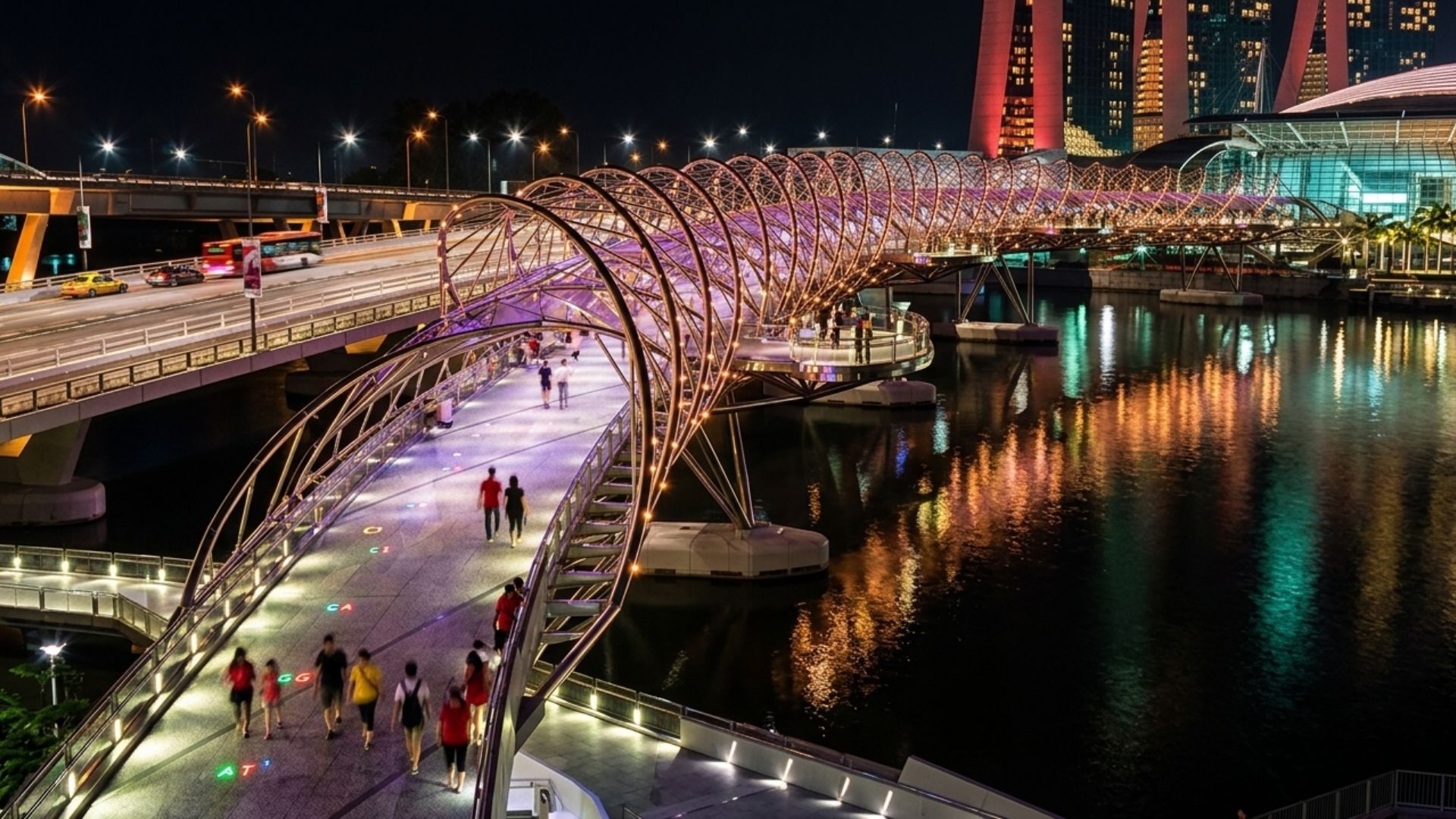
With a DNA shape, this bridge in Singapore draws attention in modern architecture and surprises tourists by transforming a simple crossing into an unforgettable visual experience in the urban heart.
-
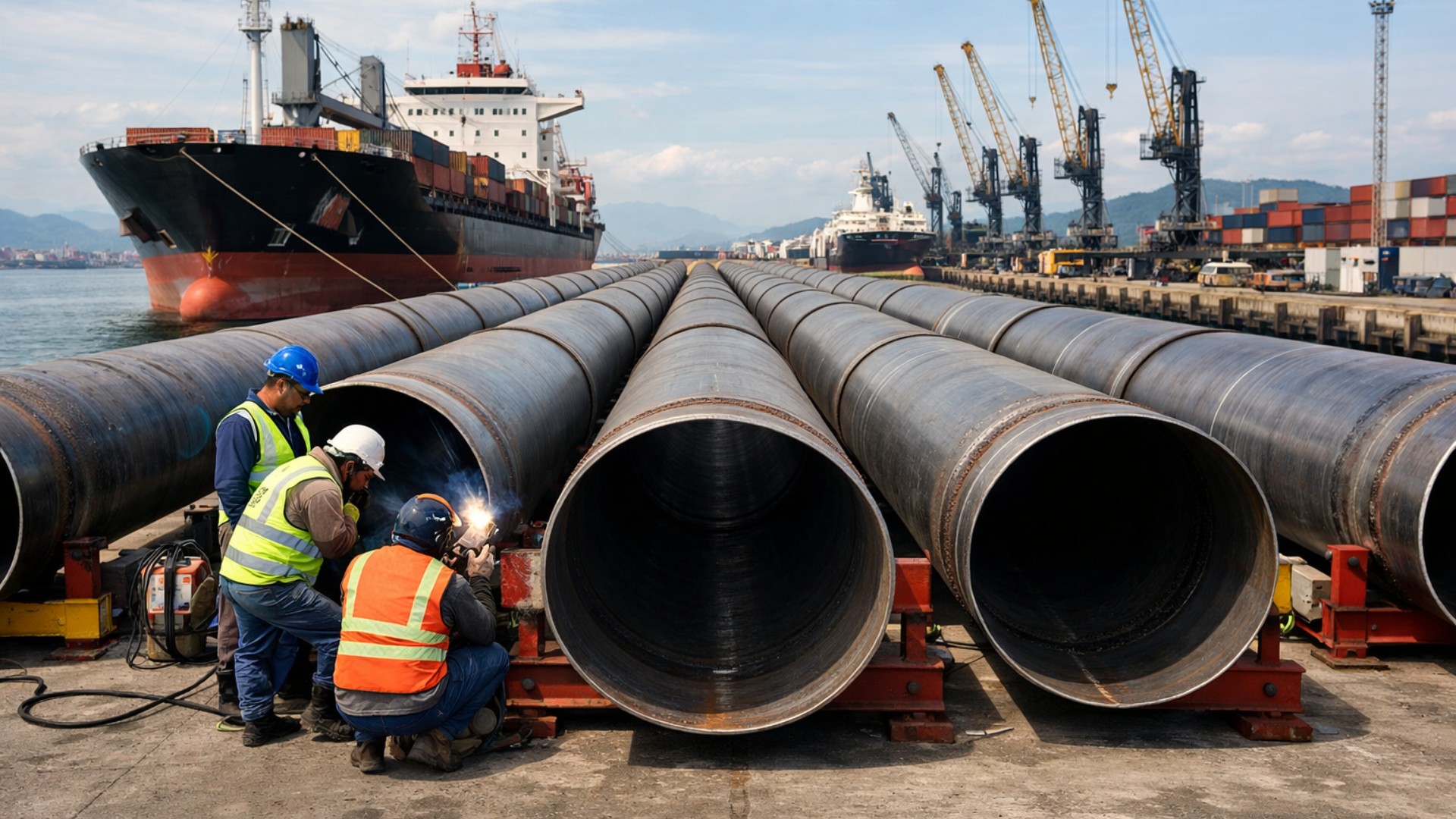
Giant underwater pipeline begins to take shape with a R$ 134.7 million project at the Port of Santos: the 1.7 km structure uses 12-meter and 700 mm pipes to supply water to 450,000 people in Guarujá.
-
A mason reveals a professional plastering technique that uses aligned guides and a 3-meter ruler to plaster an entire wall in up to 3 hours, without visible seams, with uniform thickness, perfect plumb, and a finish ready for painting without rework.


According to the China State Construction Engineering Corporation, responsible for most of the work, over 65 million cubic meters of sand and rock were used to form the foundations of the archipelago. The construction required the use of automated dredging platforms and geotechnical monitoring sensors to ensure stability in low-density marine soils.
The result is a landscape that blends futuristic architecture and tourist exuberance, with buildings that light up at night, creating a true floating city over the ocean.
Luxury, Tourism, And Environmental Controversies
When partially inaugurated in 2020, Ocean Flower Island was presented as a new international hub for tourism and business. The goal was to attract over 10 million visitors per year and transform Hainan, already known for its tropical climate, into a destination comparable to Dubai and Singapore.
However, the project was also the target of controversies. In 2021, environmental authorities in China ordered the suspension of part of the operations after discovering damage to coral reefs and changes in local sea currents. Some sections were demolished, and others underwent licensing review.
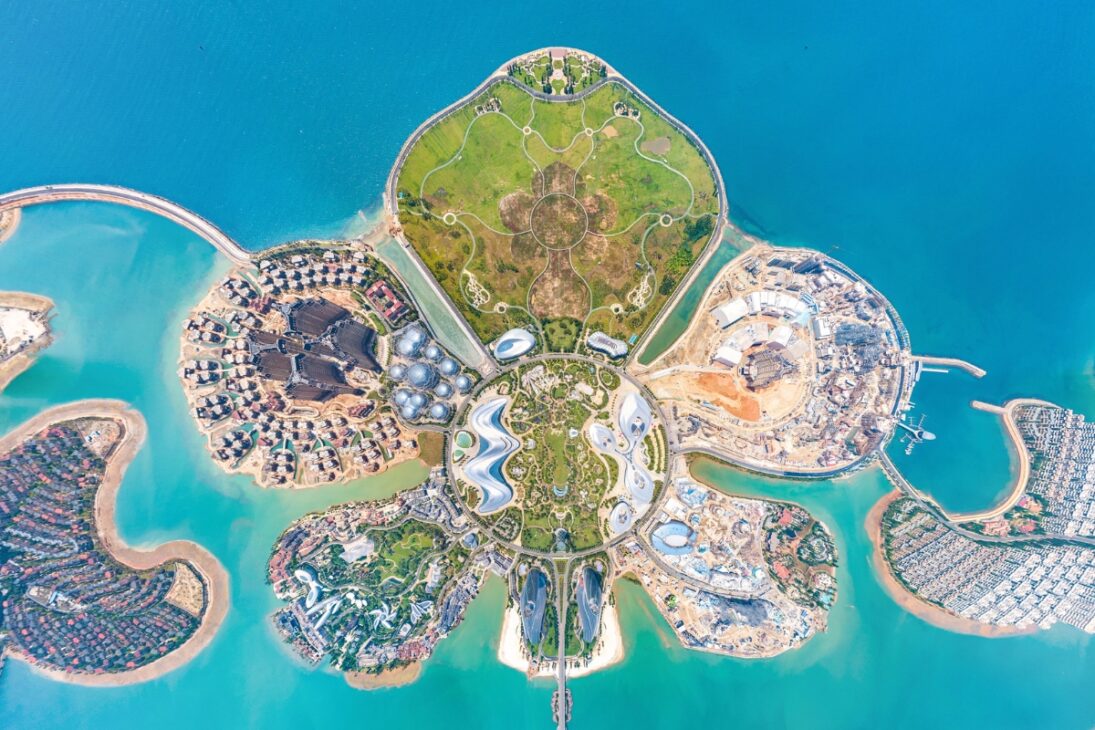
Photo: VCG / Getty Images – Editorial reproduction.
Despite the restrictions, the island remains one of the largest maritime engineering works in the world and a symbol of China’s ability to expand its urban frontiers into the sea.
The Uncertain Destination Of The “Eastern Dubai”
After the arrest of tycoon Su Shulin for corruption, the Evergrande group, which took over part of the project, faced the most severe real estate crisis in China’s history. This directly affected Ocean Flower Island, which has seen luxury properties stranded and tourist attractions with low occupancy.
Even so, the local government of Hainan is trying to revitalize the complex, offering incentives for high-end tourism, conventions, and entertainment companies. Recently, the island reopened with new hotels and an interactive maritime museum, keeping alive the ambition of transforming it into a global center for leisure and business.
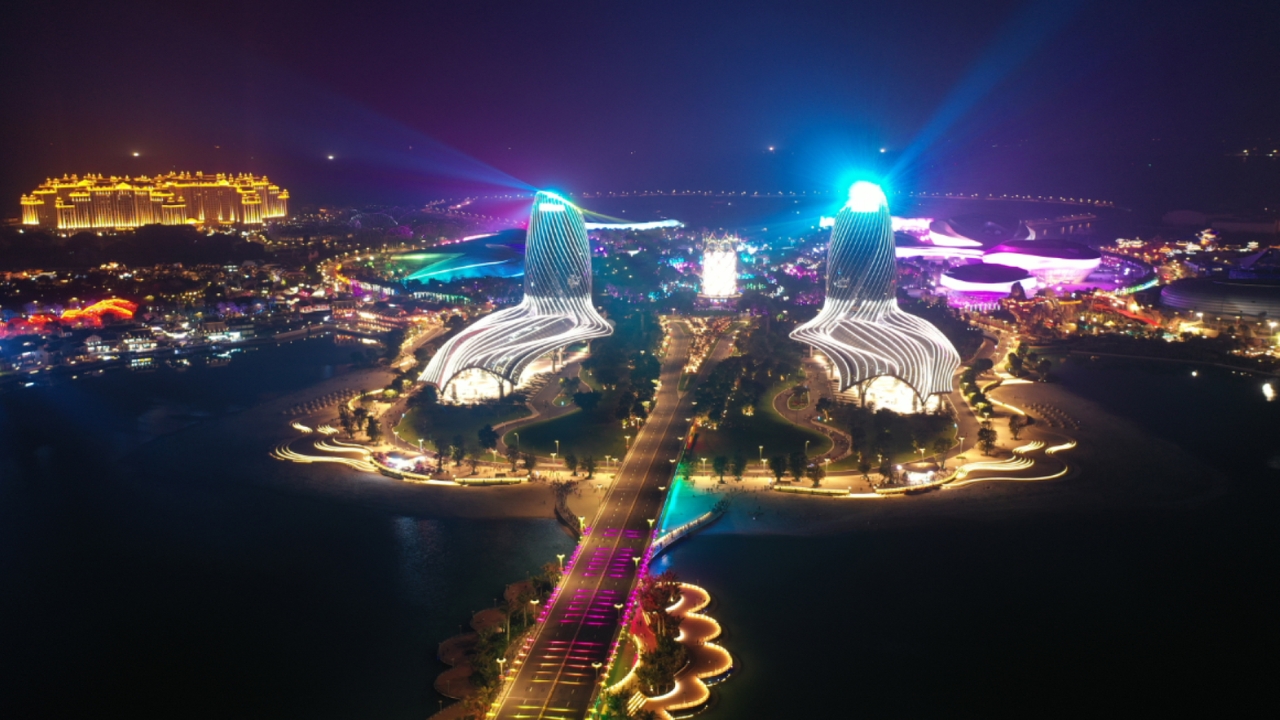
Photo: Imaginechina / VCG – Editorial reproduction.
The artificial island remains one of the most emblematic images of humanity’s ability to create cities where only the sea existed before, and perhaps also a reminder that every monumental dream comes at a price.
Would you visit Ocean Flower Island? Do you believe that artificial cities like this are the future or merely symbols of passing luxury? Share your opinion in the comments and participate in the discussion about the urban future of China.







Queria fazer aqui uma correção,na verdade o Projeto Líbio foi orçado em trinta e cinco bilhõese não como citei, porém em relação custo/ benefício o Líbio é de longe mais proveitoso…
A história da humanidade é repleta de obras monumentais,de civilizações passadas,logo nos dias atuais não podemos ignorar que muitas delas virão,coloca-las como necessárias.. talvez seja uma dúvida,isto é; há no mundo tantas necessidades básicas que propagadas irão certamente ofusca-las, não muito longe o governo Líbia faz uma obra capaz de transformar um País,gastando um milésimo do custo dessa obra,o que falta nossa sociedade é um mínimo no pensar ao próximo, daí talvez teríamos mais água e comida em vez de obras monumentais..
Apenas ostentação. Se o planeta não comporta o aumento populacional absurdo, vamos tirar terra de um lugar e mudar para outro, com imensuráveis danos ambientais, gastando milhões que poderiam melhorar a vida de milhares de pessoas, apenas para mostrar: olhem o nosso poder, o que podemos fazer… Admiro a China, mas não dá para fazer uma análise imparcial de um projeto como esse…