





 Portuguese
  English
  Spanish
  3 min of reading
  0 comments


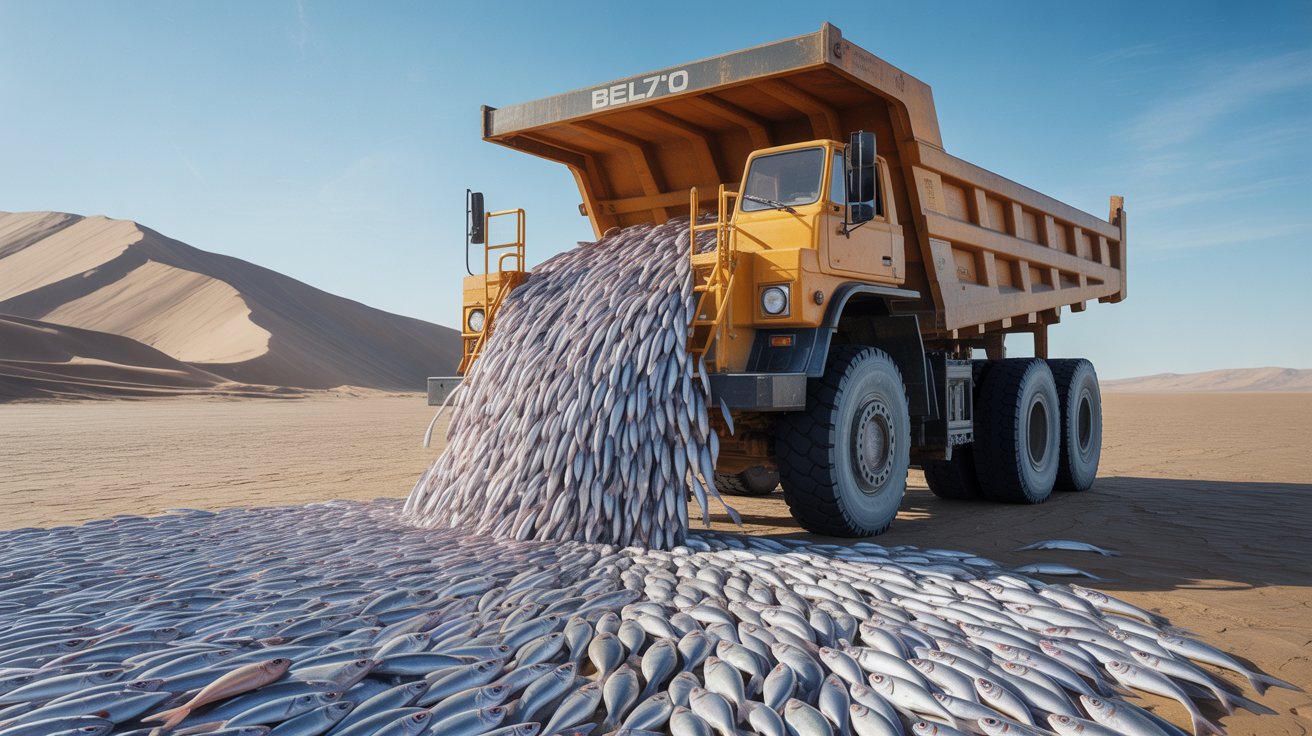
In the Xinjiang province, northwest China, millions of fish were released in desert areas of the Taklamakan in 2023. After a year, the experiment resulted in an unprecedented transformation, boosting the local economy and opening a new chapter in global aquaculture.
Located in the far west of China, Xinjiang is a region marked by mountains, dry plains, and the relentless Taklamakan Desert, considered one of the most inhospitable in the world. With less than 10% of habitable land and no access to the sea, the region is home to the city of Urumqi, known as the farthest from any ocean on the planet.
Despite the extreme conditions, China launched an experimental aquaculture project in the desert in 2023. The initiative involved the release of 100,000 marine fry into specially constructed tanks in saline and alkaline areas, where the water was previously deemed unsuitable for any type of cultivation.
The differentiating factor of the operation was the adaptation of the local water. Chinese scientists developed a solution containing calcium, magnesium, and potassium ions that transformed the saline water into an environment similar to the sea. The result: a 99% survival rate of the fish and accelerated growth of several marine species.
-
Inside an active volcano in Africa, residents use volcanic rocks to build houses in an impressive setting.

-
After 14 years of waiting, a rammed earth mansion built in 1702 in the North Zone of São Paulo will become a park with leisure facilities and green areas, with a million-dollar investment.

-
With 2 unfinished nuclear reactors, up to 25 billion in costs, and proven fraud, the Nukegate case has left 800,000 consumers still paying today for energy that will never be produced.

-
Larger than entire cities in Brazil: BYD is building a 4.6 km² complex in Bahia with a capacity for 600,000 vehicles per year, but the discovery of 163 workers in conditions analogous to slavery has shaken the entire project.

From Arid Soil to Cradle of Crustaceans and Pearls
In addition to fish such as sea bream and bass, the tanks began to house green crabs, shrimp, and even pearl oysters. In 2023, Bostan Lake set a record with over 4,000 tons of crabs harvested. In the same year, 2 million oysters were successfully introduced for pearl farming, taking advantage of the extreme climate and intense brightness of the region.
Today, six cooperatives are involved in seafood production in the desert. Only in 2023, Xinjiang produced 184,000 tons of fish, generating US$ 530 million. The official expectation is that the sector will reach a value of US$ 3 billion by 2025, with continuous growth in exports and online sales.
Even with the dry climate, Xinjiang has over 2,000 square miles of bodies of water, including lakes and reservoirs with natural organisms capable of feeding the fish. This factor reduced operational costs and increased production efficiency.
Economic Results and Future Projections
The economic transformation also impacted the income of local residents. Data from 2016 already showed that fishermen in the region earned, on average, the equivalent of R$ 2,300, surpassing the earnings of many rural workers. The expansion of the sector continues to generate thousands of jobs and widen the seafood e-commerce.
Digital sales of seafood grew 106% in 2023, reaching US$ 54 million. The products now supply restaurants in various provinces of China and even international markets, highlighting the logistical potential of the region despite its distance from the oceans.
The information was detailed in content from the channel Superior Forest, based on data from official Chinese agencies and local reports on innovation in aquaculture. The material highlighted the pioneering nature of the project and the technical developments that made it possible to create marine life in the heart of the desert.





-

-

4 pessoas reagiram a isso.