





 Portuguese
  English
  Spanish
  4 min of reading
  1 comment




China’s Strategic Interest Grows in One of Brazil’s Largest Energy Companies, Driving Negotiations That Could Transform the Nuclear Sector and Impact Brazil’s Energy Security with Billion-Dollar Investments and Unique Technological Advancements.
Eletrobras, Brazil’s largest electricity company, has caught the interest of major Chinese state-owned enterprises, which are now evaluating the possibility of acquiring a significant stake in Eletronuclear, the operator of the Angra 3 nuclear power plant.
According to the newspaper O Globo, sources close to the matter say that three Chinese giants – China National Nuclear Corporation (CNNC), China General Nuclear Power Group (CGN), and State Nuclear Power Technology Corporation (SNPTC) – have already shown preliminary interest.
The potential deal, which is in its early stages, involves the sale of approximately 36% of the voting capital and 68% of the total capital of Eletronuclear, estimated between US$ 1 billion and US$ 2 billion, according to sources who spoke on condition of anonymity.
-
A strong earthquake in Indonesia affects houses and schools, causes panic, triggers a tsunami alert, and records a rise in sea level of up to 30 centimeters in some areas.

-
Petrobras reaffirms its commitment to the market and ensures that it will carry out the energy transition safely to maintain national sovereignty.

-
Researchers discover a possible hydrogen deposit of up to 46 million tons beneath an ancient coal basin, and the volume could exceed half of the entire global production.

-
The Argentine government celebrates the lowest poverty rate in 7 years, but experts warn that the methodology has changed, real wages have fallen, unemployment has risen, and the number of people on the streets of Buenos Aires has increased by 57% since Milei took office.

In addition to the Chinese companies, other large international corporations in the energy sector may express interest, although no negotiations have been formalized at this time.
Contacted for comment, Eletrobras did not officially respond, and the Chinese state-owned enterprises also did not reply to the reporters’ inquiries.
This movement occurs amid a scenario of privatizations and reforms in the Brazilian energy sector, with federal government approval for the sale of the stake in Eletronuclear.
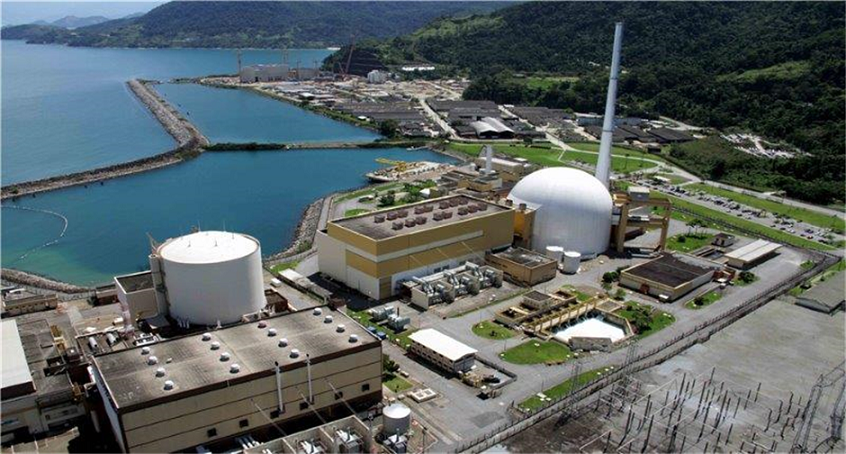
China’s Strategic Interest in the Brazilian Energy Sector
The Chinese interest in one of Brazil’s most strategic projects, the Angra 3 nuclear power plant, reflects China’s advance in seeking global investments in energy and nuclear technology.
Eletronuclear is responsible for the development of this power plant, whose construction schedule has already accumulated years of delays and high costs.
For China, the acquisition represents not only an entry into the Brazilian market but also an important step to expand its influence in Latin America, especially in sensitive sectors such as nuclear energy.
International experts point out that China has been massively investing in renewable and nuclear energy worldwide, consolidating its position as a global energy power.
In Brazil, China’s advance could generate significant impacts on energy policy and national security, making the topic delicate for the government and regulatory agencies.
How Eletrobras Faces Internal Challenges
In recent months, Eletrobras has been dealing with internal difficulties, such as resistance from minority shareholders to decisions made by the board and adjustments to government-proposed reforms to modernize the electricity sector.
Partial privatization of Eletrobras and the sale of strategic assets are part of a strategy to balance public accounts and attract private investments.
In February, the company and the federal government sealed an agreement at the Supreme Federal Court (STF) to end a legal dispute over the government’s role on the Board of Directors of the company after privatization.
The agreement provides that the government will have greater representation on the board, while Eletrobras is no longer required to invest resources in Eletronuclear for the construction of Angra 3, should the government decide to move forward with the project.
Nevertheless, the company reported that the financial guarantees of R$ 6.1 billion regarding loans already granted by BNDES and Caixa for Angra 3 remain valid and unchanged.
Additionally, Eletrobras stated that feasibility studies for the completion of the nuclear power plant are ongoing, even with the relaxation of the investment obligation.
Angra 3 and Its Role in the Energy Matrix
The Angra 3 nuclear power plant is an old project considered strategic for Brazil’s energy matrix, which seeks to diversify its sources and reduce dependence on hydropower.
Expected to increase the installed capacity in clean energy, Angra 3 faces technical and financial challenges since its conception, with delays and controversies over the past decades.
Experts emphasize that the entry of foreign investors, especially from countries with nuclear expertise like China, could accelerate the completion of the project and bring advanced technology to Brazil.
On the other hand, there are concerns regarding energy sovereignty and national security, given that control of a nuclear power plant is a sensitive topic involving strategic and geopolitical interests.
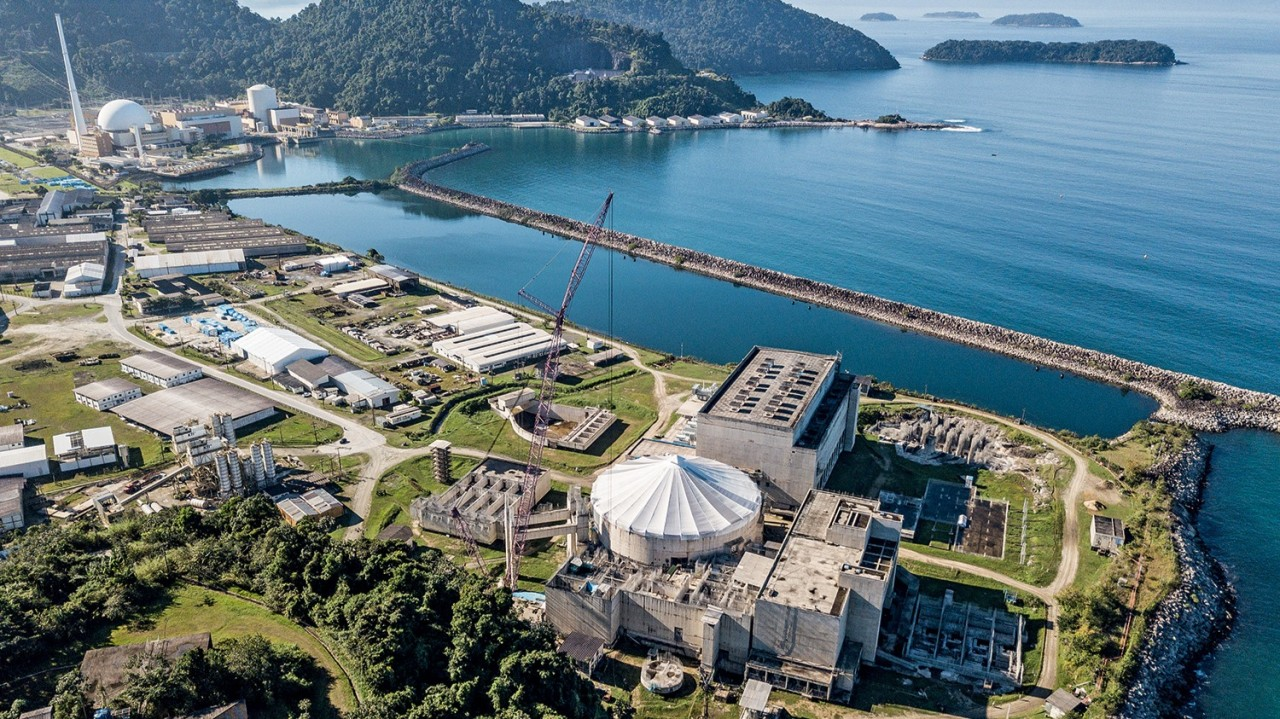
The Impact on the Future of the Brazilian Energy Sector
The potential entry of Chinese state-owned enterprises into Eletronuclear is part of a larger movement toward the internationalization of Brazil’s energy sector.
According to analysts, the Chinese presence could mean more investments and technological modernization, but it also increases dependence on foreign capital in critical sectors.
Brazil is facing a dilemma between attracting resources to develop essential projects and preserving control over strategic assets.
Energy policy experts highlight that the balance between these factors will be crucial for the success of reforms and for ensuring supply security in the country.
The question now is: to what extent should Brazil open its energy sector to foreign capital, especially from countries with geopolitical interests like China?
Do you think that Chinese investment in Eletrobras could be positive for Brazil or does it represent a risk to national sovereignty? Leave your opinion in the comments!







A empresa mais qualificada para obter a Eletronuclear é a EDF.