





 Portuguese
  English
  Spanish
  5 min of reading
  0 comments


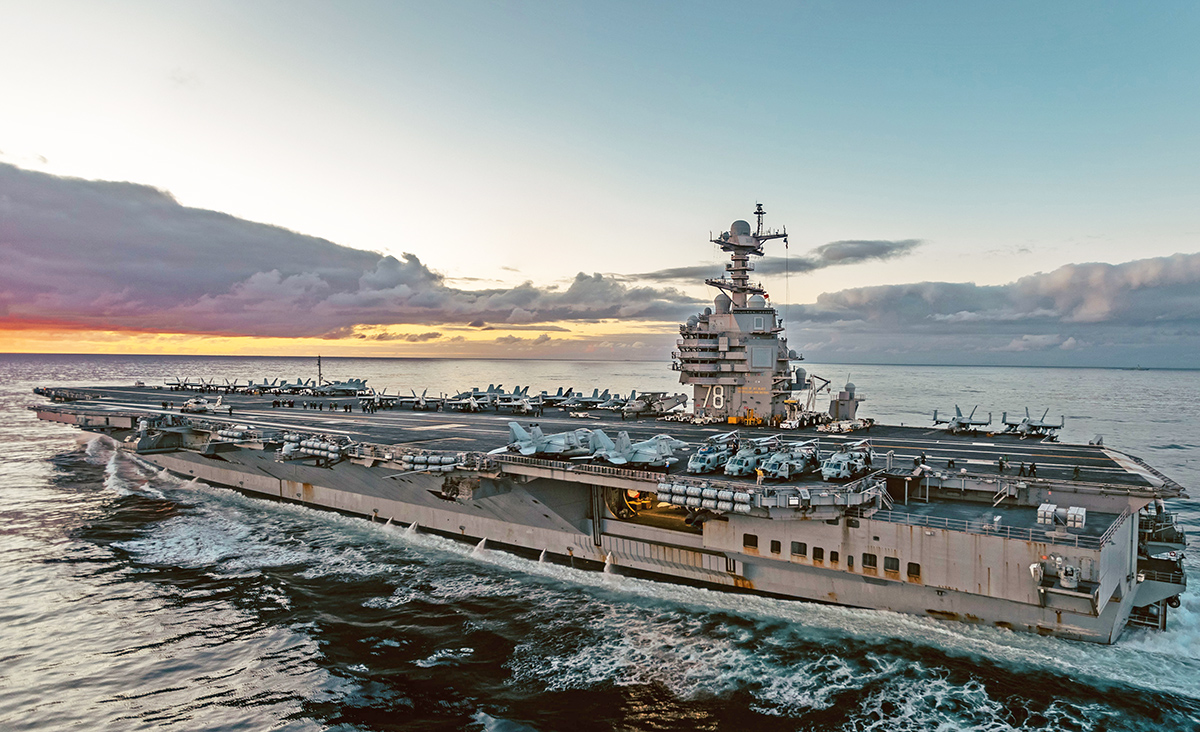
One Aircraft Carrier Brings Nuclear Power, New Operation Architecture, and Systems That Changed Deck Routine, in a Project That Became a Reference in Naval Modernization and Concentrates Attention From Military, Industry, and Analysts.
USS Gerald R. Ford and the New Generation of Aircraft Carriers
The ship described as a “floating city” is the USS Gerald R. Ford (CVN-78), an aircraft carrier that leads a new class of the United States Navy and incorporates significant changes compared to previous models.
The design replaced part of the architecture used for decades in Nimitz-class supercarriers and was conceived to operate with more electrical generation, lower personnel requirements, and greater capacity for air launches throughout the day.
The comparison to a city is not limited to the size of the vessel.
-
Something is happening around the Earth: Inside the huge explosion of fireballs in 2026

-
A hot air bubble coming from Argentina expands over Brazil, causing thermometers to exceed 38 degrees with a thermal sensation of 40 degrees in late March, affecting 6 states at once.

-
The radish leaf that almost everyone throws away has more polyphenols, flavonoids, and fiber than the consumed root, and a 2025 study showed that the leaf contains compounds that protect the intestine, combat inflammation, and may inhibit the growth of cancer cells.

-
A planet that seemed to defy the laws of physics has intrigued scientists for decades, until the James Webb revealed what is really affecting Saturn’s rotation.


The aircraft carrier concentrates propulsion, power production, air traffic control, radars, defense systems, aircraft maintenance, and logistical support on a single platform.
The U.S. Navy itself presents the Gerald R. Ford class as an asset aimed at crisis response and power projection, while Navsea, the agency responsible for the program, states that the ship represents the broadest design change in aircraft carriers since the 1960s.
A1B Reactors and the Ship’s Electric Capacity
At the center of this system are two A1B nuclear reactors, developed to deliver more electricity than the previous generation.
The Navy reports that the class was designed with fully electric utilities, which eliminated several steam lines present in ships of this size.
Official program documents also note that the vessel was designed to have more available power for onboard systems and for new embedded technologies.
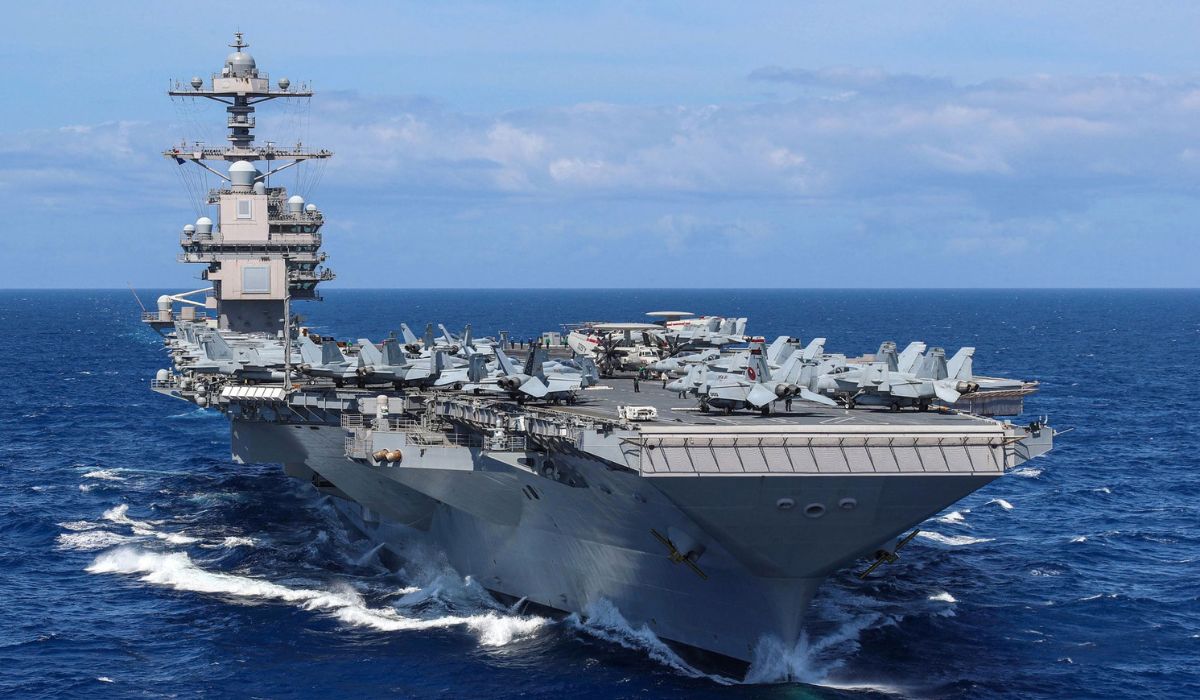
This change not only serves to move a hull of over 300 meters.
The electrical capacity powers radars, sensors, weapon elevators, workshops, communications, landing systems, and, above all, the equipment that has become the main technological hallmark of the class: the EMALS, short for Electromagnetic Aircraft Launch System.
Nuclear power was already employed in American aircraft carriers, but the Gerald R. Ford class was designed to increase the available electrical margin on board.
According to Navsea, the ship delivers approximately three times more electrical generation capacity than the previous class.
This data is cited by agencies linked to the program as one of the factors that allows accommodating more demanding systems and preparing the platform for future technologies.
Autonomy is also one of the most mentioned points when the project is discussed, although this data tends to appear simplified in promotional texts.
In institutional materials from the U.S. naval sector, the cycle of these aircraft carriers is associated with a lifespan of 50 years, with nuclear refueling in the middle of that period, around 25 years.
Therefore, the more precise formulation is to say that the ship can operate for a long interval before mid-life refueling.
In addition to autonomy, the extra generation of energy reduces limitations associated with ships designed in a different technological context.
The U.S. Congress noted, even in the early phase of the program, that the Ford-class aircraft carriers were developed to support greater electrical demands and to operate various new systems in an integrated manner.
In practice, this expands the platform’s adaptability to advanced sensors, automation, and equipment that requires higher electrical loads.
EMALS and the Electromagnetic Launch of Aircraft
The replacement of steam catapults with EMALS is one of the most well-known differences of the Gerald R. Ford.
Instead of using pressurized steam to propel the aircraft, the system employs electromagnetic technology.
General Atomics, responsible for the equipment, reports that the system enhances launch operational capacity, reduces personnel requirements, and can work with a varied weight range of aircraft.


According to open technical descriptions and reference documents from the program, the acceleration tends to be smoother than that obtained with steam catapults.
This point is noted by industry sources as a factor that reduces stress on the aircraft structures.
The effect is relevant for both embarked fighters and platforms with different characteristics, including lighter or heavier aircraft within the deck operation spectrum.
Another important effect appears in the pace of operations.
U.S. Congressional documentation linked to the Gerald R. Ford class states that the ship’s design sought to allow 33% more flight sorties per day compared to the Nimitz class.
This performance does not depend only on EMALS but also on changes in the deck, internal flows, and the movement of weapons and equipment.
The new launch system, therefore, does not act in isolation.
It integrates a set of changes that include the ship’s internal arrangement, deck reorganization, and increased electrical capacity.
It is this combination that, according to program documents, supports the proposal of a more intense air operation with fewer restrictions than in previous models.
Less Crew and New Internal Organization
The modernization was not limited to aircraft launches.
The U.S. Navy reports that the Ford class combines the new A1B reactor, EMALS, the advanced aircraft recovery system, and more modern radars with the goal of reducing personnel requirements.
The institutional material also claims that the class is expected to save over US$ 5 billion in total ownership costs over 50 years compared to the Nimitz class.
Part of this projected savings results from reduced crew size and reorganization of internal spaces.
Congress documents and specialized reports about the program indicate that the vessel was designed to operate with several hundred fewer sailors than ships of the previous generation.
At the same time, the island of the aircraft carrier and the deck arrangement were repositioned to favor the flow of air operations and maintenance.
This redesign helps to explain why the Ford class is treated, by official sources and naval industry analysts, as a significant technological shift.
The vessel does not rely on a single new piece of equipment, but rather on the combination of more powerful reactors, expanded electrical architecture, new launch and recovery systems, more modern sensors, and greater embedded automation.
The result, according to the Navy and program documents, is a platform designed for more intense operational cycles.
The Impact of the Ford Class on Naval Strategy
The USS Gerald R. Ford has also spent years under scrutiny for delays and difficulties in integrating new technologies.
Nevertheless, the U.S. Navy maintains that the ship was designed to support a modern air wing and systems that require more energy and connectivity.
In this context, the aircraft carrier is presented as a transitional step between the traditional model of naval projection and a phase where automation, more sophisticated sensors, and new energy demands hold greater weight.
For this reason, the project’s impact goes beyond the image of a large ship that launches fighters by magnetism.
What is at stake, according to official materials and public program documents, is the attempt to redefine the operational basis of a naval combat group for the coming decades, with a platform designed to incorporate technological changes without fully depending on the Cold War design logic.






-

2 pessoas reagiram a isso.