





 Portuguese
  English
  Spanish
  4 min of reading
  7 comments


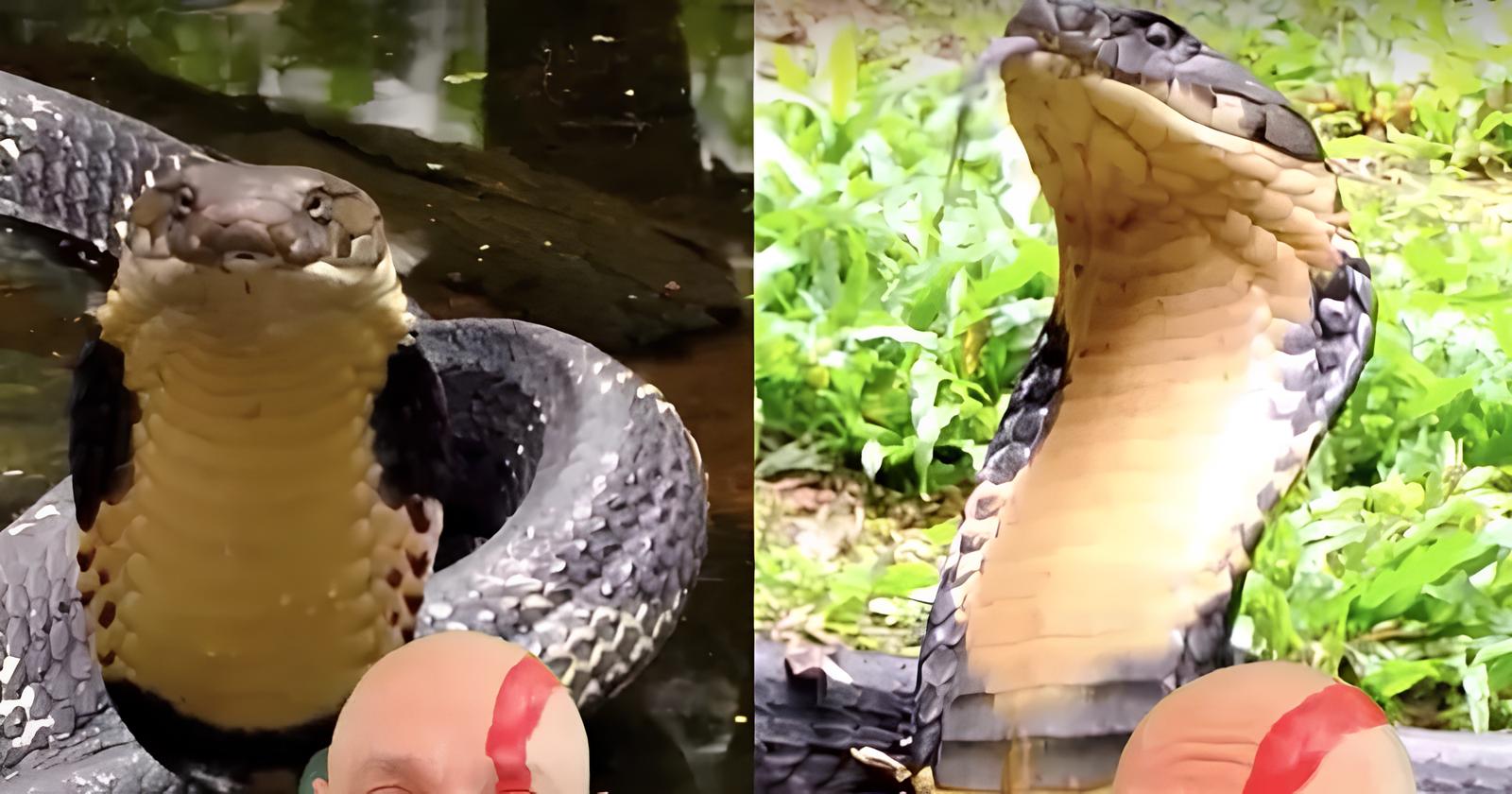


Reaching Up to 6 Meters, Domination Over Other Snakes, and One of the Highest Venom Loads in the Animal Kingdom, the King Cobra Is the Largest Venomous Snake Ever Documented.
The largest venomous snake ever recorded by science did not live in prehistory, is not extinct, and does not rely on fossils to impress. It still exists today, inhabits forests in southern and southeastern Asia, and combines three extremely rare characteristics in the animal world: colossal size, specialized predatory behavior, and an unprecedented venom delivery capability among modern snakes. This is the king cobra (Ophiophagus hannah), an animal that challenges the common notion of biological limits among venomous reptiles.
Unlike many snakes famous for their toxicity, the king cobra stands out not only for the chemical potency of its venom but also for its physical scale. Confirmed specimens exceed 5.7 meters in length, and reliable historical records indicate individuals close to 6 meters, making it larger than any other known venomous snake, alive or extinct.
The Anatomy of a Venomous Colossus
The king cobra is an animal of unusual proportions. Its long, muscular, and relatively slender body can reach over 12 kilograms, with a diameter thick enough to rival large pythons.
-
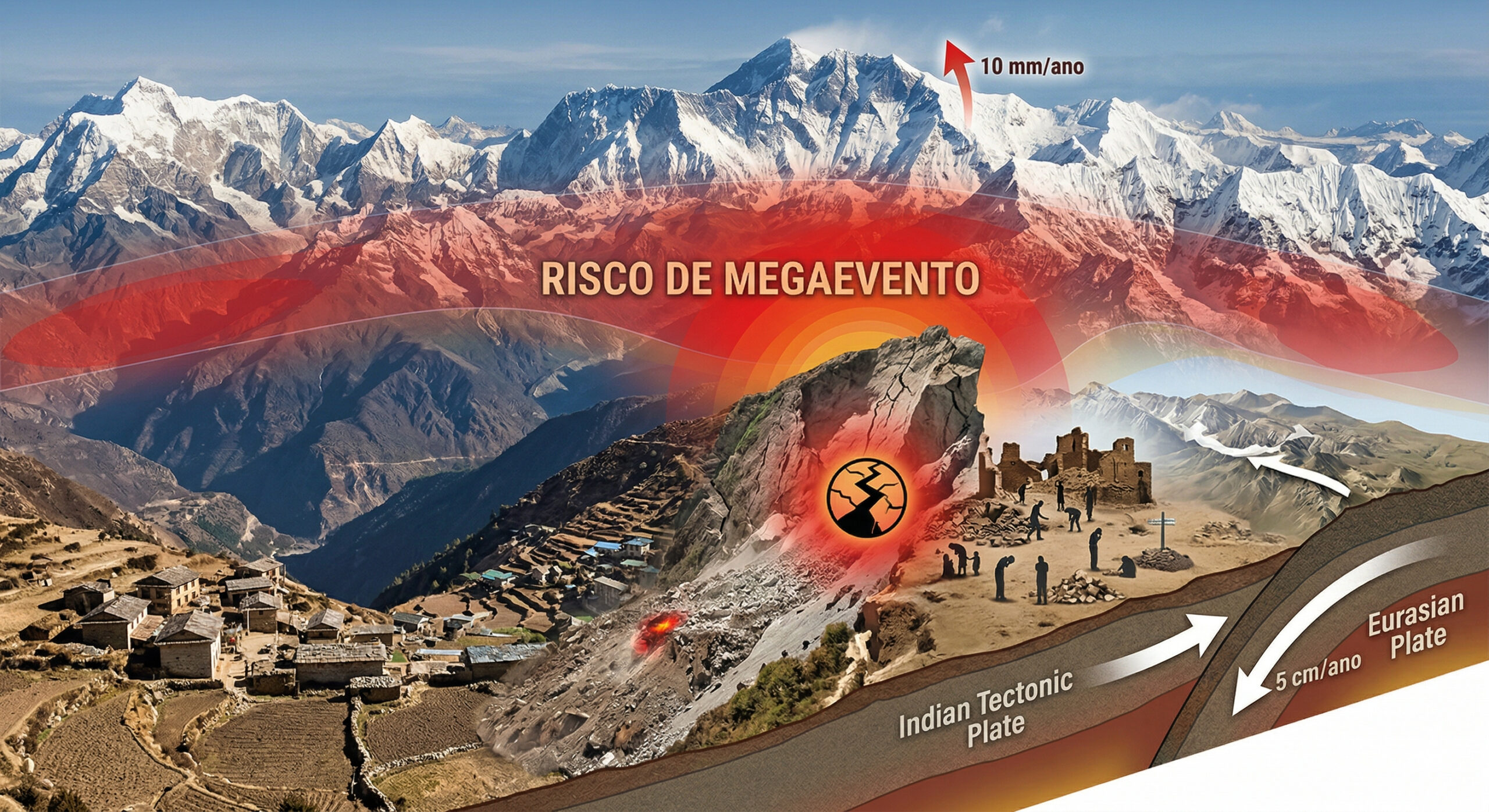
The Himalayas continue to grow to this day, with tectonic plates advancing 5 cm per year, mountains rising up to 10 mm annually, and the 2015 earthquake that killed 9,000 people may have increased the risk of an even larger seismic mega-event.
-
At an altitude of 400 km by astronauts from the International Space Station, Paris transforms at night into a golden mesh so precise that it reveals the outline of the Seine River, avenues, and entire neighborhoods like a luminous map drawn over the Earth.

-
iPhone 17 reaches historic low price with 256 GB, 120 Hz display, and drops to R$ 5,703 on Shopee, featuring A19 chip, dual 48 MP cameras, battery life of up to 30 hours, and advanced AI features.

-
Trip to Mars getting closer: Pulsar Fusion, from the UK, advances with plasma ignition in fusion engine and could drastically reduce space travel time, making crewed missions faster, safer, and economically viable.


Unlike pythons and boas, however, it does not rely on constriction to overpower its prey — its main arsenal is venom, delivered with precision through long, agile fangs.

One of the most impressive aspects is its defensive and offensive posture. The king cobra can rise up to one-third of its body, easily reaching 1.5 to 1.8 meters in height, which puts it at the level of an adult human’s chest or face.
This elevation is not just theatrical: it allows for better visual control, greater strike reach, and psychological dominance over threats.
The head is large, with relatively developed eyes for a snake, favoring active behavior and diurnal hunting, which is rare among large venomous snakes.
The Highest Venom Load Among All Snakes
Although it does not possess the most toxic venom in molecular terms, the king cobra compensates with volume. Herpetological studies indicate that a single bite can inject up to 500 to 600 milligrams of venom, a quantity significantly higher than most known venomous snakes.
This venom is predominantly neurotoxic, affecting the central nervous system, neuromuscular transmission, and respiration. Scientifically, it represents a load capable of causing rapid neuromuscular failure in large prey, including other large reptiles.
It is precisely this combination — large body + large toxin volume — that makes the king cobra a unique case in modern biology.
A Specialized Predator That Hunts Other Snakes
The very scientific name of the king cobra reveals its extreme specialization: Ophiophagus hannah literally means “snake eater.”
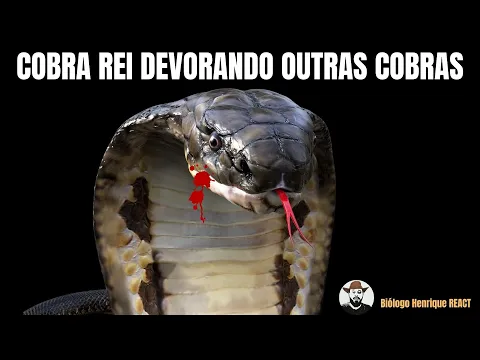
Unlike other venomous snakes that primarily feed on rodents, birds, or amphibians, the king cobra’s diet is based on other snakes, including venomous species.
It hunts king cobras, kraits, juvenile pythons, and even cobras, using speed, spatial intelligence, and physical power. This behavior requires not only resistance to the venom of other species but also fine control of its own toxin to neutralize equally dangerous prey quickly.
This dominance over other predators places the king cobra at the absolute top of the food chain among snakes.
Geographic Distribution and Extreme Habitat
The king cobra inhabits a vast region of Asia, including India, Nepal, Bangladesh, Myanmar, Thailand, Malaysia, Indonesia, Vietnam, and southern China.
It primarily lives in dense tropical forests, bamboo areas, mangroves, and mountainous regions with good vegetation cover.
Despite its size, it is a relatively discreet animal, avoiding urban areas whenever possible. However, human encroachment on forests has increased occasional encounters, contributing to its mythical and often exaggerated reputation.
Intelligence and Behavior Rare Among Snakes
Another factor that distinguishes the king cobra is its unusual cognitive behavior. It demonstrates:
- Territory recognition
- Active pursuit capacity
- Spatial memory
- And even parental behavior, something extremely rare among snakes
Females build leaf nests to protect their eggs and stay nearby until hatching, defending the area against intruders — a behavior practically nonexistent in other venomous snakes.
Comparison With Other Famous Snakes
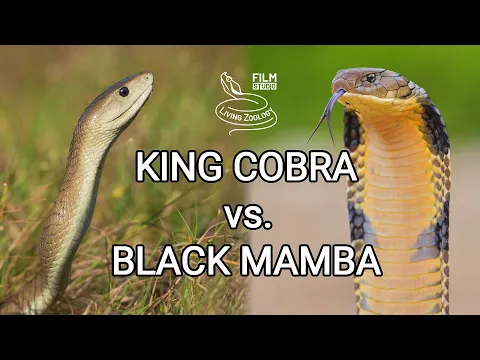
When compared to other known snakes, the king cobra’s superiority in scale becomes evident. The black mamba, for example, is extremely fast and neurotoxic but rarely exceeds 4.3 meters. The cobra is iconic for its defensive posture but is much smaller. Meanwhile, pythons and anacondas, although larger in length and weight, do not possess venom.
Thus, the king cobra occupies a unique space: it is the largest venomous snake that the Earth has ever produced, with no direct equivalents in known history.
A Biological Limit Still Alive
Unlike many natural colossi that we only know through fossils, the king cobra represents something even more impressive: an extreme biological limit that remains alive. It is proof that modern nature still hosts organisms capable of rivaling, in scale and complexity, with giants from the prehistoric past.
Its size, venom load, specialized behavior, and intelligence position the king cobra not just as a statistical record but as one of the most extraordinary animals ever documented by modern science.
And perhaps the most impressive part is exactly this: it is still there, silent, dominant, and perfectly adapted, reminding us that not all giants are left in the past.








Also found in the philippines along with philippine spitting cobra.
The King Cobra is not existing in Srilanka. We have other species of snakes of venomous and non venomous . So I learned many unknown details about this marvellous reptile . I believe , I can facilitate the minds of our young generation .
It seems to. be,A good app