





 Portuguese
  English
  Spanish
  4 min of reading
  0 comments


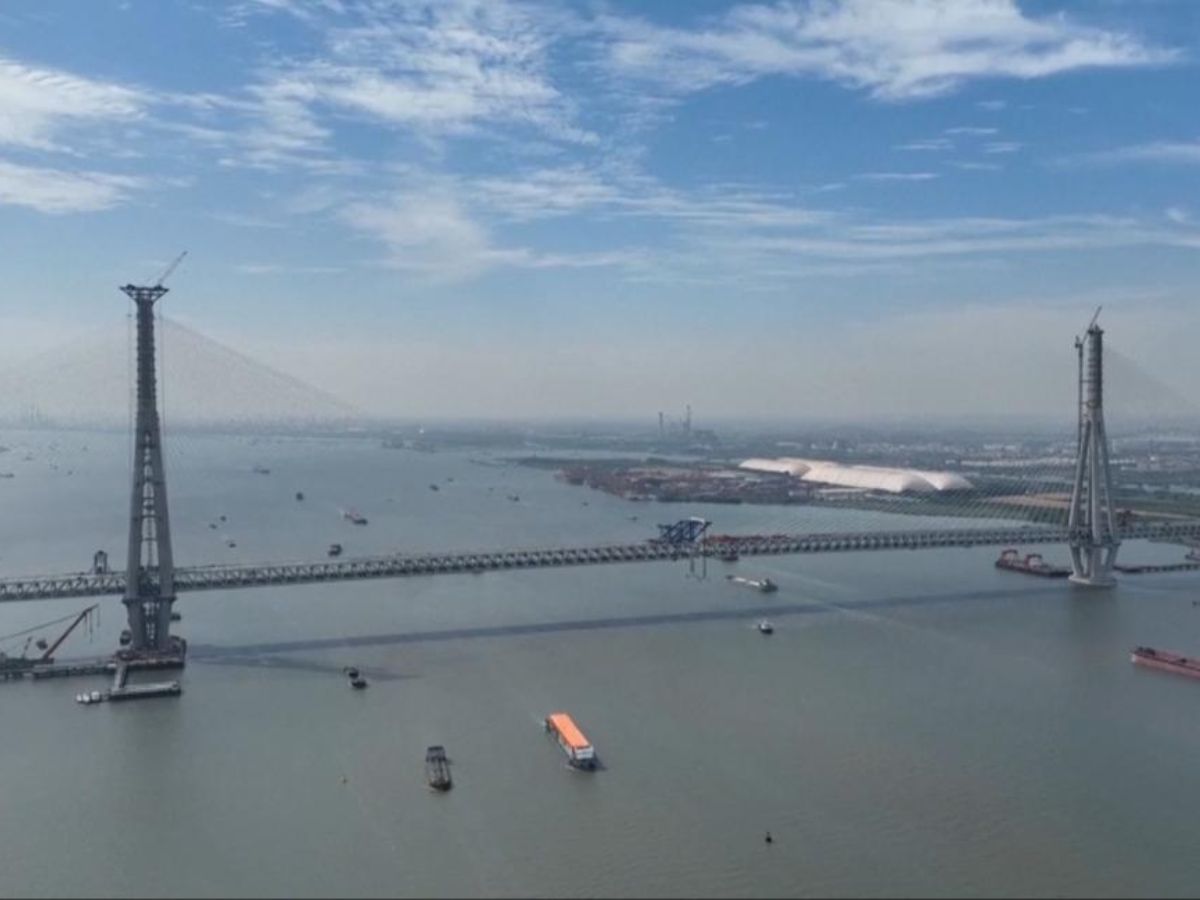
With Towers of 352 Meters and a Record Span, the Construction of the Changtai Bridge over the Yangtze River Is in the Final Stretch, Promising to Revolutionize Transportation in the Economic Heart of China
This article delves deeply into the construction of the Changtai Bridge, detailing its record-setting specifications, the technological innovations employed, and the impact this monumental work will have on regional development and global engineering.
In Jiangsu Province, eastern China, a major infrastructure project is redefining the limits of engineering. The Changtai Bridge over the Yangtze River, a vital economic and cultural artery, emerges as a symbol of the country’s modernization and ambition. Its main function is to establish a crucial link between the cities of Changzhou and Taizhou.
The Strategic Vision Behind the Changtai Bridge
The primary goal of the Changtai Bridge is to create a vital nexus between the cities of Changzhou and Taizhou, drastically reducing travel time between them from about an hour and a half to approximately 30 minutes.
-
A retired IT professional built a 22-meter boat in his backyard in Oklahoma with a school bus engine, light pole masts, and handmade watertight doors to become the redneck version of Jacques Cousteau.
-
China is building a city in Brazil: a complex with an investment of R$ 5.5 billion comes to light, but allegations involving workers draw attention.
-
While Argentina buys old war equipment, Brazil is keeping an eye open and joins the select group of nations with advanced military technology by investing $5.2 billion, producing 36 Gripen fighters in the country, and reducing operational costs.

-
Brazil on alert? Why invading Brazil is a NIGHTMARE for the USA: 8.5 million km², 213 million inhabitants, Amazon covering 60% of the territory, trillion-dollar war, and resistance that even 13,000 aircraft could not control.

The project, an investment of US$ 4 billion, aligns with China’s national strategies for the development of the Yangtze Economic Belt and integration of the Yangtze River Delta.
One of its most innovative features is its design as the world’s first river-crossing channel to integrate, within a single structure, an expressway, an intercity railway, and a regular highway.
This “Trinity” concept represents a significant advancement in transportation infrastructure planning.
The Specifications That Challenge the Limits
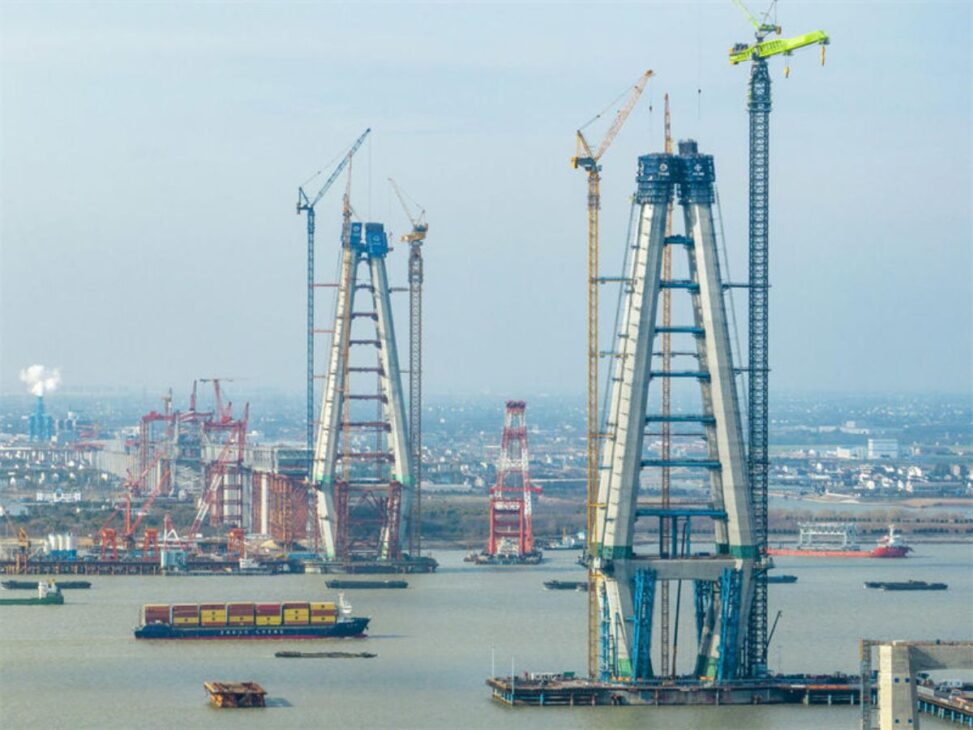
The Changtai Bridge is an engineering complex with a total length of 10.03 km. Its specifications are superlative and set new global standards.
The Record-Breaking Main Span: The cable-stayed bridge has a main span of 1,208 meters, the largest in the world for a bridge that carries both road and rail traffic.
Iconic Towers: The main towers, designed in a diamond shape, reach a height of 352 meters, making them the tallest cable-stayed bridge towers in the world.
Multimodal Deck: The bridge features a two-level design. The upper deck accommodates a six-lane expressway, while the lower level houses a four-lane highway and two intercity railway lines.
In addition to these, the project claims other records, such as the steel truss arch bridge with the largest span in the world (Lu’anzhou Bridge, 388 meters).
The Saga of the Construction of the Changtai Bridge
The construction of the Changtai Bridge officially began in October 2019, with a planned duration of five and a half years.
The completion and opening for traffic are scheduled for the first half of 2025. By mid-2025, the construction of the imposing main towers, exceeding 350 meters in height, is being finalized.
To adhere to such an aggressive timeline, cutting-edge construction technologies have been employed:
W12000-450 Tower Crane: The world’s first rotary tower crane at the level of 10,000 ton-meters, custom-made for the project.
Intelligent Cofferdam Robot: A pioneering robot in China, which significantly reduced foundation construction time by operating in murky waters for real-time monitoring.
Precision Engineering: The closure of the main beam was achieved with an error of less than 2 mm, a precision feat for a structure of this scale.
The Changtai Bridge in the Pantheon of Great Bridges Around the World
The construction of the Changtai Bridge positions it in a select group of major road-rail bridges. Its main cable-stayed span of 1,208 meters surpasses that of the Husutong Bridge (1,092 meters), also in China.
Although the Tsing Ma Bridge in Hong Kong has a longer road-rail main span (1,377 meters), it is a suspension bridge, making Changtai’s achievement a world record in the cable-stayed category.
The Yangtze River has established itself as a true laboratory for advanced bridge engineering. The intense activity in the region fosters a competitive and innovative environment from which the Changtai Bridge is an exemplary product, setting new standards for future crossings.
The Socioeconomic Impact and Legacy of the Bridge
The Changtai Bridge over the Yangtze River is set to generate a profound socioeconomic impact. The drastic reduction in travel times and logistics costs is expected to stimulate trade, business, and economic growth in southern Jiangsu and the vast Yangtze River Delta region.
The bridge serves as a powerful symbol of China’s engineering capabilities and its infrastructure development ambitions, projecting an image of technological leadership on the international stage.
Its legacy will be multifaceted: a landmark in the history of civil engineering, an inspiration for future large-scale projects, and a link that not only connects shores but also unites the present with a future of expanded possibilities.







Seja o primeiro a reagir!