





 Portuguese
  English
  Spanish
  6 min of reading
  9 comments


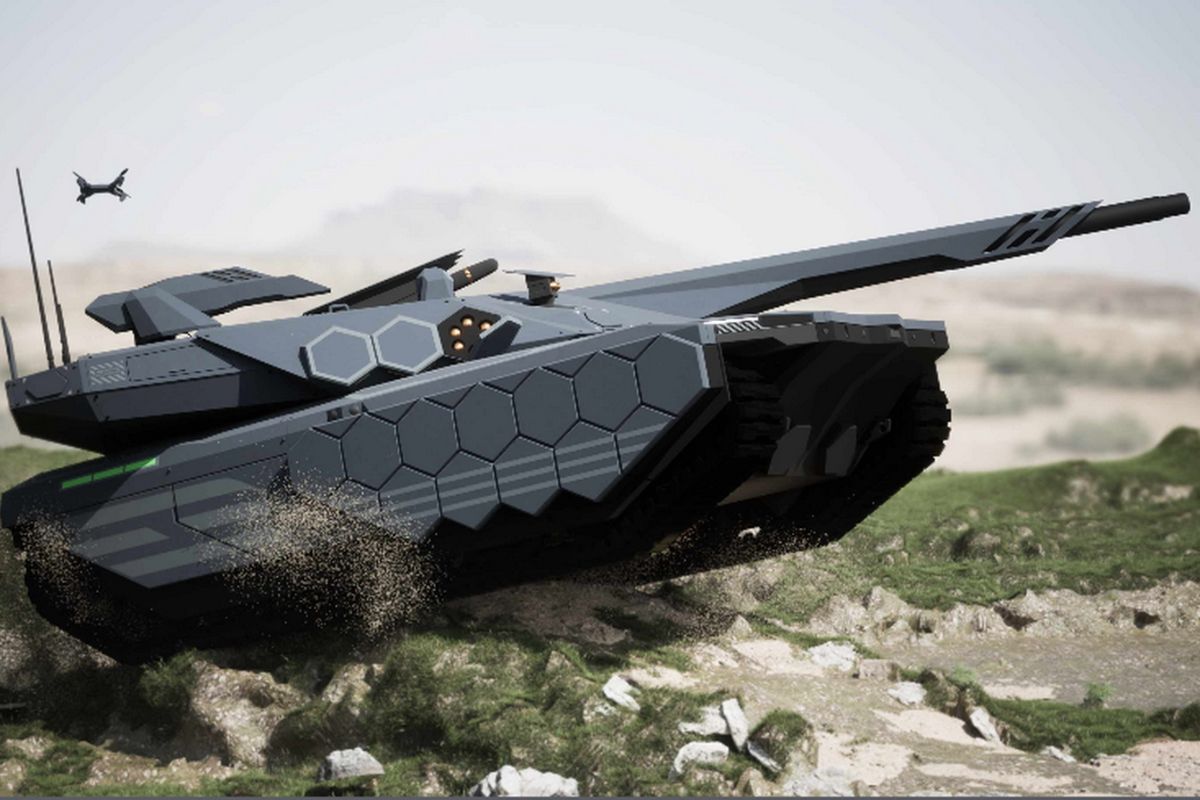


The K3 from Hyundai Emerges as South Korea’s Most Ambitious Military Project, Combining Hydrogen, Stealth, Artificial Intelligence, and Total Connectivity. Designed as a Sixth Generation Tank, the Vehicle Promises Extreme Silence, Low Thermal Signature, and Total Digitalization, Targeting Future Conflicts.
South Korea has opted for a radical technological breakthrough for the battlefield. At the center of this strategy is the K3 from Hyundai, a tank concept that abandons the incremental logic of modern armored vehicles and attempts to completely redesign the tank’s role in contemporary warfare.
Since its first public announcement, the K3 from Hyundai has been seen as something beyond a simple successor to the K2 Black Panther. The proposal is to create a connected, stealthy, and highly automated ground combat system, capable of surviving in environments dominated by drones, sensors, guided missiles, and digital warfare.
Why South Korea Decided to Create the K3 from Hyundai

The decision to develop the K3 from Hyundai stems from a straightforward diagnosis: warfare has changed more in the past ten years than in previous decades. Recent conflicts have shown that traditional tanks, designed during the Cold War, have become vulnerable when facing modern sensors, cheap drones, and precision-guided munitions.
-
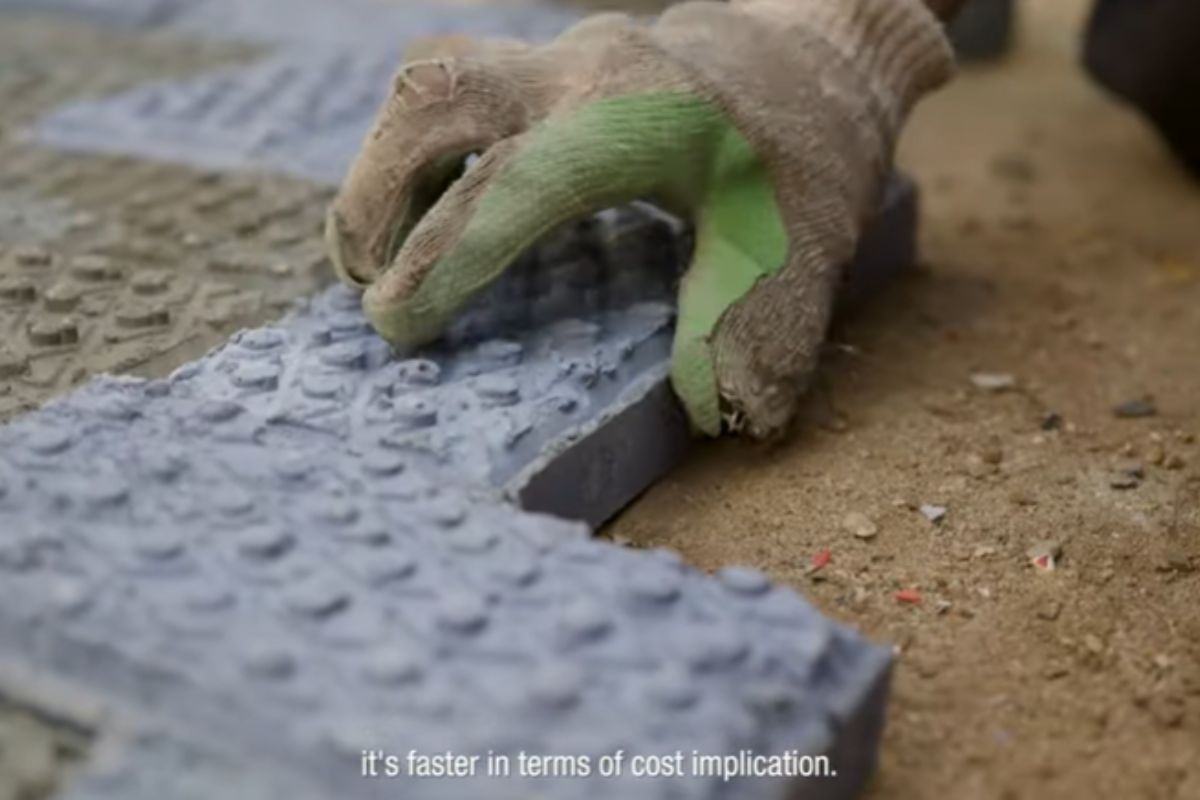
In Kenya, engineer Nzambi Matee created “bricks 2.0” using packaging plastic: a mixture with sand, heated and pressed; they are 5 times more resistant, already have official licensing, and are being used in streets and construction projects.
-
More than 20,000 positions could be opened, and thousands of technicians are starting to be trained in Brazil, as the expansion of data centers creates an urgent race for professionals to keep the internet, cloud, and artificial intelligence running 24 hours a day.

-
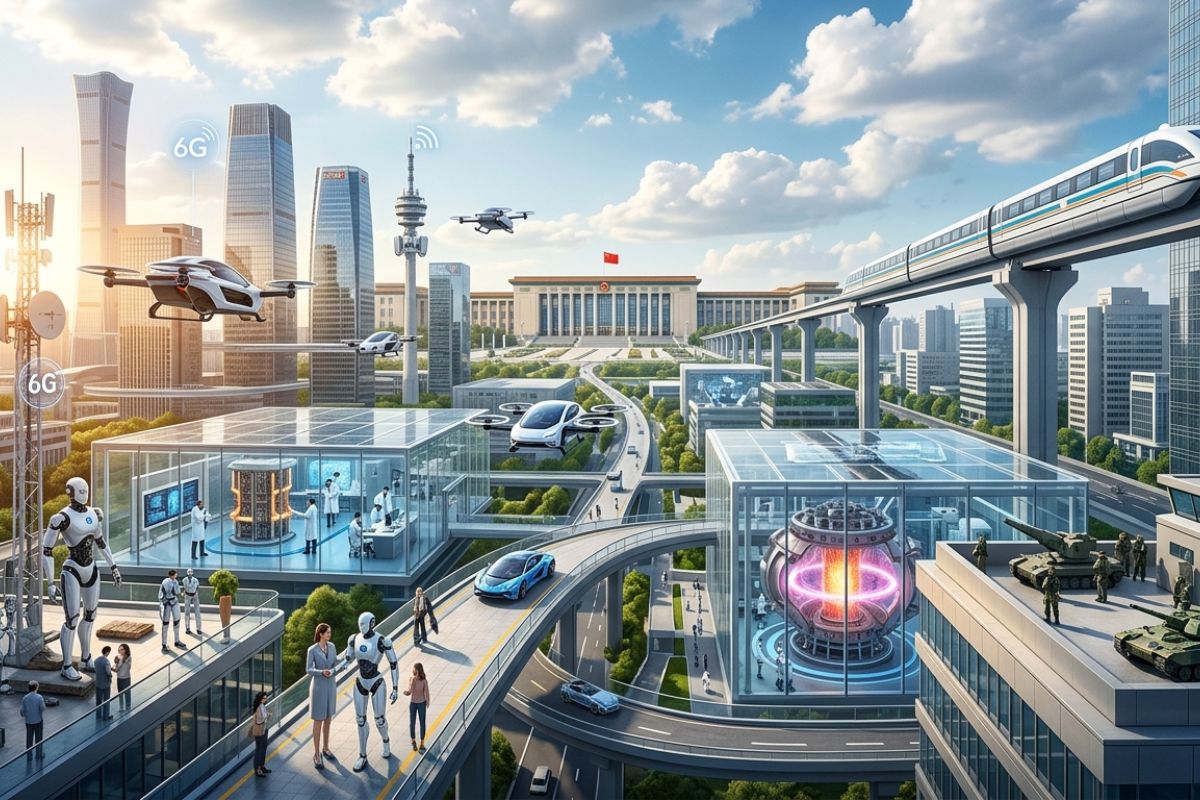
China approves the 15th Five-Year Plan 2026-2030 to become a global power: prioritizes brain implants, 6G with AI, humanoid robots, flying cars, quantum technology, and nuclear fusion, while strengthening defense and the economy.
-
HONOR X80i arrives with a massive 7,000 mAh battery, a 120 Hz AMOLED display with a brightness of 6,500 nits, and the new Dimensity 6500 Elite chip, promising up to 22 hours of video playback and impressive performance in casual gaming.


South Korea has monitored this situation closely, especially in light of regional instability and the technological advancements of its neighbors. Instead of slowly adapting existing platforms, the country chose a generational leap by creating a tank conceived from the ground up for a digital, connected battlefield saturated with aerial and electronic threats.
The K3 from Hyundai thus emerges as a tank designed for tomorrow, not to fix yesterday’s limitations.
A Sixth Generation Tank Designed as a System, Not as a Vehicle

The K3 from Hyundai is described as a sixth generation tank because it breaks away from classic armored vehicle concepts. Its design resembles more of a stealth aircraft than a metal box on tracks, featuring angled surfaces, optimized geometry, and materials designed to reduce radar, heat, and noise signatures.
The central idea is simple and radical: it is not enough to be resilient; it must not be seen, not be heard, and not be detected. The K3 is designed to operate in a network, integrated with external sensors, drones, and command and control systems, functioning as an intelligent node on the battlefield.
This approach transforms the tank into part of a digital combat ecosystem, abandoning the typical operational isolation of classic armored vehicles.
The Armored Capsule and the New Crew Survival Philosophy

One of the boldest aspects of the K3 from Hyundai is the complete reconfiguration of the crew. Instead of spreading the commander, gunner, and driver throughout the turret and hull, as in traditional tanks, the K3 concentrates all in a protected capsule located at the front of the vehicle.
This isolated capsule drastically increases the chance of survival in the event of impact, fire, or ammunition explosion. The tank uses automated loading, eliminating the need for a fourth crew member and reducing human exposure to the armored vehicle’s most vulnerable points.
The principle is clear: experienced crew members are more valuable than the tank itself. The K3 from Hyundai is designed to protect people before protecting metal.
Sensors, 360-Degree Vision, and Total Situational Awareness

In the K3 from Hyundai, direct vision through hatches has practically disappeared. Instead, the tank is surrounded by cameras, daytime optical sensors, thermal, and infrared sensors, offering 360-degree panoramic vision in real time.
Information is displayed on internal digital screens and, potentially, on helmets with advanced visualization features, allowing the crew to see threats, drones, vehicles, and infantry around the tank without blind spots.
This situational awareness is enhanced by artificial intelligence, which assists in identifying, prioritizing, and tracking targets, reducing reaction time in information-saturated environments.
Hydrogen as a Strategic Weapon, Not an Environmental One
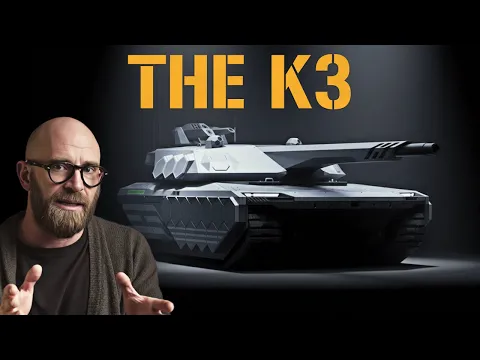

The most revolutionary aspect of the K3 from Hyundai lies in its energy source. The tank is designed to operate, in its final version, with hydrogen fuel cells, something unprecedented for a heavy armored vehicle.
The use of hydrogen is not motivated by environmental issues, but by clear military advantages. Hydrogen-powered electric systems are much quieter, produce lower thermal signatures, and require less maintenance compared to conventional diesel engines.
This means that the K3 can move slowly or remain on standby with almost no noise, making it difficult to detect by acoustic and infrared sensors while reducing vulnerability to heat-seeking missiles.
Hybrid Transition and Hydrogen’s Logistical Challenges
Despite the ambition, the initial models of the K3 from Hyundai are not expected to operate exclusively on hydrogen. The plan envisions a hybrid system, combining diesel and hydrogen while the hydrogen infrastructure and logistics mature.
The expectation is that, by around 2040, when the K3 reaches full production, the challenges of hydrogen storage, transport, and supply will be sufficiently resolved to allow complete operation.
Even in hybrid mode, the tank would already become one of the world’s first to integrate hydrogen operationally within a ground combat system.
Mobility, Speed, and Stealth in Motion
The K3 from Hyundai is designed to reach speeds between 70 and 80 km/h on the road and around 50 km/h off-road, figures comparable to major modern tanks but with greater efficiency and reduced signature.
The use of rubber tracks reduces noise and heat, contributing to stealth, although it brings challenges for repairs in combat. The advanced hydropneumatic suspension, inherited from the K2, allows for greater stability, rapid acceleration, and reduced exposure time to threats.
The combination of mobility, silence, and agility makes the K3 a difficult armored vehicle to track and even more challenging to engage.
Firepower, Drones, and Combat Beyond the Line of Sight
Offensively, the K3 from Hyundai maintains strategic simplicity with extreme lethality. The tank will feature an uncrewed turret equipped with a 130 mm cannon, capable of engaging targets up to 5 km away.
In addition to the main gun, the K3 incorporates guided anti-tank missiles, capable of operating both in line of sight and beyond it. The tank also features a remotely controlled weapons station with calibers between 12.7 mm and 30 mm, dedicated to defense against drones and near air threats.
The differentiator is the integration of its own drones, launched and recovered from the turret, expanding reconnaissance range, target acquisition, and situational awareness on the battlefield.
Active Defense, Metamaterials, and Protection Against Drones and Missiles
The K3 from Hyundai is designed with an absolute focus on survival. The tank incorporates active protection systems, capable of detecting and destroying missiles, projectiles, and drones before impact.
It also includes directional infrared countermeasures, capable of confusing or blinding heat-seeking missiles, as well as electronic jammers to neutralize enemy drones.
Its armor is modular and multilayered, combining high-hardness steel, advanced ceramics, and reactive armor, allowing adaptation to the type of mission and the operational environment.
A Connected Tank for Networked Warfare
The K3 from Hyundai is not designed to fight alone. It integrates command, control, communications, computing, intelligence, surveillance, and reconnaissance systems into a single digital ecosystem.
This connectivity allows for coordinated action with other units, drones, satellites, and command centers, transforming the tank into a connected combat platform capable of sharing real-time data and operating in information-based warfare.
The Risk of the Bet and the Future of the Tank
The design of the K3 from Hyundai is based on a bold premise: tanks will still be relevant in 2040. This bet is not unanimous. There are doubts about the advancement of cheap drones, precision munitions, and unmanned vehicles capable of making large armored vehicles expensive targets.
Still, South Korea prefers to be prepared. The K3 represents a vision of the future where tanks do not disappear but evolve into something different, stealthy, intelligent, and deeply integrated into the digital battlefield.
If this bet proves correct, the K3 from Hyundai could become one of the most influential military projects of the century.
Do you believe that highly technological tanks like the K3 from Hyundai will still play a decisive role in future wars, or will drones make them obsolete?






Chega de guerra, de morte, de armas, de destruição, de maldade contra os civis pelas guerras, eu sei que é importante se defender, mas saber que a morte não compensa para ninguém a guerra tem que ser evitada e as armas destruídas não vamos acabar com a vida de ninguém. Ravi
A hei que só existia no Just cause
chassi HB20
KKKKKKKKKKKKK