Portuguese
  Spanish


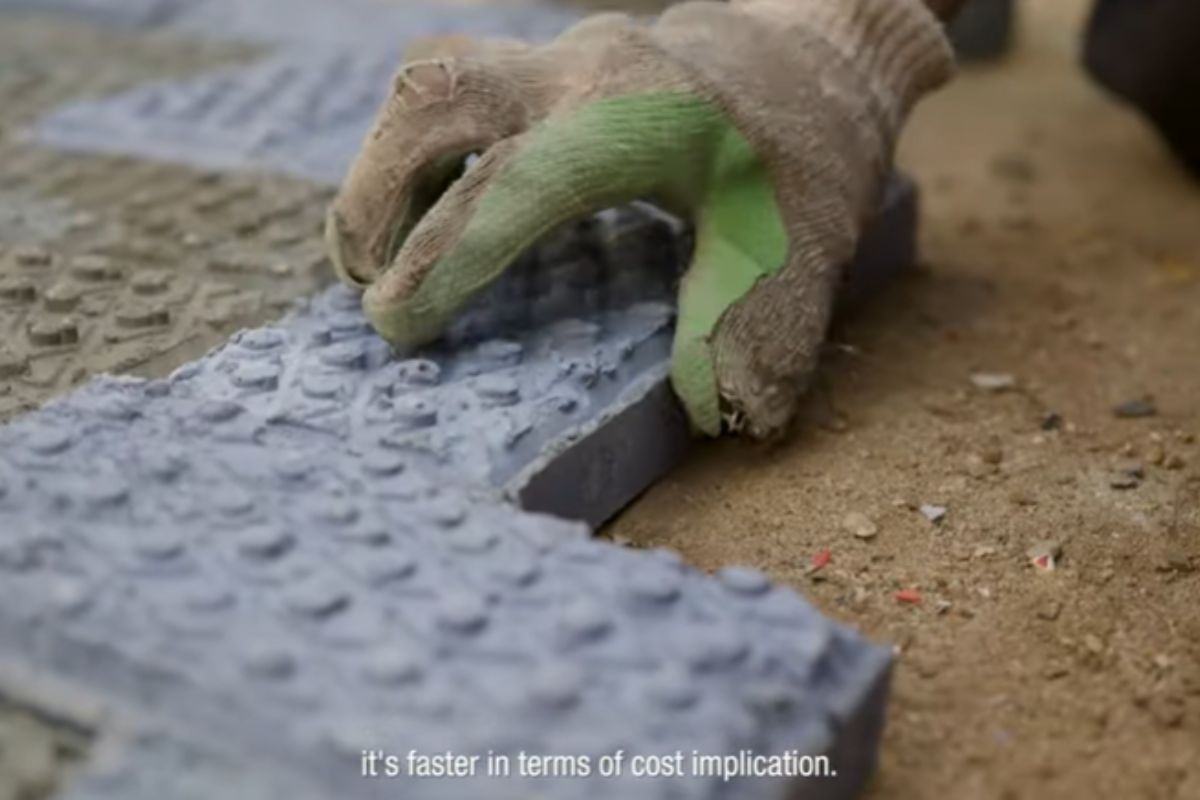

Bricks 2.0 created by Nzambi Matee mix plastic and sand, are heated and pressed, received official license and became pavement, blocks, and urban pieces in Nairobi
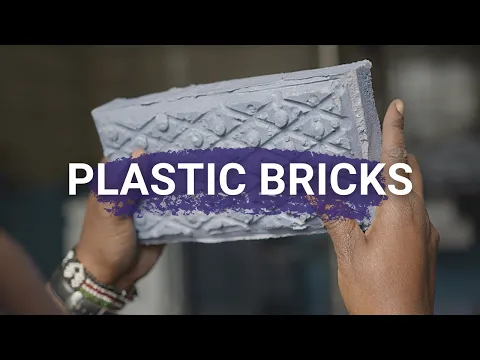
The bricks 2.0 emerged in Kenya as a dual response to two giant problems: the accumulated plastic waste in cities and the need for more affordable construction materials. Materials engineer Nzambi Matee founded the company Gjenge Makers to transform plastic waste into blocks and urban elements, such as pavements, tiles, and even manhole covers, using a recipe that swaps waste for infrastructure.
In practice, the bricks 2.0 are made by mixing plastic with sand, heating, and compressing until solid blocks are formed. With the correct proportions, it is estimated that these blocks are five times more resistant than traditional bricks, with the additional advantage of maintaining a certain degree of flexibility, which reduces the chance of cracks in everyday use.
How bricks 2.0 are manufactured with plastic and sand
The process of bricks 2.0 was refined through trial and error until the desired properties were achieved. First, the plastic is mixed with sand in specific proportions. Then, the mixture is fed into an extruder, where it is heated until the plastic reaches its melting point without chemically degrading.
-
South Korea Tows 18 Concrete Blocks Weighing Up to 48,000 Tons Over 36 km to Construct a 3.2 km Underwater Tunnel Between Busan and Geoje, Installed Nearly 50 Meters Deep

-
Chinese Tianwen-2 Mission Targets Near-Earth Asteroid After 1 Billion Kilometer Journey to Collect Ancient Samples, Aiming to Uncover Clues About Water, Organic Compounds, and Solar System Origins Before Heading to a Comet

-
France Constructs 900-Meter Sea Wall in Brest, Expands Port by 14 Hectares for Marine Renewable Energy Hub
-
New Discovery Suggests Prehistoric “Hobbits” May Have Survived on Komodo Dragon Remains


Afterward, the heated material is poured into molds, and a hydraulic press compacts everything to generate high density and the final shape. As it cools, the blocks are removed and form a batch ready for use. It is a simple industrial line in appearance, but calibrated to maintain consistency and strength.
Why resistance and flexibility became the differential

One of the strongest arguments for bricks 2.0 is their resistance. The company claims that the blocks can be five times more resistant than traditional bricks when the mixture is in the correct proportion. Additionally, there is a functional gain: the material does not crack as easily because it retains flexibility.
Another cited fact is thermal resistance, with a melting point above 350 degrees Celsius, which helps maintain shape under normal conditions of use in urban paving. This matters on streets and sidewalks, where the material needs to withstand heat and constant use.
Where bricks 2.0 are already being used
The project did not stay in the lab. Bricks 2.0 are already used in public spaces and can serve to pave streets, sidewalks, patios, and parking lots, in addition to decorative applications, as they can be produced in different colors.
The proposal is to replace, in various situations, what would traditionally be done with conventional bricks, but using a material that reuses high-volume plastic waste.
The point that unlocks everything: official license for urban and residential use
A good part of the alternatives to traditional brick faces the same problem: lack of official approval. The differential of bricks 2.0 from Gjenge Makers is that they obtained the necessary licenses from the Kenyan Standards Office, allowing use in urban and residential projects in the country.
This changes the status of the material. It goes from being an “interesting solution” to becoming a product that can enter construction without being stuck in informal testing.
What types of plastic are in the mixture
The bricks 2.0 use common plastics that often fall outside the formal recycling cycle. Among them are HDPE, LDPE, and PP, materials found in bags, packaging, detergent bottles, ropes, buckets, and various containers that normally go to regular trash.
A data presented by the startup is that, since 2020, about 200 tons of plastic waste have been used to create construction materials. This highlights the potential for scale, even though it is still small compared to the total volume of waste generated.
The social impact behind the technology

In addition to engineering, the bricks 2.0 also carry a social component. The company claims to generate direct and indirect jobs for over 600 people, linked to collection, sorting, and manufacturing, with a significant participation of women and youth who face difficulties entering other economic activities.
This type of structure connects circular economy, urban planning, and social inclusion in the same project. It’s not just recycling; it’s creating a work chain around waste.
The challenge that continues to exist even with bricks 2.0 working
Even with licenses and real use, there is an obstacle that always appears when a new material tries to become standard: cost per unit, industrial scale, and resistance from traditional sectors.
One thing is for the product to work; another is for it to consolidate as a dominant alternative in an industry accustomed to cheap and widely available materials.
Still, the bricks 2.0 have already proven an essential point: it is possible to transform discarded plastic into urban infrastructure with technical performance and official validation, and to do so at an increasing scale.
And you, if your city adopted bricks 2.0 with recycled plastic for sidewalks and streets, would you trust more in their resistance or would you be wary of the material because it is made from waste?