





 Portuguese
  English
  Spanish
  7 min of reading
  121 comments





In The Truckers’ Crisis, A Lack Of Truck Drivers And Pressured Drivers Face Dangerous Roads And Put The Economy On Alert.
The truckers’ crisis is no longer a distant warning and is now a reality in the yards and on the roads of Brazil. Trucks ready to roll are sitting idle because there’s a shortage of drivers, while the truckers’ crisis has opened a gap of more than 1 million qualified professionals and is pressuring freight rates, deadlines, and consumer prices.
At the same time, the old dream of “living on the road” is losing appeal among young people. The category is aging, facing long hours, insecurity, high costs to maintain the truck, and little appreciation. Without renewal, the truckers’ crisis deepens and jeopardizes the machinery that drives the Brazilian economy.
A Profession That No Longer Charms Young People
For decades, being a truck driver meant freedom, the road, trips with a father or uncle, stories from rural areas, and a certain social admiration. Today, that charm is breaking down.
-
Havan buys historic football land in Blumenau for a million-dollar amount protected by a confidentiality clause and is already planning to change even the layout of streets to build a megastore in half-timbered style costing 80 million reais.

-
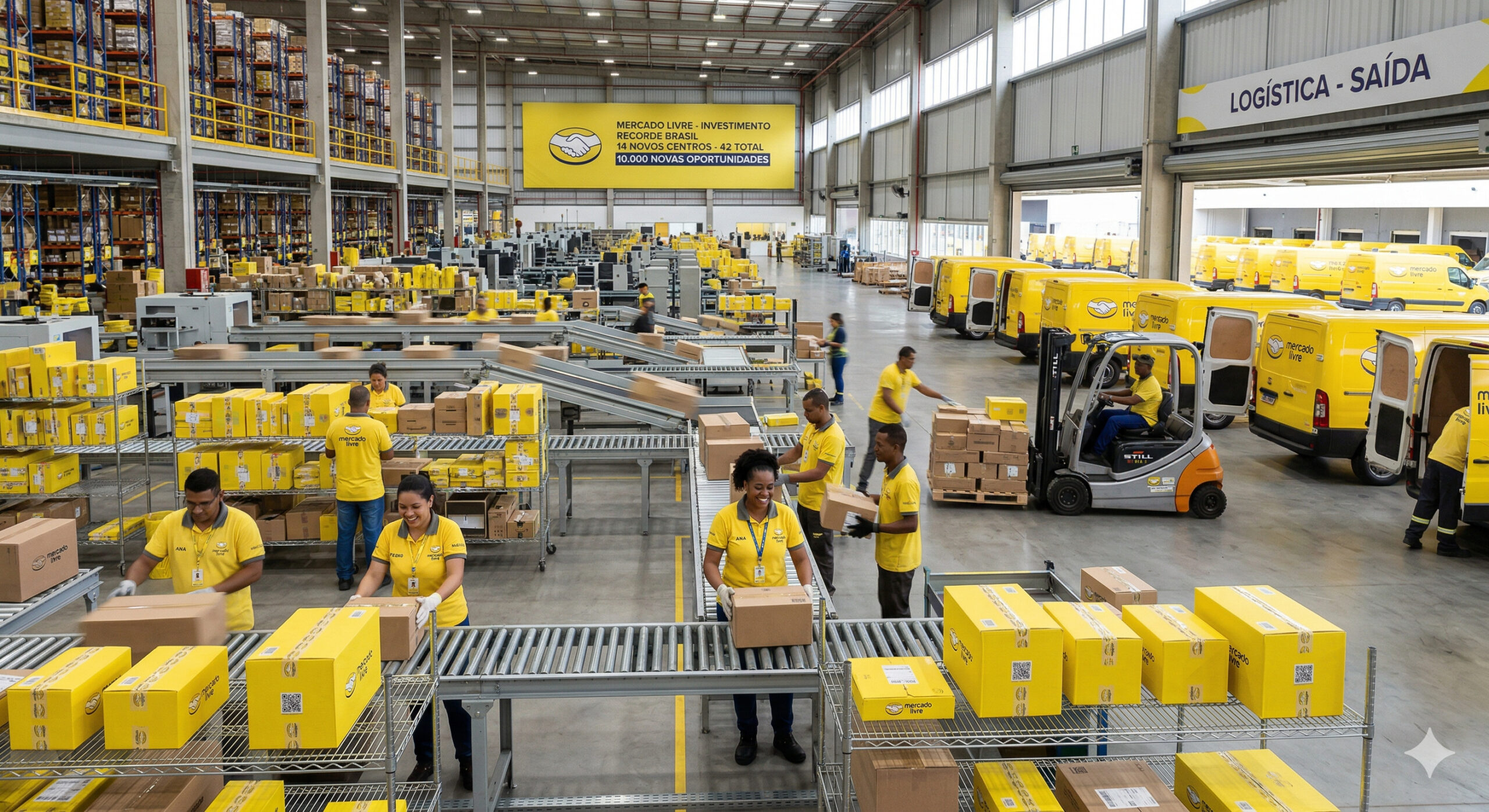
Mercado Livre “opens the vault” and announces a record investment of R$ 57 billion in Brazil in 2026, a value 50% higher than the previous year, with an expansion plan that includes 14 new logistics centers, totaling 42 units in the country and hiring an additional 10,000 employees.
-
How investment in technology can revolutionize the national economy and enhance industrial gains, according to a study that highlights the direct impact on productivity, innovation, and wealth retention within Brazil.

-
The largest food company on the planet, JBS, has just opened a 4,000 square meter laboratory in Florianópolis to develop customized proteins that modulate muscle mass gain, immune response, and metabolic performance.


Many drivers report that their children and grandchildren no longer want anything to do with the cab. The new generation looks at the truckers’ crisis and sees a heavy, undervalued profession that is distant from family life.
The reports are clear. There is a sense of fatigue and devaluation among those who are still active. The hours are long, the distance from home is significant, road insecurity is increasing, and the costs of maintaining a truck are daunting.
When a young person compares this reality with other professions that pay similarly but offer more comfort and stability, the choice becomes obvious. Many simply shy away from the wheel.
At the same time, current truck drivers are aging. The average age of the category is already over 50, which means a large portion of these professionals is nearing retirement. If the older ones leave and the younger ones do not enter, the truckers’ crisis becomes a structural problem, not just a temporary one.
Trucks Stopped, Empty Trailers, And Hostile Roads


Behind the scenes of the truckers’ crisis, the scene repeats itself in many companies: expensive equipment, trailers, and special vehicles sitting in the yard, waiting for a driver who doesn’t arrive. Drivers report that clients call in desperation, asking if they “know someone” who can take a trip, because the trailer is stopped, the deadline is approaching, and there’s no one to sit in the truck’s driver’s seat.
In more complex segments, such as the transportation of indivisible and special loads, the situation is even more critical. Besides requiring more qualifications, this type of operation faces time restrictions, with circulation limited between sunrise and sunset. This tightens the work window, increases stress, and causes many people to abandon the sector.
The road, which was once synonymous with adventure, is now described as a hostile environment. Violence, lack of basic structure, paid showers and parking, and gas stations that only free up a parking spot for sleeping if the truck driver fuels up are the daily routine for many professionals.
It is not uncommon for drivers to report that they have to beg for a safe place to spend the night or accept poor conditions because they have no alternative.
Not surprisingly, many parents who grew up in the truck cab with their own parents now do not wish the truck driver life for their children. The message that reaches the new generations is clear: the road does not offer the minimum dignity and safety that such a strategic profession should provide.
The Truckers’ Crisis Is Not Just a Brazilian Issue
Although the focus is on the internal scenario, the truckers’ crisis is not exclusive to Brazil. The United States, European countries, and all of Latin America also face bottlenecks because there is a shortage of drivers to meet the growing demand for road transport.
In some markets, companies have reacted with significant pay increases, offering weekly proposals far above the Brazilian average to try to fill vacancies.
Even so, the challenge persists. This shows that money helps, but does not solve everything. The truckers’ crisis is also about quality of life, recognition, and decent working conditions.
Is There A Lack Of Drivers Or A Lack Of Conditions To Work?

An important point in the discussion is the difference between “lack of drivers” and “lack of qualified drivers willing to stay with the company.” Many professionals in the industry remember that, historically, it has always been said that there is a shortage of drivers. From the grandfather to the father, the phrase is repeated from generation to generation.
What changes now is the combination of factors. On one hand, the technical demands are increasing, with more modern trucks loaded with technology, tracking, refrigeration systems, and sensitive equipment. On the other hand, companies still do not offer, in many cases, the support and recognition that the driver expects.
The truck driver does not want just a paycheck. He wants to be respected, to have support when the truck breaks down in the middle of the night, to be attended by someone from the company when a problem arises with the tracker or the cargo, and to feel that he is part of a team, not that he is alone on the road. When that support does not exist, many end up looking for other fields, even earning similarly.
Some advocate that companies need to “look inwards” and do their homework. This includes understanding that the truckers’ crisis cannot be fought merely with job ads but with culture, management, communication, and infrastructure. In other words, it’s pointless to complain about the lack of drivers without offering a minimally attractive environment for them to stay.
Home Office Generation, High Training Costs, And An Overlooked Profession
Another element feeding the truckers’ crisis is the clash of mindsets between generations. Many young people grew up in a context of technology, remote work, and new ways to earn money without leaving home. Given this, the idea of spending days or weeks away from family, sleeping at gas stations, and dealing with risks on the road loses its appeal.
Moreover, the cost of training is high. Getting a license in the required categories, taking specific courses, and adapting to new requirements is not trivial for someone starting their professional life. For many, it simply does not justify investing so much to enter a profession that conveys an image of being mistreated and underappreciated.
Still, there are companies that have already understood the message and started to act. Some have created internal driver training schools, covering 100 percent of the costs for new professional classes and forming partnerships with entities like Sest Senat to open dozens of training vacancies.
In these programs, drivers learn everything from the basics to the use of refrigeration equipment, thermostats, and tracking systems, as well as receiving guidance on communication and behavior.
This type of initiative shows that when someone invests in training and offers a clear path for growth, the profession begins to seem like a viable choice again. Instead of waiting for the driver to “arrive ready,” the company takes the lead in building that professional.
When The Truckers’ Crisis Hits The Consumer’s Wallet
At first glance, the truckers’ crisis may seem like a problem confined to the transportation sector. But the domino effect is vast. Fewer available drivers means trucks are stopped, deliveries are delayed, freight costs are higher, and delivery deadlines are longer.
In the end, the bill is paid by the consumer, who finds products more expensive and, often, at risk of shortages in some regions.
From the companies’ perspective, the scenario is also concerning. Transport companies that invested in a modern fleet now see part of their trucks sitting idle due to a lack of qualified people to take the wheel. Clients are pressuring for deadlines, logistics are becoming more complex, and operational costs are skyrocketing.
If nothing is done on a large scale, the tendency is for the truckers’ crisis to deepen in the coming years, as more professionals retire and fewer young people come in to replace them.
Brazil’s dependence on road transport, combined with this deficit, creates a real risk of a hold-up of the economy during peak demand moments.
Train, Value, And Care: The Only Way To Change The Game

In light of this scenario, experts are unanimous on one point. There is no quick solution for the truckers’ crisis that does not involve consistent training and genuine appreciation of the profession. It’s not “magic”; it’s long-term investment in people.
This means expanding training programs, reducing barriers to entry for those who want to train, improving conditions on the roads, strengthening rest and stop infrastructure, and, most importantly, changing the way the country sees the truck driver.
He is not “just” someone who drives. He is the professional who carries the entire economy of a nation on his shoulders.
In daily life, those who have been behind the wheel for decades confess that, even amidst so many difficulties, they still feel passion for what they do.
There are drivers who cannot imagine being away from the road, who feel restless when they stay too long at home, and who take pride in quietly being part of the routine of millions of Brazilians. The question is whether this flame will reach the next generations.
In a Brazil that relies on trucks to supply cities, move industries, and keep the economy running, the truckers’ crisis is a warning that can no longer be ignored. If the country does not take care of those who drive, the time will come when there simply won’t be enough people to keep the machinery operating.
And you, in your view, what weighs the most today in aggravating or alleviating the truckers’ crisis in Brazil: salary, road conditions, lack of recognition, or the disinterest of new generations in life in the cab?








Olá sou caminhoneiro a 50anos e ainda estou na ativa
Minha opinião é que hoje quem manda no caminhão é as operadoras de rastreamento você não consegue dormir é a madrugada inteira enchendo teu saco não pode parar onde você está acostumado parar então juntando tudo isso mais as condições das estradas sem segurança nenhuma guardas mal educados quando te param parece que você é **** não existe mais amizade como antigamente postos a não ser aqueles que você é cliente não te tratam bem cobra tudo juntando tudo isso qual o motivo para um jovem hoje entrar nesse ramo vai acabar com a classe pode esperar obrigado
Tá ótimo! O Brasil escolheu viver de influencers, especulação financeira, futebol, betes, tigrinho e funk. Enquanto atirou na latrina os verdadeiros trabalhadores, começando pelos caminhoneiros, mas estendo a todos os demais (inclusive o lixeiro, que o **** playboy matou por motivo fútil em Belo Horizonte, fato que o Brasil jamais deveria se esquecer). Enquanto a mentalidade do país não mudar (e principalmente das mulheres que dão moral pra esses canalhas), eu só espero que piore! Amém!
Tenho 70 anos, fui motorista de carreta,truck, bitrem etc.
Hj estou aposentado, e gosto do que fazia.
Gostaria de voltar para a estrada, não com jornadas muito longas, mais ninguém me interessa, por conta da idade.
Embora ainda estou em perfeita saúde e disposição.