





 Portuguese
  English
  Spanish
  4 min of reading
  17 comments


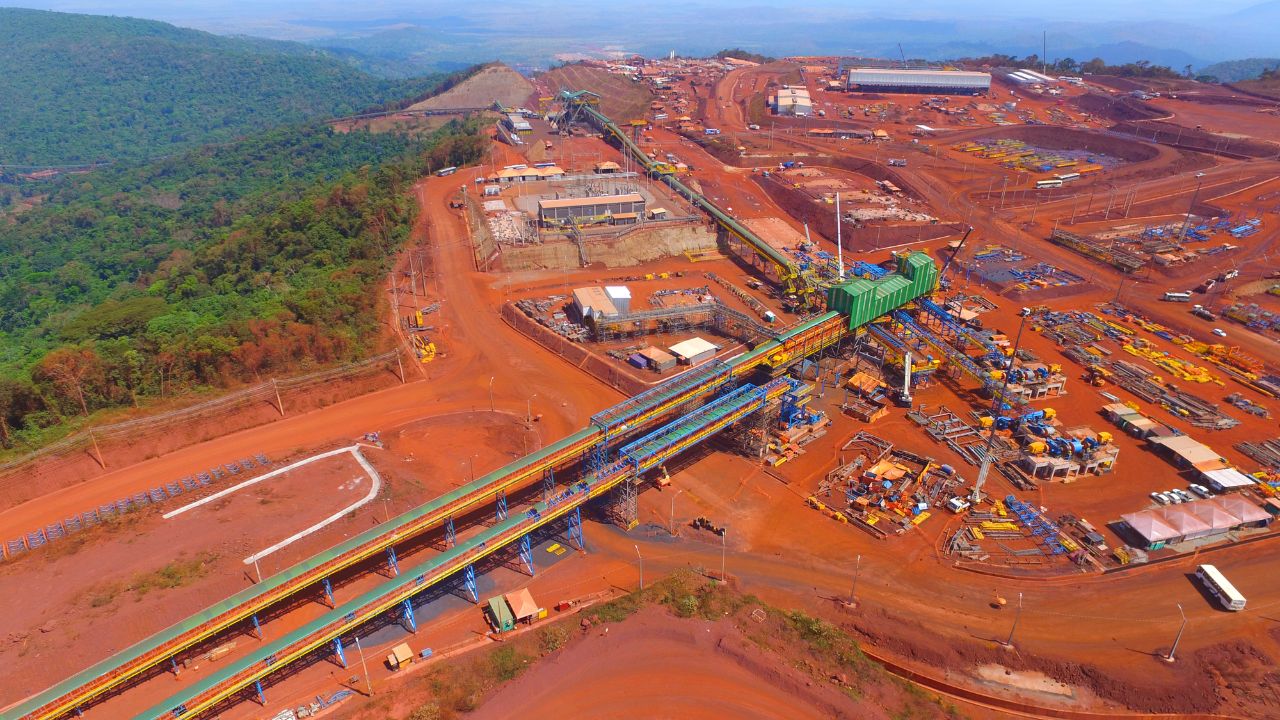


Brazil Has A Province With 18 Billion Tons Of High-Purity Iron — And It Was Found By Chance In A Forgotten Piece Of Jungle
A forced landing in the middle of the jungle, a curious geologist, and a reddish stone were enough to reveal one of the planet’s greatest mineral secrets: the Carajás Mountains. Beneath that dense forest lay a province with 18 billion tons of iron of the highest quality — and this would forever change the fate of mining in Brazil and the world.
It All Began With A Navigation Error
The year was 1967. The military dictatorship encouraged economic exploration projects in the Amazon, and the company US Steel, through its subsidiary Meridional Mineração, was flying over the region with geologists in search of new deposits. During a storm, the helicopter carrying Brazilian geologist Breno Augusto dos Santos deviated from its course and ended up landing in a clearing near an arching formation.
It was there, almost by chance, that Breno noticed unusual reddish rocks and decided to collect samples. The laboratory confirmed: it was iron ore with over 60% purity, an extremely rare index. It was the beginning of the legend of Carajás.
-
He started running at 66 years old, broke records at 82, and is now a subject of study for having a metabolic age comparable to that of a 20-year-old, in a case that is intriguing scientists and inspiring the world.

-
Oldest tree on the planet reappears after 130 years of searches: Wattieza, 385 million years old, was 10 meters tall and had no leaves or seeds; Gilboa fossils in New York solved the mystery in 2007.

-
A 48-square-meter house assembled in hours with 4,000 bricks made of recycled plastic that does not absorb moisture, has natural thermal insulation, and costs less than 90,000 reais in a complete kit.

-
Luciano Hang revealed that Havan’s air fleet has already accumulated more than 20,000 landings, 10,000 flight hours, and 6 million kilometers traveled, and he says that without the planes, the company would never have grown so quickly.



The Largest Mineral Project In Brazil Is Born
Today known as Project Carajás, this mining complex is located in southeastern Pará and is operated by Vale. The main deposit, the Carajás Mountains, is considered the largest in the world in iron content. But the grandeur doesn’t stop there: the project includes open-pit mines, a 892 km railway — the famous Carajás Railroad — and the Ponta da Madeira Terminal, in the port of São Luís (MA), from where the ore is shipped to countries such as China, Japan, and South Korea.
In addition to iron, the region is also rich in gold, copper, manganese, and other strategic minerals. According to Vale itself, the complex produced around 230 million tons of ore in 2023, equivalent to nearly one-third of total national production.
The Power Of The Railway And The Giant Ships
To transport such production, the Carajás Railroad was built, one of the most efficient in the world. It accommodates trains 3.3 km long, with up to 330 wagons, transporting up to 39 thousand tons of ore per trip. There are 10 trips per day, supplying the Maranhão port where the ore is shipped on Valemax ships — the largest bulk carriers on the planet, measuring 362 meters and with a capacity of 400 thousand tons.
The most common destination? China, where companies like Baowu Steel, the largest steelmaker in the world, depend on Carajás iron to maintain their production.
The Serra Divided Into Three
The project unfolds into three main fronts:
- Northern Serra: active since the 1980s, it concentrates mines such as N4E, N5, and N5 South, with pits reaching 300 meters deep. This is where the largest iron reserves on the planet are found, with content of 66% to 67%.
- Southern Serra: houses S11D, the largest project in Vale’s history, featuring extraction technology without the use of water (dry process), which reduces water consumption by 93%.
- Eastern Serra: smaller but strategic. Produces 10 million tons per year with a content of 64%.
Social And Environmental Impacts
If on one hand Carajás has become an economic engine, with R$ 33 billion in iron exports alone in 2022, on the other hand, it has left scars. The deforestation caused by mining and the railway has contributed to the loss of 469 thousand km² of vegetation between 1988 and 2021, according to data from INPE.
Moreover, the railway crosses indigenous lands and protected areas, generating conflicts with local communities. There have also been reports of tailings leaks, such as in 2023, when IBAMA fined Vale for pollution in the Paraupebas River.
Bet On “Green Iron”
Trying to reduce its environmental footprint, Vale is now investing in low-carbon iron, using reforestation charcoal. It is also testing autonomous trucks, electric trains, and satellite monitoring tools to prevent further deforestation.
“We want to be leaders in sustainable mining and ensure that Vale is carbon zero by 2050,” stated the company’s president in an official note.
A Geological Treasure Of Billions Of Years
The Carajás Mountains are not only rich in ore. They are also a geological relic. Their formations date back over 2.5 billion years and house caves with unique fossils, isolated lakes, and endemic species that do not exist anywhere else in the world.
A Paradox Between Wealth And Responsibility
Carajás is a powerful example of how resource exploitation can transform a country’s economy, but also a warning about the limits of growth at any cost. Brazil depends on iron for its external accounts, but the world increasingly demands mining with climate and social responsibility.
The story that began with an emergency landing is now continuing to be written with technology, conflicts, and billions at stake. And all of this, right in the heart of the forest that should be untouched.








Tive o prazer de trabalhar em Serra dos Carajas em 1973 na então Meridional de Mineração, companhia de economia mixta da USSteel e Vale do Rio Doce. Eramos 2 geologos, eu engenheiro, um topografo, um administrador de empresas e mais um gerente geral americano, e um contingente de uns 200 trabalhadores. A companhia estava na fase de levantamento, mapeamento da jazida. Tempos inesquecíveis. Fauna brasileira presente e exuberante. Onças pintadas, pretas, antas, caititus, queixadas, macacos, arpia, porco espinho gigante. Tantos animais conheci em liberdade. E uma lembrança que não esqueço. Sentar na varanda na casa de hospedes e ver a mata a perder de vista.
Sr. Noel Budeguer, por gentiliza, antes de escrever que Carajás foi “descoberto por acaso”, pesquise um pouco mais em vez de escrever a primeira coisa que voce copiou do Google… Já não basta a tal “astronauta brasileira” fazer a mídia inteira passar vergonha em razão de nenhum dos digníssimos repórteres terem a decência ou o minimo trabalho de verificarem se as afirmações dela tinham alguma base de verdade? Quando voce diz “ACASO” mostra que fez uma pesquisa bem rasa a esse respeito. Se quiser saber sobre o que estou falando aprofunde um pouco mais a sua “pesquisa” e depois peça desculpas ao geólogo BRENO AUGUSTO DOS SANTOS, o responsável pela descoberta depois de muita pesquisa e estudos da região.
O primeiro motor de luz quem colocou aí na Serra Norte fui eu.
Meu nome e Tharley Rodrigues de Almeida, em 1981 ou 1982 não me lembro a data com precisão afinal tem muitos anos.
Um de luz que pesava quase quatro mil kilos.
Pousamos em um D-3 versão C-47, pousamos a noitinha de baixo de muitas formações de mal tempo.
Nós puxava Cassiterita em Jacutinga e Pitinga entre Manaus e Boa Vista Rr.
Lá Jacutinga tinha como um dos Gerentes o Sr. Cirino e mais alguns engenheiros. Era dois mil e quinhentos kilos de Cassiterita na saída e três mil de óleo diesel na entrada.
Voava o dia inteiro 11 pernas de vôo nos fazinhamos e tinha mais uns quatro aviões C-206 de pequeno porte.
Que levava só 600 kilos por viajem,vai timevos está jornada aí de levar o Motor de Luz a Serra Norte,acerta dos Carajás.
Hoje e a Vale do Rio Doce.
O proprietário era os Metralhas de Alta Floresta MT.
Cede deles de Jacutinga era em Manaus.
E foi uma época muito boa.
Hoje e a maior produtora de Ferro do Mundo.
E tem ouro outros minérios muito mais ainda a descobrir lá…
PT – KVM era nosso cargueiro lá…muito bom mesmo avião.
Saímos de Manaus a Serra Norte Direto me lembro que foi 5 horas e mais uns minutos.
Longa distância.
No outro dia Alta Floresta direto…
Para uma revisão.
Abraço a todos que se lembra desta época incrível….
Seu amigo Tharley….