






 Portuguese
  Spanish


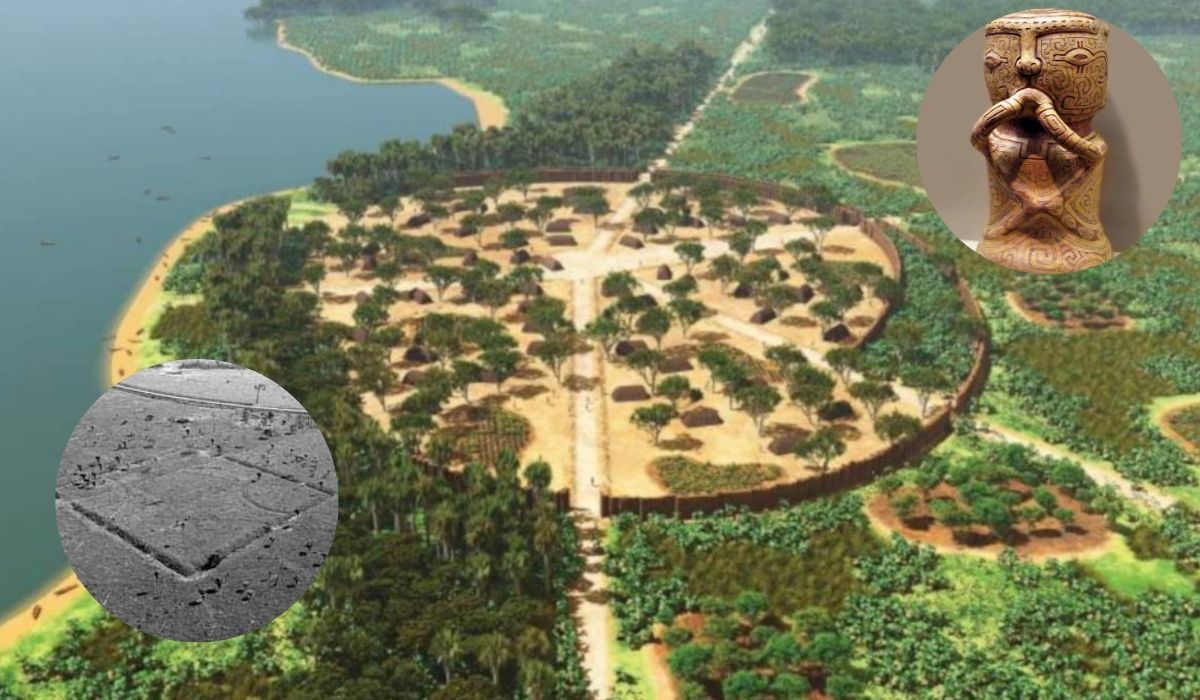


Archaeological And Scientific Evidence Is Expanding The Understanding Of Ancient Indigenous Societies, The Planned Use Of Territory, And The Environmental Diversity In Pre-Colonial Brazil, Revealing Complex Occupations, Soil Management Techniques, And Cultural Expressions Developed Over Thousands Of Years.
Archaeological research, soil studies, and paleoenvironmental investigations have been gathering evidence that extensive areas of Brazilian territory were occupied and transformed by Indigenous populations long before the arrival of the Portuguese.
Works conducted in regions such as the Amazon and floodable areas of the Pantanal indicate the presence of societies with spatial planning capacity, earthwork construction, sophisticated material production, and long-term environmental management.
At the same time, paleontology and archaeology studies seek to understand how human groups interacted with the megafauna of the Pleistocene, now mainly known through fossil records.
-
Couple buys 1905 colonial house, plans to tear down walls to unite three rooms, but finds hidden service staircase and rethinks the entire renovation to preserve details that have survived for over a century.

-
Couple receives a quote of $50,000 to install a built-in refrigerator, decides to do the work themselves, spends $6,000, and claims to have saved over $100,000 by renovating the house.
-
At 77 years old, an elderly woman lives alone in an almost ghost village in the French Alps, at an altitude of 1,000 meters, where there is a town hall, a mayor, and an entrance sign, but only she lives there every day in a place destroyed by a landslide and almost erased from the map.

-
India excavates a 28 km artificial lake in the Thar Desert, lines the bottom with a giant plastic sheet to prevent 1.41 million tons of water from disappearing into the sand, and attempts to supply 5 million people throughout the year.


Indigenous Occupation Of The Amazon Before Colonization
Over the past few decades, the interpretation of human occupation in pre-colonial Amazon has undergone significant revisions.
Archaeological research in areas such as Alto Xingu has identified sets of settlements connected by paths and excavated structures, organized around communal spaces.
According to the researchers responsible for these studies, this pattern suggests forms of regional organization and territorial planning distinct from European urban models but compatible with complex societies adapted to the Amazonian environment.
The advancement of investigation techniques has contributed to broaden this picture.
In addition to traditional excavations, the use of satellite imagery and, more recently, LiDAR has allowed the identification of features in the relief beneath the forest cover.
According to specialists, the technology helps to map ancient structures without the need for major interventions in the environment, increasing knowledge about paths, ditches, and artificial elevations associated with long-term human occupation.
Terra Preta de Índio And Sustainable Soil Management
Among the main indicators of prolonged human presence in the Amazon is the so-called Terra Preta de Índio.
Studies published by Brazilian institutions indicate that this type of dark and fertile soil is often associated with archaeological sites and results from cumulative processes linked to human activity over centuries or millennia.
Although there are academic debates about the exact mechanisms of formation, chemical analyses and datings indicate that some of these deposits are thousands of years old.
Researchers emphasize that the importance of Terra Preta goes beyond fertility.
When found alongside material traces, it serves as a marker of continuous occupation and helps to identify areas where Indigenous populations lived and managed the environment for long periods.
This data has been used to revise maps of ancient occupation of the Amazon, previously considered more sparse.

Geoglyphs of Acre And Millennial Earthen Works
In the southwestern Amazon, especially in Acre, archaeological surveys have identified hundreds of geoglyphs, geometric structures formed by ditches dug into the soil.
Records from IPHAN describe large-scale figures, such as circles and squares, distributed across different municipalities.
The number of known sites has increased as new areas have been analyzed with the support of aerial imagery and remote sensing.
The function of these structures is still a research topic.
Some scientific literature suggests that many geoglyphs were not residential areas, but spaces intended for collective activities, such as ritual gatherings or community events.
These interpretations are based on the absence of domestic remains at various sites and on the scale of the constructions, which would indicate use by large groups.
Research also points out that some of these structures may date back to about 2,500 years, according to estimates released by official institutions.
Archaeology of The Pantanal And Adaptation To The Floodable Environment
In the Pantanal, archaeological evidence presents different characteristics, influenced by the flooding regime and the dynamics of floodable soils.
Academic studies describe the presence of embankments and artificial mounds, interpreted as technical solutions for human occupation in an environment subject to seasonal flooding.
Datings indicate that some of these occupations date back thousands of years.
Researchers emphasize that the Pantanal does not necessarily present the same patterns of roads and settlement networks described for specific areas of the Amazon.
Still, the evidence indicates distinct forms of organization and landscape transformation.
According to the studies, this diversity reinforces that Indigenous societies developed distinct responses according to the environmental conditions of each region.
Marajoara Pottery And Cultures of The Tapajós
Material culture is one of the main sources for understanding these societies.
On Marajó Island, Marajoara pottery is known for funerary urns and decorated objects, often associated with ritual contexts.
Museums and academic research describe techniques of modeling, painting, and firing that indicate a high degree of artisanal specialization, as well as a complex symbolic repertoire.
In the Tapajós region, particularly around Santarém, archaeological studies analyze ceramic sets associated with the so-called Santarém or Tapajonic culture.
Works published in Brazilian scientific journals discuss styles, functions, and contexts of these objects, which have been studied since the early 20th century.
For researchers, this material evidences the cultural diversity of pre-colonial Amazon.

Brazilian Megafauna And Chronological Limits
The so-called Brazilian megafauna, composed of large mammals such as giant sloths and glyptodonts, belongs to a period long before the more recent Indigenous occupation.
The majority of extinctions occurred at the end of the Pleistocene, tens of thousands of years ago, a topic still investigated by paleontologists and archaeologists.
Research seeks to clarify the role of climate change and human activities in this process, without a definitive consensus.
In Brazil, studies analyze fossils and archaeological contexts to verify possible interactions between humans and these animals.
When it comes to visual records, such as rock paintings, researchers exercise caution.
In sites like those in the Serra da Capivara National Park, there are panels depicting fauna, but the identification of extinct species depends on specific analyses and is not generalized across the entire known dataset.
The gathering of this data indicates that the ancient history of Brazilian territory involves different temporal scales and forms of occupation, from Indigenous societies with earthworks, environmental management, and artistic production to older ecosystems marked by the presence of large mammals now extinct.




Pode num ser real a lenda de Eldorado mas a do primeiro império de Ratanamba que seu governante era amigo de Davi e até exportou madeira pro seus palácios em Israel é como todos judeus e índios já foram evangelizados muitos são chamados mas poucos escolhidos e com Ele o venceremos os chamados eleitos e fiéis
Ratanabá deveria ser incrível mesmo.
Quando tem alguma reportagem sobre os povos orignários, sua cultura, vem um monte de gente contestar, provavelmente são grilheiros que näo reconhecem que eles estavam aqui bem antes da invasäo portuguesa. Quanta ignorância.