





 Portuguese
  English
  Spanish
  5 min of reading
  3 comments


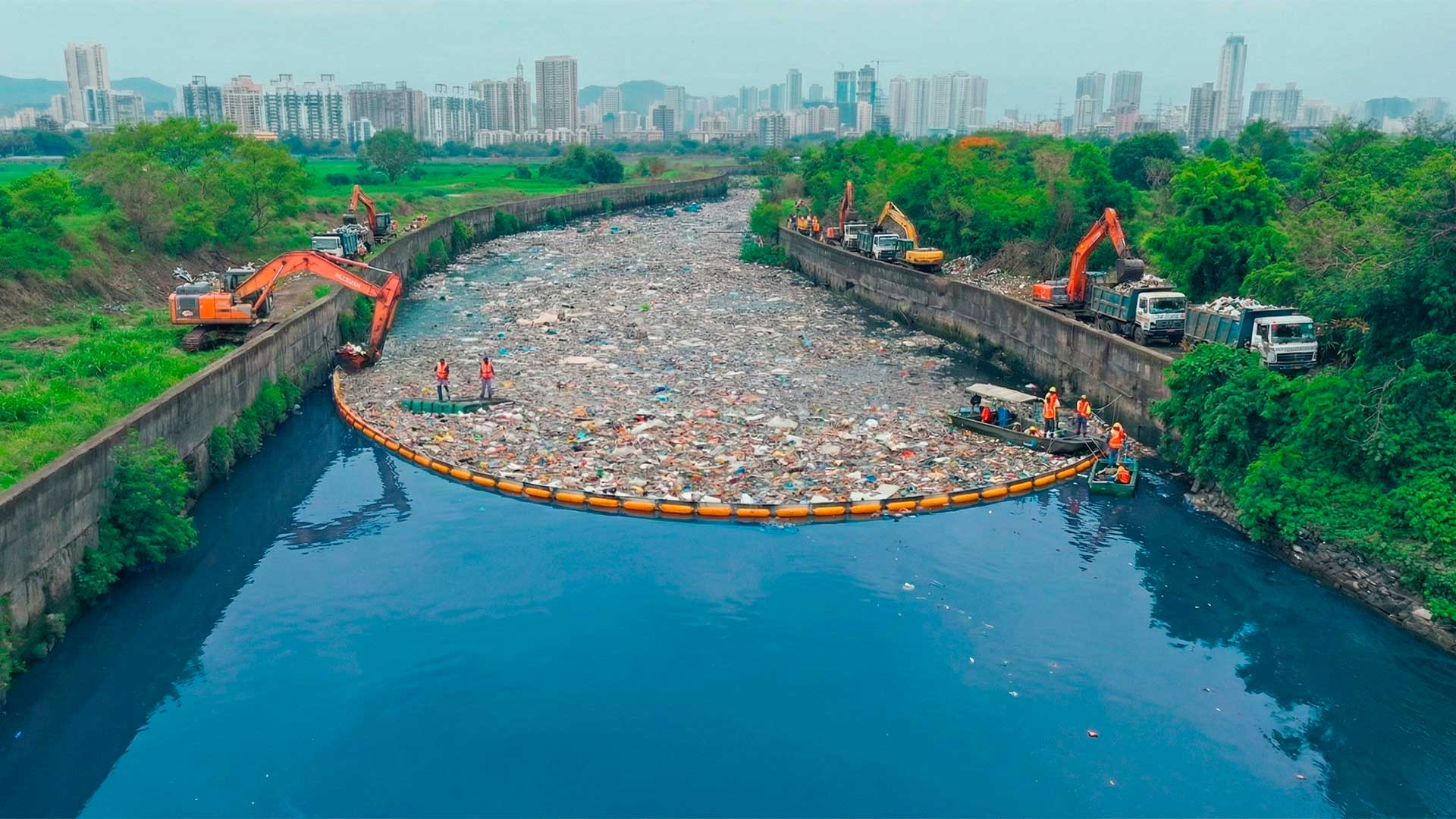


A Low-Cost Solution Aims to Intercept Trash in Urban Rivers and Canals Before It Spreads to the Ocean. Initiatives in Cities Like Mumbai Are Testing Modular and Locally Repairable Barriers. Experts Note That Technology Helps, but Does Not Replace Plastic Reduction and Waste Management.
The Crisis of Plastic in the Oceans Is Often Portrayed with Images of Garbage Patches at Sea, but the Main Route Starts Much Earlier. For a Significant Portion of the Material, the Most Common Pathway Passes Through Rivers, Canals, and Urban Drainage Systems, Which Function as Conveyors Transporting Waste to the Coast.
The Challenge Is That Once Plastic Is in Open Water, It Disperses, Breaks into Smaller Particles, and Becomes a Much Harder Problem to Contain. The Very Degradation Dynamics Contribute to the Formation of Microplastics, Which Can Enter the Food Chain and Reach Humans.
It Is at This Point That an Apparently Simple Idea Gains Traction. Instead of “Hunting” Trash in the Ocean, the Focus Is on Interrupting the Flow at the Source by Installing Interception Systems in Strategic Sections Where Waste Concentrates.
-
No one expected this under a common street: archaeologists find 3 intact oak barrels, buried about 400 years ago, with traces of lime and pieces related to 17th-century construction.
-
After decades of failed attempts, Brazil is once again looking to space with an orbital rocket measuring 12 meters, weighing 12 tons, costing R$ 189 million, and scheduled for launch in 2026, in a new race to finally achieve autonomous access to orbit.

-
The Earth will plunge into a few minutes of darkness in broad daylight in August 2026, when a total solar eclipse transforms the sky into one of the most impressive astronomical phenomena in recent years.

-
How the terraforming of Mars can transform the planet: artificial aerosols can increase the temperature by up to 35°C in 15 years, creating conditions for liquid water.


A Recent Example Comes from Mumbai, India, Where the Organization Planet Wild Reports a Partnership with Plastic Fischer to Expand Barriers in Canals and Drains That Flow into the Sea. The Proposal Blends Basic Engineering, Daily Operation and Sorting Logistics, Aiming to Prevent Trash from “Passing the Point of No Return.”
Why Rivers Have Become the Main Opportunity to Block Plastic Before It Reaches the Ocean

There Is Scientific Uncertainty About the Exact Amount of Plastic That Flows from Rivers to the Sea, as Measurements Vary by Season, Rainfall, and Local Characteristics. Nevertheless, Widely Cited Studies Estimate That Between 1.15 and 2.41 Million Tons Per Year May Reach the Ocean from Rivers, with a Large Portion Concentrated in a Few Watercourses.
When This Flow Increases During Rainy Periods, the Window for Intervention Becomes Short and Intense, Especially in Coastal Urban Areas. UNEP Highlights That Small Urban Rivers Can Export Much Plastic and That Local Actions Can Reduce This Outflow, Even Without “Solving the Planet” All at Once.
The Scale of the Problem Also Emerges in Global Estimates of Leakage to Aquatic Ecosystems. UNEP Points Out That 19 to 23 Million Tons of Plastic Waste Leak Annually into Aquatic Environments, Reinforcing the Need to Tackle Disposal and Infrastructure, Alongside Any Capture Technology.
How Floating Barriers Work and Why Simplicity Became a Strategy
Plastic Fischer Describes Its Solution as a Passive, Modular, and “Self-Aligning” System Designed to Intercept Most of the Trash Floating on the Surface. The Company Claims That the Model Allows Aquatic Life to Pass Underneath, Specifically to Reduce Impacts on Wildlife and River Flow.
In Practice, the Barrier Functions Like a “Funnel” at Water Level, Channeling Waste to an Accessible Collection Point. The Technology Does Not Depend on Motors and Can Be Adapted to Different Widths, Which Facilitates Replication in Urban Canals, Medium Rivers, and Sections with Varying Flow Rates.
The Distinction, According to Institutional Materials and Partners, Lies in the Tripod of Local, Low Technology, and Low Cost, with Construction Using Materials Available in the Region and Maintenance That Can Be Learned by the Community Itself. This Design Aims to Address a Common Weakness in Environmental Projects, Which Operate as Pilots and Then Fail Due to Lack of Maintenance and Funding.
Plastic Fischer Was Founded in 2019, According to a Statement from Siemens, and Has Been Expanding Operations in Asia Focused on Intercepting Plastic in Rivers. The Same Source Describes the TrashBoom as a Locally Built Modular Floating Barrier.
In the Case of Mumbai, Planet Wild Reports That Barriers Were Installed in Drains and Canals That Are Highly Polluted, Precisely Where Trash Tends to Accumulate Before Flowing into the Sea. The Organization States That the Partnership Included Installation of a New System, Operation, Cleaning of Accumulated Waste, and Strengthening Sorting and Processing Capacity.
What the Numbers Suggest and What Limits Appear in the Real World
On the Mission 34 Page, Planet Wild States That Plastic Fischer Has Already Prevented 2.5 Million Kilos of Plastic from Reaching the Ocean and That There Are Over 65 Systems Installed in Asian Cities. The Same Material Cites a New TrashBoom with the Goal of 10,000 Kilos per Month of Plastic Intercepted in Mumbai.
Even When Capture Works Well, the “After” Becomes the Decisive Part. Without Sorting, Viable Recycling, and Proper Disposal, the Project Risks Merely Shifting the Problem Elsewhere or Creating a Dependence on Continuous Cleaning Without Addressing Disposal at the Source.
Why Technology Can Scale and Yet Is Not Enough Alone
Reports on the Future of Plastic Show That the Risk of Deterioration Is Real If Nothing Changes, Including Scenarios of Significant Increases in Stocks and Leaks Over the Coming Decades. The Ellen MacArthur Foundation, Commenting on the Study “Breaking the Plastic Wave,” Highlights Scenarios in Which Stocks of Plastic in the Ocean Could Grow Sharply and That Annual Inflows Could Nearly Triple by 2040 Without Systemic Action.
Other Analyses Indicate Significant Growth Until the Middle of the Century, with Projections of a Strong Increase in the Concentration of Microplastics in Ocean Areas. An Example Is the WWF, Which Released Projections of Quadrupling of Ocean Plastic Pollution by 2050 Under Certain Scenarios.
Thus, the River Barrier Tends to Function Better as an “Emergency Valve” Rather Than as a Final Solution. It Reduces the Load Reaching the Sea, Buys Time for Cities to Expand Collection and Treatment, and Produces Useful Data on What Is Being Disposed of and Where It Comes From.
The Political Debate Continues in the Same Direction, with Increasing Pressure to Reduce Plastic Production and Accelerate Changes in Packaging and Return and Reuse Systems. Recent Reports on Global Negotiations and Treaty Proposals Show That There Is a Dispute Between Focusing Solely on Recycling and Including Production Reduction Targets, Which Directly Influences Whether Local Projects Will Be “Background” or Part of a Structural Turn.
In the End, the “Discovery” That Excites Is Not a Miracle Machine but a Practical Principle. If Plastic Reaches the Ocean via Predictable Routes, Blocking These Routes with Simple and Repairable Solutions Can Prevent Enormous Harm, Provided the World Stops Treating Waste as Something That Disappears Once Out of Sight.
Want to See a Discussion That Divides Opinions? Comment Whether You Think Barriers in Rivers Are a Smart and Immediate Solution or If They Have Become Merely a Palliative That Alleviates Pressure to Reduce Disposable Plastic Production and Holds Governments Accountable for Real Waste Management.







A nossa empresa/startup, Sitimi Labs Inovação, tem uma tecnologia para Ecobarreiras mais eficiente e eficaz para coletar plásticos em rios.
Buscamos parceiros/investidores para desenvolvimento final e testes.
Whatsapp: +55 21 98266 3798.
Eduardo Monte
Fundador
Conversem com o rapaz de Colombo – PR. Ele já faz o uso de barreiras há anos e com certeza pode ajudar muito nesse projeto.
Toda ajuda pra diminuir o risco é válido mais é só o começo deve ter punição por exemplo pra quem joga lixo fora de horário da coleta é outra ajuda interessante