





 Portuguese
  English
  Spanish
  3 min of reading
  11 comments


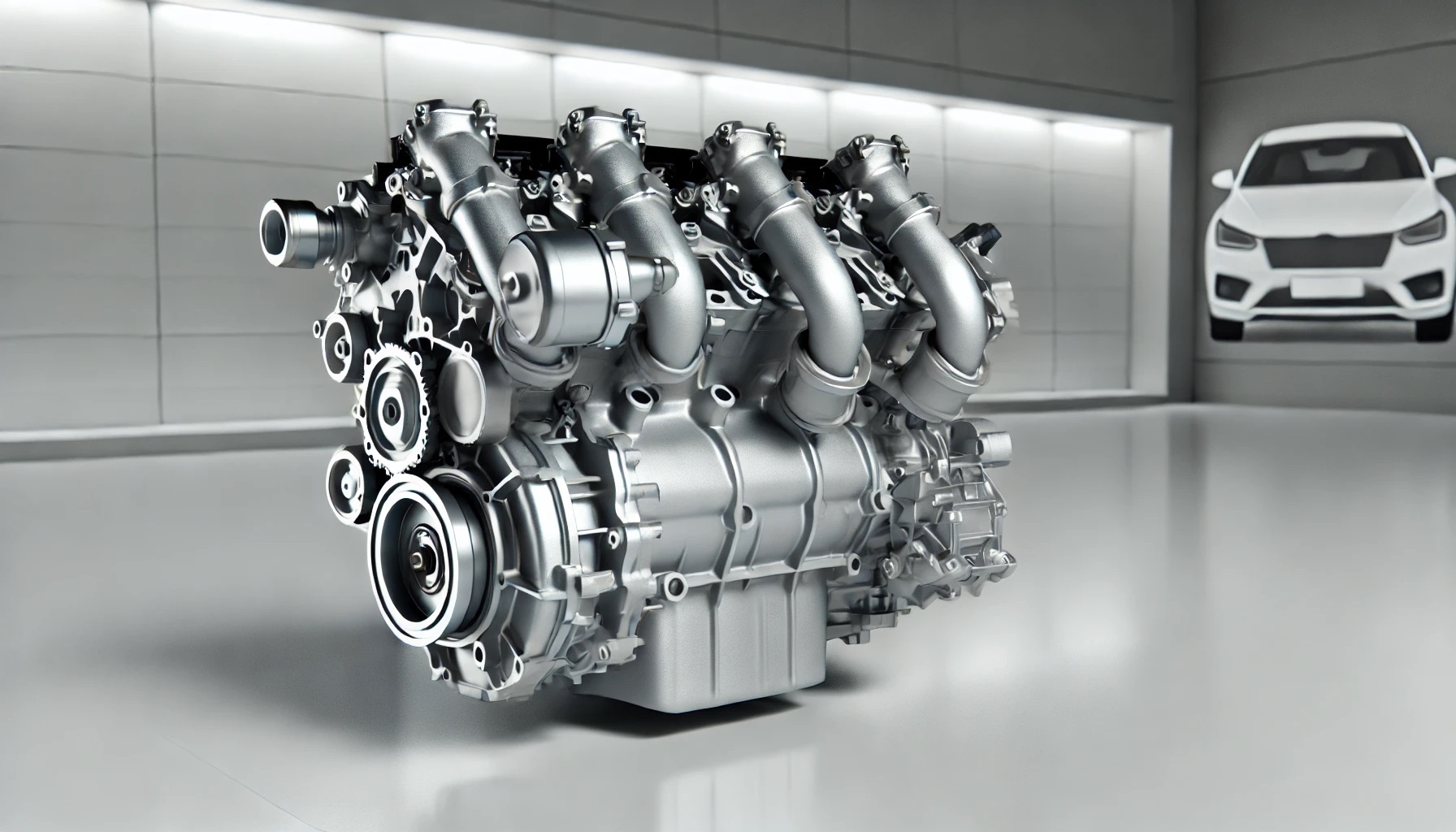


End of 3-Cylinder Engines? Discover Why Automakers Are Moving Away from This Configuration and What Are the Main Models Still Using This Type of Engine.
The future of 3-cylinder engines has generated a lot of discussion, especially on social media. Criticism and heated opinions arise on profiles and channels on YouTube, where many “experts” claim that these engines are fragile or disposable. However, reality tells a different story: these compact engines equip about half of the passenger cars sold in the first quarter of 2024. With impressive energy efficiency and performance, 3-cylinder engines are far from being disposable — and continue to gain ground in the global market.
A Bit of History of 3-Cylinder Engines in Brazil and the World
Is it really the end for 3-cylinder engines? According to the National Federation of Motor Vehicle Distributors (Fenabrave), from January to March 2024, 376,691 automobiles were registered. Of this total, 203.4 thousand were equipped with 1.0 engines.


However, only the Fiat Mobi (which has just over 14 thousand units) still uses a 1.0 block with 4 cylinders. All others count on 3-cylinder engines, meaning that out of the 376 thousand registered cars, 188,735 of them use a 3-cylinder engine, not counting part of the 1,131 units of the X1 and Series 1, which use a tricylinder 1.5 turbo unit.
-
Honda performs miracles in fuel consumption with a hatch that marks 13.2 km/l in the city and 15 km/l on the highway, leaving Polo, HB20, 208, and Onix behind and becoming a reference among compact cars without resorting to turbo or hybrid systems.

-
Six diseases that seem common but can prevent the renewal of the driver’s license for the elderly throughout Brazil and surprise experienced drivers — could any of them affect you without showing clear signs?

-
With 122 hp, fuel consumption of up to 17.7 km/l, and a trunk capacity of 440 liters, this hybrid SUV impresses even though it costs up to R$ 47,000 more than the Yaris — meet the Toyota Corolla Cross.
-
600 km with three Chinese plug-in SUVs, same mode and air conditioning on: Jaecoo 7, BYD Song Plus, and Haval H6 hit the road, and the pump reveals who was truly the most economical.

3-cylinder engines have been in the market for 71 years. They were developed by the German DKW (with a two-stroke cycle) and were even sold in Brazil in the famous Vemaguet. In the 1970s, the three-cylinder block became more sophisticated and entered the Japanese market as a solution to replace the two-cylinder engines of the old Kei Cars.
Is the 3-Cylinder Engine Good?
Many modern 3-cylinder engines derive from 4-cylinder blocks. Essentially, one cylinder has been removed. In Europe, 1.2 blocks, developed from 1.6 engines, are still common.
The main argument from manufacturers is that the three-piston block has lower heat energy loss and friction, as they are smaller and have at least 25% fewer moving parts compared to a 4-cylinder engine. Automobile engines lose a lot of energy to overcome the friction of their parts.
According to engineers, about 20% of the engine’s power is lost just due to friction. With one less cylinder, the effort decreases by about 15%. Thus, more energy is left to transfer to the wheels.
The key move was to pair the block with a turbocharger. This allowed for averages of power and torque higher than naturally aspirated 2.0 engines. Therefore, manufacturers were able to meet emission requirements and offer performance.
End of 3-Cylinder Engines? Main Cars with the Engine in 2024
The disadvantages of the 3-cylinder engine are also significant, and among them are the lower power, as it generally has less power than four-cylinder engines, which can affect the vehicle’s performance, especially in high-load or high-speed situations.
Despite rumors of the end of 3-cylinder engines, the national market currently offers at least 23 models equipped with tricylinder engines, with displacements ranging from 1.0 to 1.5. It seems that it will be difficult to escape this type of engine. Among the models are:
- Peugeot 208;
- Hyundai HB20S;
- BMW Series 1;
- Fiat Argo;
- Volkswagen Virtus;
- Fiat Pulse;
- Fiat Strada;
- Chevrolet Onix Plus;
- Chevrolet Montana;
- Chevrolet Onix;
- Renault Kardian;
- Chevrolet Tracker;
- Volkswagen T-Cross;
- Hyundai HB20;
- Hyundai Creta;
- Fiat Fastback;
- Citroën C3;
- Renault Kwid;
- Citroën C3 Aircross;
- Volkswagen Nivus;
- BMW X1;
- Volkswagen Polo;
- Toyota GR Corolla;
- Mini Cooper.









A maioria dos compradores nem imaginam o que estão comprando por isso vendeu esse número que foi divulgado e também por falta de alternativa todos lançaram sem divulgar essa informação, e quando não dá retifica e descartável mesmo.
Não falou nada com nada. Muito mal explicado.
Comprei 2 onix aspirados novo, pra trabalho, rodamos 200 km em média por dia, vou fazer a quarta revisão de 10 mil km, até agora tá excelente os carros, e tem potência normal a um de 4 cilindros