





 Portuguese
  English
  Spanish
  5 min of reading
  0 comments


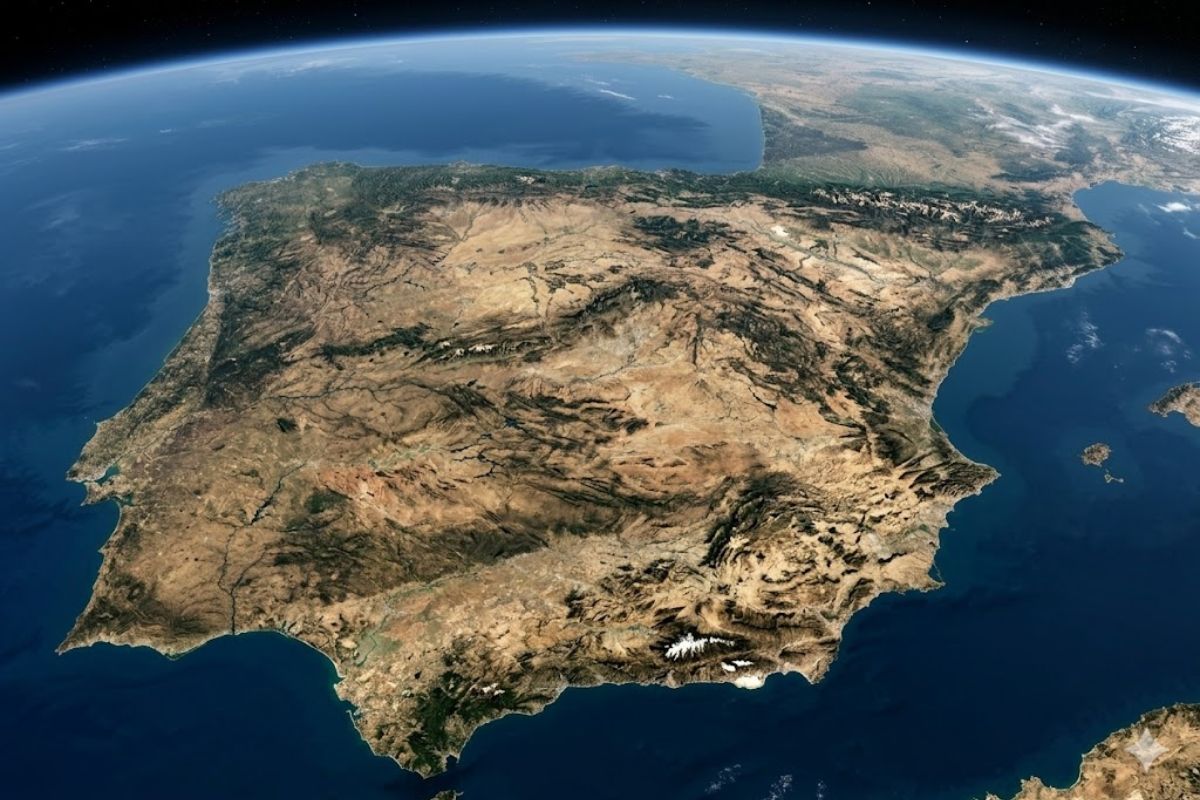
In Spain, The Contrast Between Strategic Position And Unequal Human Occupation Appears In The Interior, Where Geography Raises Mountains, Reduces Rain, Limits Agriculture And Brings Down The Population In Large Areas, Creating A Demographic Vacuum That Helps To Explain Why The Coast And Madrid Concentrate Almost Everything Until Now
In Spain, the external advantage of controlling a strategic position between the Atlantic, the Mediterranean, and the Strait of Gibraltar faces a persistent internal problem. The Geography Of Spain Hinders The Settlement Of The Interior, Fragmenting The Territory With Mountains And Pushing The Population To Coastal Zones, More Fertile Valleys, And Large Metropolitan Areas.
This imbalance appears in the numbers and the human map of the country. About 90% of the population is concentrated in a Smaller Portion Of The Territory, While A Huge Area Of The Interior Maintains Very Low Population Density. Spain Is Almost Four Times Larger Than England, But Has About 9 Million Fewer Inhabitants, A Contrast That Helps To Understand Why The Occupation Of Spanish Space Has Never Been Homogeneous.
The Geography Of Spain Transformed The Interior Into A Difficult To Occupy Mosaic
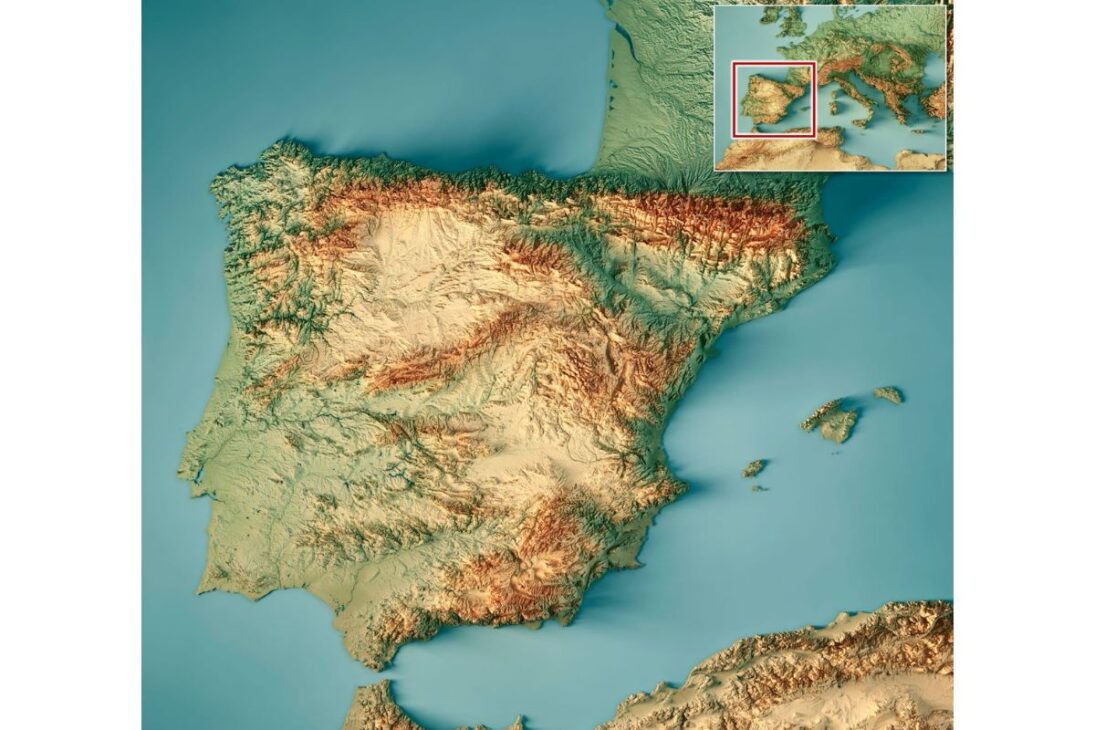
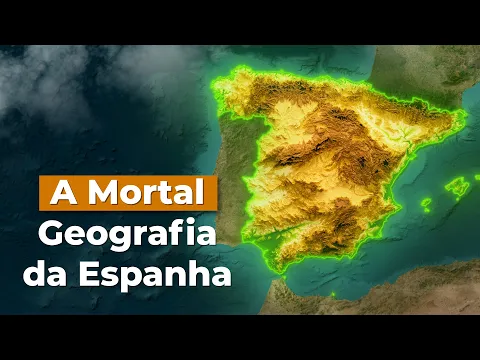
The Geography Of Spain Is Marked By Successive Barriers. The Pyrenees Close The North With Peaks Over 3,000 Meters And Limit Passages To The Rest Of Continental Europe.
-
In the middle of the sea, these enormous concrete and steel structures, built by the British Navy to protect strategic maritime routes, look like they came straight out of a Star Wars movie.
-
For years, no one could cross a neighborhood in Tokyo because of the tracks, but an impressive solution changed mobility and completely transformed the local routine.
-
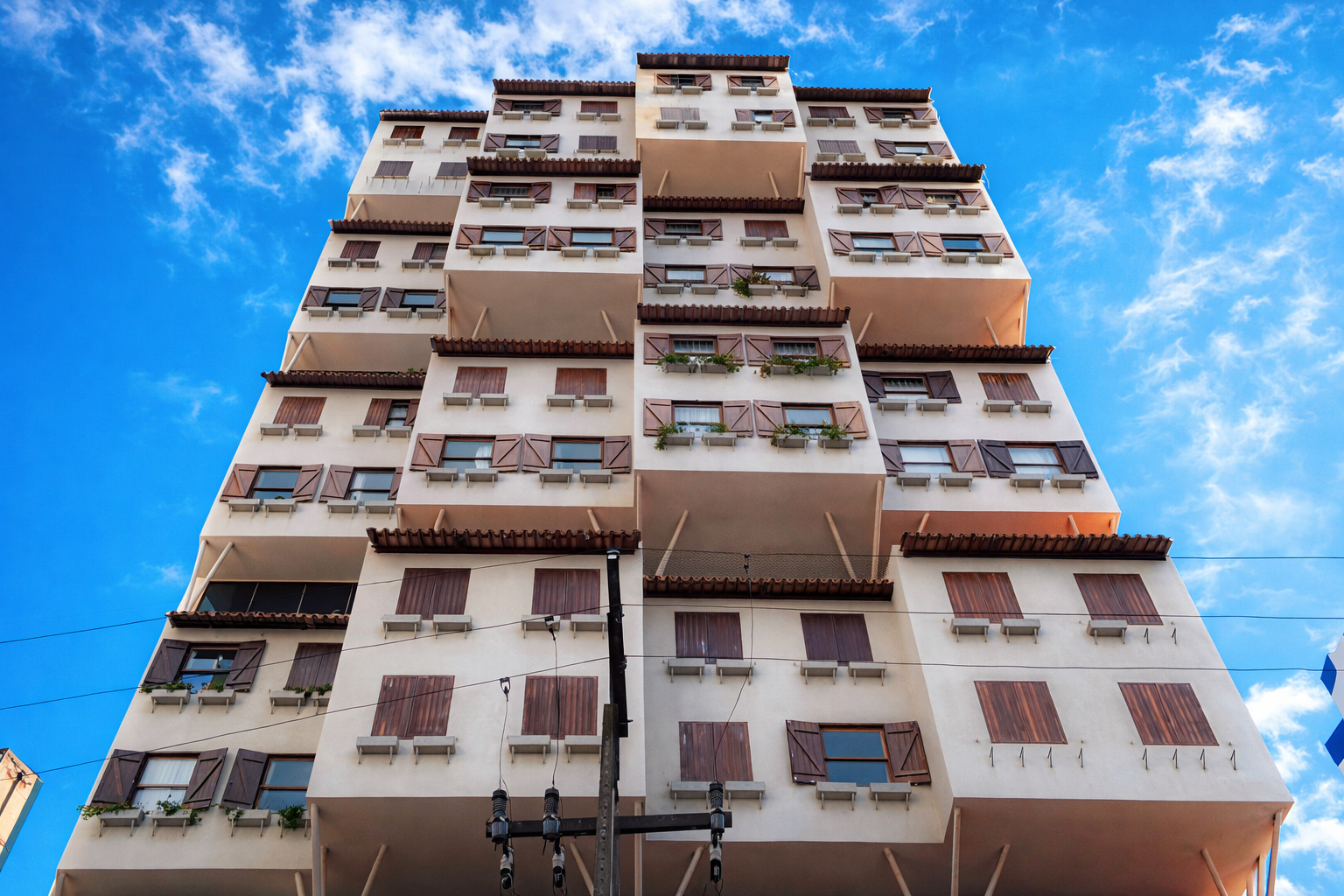
With 15 floors, an unusual building in Curitiba uses concrete, pilasters, and exposed roofs to create the effect of stacked houses.
-
Archaeologists opened a secret chamber that had been sealed by sand for 40,000 years inside a cave in Gibraltar and found what may be the last place where Neanderthals lived before disappearing from Europe forever.

The Cantabrian Mountain Range Compresses The Habitable Band Of The Northern Coast, While The Central System Divides The Meseta And Makes Internal Circulation Tougher.
To The East, The Iberian System Separates The Interior From The Mediterranean Coast. To The South, Sierra Morena And The Bética Mountain Range Reinforce The Compartmentalization Of The Territory.
These Mountains Not Only Shape The Landscape, But Condition The Population Distribution.
The Practical Effect Of This Structure Is A Country Cut Into Natural Compartments.
Instead Of Broad Continuous Plains, As Seen In Other Parts Of Europe, Spain Presents A Relief That Imposed Long Crossings, Hindered Exchanges, Delayed Regional Integrations, And Made The Interior Less Attractive For Dense Settlements.
Madrid Grew And Consolidated As An Exception, But A Good Part Of The Territorial Mesh Remained Sparse. The Population Concentrated Where The Relief Offered More Access, More Water, And More Productivity.
Mountains, Dryness And Little Water Explain Why The Interior Lost Population
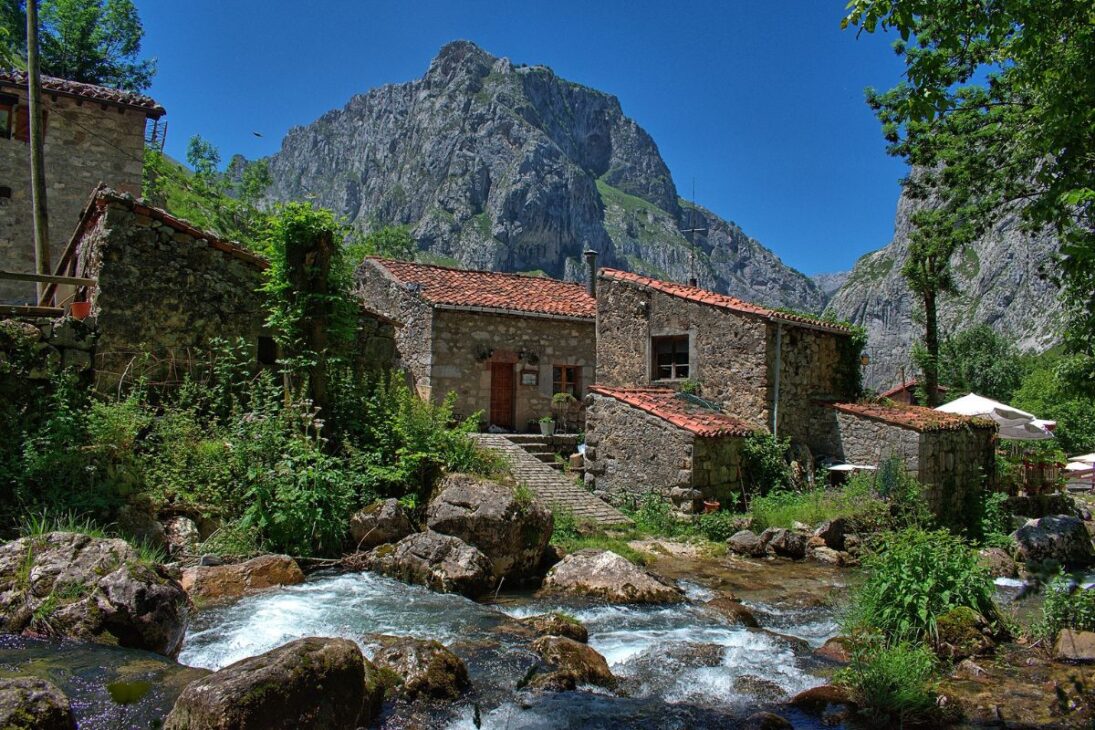
Besides The Mountains, Aridity Weighs Decisively. Spain Is Described As The Driest Country In Europe And Houses The Tabernas Desert, Along With Other Semi-Arid Areas That Hinder Settlement.
The Cantabrian Mountain Range Intercepts Atlantic Moisture, Making Its Ocean Slopes Receive Up To 2,500 Mm Of Rain Per Year, While The Plateau To The South Receives Only 350 Mm.
In The Southeast, The Almeria Area Appears With About 200 Mm Annually. This Brutal Difference In Water Helps To Explain Why The Interior Remained More Empty.
The Problem Is Not Only In The Lack Of Rain, But In The Way The Geography Itself Blocks The Circulation Of Moisture.
The Pyrenees, The Iberian System, And The Sierra Nevada Restrict The Passage Of Humid Masses And Amplify The Aridity In Various Parts Of The Territory.
During Summer, The Azores Anticyclone Further Reinforces This Atmospheric Block For Months. The Result Is A Combination Of Dry Summers, Cold Winters, Soils That Are Not Always Fertile, And Large Areas Of Low Productivity.
When Water Is Lacking And The Relief Separates, The Population Tends To Flee The Interior And Concentrate Where Economic Life Is More Viable.
History Reinforced The Vacuum Of The Interior Of Spain

The Historical Occupation Of Spain Never Fully Eliminated This Problem. Romanization Was Deeper In Mediterranean Areas, In The Guadalquivir Valley, And In Zones With Better Maritime Access, While Elevated And Dry Parts Of The Interior Took More Time To Integrate.
Later, The Visigoth Kingdom Established Its Capital In Toledo, In The Center Of The Meseta, But This Did Not Mean Dense Settlement.
The Position Was Strategic, However, The Population Continued To Be Spread Out In Low Density Due To Natural Conditions And Communication Difficulties.
With The Muslim Invasion In 711, The South Gained New Weight, Especially In More Fertile And Productive Areas.
Later, Christian Expansion Distributed Lands And Founded Villages, But Many Of Them Emerged In Regions Of Low Agricultural Productivity, Leaving Large Vacuums Between One Core And Another.
Centuries Later, The Choice Of Madrid As Capital Strengthened The Political Center, But The Urban Impulse Became Very Concentrated.
Industrialization Favored Catalonia And The Atlantic North, And Between The 1950s And 1970s, Migration From The Countryside To The Cities Further Accelerated The Rural Emptying.
The Population Of Spain Was Being Pulled To Specific Poles, While The Interior Aged Or Lost Inhabitants.
The Numbers Show A Spain Much Less Dense Than It Seems
The Population Density Of Spain Was Presented As 91 Inhabitants Per Km², A Low Index For A Country Of Its Size And Relevance On The Continent.
England Has A Density More Than Four Times Greater. Germany And Italy, With Comparable Sizes, Are About Twice As Dense.
The Netherlands Are Almost Four Times Denser. This Shows That The Spanish Problem Is Not Only Territorial Size, But The Difficulty Of Transforming Space Into Constant And Balanced Occupation.
The Contrast Also Appears Within The Autonomous Communities Themselves. Madrid, With About 6 Million Inhabitants And Small Territory, Surpasses In Population Much Larger Regions, Such As Castile And León And Castile-La Mancha.
This Confirms That, In Spain, Extensive Area Does Not Mean Human Concentration.
Geography, Climate, And History Pushed The Population To Few Strong Centers, Leaving The Interior With Vacuums That Resemble Much More Isolated Regions Than One Would Imagine In A European Country.
The Coast And The Metropolises Won The Dispute For Population
Today, Most Of The Population Of Spain Lives Near The Sea Or In Metropolitan Areas, And This Pattern Did Not Arise By Chance.
The Mediterranean Coast Offered A Milder Climate, Greater Ease Of Trade, And Better Agricultural Conditions.
The Guadalquivir Valley Concentrated Productivity And Occupation. Madrid Became A Political And Administrative Center.
In Parallel, The Areas Of The Interior Became Trapped In A Tougher Climate, Less Intensive Agriculture, More Difficult Communication, And Lower Capacity To Attract Industrial Activity.
This Logic Helps To Understand Why There Are Aging Villages, Nearly Abandoned Hamlets, And Large Expanses Of Low Density In The Country.
Spain Is Not Empty Due To Lack Of Strategic Position, But Because Its Internal Geography Imposed Severe Limits On Settlement Over The Centuries.
The Country Dominates Valuable External Routes, But Its Human Organization Has Been Shaped By Mountains, Dryness, Altitude, Isolation, And Economic Concentration In Few Points.
In The End, Spain Appears Powerful When Viewed From The Outside, Surrounded By Strategic Maritime Routes And Connected To Two Large Maritime Spaces.
But Inside, The Country Reveals A Harsh Design, In Which Geography, Mountains, Interior, And Population Never Balanced Simply.
This Is The Central Point Of The Problem: The Same Position That Makes Spain Strategic On The European Map Did Not Resolve The Natural Barriers That Emptied Its Territorial Heart.
Do You Think The Spanish Interior Can Still Be Repopulated With Infrastructure And Investments, Or Has Geography Already Defined This Limit Centuries Ago?





-

-

-

-

-

-

21 pessoas reagiram a isso.