





 Portuguese
  English
  Spanish
  4 min of reading
  2 comments




The Ambitious Brazilian Project, Known as North-South Railway, Has the Potential to Revolutionize National Logistics. Understand the Relevance of This Enterprise for Rail Transportation in Brazil.
The vast Brazilian territory is a significant economic advantage, highlighting each region’s production of different commodities: the Midwest is a leader in grains, the Northeast in tropical fruits, the South in agriculture, the North in minerals, and the Southeast in industrial products. However, this territorial extension presents challenges, such as the high time and cost to transport goods between regions, due to low investment in rail transportation. Fortunately, a Brazilian megaproject, the North-South Railway, has arrived to change this scenario, promising to revolutionize logistics and boost rail transportation in Brazil.
The largest railway project underway in Brazil, mobilizing around five thousand workers and accumulating investments close to R$ 5 billion, has just reached 73% physical progress and is expected to be completed by mid-2026.
Understand the Importance of Brazilian Rail Transport
The Brazilian megaproject, called North-South Railway, promises to connect all five regions of the country through rail transport, passing directly through nine states. This project aims to increase efficiency and reduce transportation costs, which can boost exports and, consequently, the national economy.
-
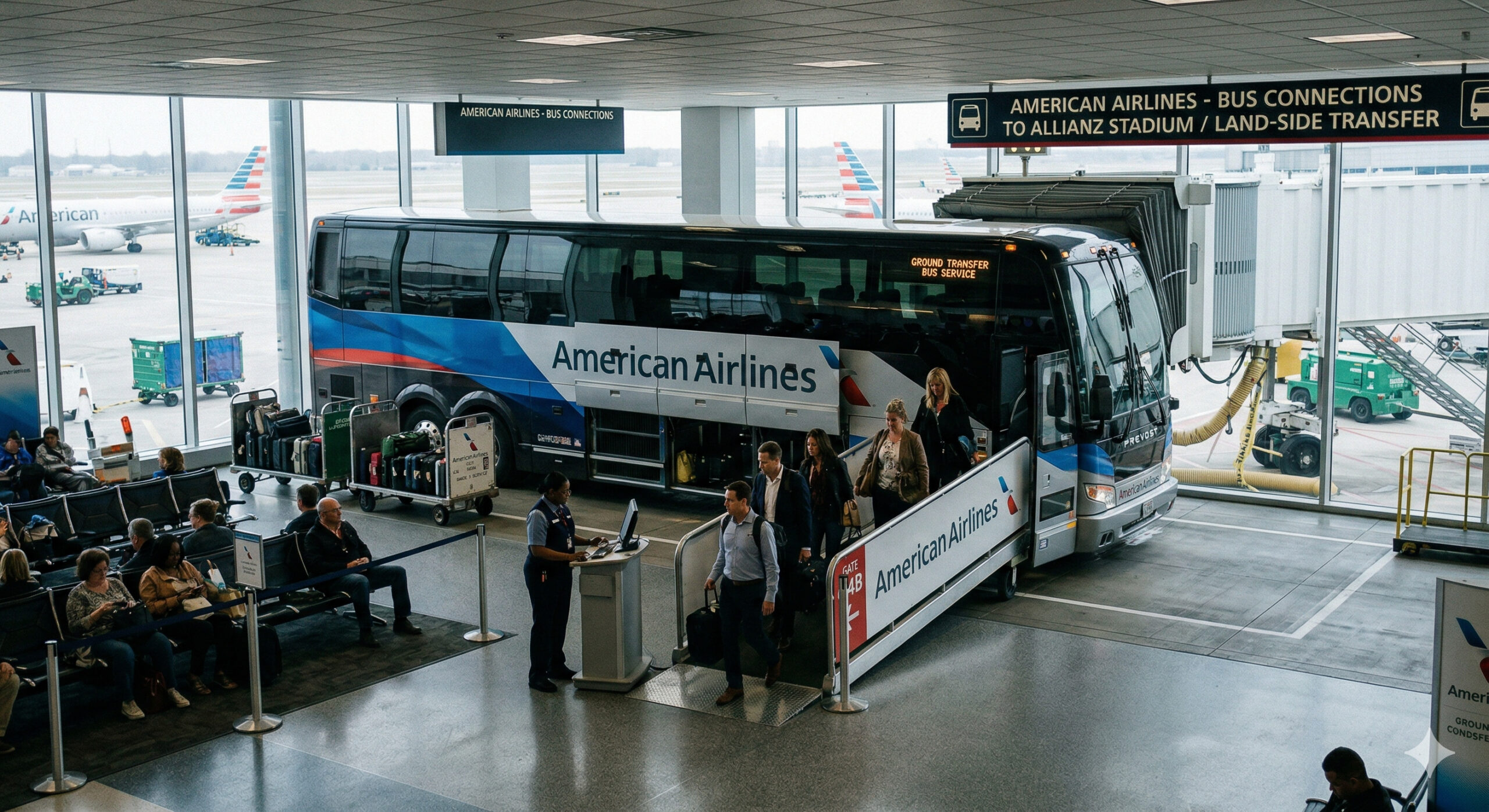
American Airlines starts selling trips as if they were flights, with check-in and baggage check at the airport, but on short routes, passengers board luxury buses connecting cities to major hubs in the U.S.
-
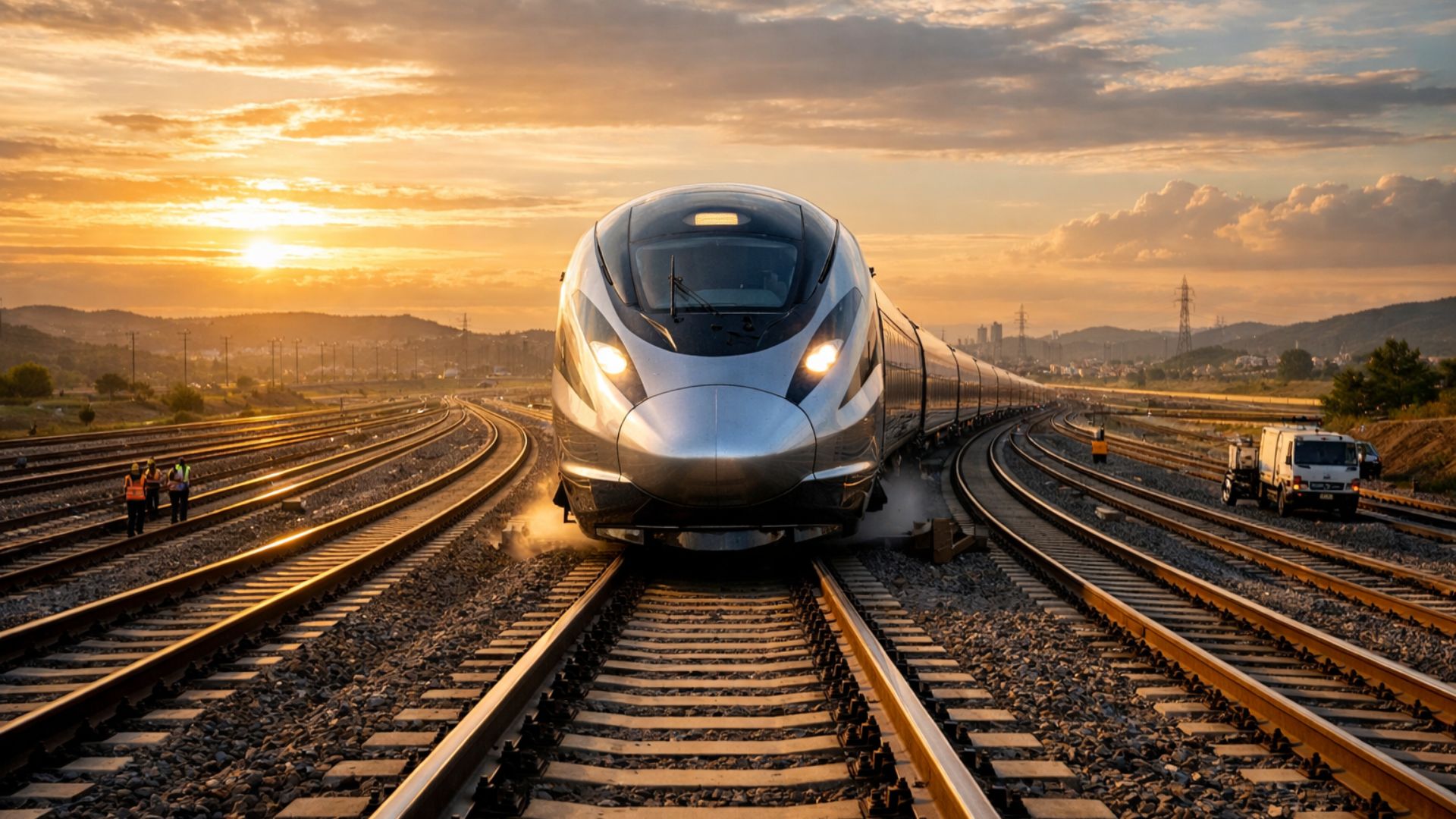
São Paulo surprises the world with a colossal railway network project that promises over 1,000 km of tracks, R$ 194 billion in investments, and 40 projects connecting the capital to the interior with fast and sustainable trains.
-
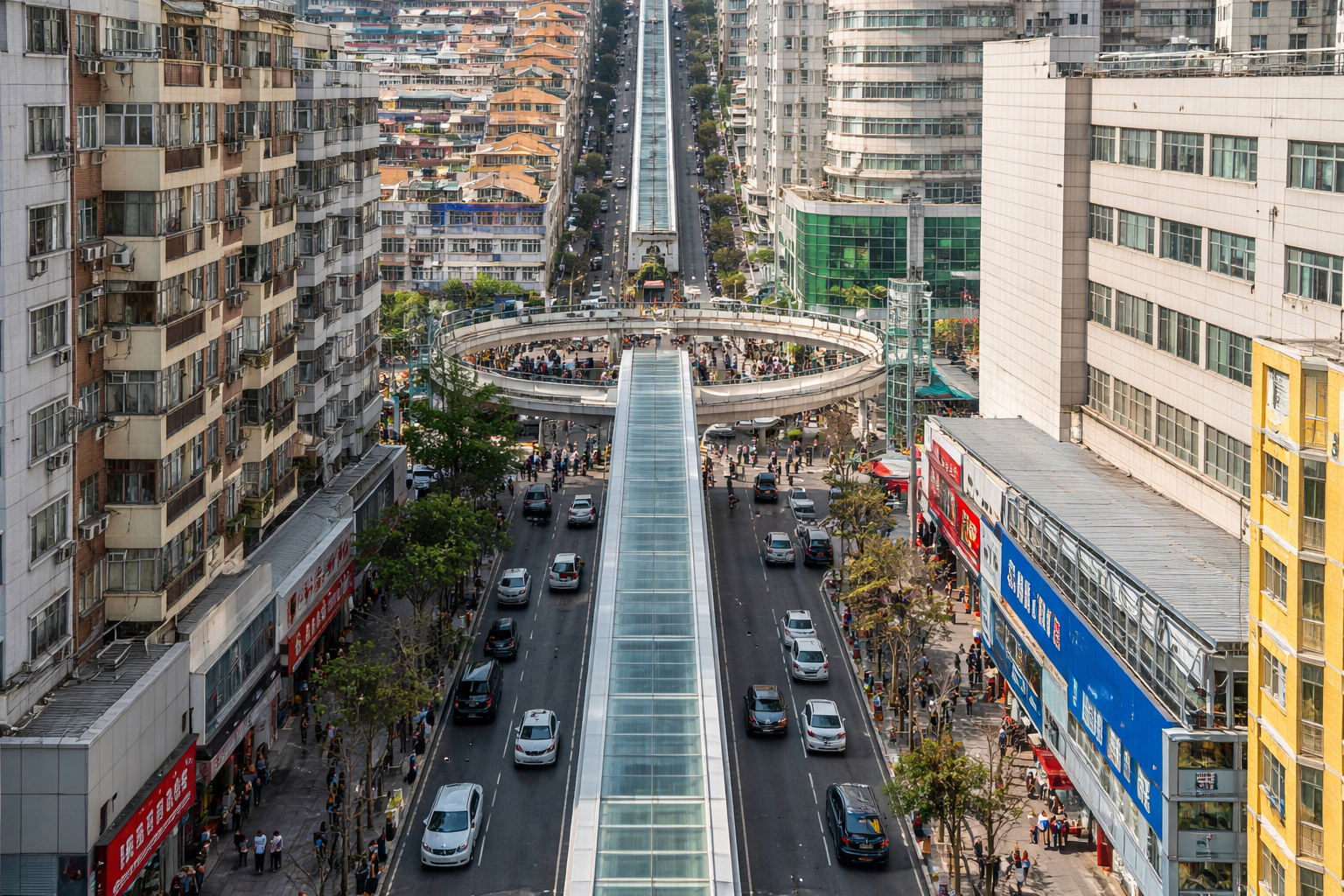
The world’s largest escalator, measuring 905 meters in China, reduces urban travel time from 1 hour to about 20 minutes and transforms mobility in mountainous regions with an engineering solution adapted to the terrain.
-
A R$ 300 million logistics giant is taking shape in Serra with over 100,000 m² and raises a question: how can this transform e-commerce and distribution in the state?
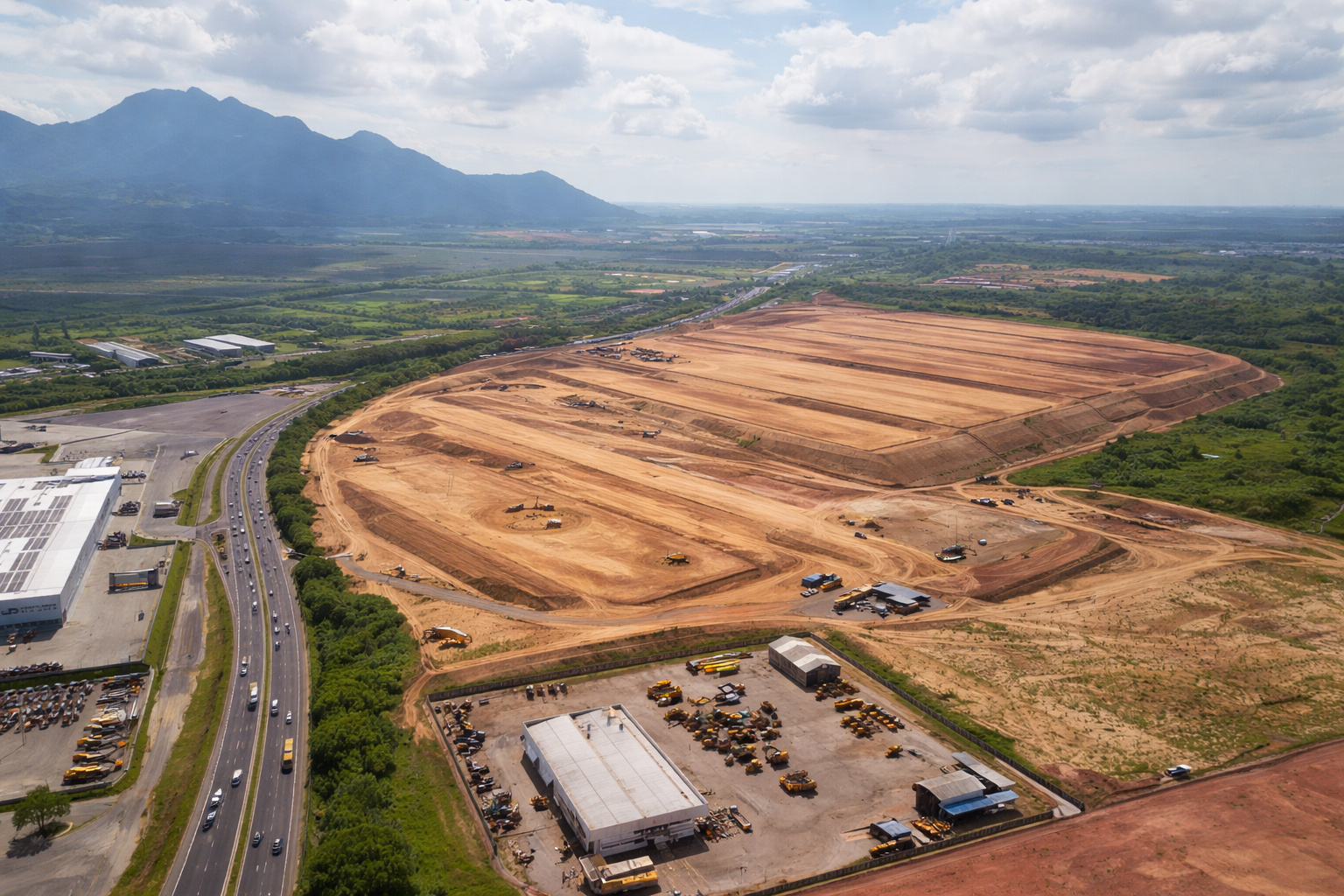

Brazil has a vast territorial expanse, especially in the longitudinal direction, which requires the government to develop large projects to interconnect all regions of the country.


However, unlike developed nations that have a strong presence of railways, our country has opted to invest in highways to meet this demand. Although this extensive network of highways is essential for logistics, this type of transport is considered less efficient compared to Brazilian rail transport.
Despite not having as many railways, this mode of transport has been present in the country for almost 200 years, with the inauguration of the Petrópolis railway in 1854, which was of utmost importance for Rio de Janeiro, also marking the beginning of investments in Brazilian rail transport.
How Will the North-South Railway Be Distributed?
Most states do not have direct connections to the sea, so goods must be transported by trucks to the ports, which makes it more expensive and takes much longer to reach their destination. Thus, the North-South Railway emerged as a solution to these logistics obstacles, as rail transport is considered faster and more economical than road transport, which will consequently generate more profits for the entire country.
Overall, the North-South Railway will have 13 sections, starting from the city of Barcarena in the State of Pará to Açailândia in Maranhão, with a length of 493 km.
After that, it will go to Porto Franco, which is a completed stretch since 1996, with 215 km, thus concluding the part that passes through the Northeast region and returning again to the north, specifically in the city of Aguiarnópolis in the state of Tocantins, this being the shortest section of the route with only 42 km in length.
As it traverses Brazil, ultimately, the last point of the Brazilian megaproject is in the city of Rio Grande, in the state of Rio Grande do Sul.
Economic and Logistical Impact
The North-South Railway is fundamental for logistics and the economy of Brazil. By providing a more efficient and economical means of transportation, the railway reduces dependence on road transport, decreases road congestion, and improves road safety. Additionally, by facilitating the flow of agricultural, mineral, and industrial products, the railway strengthens the competitiveness of Brazilian exports in the global market.
The North-South Railway is a landmark in Brazilian railway infrastructure, with the potential to transform logistics and boost the national economy. Although it is not yet fully completed, the operational sections are already providing significant benefits, and expectations for the future are positive.
With most of the earthworks completed and several viaducts and bridges already finished, the physical progress of the railway accelerates: the installation of sleepers and tracks is already advancing at a pace of up to one kilometer per day.
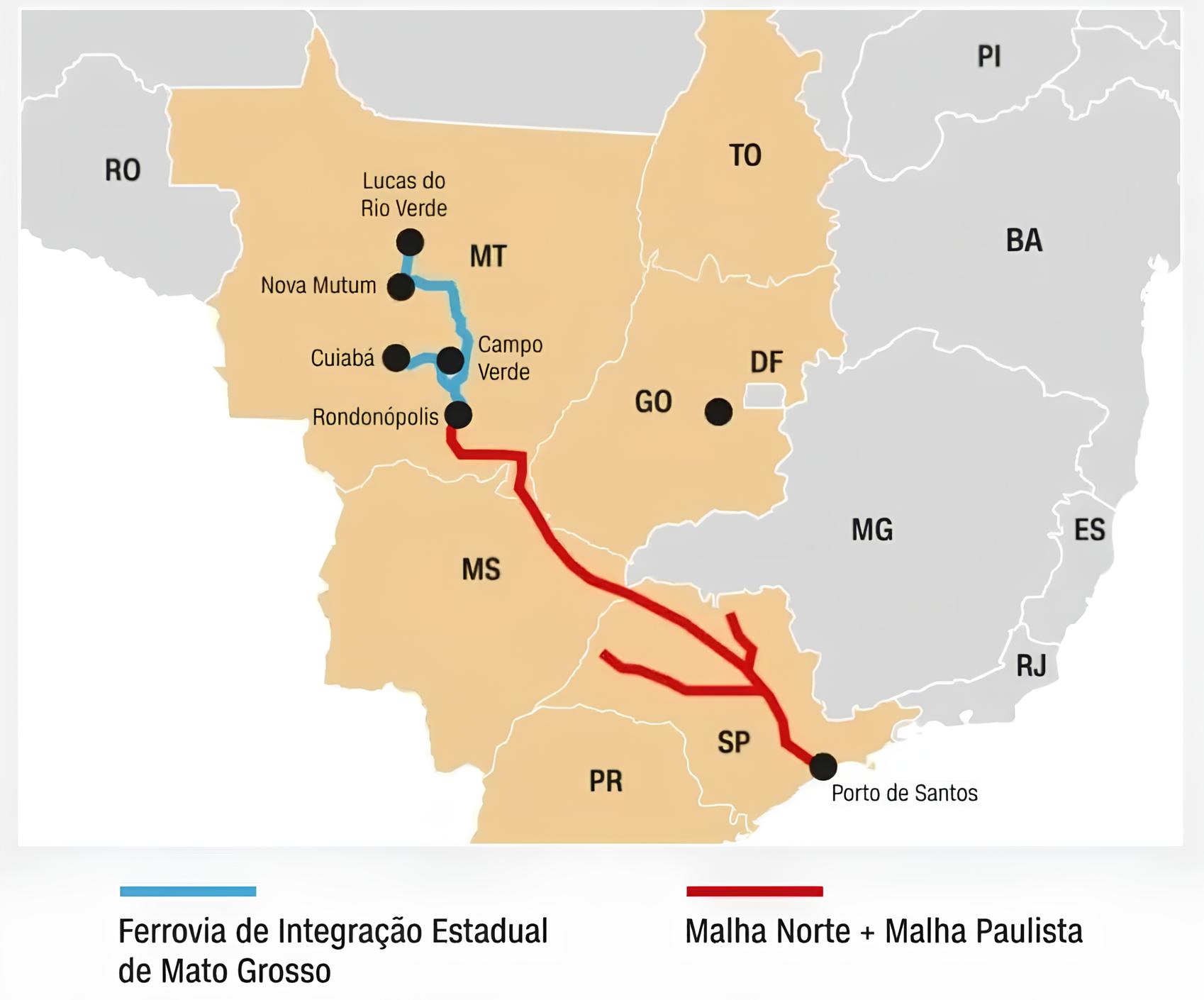
In practice, the FMT functions as a continuation of 743 kilometers of the North Mesh, which currently concentrates the harvest collection of grains from Mato Grosso from the megaterminal logistics of Rondonópolis.
Today, trucks loaded with soybeans, corn, and meal travel over 500 kilometers from farms until they reach the Rumo railway boarding point. From there, the trains cross the entire São Paulo interior until reaching the Port of Santos (SP), in a journey that takes about 76 hours.
Has the Brazilian Megaproject Been Completed?
The North-South Railway, one of Brazil’s main railway infrastructure projects, is not yet completely finished, but several sections are already in operation.
The section from Porto Nacional (TO) to Estrela d’Oeste (SP), with approximately 1,537 km, and the section from Açailândia (MA) to Porto Nacional (TO) are operational, facilitating the flow of grains and minerals. The section from Estrela d’Oeste (SP) to Panorama (SP) is under construction, and the section from Porto Franco (MA) to Barcarena (PA) is in planning.
When the project began to be structured, Rumo estimated an investment of between R$ 14 billion and R$ 15 billion to complete the 743 kilometers of the North Mesh. Today, however, the company avoids presenting new values or projections.
According to Marcassa, the decision about the next steps will be up to the board of directors, which is expected to deliberate between December and January. The analysis will take into account three main factors: the volume of necessary investments, the potential for revenue generation, and the cost of capital to make the works feasible.









Esta impossível de ler, pois as propagandas sobrepostas tomam 80% da tela.
As ferrovias são vitais para qq país. Imagine p/países continentais como EUA, China, Rússia, Índia, Canadá, Austrália, Brasil, etc.
A Norte Sul e suas interligações com a Transnordestina, a FICO, FIOL, Ferrogrão e as demais, que irão até Mova Mutum e Lucas do Rio Verde em Mato Grosso, fica a um passo de concluir um sonho de nos ligarmos ao Pacífico pelo Peru. Restando apenas o trecho de Rondônia e o do Acre.
A nossa parte dava para o Brasil fazer sozinho, sem precisar da dependência de outros países.
A parte do Peru, já que China tem o interesse e a dependência de nossos produtos, ficaria responsável p/obra juntamente com aquele país, já que tem uma megaestrutura no porto de Chancay, visando integrar a America do Sul com a seu país e Ásia como um todo encurtando a distância em cerca de 15 dias,melharando a logistica e diminuindo custos.
No caso do Brasil, uma ideia seria alocar os recursos das EMENDAS PIX/SECRETAS, que são em média 50 bilhões ao ano. Em pouco tempo, teríamos as obras concluídas e funcionando para o bem do povo e do país.