





 Portuguese
  English
  Spanish
  4 min of reading
  0 comments


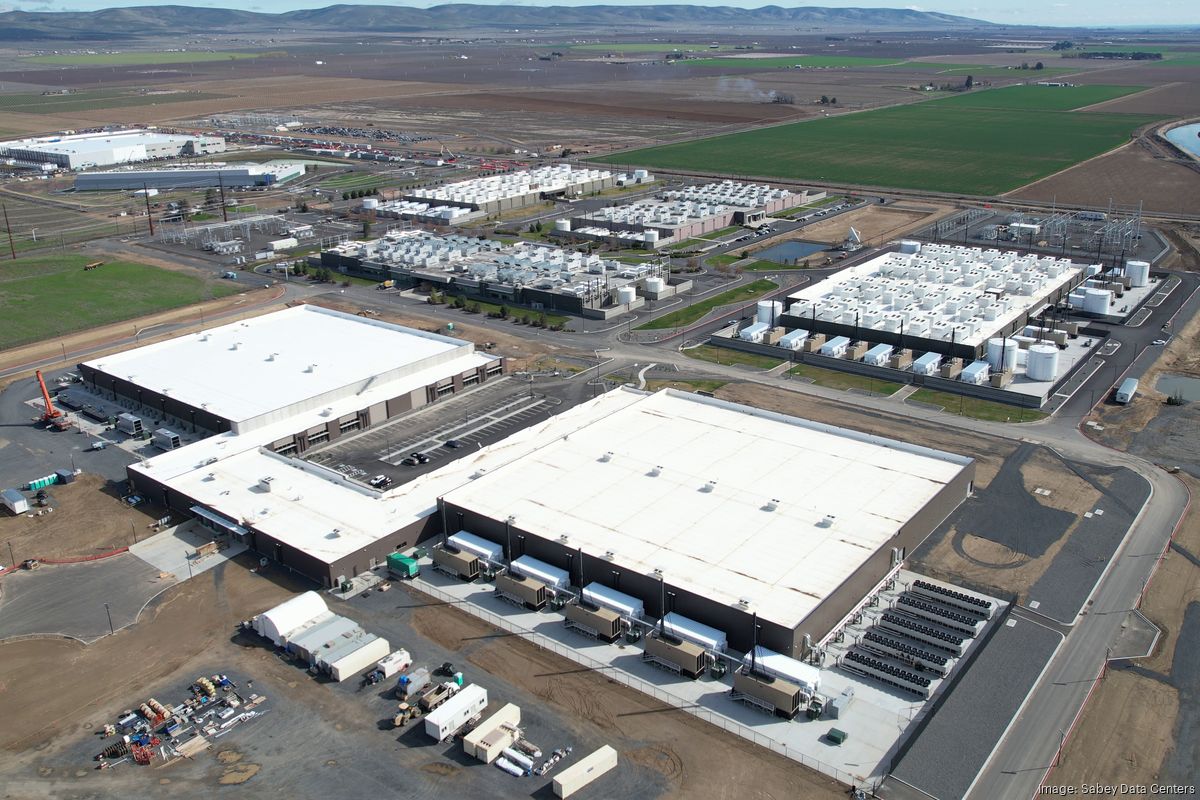
With Investments of US$ 450 Billion Per Year, Tech Giants Like Google and Amazon Build Bigger Data Centers, Creating a Demand for Electricity That Challenges Global Infrastructure and Sustainability Goals
There is a new industry growing at an explosive pace in the world. These are the “invisible factories” of artificial intelligence. They do not produce cars, clothes, or any physical goods we can touch. Their production consists of algorithms, data, and responses for assistants like ChatGPT. However, the energy consumption of these facilities is already colossal and is reshaping the demand for electricity on the planet.
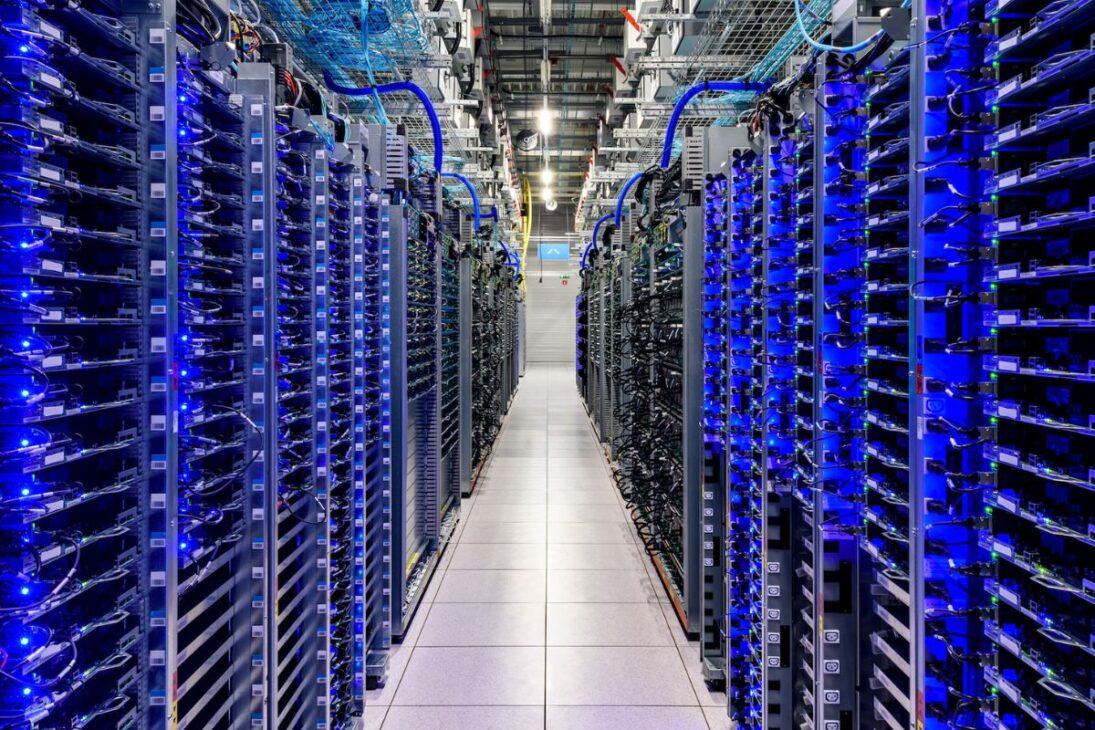
These factories are the data centers, gigantic warehouses filled with supercomputers. The demand for artificial intelligence is so great that, by 2025, these facilities will consume an unprecedented amount of energy.
The comparison with a city like Campinas (SP) helps to understand the scale of the challenge.
-
Inside an active volcano in Africa, residents use volcanic rocks to build houses in an impressive setting.

-
After 14 years of waiting, a rammed earth mansion built in 1702 in the North Zone of São Paulo will become a park with leisure facilities and green areas, with a million-dollar investment.

-
With 2 unfinished nuclear reactors, up to 25 billion in costs, and proven fraud, the Nukegate case has left 800,000 consumers still paying today for energy that will never be produced.

-
Expedition 501: Scientists drill into the ocean floor and discover a giant reserve of fresh water hidden beneath the sea, extracting nearly 50,000 liters and revealing an invisible system that could reshape the map of water scarcity.


The Energy Hunger of Artificial Intelligence, the Global Consumption of 415 TWh by Data Centers in 2024
To understand the size of the problem, we need to look at the numbers. In 2024, the global electricity consumption of all data centers is estimated to be 415 terawatt-hours (TWh), which represents 1.5% of all the energy used in the world. Of this total, artificial intelligence tasks were already responsible for around 20%.
Projections indicate an impressive growth. According to the International Energy Agency (IEA), data center consumption is expected to double by 2030, reaching almost 945 TWh.
Artificial intelligence will be the main culprit for this increase, potentially consuming nearly half of all data center energy by the end of 2025.
The Comparison with Campinas, How the Demand of 200 TWh from Artificial Intelligence in 2025 Translates into a Colossal Expenditure
Talking about terawatt-hours can be abstract. To provide a real dimension, let’s compare it to a well-known Brazilian city. The city of Campinas, in São Paulo, with its population of 1.18 million residents in 2024, has an estimated annual energy consumption of 0.526 TWh.
The projected energy consumption just for artificial intelligence worldwide in 2025 is 200 TWh.
Doing the math, this means that the energy needed to power global AI systems next year would be enough to supply approximately 380 cities the size of Campinas for an entire year.
The problem is not just the volume, but the fact that this energy is consumed in an extremely concentrated manner in a few locations.
The Tech Giants, the Investments of Over US$ 450 Billion from Microsoft, Amazon, and Meta in 2025
Behind this explosion in consumption are the tech giants. The investments in artificial intelligence data centers are astronomical.
Microsoft plans to invest US$ 80 billion by 2025.
Amazon has allocated US$ 86 billion to expand its AI infrastructure during the same period.
Tallying the investments of Microsoft, Amazon, Google, Meta, and Apple, the amount exceeds US$ 450 billion just for 2025.
This spending is justified by the need for increasingly powerful computers. New AI chips, like those from Nvidia, generate so much heat that they require much more complex cooling systems that consume even more energy.
The Pressure on the Electric Grid and the Dependency on Fossil Fuels in 2022
The growth of artificial intelligence is putting unprecedented pressure on the world’s electrical grids. Building new transmission lines to meet this demand can take 4 to 8 years, a pace much slower than that of building data centers.
Moreover, the energy used is still not clean. In 2022, about 56% of the electricity used by data centers in the United States came from fossil fuels, such as gas and coal. This means that while AI promises a technological future, it is currently contributing to increased CO₂ emissions.
The Solutions for the Future, Nuclear Energy, Solar, and Liquid Cooling for AI Data Centers


To solve the problem, tech companies are seeking alternatives. Meta, for example, announced that by the end of 2025, it will have invested enough to add 9.8 GW of renewable energy, such as solar and wind, to the U.S. electrical grid.
Another trend is to seek direct energy sources. Amazon has already acquired a data center that will be powered by a nuclear plant in Pennsylvania. Small modular nuclear reactors (SMRs) are also being considered to power data center campuses in the future.
Cooling technology is also evolving. Liquid cooling, which is 3,000 times more efficient than air cooling, is being adopted in 73% of new artificial intelligence facilities, promising to reduce energy costs and the environmental impact of the “invisible factory.”





-

-

-

3 pessoas reagiram a isso.