





 Portuguese
  English
  Spanish
  3 min of reading
  0 comments


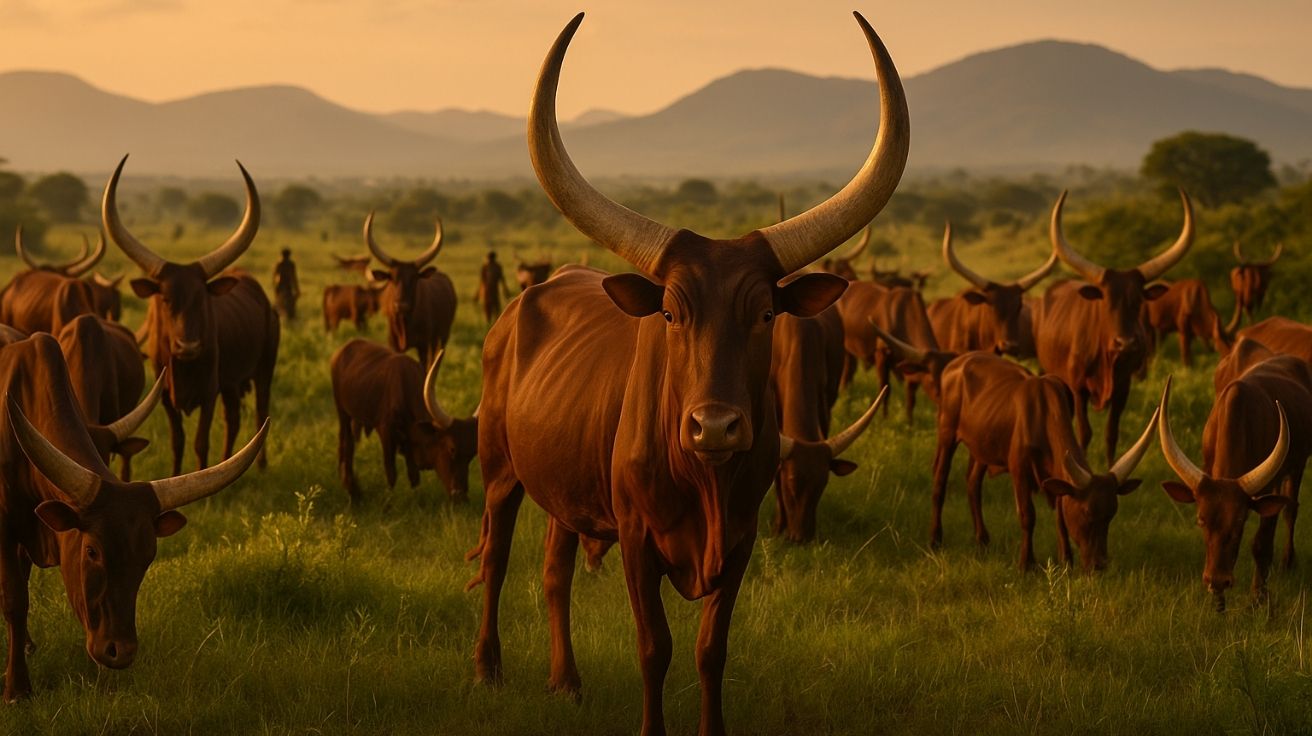
Among The Fertile Pastures Of Uganda And The Plains Of Texas, Breeds Of Cattle With Monumental Horns Stand Out In The Global Livestock Industry; In Africa, The Ankole Breed Represents Culture And Economy, While In The USA The Texas Longhorn Preserves The Heritage Of The Old West.
With Over 7 Million Heads In Pastures Of East Africa, The Raising Of Large-Horned Cattle Of The Ankole Breed Has Gained Attention In The Agribusiness. Raised On Open Farms In Uganda, Rwanda, And Kenya, These Cattle With Monumental Horns Are A Symbol Of Tradition And A Source Of Income For Thousands Of Producers.
African Livestock Farming Bets On Large-Horned Cattle
In Uganda, The Routine On Farms Is Marked By Simple And Efficient Management. The Large-Horned Cattle Are Released Every Morning To Graze In Areas Up To Five Kilometers In Radius, Taking Advantage Of The Abundance Of Natural Resources. The Animals Feed Freely And Return To The Pen At The End Of The Day.
The Pens Are Open, Without Cover, As There Are No Predators Present. The Local Technique To Control Parasites And Reduce The Stress Of The Herd Is To Burn Straw Every Three Days, Filling The Environment With Smoke. This Creates A More Comfortable Microclimate For The Animals, Preventing Infestations And Maintaining The Herd’s Health.
-
The water that almost everyone throws away after cooking potatoes carries nutrients released during the preparation and can be reused to help in the development of plants when used correctly at the base of gardens and pots, at no additional cost and without changing the routine.

-
The sea water temperature rose from 28 to 34 degrees in Santa Catarina and killed up to 90% of the oysters: producers who planted over 1 million seeds lost practically everything and say that if it happens again, production is doomed to end.

-
An Indian tree that grows in the Brazilian Northeast produces an oil capable of acting against more than 200 species of pests and interrupting the insect cycle, gaining ground as a natural alternative in soybean, cotton, and vegetable crops.

-
The rise in oil prices in the Middle East is already affecting Brazilian sugar: mills in the Central-South are seeing their margins shrink just as ethanol gains strength.


The African Livestock Farming With Large-Horned Cattle Does Not Depend On Large Structures. With Rainwater Harvesting Systems And Improvised Channels, The Farmers Ensure The Hydration Of The Animals At Low Cost.


Colossal Horns, Giant Economy
The Ankole Breed Stands Out Not Only For Its Huge Horns But Also For Its Economic Impact. Over 2.7 Million Ankole Cattle Are Slaughtered Annually In Regions Such As Western Uganda, Where Most Of The Raising Takes Place. These Animals Are Taken To Local Markets And Sold To Abattoirs For Meat Processing.
Although Less Numerous Than Traditional Zebu — Which Total Over 300 Million On The Continent — The Ankole Cattle Have Gained Ground In The Beef Market Due To Their Striking Appearance And Hardiness. Each Male Can Weigh Up To 500 Kilograms, While Females Reach About 360 Kg.
The Farm Of Large-Horned Cattle In Africa Is Both A Model Of Sustainability And Tradition. Producers Value The Cattle Not Only As An Economic Asset But Also As A Cultural Heritage Of Their Communities.
Texas Longhorn: The Large-Horned Cattle Symbol Of The Old West
In The United States, The Focus Is On The Texas Longhorn, A Breed Descended From Spanish Cattle And Known For Its Open And Resilient Horns. With About 273 Thousand Heads, The Breed Is Maintained Mainly In Texas, Where It Represents The Historical Identity Of American Livestock Farming.
The Large-Horned Cattle Farming In The USA Combines Tradition With Market Strategy. In Hill County, In Central Texas, A Farm Houses Over 400 Specimens. Between 100 And 130 Cattle Are Sold Annually For Slaughter, Exhibitions, And Cultural Events.
The Meat Of The Texas Longhorn Is Valued For Its Flavor And Controlled Fat Content. Farmers Also Keep The Animals For Symbolic Reasons, Reinforcing The Link Between Agricultural Activity And The Country’s History.
Threats In The Field: The Parrots That Cause Damage In Australian Livestock
While Africans And Americans Cultivate Large-Horned Cattle, Australians Face A Different Challenge In Agribusiness: The Invasion Of Parrots In Cattle And Grain Farms. Species Such As The Galah Cockatoo Gather In Flocks Of Hundreds, Attacking Crops And Creating Disturbances For Farmers.
It Is Estimated That These Birds Cause Damage Of Over 173 Million Dollars Annually To Australian Agriculture. In Addition To Crop Losses, They Also Affect Livestock By Consuming Seeds And Taking Up Facilities Intended For Cattle.
Control Measures Such As Scare Devices, Traps, And Population Management Are Adopted To Protect Rural Production Farms.
And You, What Do You Think Is Missing In Brazil To Better Appreciate Rustic Breeds Like Large-Horned Cattle And Further Strengthen Our Livestock On The Global Stage?









-

-

-

-

-

-

593 pessoas reagiram a isso.