





 Portuguese
  English
  Spanish
  4 min of reading
  3 comments


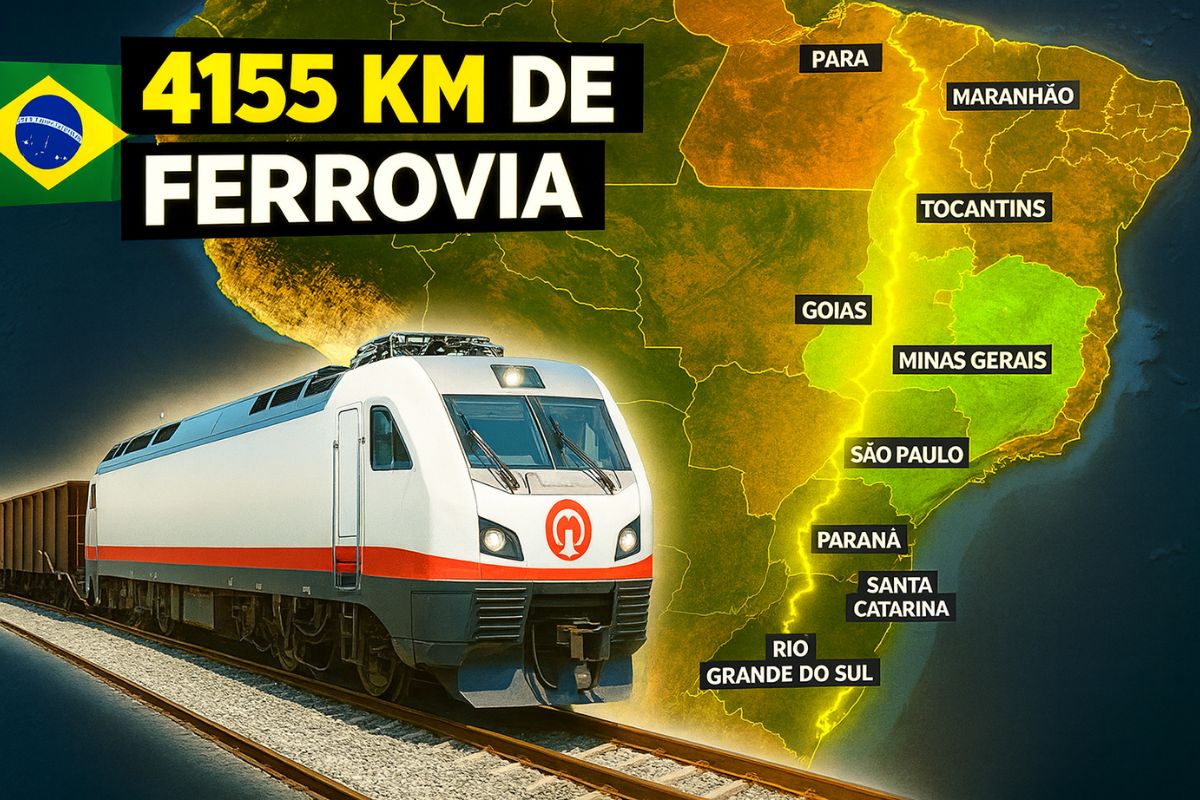


The North–South Railway Consolidated a Corridor of 2,257 Kilometers Between Açailândia (MA) and Estrela d’Oeste (SP), Connecting to Ports and Strategic Networks and Changing the Outflow Matrix in Central Brazil
The North–South Railway was conceived in the 1980s to integrate the territory through a continuous railway axis, reduce logistical costs, and scale up cargo transportation. Today, with the operational trunk between Maranhão and São Paulo, the project fulfills its promise: it united the country by rail, increased competition among routes, and repositioned producing regions on the competitiveness map.
The North–South route connects to the Carajás Railway heading toward the Itaqui port in Maranhão and the São Paulo Network towards the Santos port. The priority now is to transform built kilometers into gained minutes: extending yards, signaling adjustments, and centralized control have been increasing capacity, cadence, and reliability of the corridor.
Route and Connections: Where the Backbone Meets the “Ends”
The North–South Railway originates in Açailândia (MA), crosses Tocantins and Goiás, and ends in Estrela d’Oeste (SP), connecting to the São Paulo network towards Santos.
-
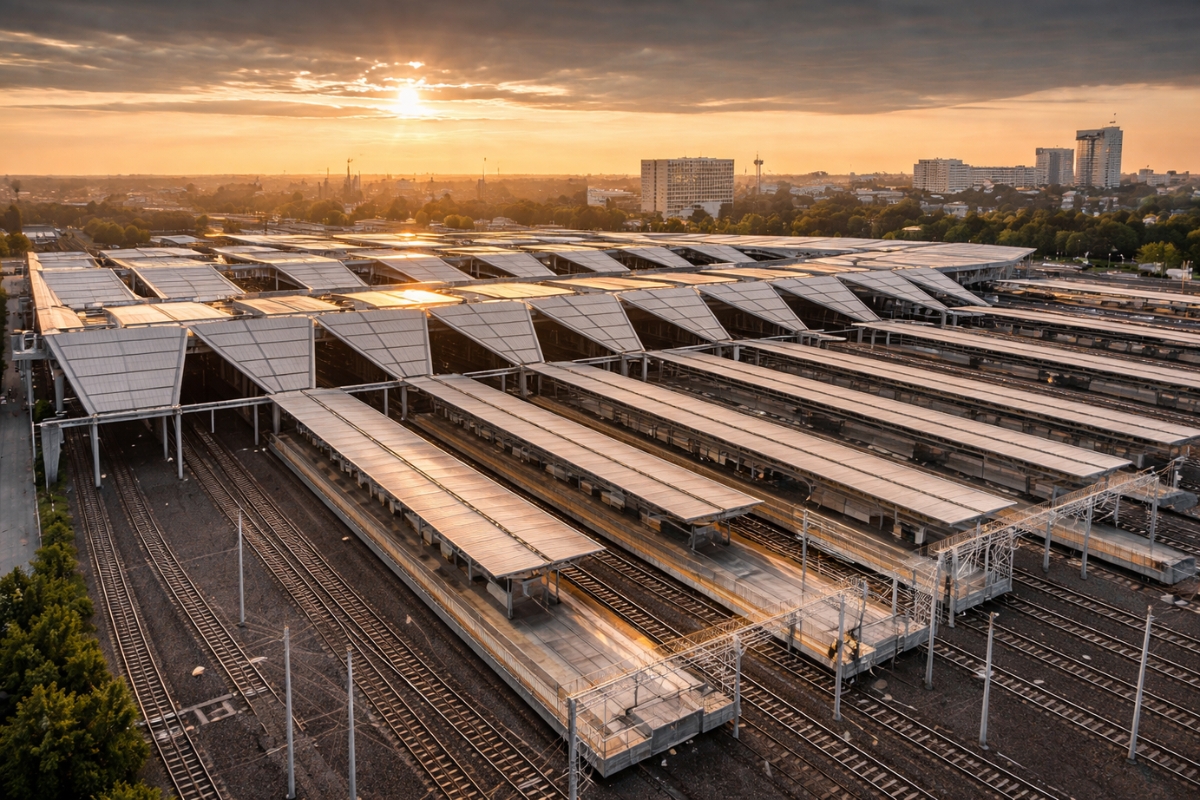
In A European City, The Country’s Largest Railway Junction Was Modernized Without Closing Its Doors, Kept Trains Running During Years Of Construction, Now Serves Up To 60,000 Passengers Per Day, And Installed Solar Panels That Generate About 30% Of Its Energy
-
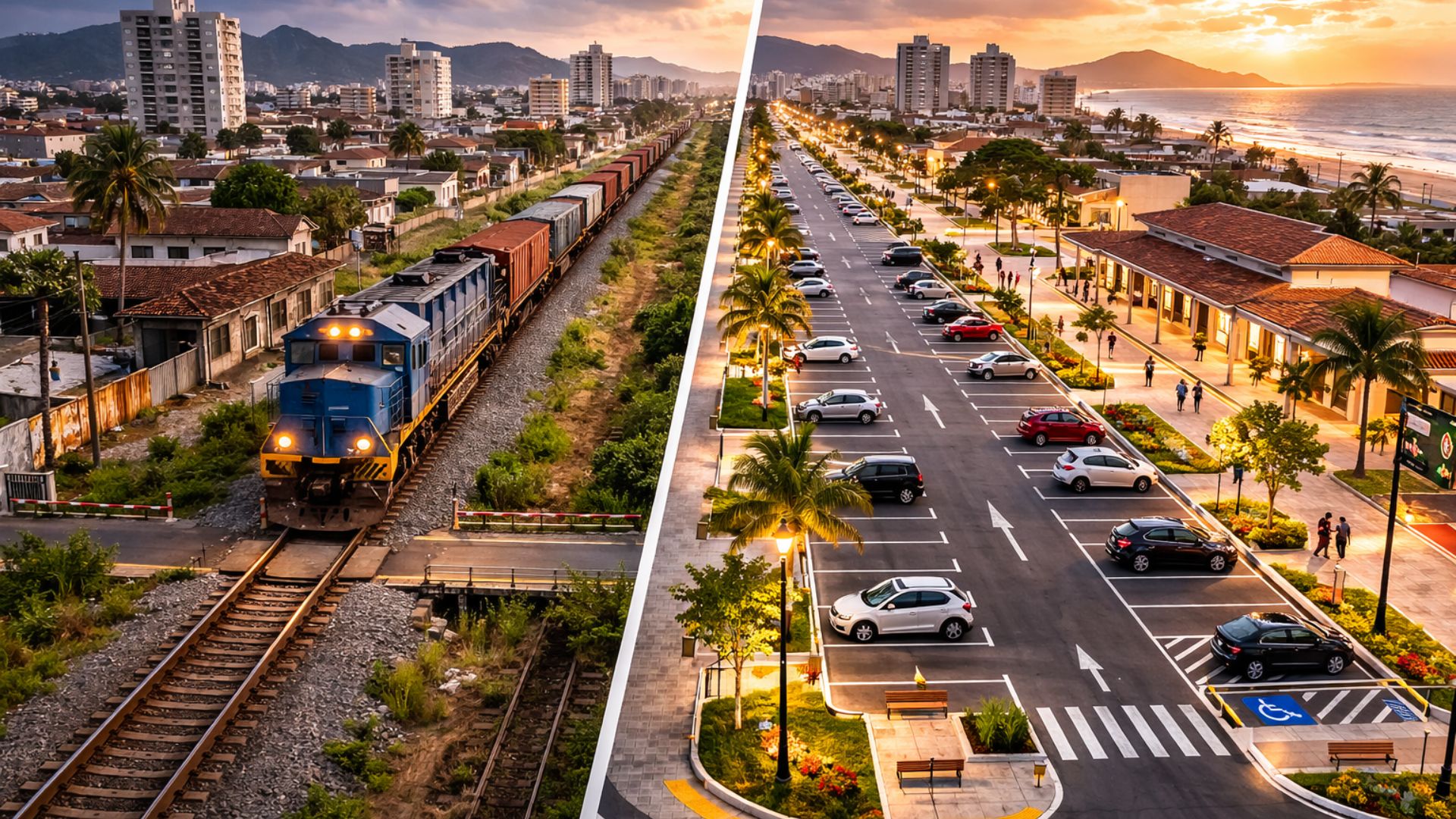
Famous Brazilian Railway May Become a Parking Lot
-
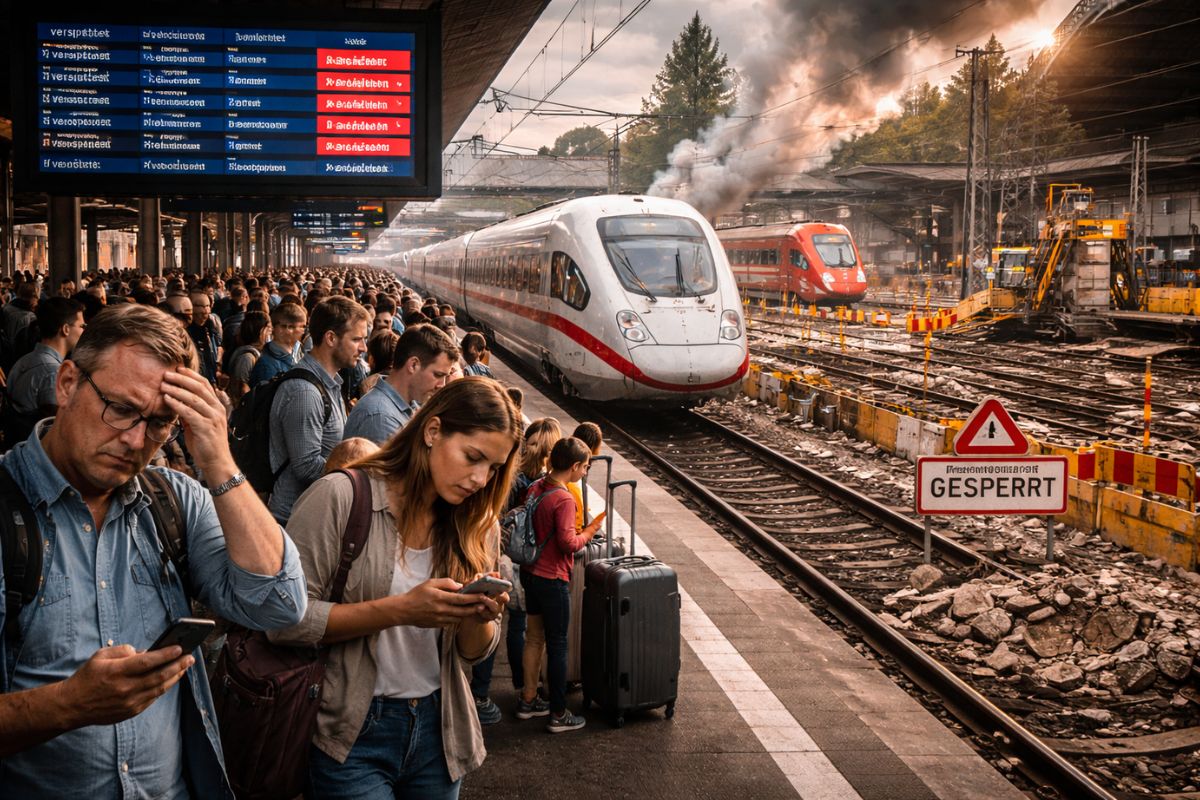
The Country of “Punctual As a Train” Admits It Has Lost Control: High-Speed Trains Delay, Stop, Disappear from the Map and Turn 6-Hour Trips into 10, While Deutsche Bahn Promises Restructuring in 2026 But Faces 19th Century Infrastructure, Staff Shortages and Sections Closed for Months
-
With an Investment of R$ 700 Million in One of the Country’s Main Rail Networks, VLI Reinforces Infrastructure, Receives 8 New Locomotives, and Expands the Corridor Connecting 7 States, Boosting Jobs and the Transportation of Grains, Ore, and Oil Products to the Port of Santos
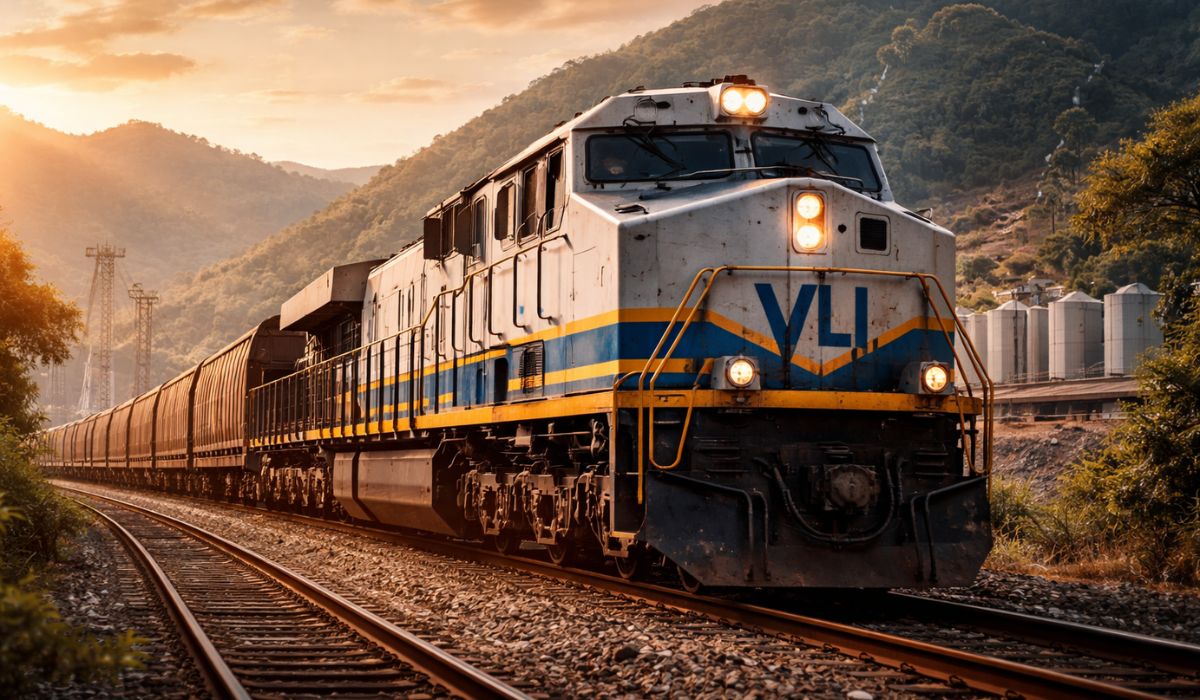

To the north, the interface with the Carajás Railway (EFC) opens the door to Itaqui; to the south, the connection with the São Paulo Network links the interior to the country’s main port complex.
Along the corridor, yards like Palmeirante, Porto Nacional, and Porto Franco organize crossings and operational windows.
Studies for extending to Barcarena (PA) are evaluating railway access to Vila do Conde, reinforcing the axis’s role as a multimodal distributor.
The backbone is ready; the ends define the competitive reach of the system.
The implementation advanced in modules. Between 2007 and 2010, the track reached Porto Nacional (TO); in 2014, the connection reached Anápolis (GO), a logistics hub in the Midwest; in 2023, continuity to São Paulo was consolidated.
From there, the debate shifted from “new work” to “usable capacity”, focusing on interoperability with EFC and São Paulo Network.
In 2019, the subcontract for the central-south section established investment and performance goals.
The practical result is predictability: synchronization between yards, calibrated signaling, and priority rules that transform the continuous track into a circulation chain.
Applied Engineering: How the Route Became Daily Performance
The construction combined drainage and earthworks (critical hydrology in the North), ballast and sleepers, and continuous long bars rail (LSC) for geometric stability.
Broad curves and gentle ramps reduced tractive effort and wear, increasing the payload per trip.
In the South, urban crossings and road interfaces required nighttime windows and meticulous planning. Yards sized for long trains and centralized signaling with occupancy detection shortened crossings and reduced variability.
In railways, every second saved in the yard is worth kilometers of avoided queue.
The integration with EFC allows for outflow to Itaqui; with the São Paulo Network, to Santos.
Memorandums and capacity plans in Itaqui and fine adjustments in the São Paulo network create logistical redundancy and competition among routes.
When there are two exit doors, freight becomes more predictable, and planning improves from farm to retail.
The recent operation focuses on lengthening yards, signaling, and terminals in the northern section to enable bidirectional flow and balance windows.
The logic is simple: less time stopped, more asset turnover, and lower cost per ton.
Comparatives: What the North–South Does (and What It Doesn’t Need to Do)
The EFC (Carajás), with very long ore compositions, and the EFVM (Vitória–Minas), with double track in several sections, are references for high tonnage and reliability.
The North–South Railway operates in a more mixed scenario, with cities, multiple products, and various interfaces.
It loses in tons per train but gains in economic function by connecting agribusiness and industry to two strategic ports.
On the international stage, dedicated corridors such as the Australian Roy Hill show exceptional metrics in a less urbanized environment.
The North–South’s vocation is different: to integrate producing regions, distribute flows, and create outflow alternatives. The correct comparison is of systemic results, not just train-km.
With the continuous trunk, the agenda turned to operation: centralized control, reprogramming of crossings, yard capacity, and clear operational agreements with EFC and São Paulo Network.
Each window adjustment frees new slots and increases the ceiling of trains per day without building a meter of track.
Parallel advances in projects like FICO (EF-354) and FIOL add feeders to the axis, while studies for Barcarena assess a third pathway to the sea.
When the corridor offers a real alternative, freight stabilizes, and industry plans with less risk.
The North–South Railway delivered the missing connection: a competitive axis from Maranhão to São Paulo.
The challenge now is to operate capacity with clock-like precision, longer yards, finely tuned signaling, and transparent interoperability, so that cost and time gains reach the gate, the warehouse, and the production plant.
When the operation works, the economy breathes. You can watch a video on this topic on the Construction Time channel.
If you work in logistics, agriculture, industry, or foreign trade: on your route, has the North–South railway already reduced freight, cycle time, or disruption? Where are the bottlenecks — yards, windows, port access, or integration with the last mile road transport? Share a concrete case in the comments and what needs to change for capacity to turn into competitiveness year-round.









Espero que essa espinha dorsal seja conpleta chegando no RS até o porto do Rio Grande. Nese caminho vai cruzar tbm com a futura e grande promissora nova Ferroeste que liga MS ao porto de Paranaguá e no futuro tbm espero, a ferrovia do Frango na região de Chapecó em SC.
I do not even know how I ended up here but I thought this post was great I do not know who you are but certainly youre going to a famous blogger if you are not already Cheers
Your articles never fail to captivate me. Each one is a testament to your expertise and dedication to your craft. Thank you for sharing your wisdom with the world.