





 Portuguese
  English
  Spanish
  3 min of reading
  0 comments


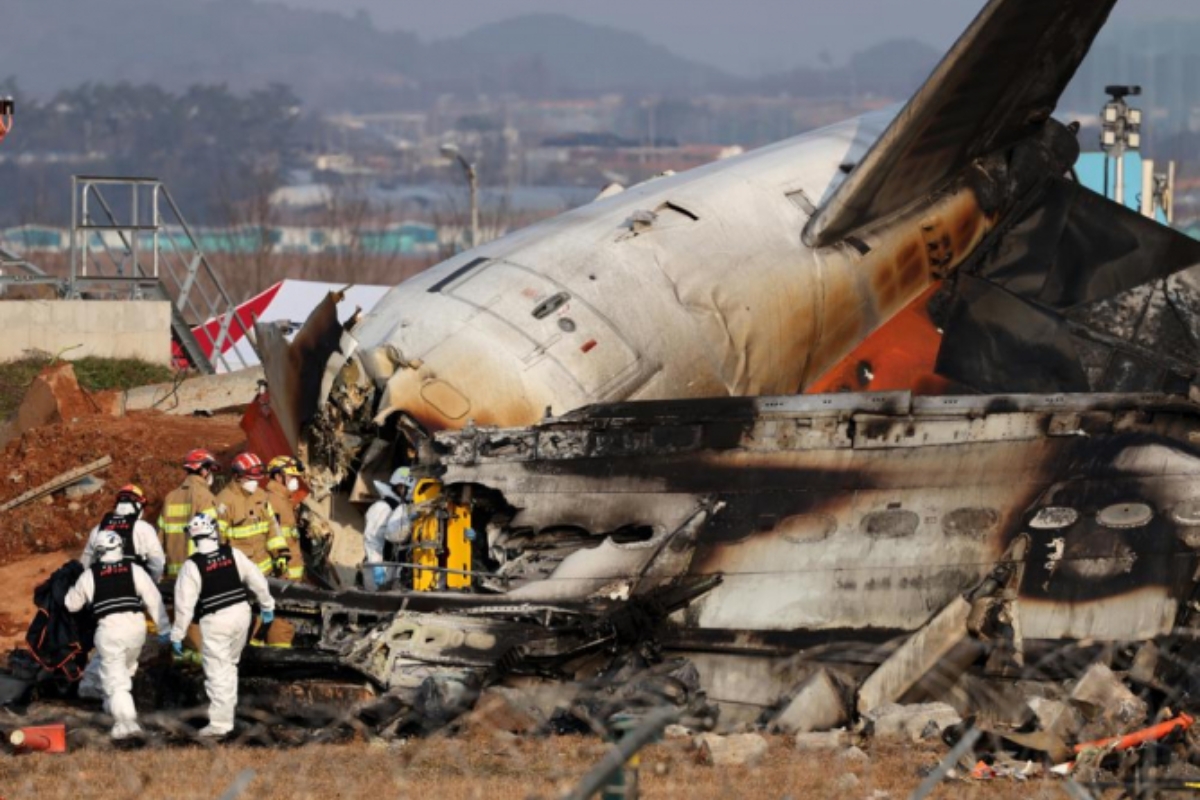
In 1972, an air disaster in the former Czechoslovakia gave rise to one of the most impressive cases ever recorded. Among the wreckage, snow, and an improbable succession of factors, Vesna Vulović survived and entered into world history.
There are stories that seem invented for a movie, but this one really happened. The protagonist was Vesna Vulović, a Yugoslav flight attendant who made history after surviving the disintegration of an airplane in mid-flight at over 10,160 meters altitude, a number that still impresses due to its technical and human weight.
The most shocking aspect is not just the altitude, but the fact that she survived without a parachute. Her case was recorded as the highest fall ever survived by a human, a record that continues to be officially recognized and has turned her name into a legend of aviation.
Flight 367 of JAT: a tragedy in the skies of Europe
Everything happened on January 26, 1972, aboard flight 367 of JAT Yugoslav Airlines. The aircraft was a McDonnell Douglas DC-9-32, a twin-engine jet designed for short and medium-haul routes, and was on a route that included Stockholm, Copenhagen, Zagreb, and Belgrade.
-
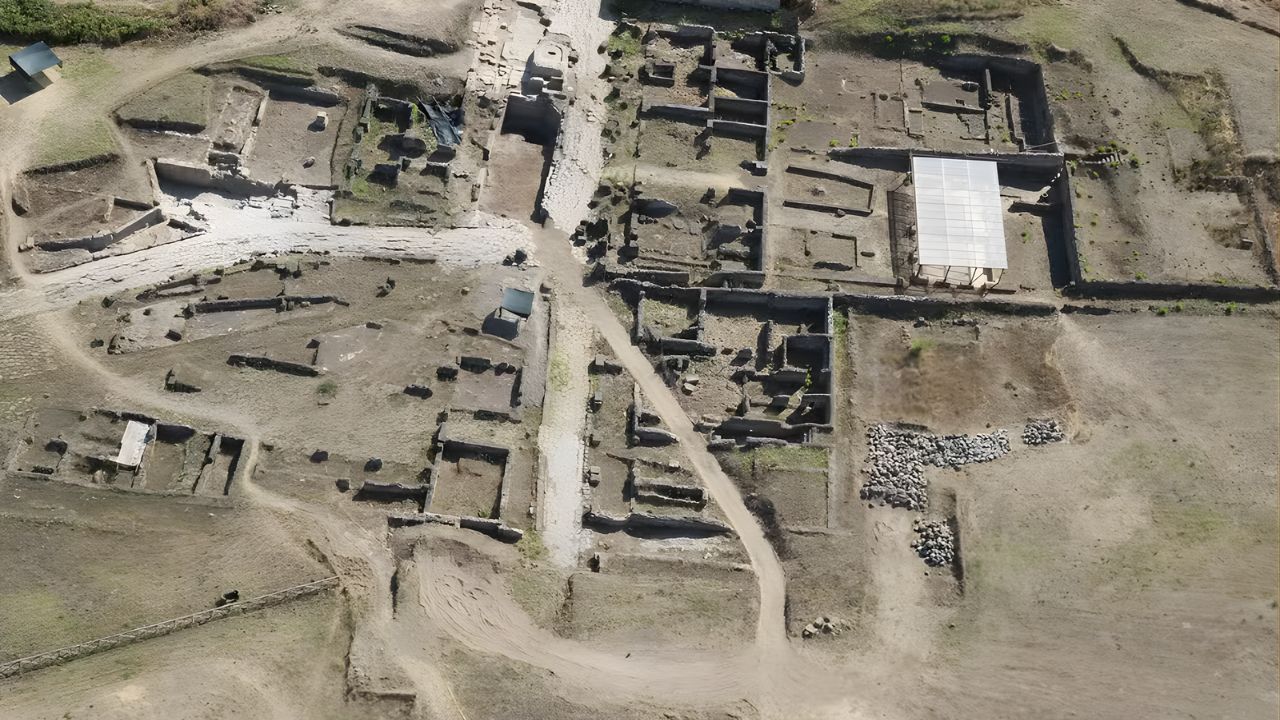
With a monumental stone structure dating back over 2,000 years, excavated 6 meters deep and with dimensions that surprise archaeologists, the newly discovered tank in Gabii may be one of the first major public works of Ancient Rome outside of temples and walls.
-
Goodbye fitness bracelet: users around the world are replacing the old item with this more discreet, comfortable smart ring that can monitor health for several days without recharging.

-
Millions of people have been eating garlic for centuries without knowing that this simple bulb contains a compound called allicin, which studies link to the reduction of blood pressure and cholesterol.

-
Neither in the refrigerator nor in a poorly sealed bag: this is the correct way to store bread.


During the cruising phase, the plane suffered an in-flight explosion and ended up breaking apart in the air. The toll was devastating: 27 people died, and among all the occupants, there was only one survivor. That one life saved against all odds was Vesna Vulović.
What caused the in-flight explosion
The official investigation concluded that the total destruction of the airplane was caused by the explosion of a device placed in the luggage. In other words, it was not due to a common structural failure or an engine problem, but rather a violent event that compromised the fuselage while the aircraft was at cruising altitude.
From an aviation perspective, an explosion at that altitude is especially lethal. The combination of sudden depressurization, structural fragmentation, and instant loss of control turns any possibility of survival into something extremely unlikely.


The key that changed everything: she did not fall in free fall
Although the story is often told as if Vesna had plummeted directly from the sky with her body exposed to the air, the technical reality was different. She did not survive a conventional free fall, but remained trapped inside a section of the fuselage of the plane as it descended chaotically.
This detail is essential to understand the miracle. The most widespread accounts indicate that she was immobilized in the rear part of the aircraft, possibly compressed by a service or meal cart, something that reduced the movement of her body upon impact and ended up being a decisive factor.
The impact: forest, snow, and an unrepeatable combination
The part of the fuselage where she was fell over a sloped area covered by forest and snow, near Srbská Kamenice, in what was then Czechoslovakia. This geography played a huge role: the trees, the slope of the terrain, and the snow would have helped to .
In physical terms, surviving a fall of this magnitude requires an almost impossible sequence of favorable variables. The structure surrounding Vesna, the angle of impact, the progressive deceleration caused by the terrain and vegetation created a unique situation, practically unrepeatable in the history of aviation.
The injuries were devastating
Surviving did not mean coming out unscathed, not by a long shot. Vesna Vulović suffered skull fracture, broken vertebrae, fractured ribs, broken pelvis, and severe injuries to both legs, and she remained in a coma for a period after the accident.
She also suffered a temporary paralysis from the waist down, which gives an idea of the extreme degree of physical trauma. From a medical perspective, her recovery was as extraordinary as her initial survival, because her body withstood multiple injuries that typically compromise life or leave even more severe sequelae.
A recovery that also challenged medicine
After the accident, Vesna underwent a long rehabilitation process and managed to recover significantly. Although she was left with a permanent disability, her progress was impressive for someone who had been exposed to such a violent impact and to injuries so complex at the bone and neurological levels.
Her story also became a medical example of human resilience. She not only survived the most brutal event, but also managed to return to a relatively functional life, something that further amplified the astonishment surrounding her case.
The Guinness record that remains standing
Over the years, her name became forever linked to a world record. The Guinness World Records officially recognizes her as the person who survived the highest fall without a parachute ever recorded, at a height of 10,160 meters, equivalent to 33,333 feet.
This fact is not an internet exaggeration or a legend amplified by social media. The record remains valid and continues to be one of the most impactful marks ever documented, not only for the number but for the combination of air disaster, extreme survival, and official validation.
The controversy that surrounded the case decades later
Over time, the story also became embroiled in controversy. In 2009, some journalists raised the hypothesis that the plane may not have disintegrated exactly at that altitude and that the actual sequence of events might have been different from the official version.
Even so, this alternative theory did not replace the recognized investigation nor alter the status of the case. The Guinness record was not revoked, and the official narrative continued to be the main reference, so the controversy exists, yes, but it did not nullify Vesna Vulović’s historical recognition.
Why her case continues to fascinate the world
The story of Vesna impresses because it brings together all the elements that captivate the reader right from the first line. There is an explosion in mid-flight, a fall of over ten kilometers, a single survivor, impossible injuries, and a world record that still stands the test of time.
But it also fascinates due to its technical dimension. It was not just a “miracle” told superficially, but rather an episode in which structural, biomechanical, geographical, and medical factors acted together in an extraordinary way, making possible what seemed absolutely impossible.
From flight attendant to global symbol of survival
After the accident, Vesna Vulović became a well-known figure in Yugoslavia and later an international reference in extreme survival. Her name ceased to be linked only to a specific flight and became part of the history of modern aviation.
Years later, she wanted to return to work flying, but was transferred to office duties. Still, her story had already surpassed any professional role: she had become the human face of one of the most incredible episodes ever recorded in the skies.
A true story that still seems like fiction
Vesna Vulović was born in 1950 and died in 2016, but her case continues to circulate around the world because it seems to break the most basic laws of common sense. And yet, it happened: a flight attendant was trapped in a section of the fuselage, fell from 10,160 meters, and survived.
That is why her story remains alive decades later. Not only because she holds a record, but because it forces us to confront one of the greatest mysteries of human resilience: how far can the body go when everything should have ended long before.
The detail that almost no one mentions
There is a fundamental nuance that is always worth remembering when this story is told. Vesna did not survive because her body endured a “normal” free fall from 10 kilometers altitude, but because she remained inside a structure of the airplane that completely altered the dynamics of the descent and impact.
This detail does not take away from the drama of the case; on the contrary, it makes the story even more fascinating. Because it shows that, even in a total air disaster, small structural and physical variables can mark the difference between instant death and a survival that the world still cannot fully comprehend.







Seja o primeiro a reagir!