





 English
  Francês
  Alemão
  Italiano
  Japonês
  Norueguês
  Portuguese
  Spanish
  6 min of reading
  0 comments


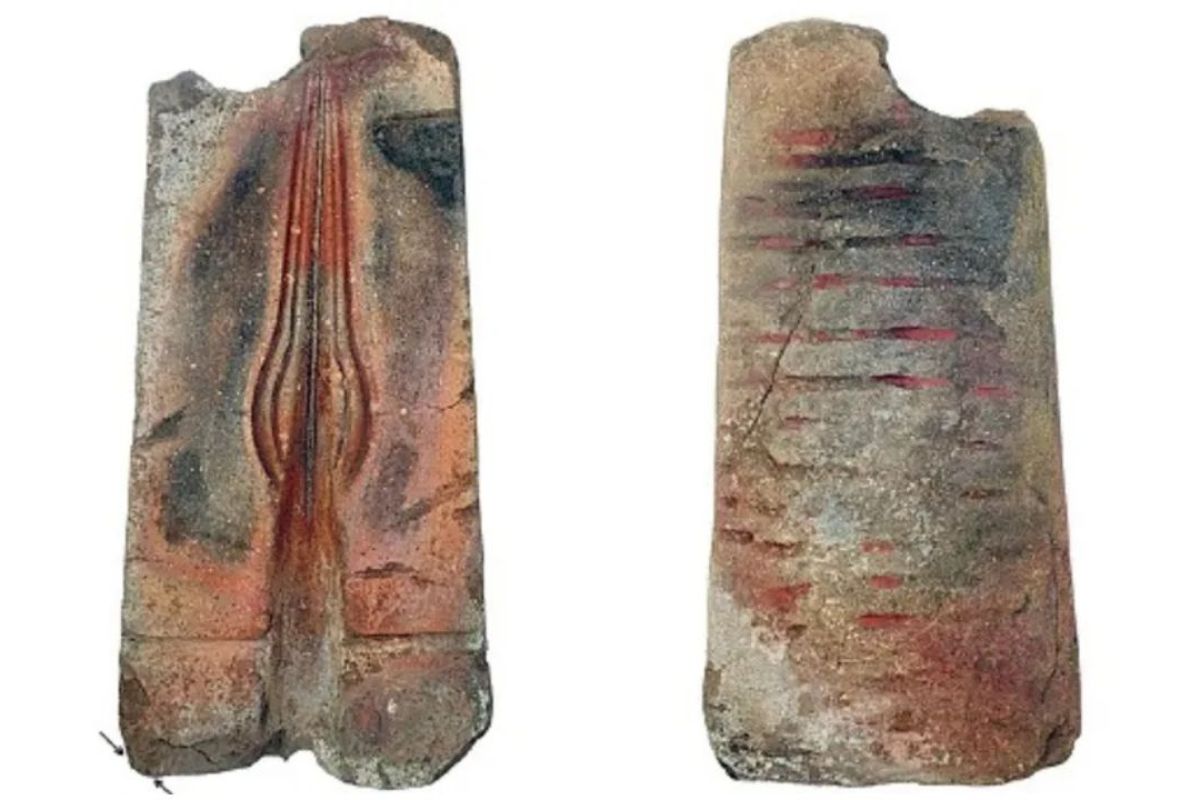
The relic found in the Czech Republic spent years supporting the base of a barn before being identified as a millennia-old mold for a Bronze Age spearhead
The relic was hidden in plain sight for years. What seemed to be just a rectangular stone used in the structure of a barn caught attention after being found on the grounds of a house in Morkuvky, a small village in southeastern Czech Republic. When archaeologists analyzed the object, they discovered that it was not an ordinary rock, but a rare piece linked to the manufacturing of weapons from the Bronze Age.
The discovery completely changed the historical value of that block of stone. The piece was, in fact, a casting mold for producing bronze spearheads, dated to around 1350 B.C. The object helps to reveal how weapons were manufactured over 3,000 years ago and reinforces the technical sophistication of human groups living in Central Europe during that period.
How the stone became an archaeological discovery
The story began in 2007, when a resident identified as J. Tomanec found a rectangular stone in his garden. The object had long been used to help support the foundation of a barn, which shows how the relic remained ignored before its true value was recognized.
-
New technology with lights is being tested in the most dangerous stretch of Serra do Mar in Paraná to alert drivers, reduce delayed reactions, and try to curb the rise in deaths on the highway.

-
The Perseverance rover’s radar reveals a river buried 35 meters beneath Mars, pushing the presence of liquid water back to 4.2 billion years and increasing the chances of signs of life on the planet.

-
The climate in 2026 may surprise with extremes even more intense than in 2025, with heatwaves, out-of-season cold, and irregular rainfall in Brazil.

-
Astronomers identify 45 rocky planets that could harbor life, and one of them is just 4.2 light-years from Earth, making it the closest neighbor with the potential to have liquid water on its surface.


Over time, the unusual shape of the piece sparked interest. The block caught the attention not only of the owner but also of local archaeologists, who decided to examine it more closely.
It was then that the most impressive finding emerged: the stone preserved an extremely precise negative mark, made to shape a bronze spearhead.
What the researchers discovered about the relic
After analysis, researchers identified the relic as a casting mold, technically called a matrix, used to manufacture a spearhead from the Bronze Age. The piece measures nearly 23 centimeters in length and was made of rhyolite tuff, a volcanic rock.
The most important detail lies in its surface. On one side of the mold, specialists found the very well-preserved negative impression of the weapon that would be produced there.
This means that the relic was neither decorative nor ritualistic, but a practical tool for metallurgical production, used in a technological and military context.
Radiocarbon dating indicates that the object dates back to approximately 1350 B.C., a period within the Late Bronze Age. This phase was marked by trade networks, technical advancements in metallurgy, and the circulation of objects and raw materials over long distances.
How the mold was used to manufacture spears

Researchers concluded that the mold operated in two halves, although only one has survived to this day. Liquid bronze was poured into the interior of the piece, and the two parts were then joined and tightened with a copper wire.
This process resulted in a spearhead with a hollow base and lanceolate shape. The produced weapon also featured longitudinal ribs in relief, a detail that shows technical care in the design of the piece.
The relic reveals a production method that is much more refined than many people imagine when thinking of ancient societies.
Another important fact is that the surface of the object shows signs of high thermal stress. This suggests repeated and intensive use, indicating that the mold may have served to produce dozens of spearheads over time.
Why this piece is so rare
The rarity of the relic lies in the context in which it was found and the state of preservation of its casting mark. Similar molds linked to Bronze Age culture have appeared in excavated settlements and burial areas, but this case stands out because the object was reused in modern times as part of a rural construction.
This reinforces how historical artifacts can survive unexpectedly for centuries, sometimes completely disconnected from their original context. An essential piece for manufacturing weapons ended up treated as simple building material, making the discovery even more surprising.
Additionally, scientists have hypothesized that the mold may have belonged to the Urnfield culture, also known as the Urnfield culture. This group spread across parts of Europe from the mid-second millennium B.C. and received its name from the custom of burying cremated bones in urns placed in fields.
The origin of the stone points to the circulation of materials
Another relevant aspect of the relic involves the very rock used in its manufacture. Researchers indicate that the volcanic tuff likely originated from an area further east, between northern Hungary and southeastern Slovakia.
This fact is important because it suggests the transportation of raw materials over dozens or even hundreds of kilometers. In other words, the production of stone molds did not depend solely on local resources. There was circulation of materials and, possibly, technical knowledge between different regions.
The relic helps to show that connections in Central Europe during the Bronze Age were broader than they may seem at first glance. It was not about isolated communities producing simple objects, but groups embedded in networks of exchange and technology.
What the discovery says about warfare in the Bronze Age
The mold found also sheds light on the importance of weapons during that period. The spearheads produced by this type of matrix were common in the Carpathian region during the Late Bronze Age, indicating that this weaponry was part of the military reality of the time.
According to the interpretation presented by specialists, warriors of this period often carried different equipment, including shields, spears, and leg protection. The spear, therefore, was not a secondary item, but a central piece in combat.
In this context, the relic gains historical significance because it represents not just a handcrafted tool. It is directly linked to the production of weaponry used in battles and the ability to supply warriors with standardized weapons. It is concrete evidence of how technique, warfare, and material organization walked hand in hand over 3,000 years ago.
Why a discovery like this is so impressive
A large part of the impact comes from the contrast between past and present. For years, no one saw anything more than a useful and heavy object in that block of stone. Only after analysis did it become clear that it was a relic capable of opening a window into ancient metallurgy and the production of weapons during the Bronze Age.
The level of preservation is also impressive. Even after so much time and after being repurposed in another context, the piece still retained clear traces of its original function. This allowed researchers to safely reconstruct its utility and historical fit.
In the end, the find draws attention because it combines three very strong elements: surprise, rarity, and historical value. A simple barn stone ended up revealing an entire chapter about military technology, circulation of materials, and metallurgical knowledge in ancient Europe.
What this relic reveals about the past
The discovery shows that seemingly common objects can hold extraordinary stories. The relic found in the Czech Republic not only survived the test of time but also preserved clear signs of a world where manufacturing weapons required technique, planning, and mastery of specific materials.
More than a curious artifact, the piece helps to understand how Bronze Age societies produced war instruments, how they circulated raw materials over long distances, and how certain technologies were already quite advanced for the period.
Every detail of the mold reinforces that the ancient past was much more complex and sophisticated than the unassuming appearance of this stone might suggest.
Would you have imagined that a stone used for years in a barn could hide such a valuable relic from the Bronze Age?






Seja o primeiro a reagir!