





 Portuguese
  English
  Spanish
  3 min of reading
  0 comments


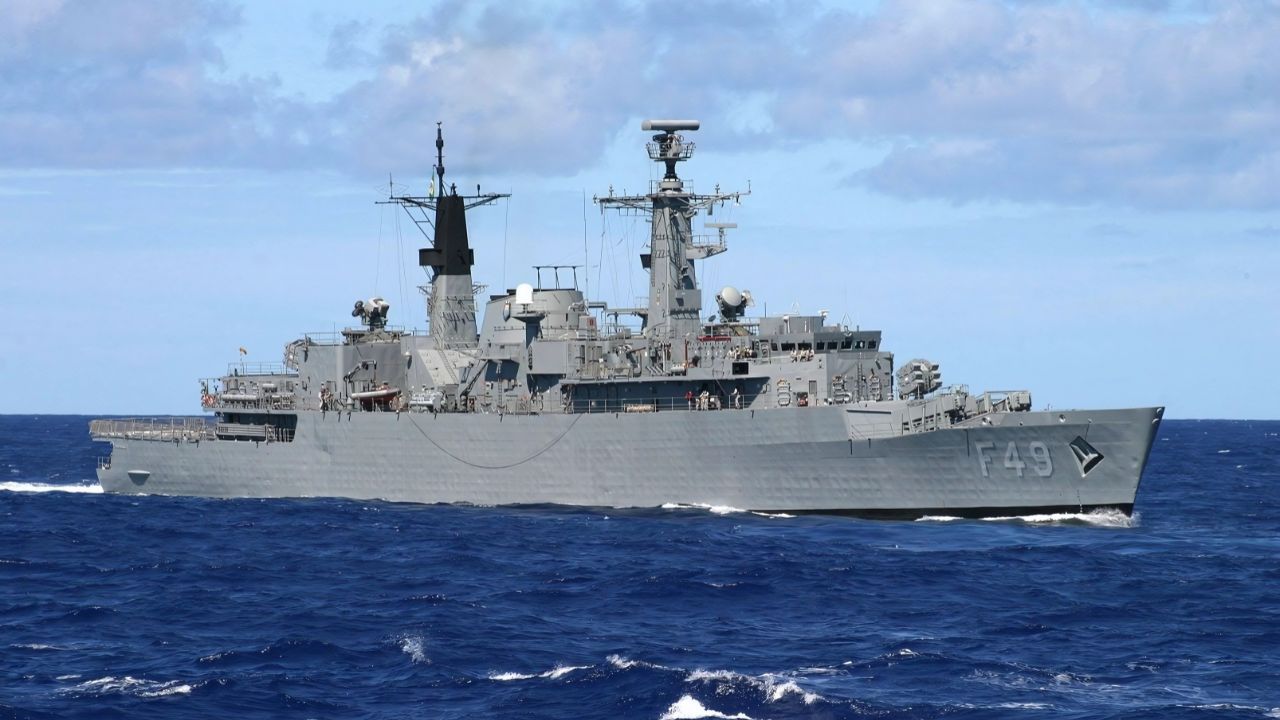
The Rademaker Frigate, Ship of the Greenhalgh Class of the Brazilian Navy, Combines Combat and Patrol Capability with Strategic Action in the South Atlantic.
The Brazilian Navy has an important strategic reinforcement since 1997: the Rademaker Frigate, ship of the Greenhalgh Class. Officially incorporated on April 30 of that year, in England, the vessel was chosen for its operational capacity for patrolling, defense, and search in the South Atlantic.
Its name honors Admiral Augusto Hamann Rademaker Grünewald and symbolizes the strength and naval tradition of Brazil.
The frigate is equipped with combat systems capable of locating and neutralizing aerial, underwater, and surface threats.
-
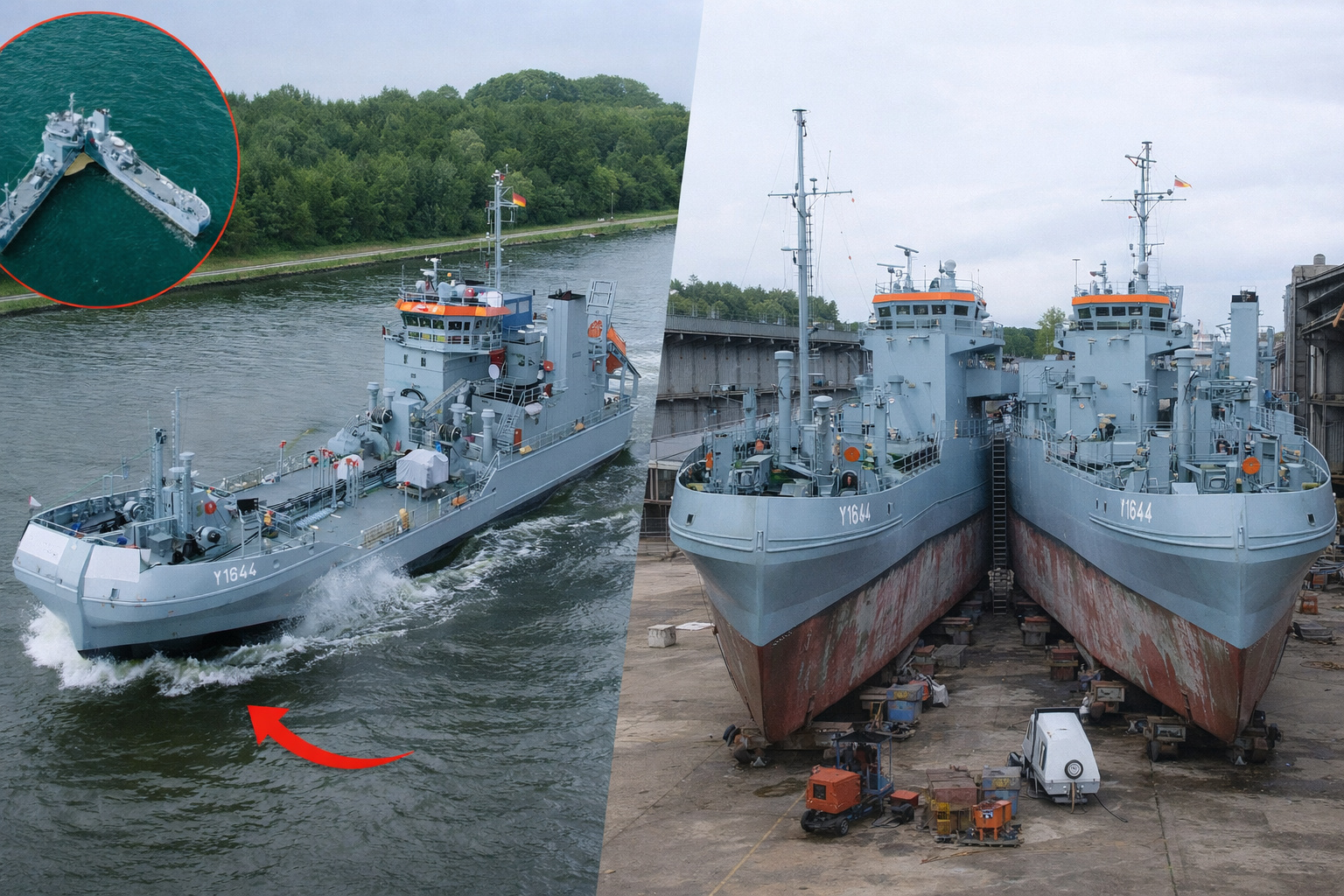
The German ship Bottsand splits its hull in two halves in the middle of the ocean to swallow spilled oil on the surface, separating the oil from the water inside a 790 cubic meter tank and then closing again. It is the only ship in the world factory-designed to split in half as part of normal operations, and the crew of six people who operate everything is civilian.
-
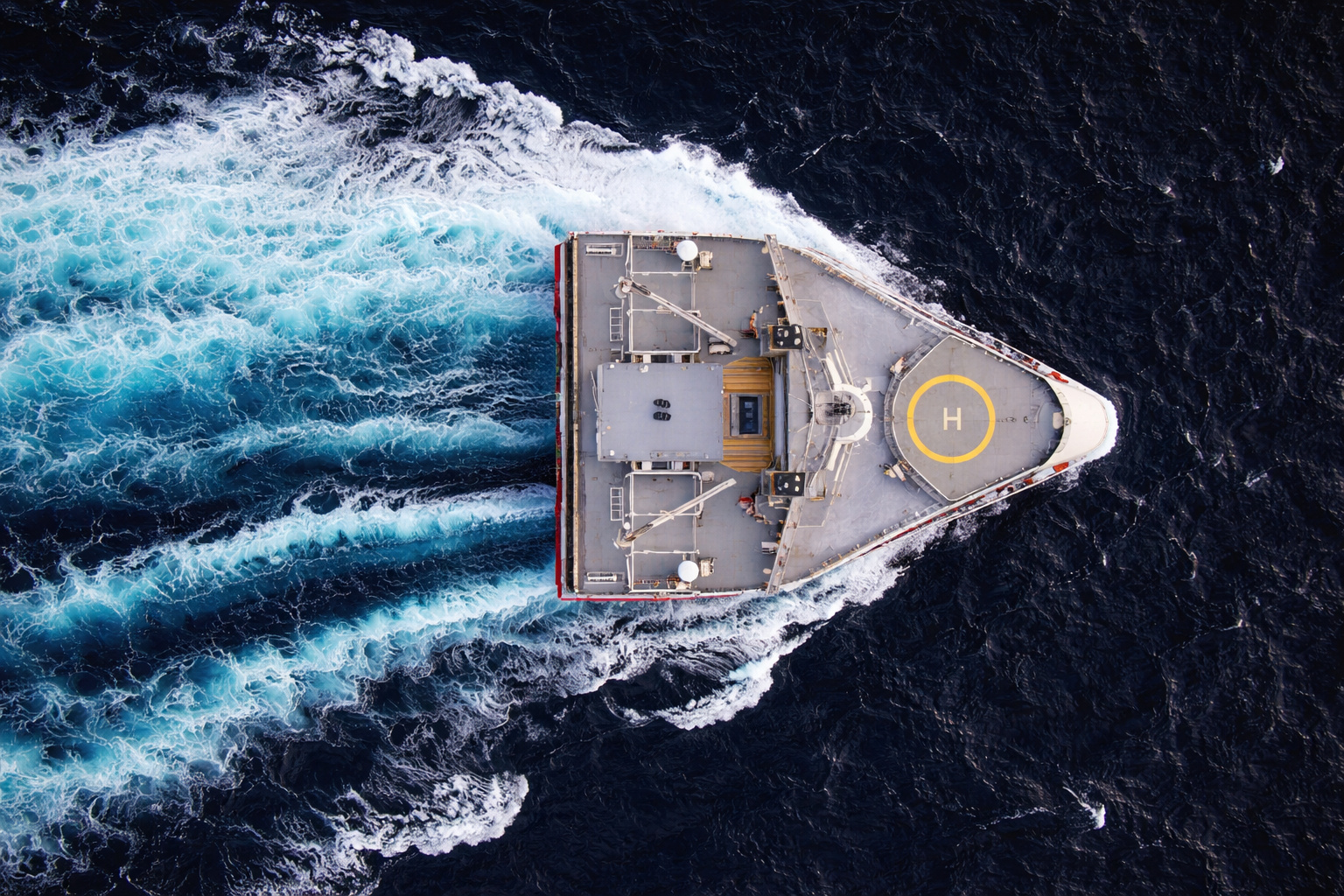
With almost 70 meters in width at the stern and a shape resembling a “giant slice of cheese,” the Ramform Titan tows up to 24 seismic cables to sweep the ocean floor in 3D and reveal oil reserves hidden beneath kilometers of sediment.
-
How a 131-ton, 11-meter propeller supports 90% of global trade and transforms the largest container ships on the planet.

-
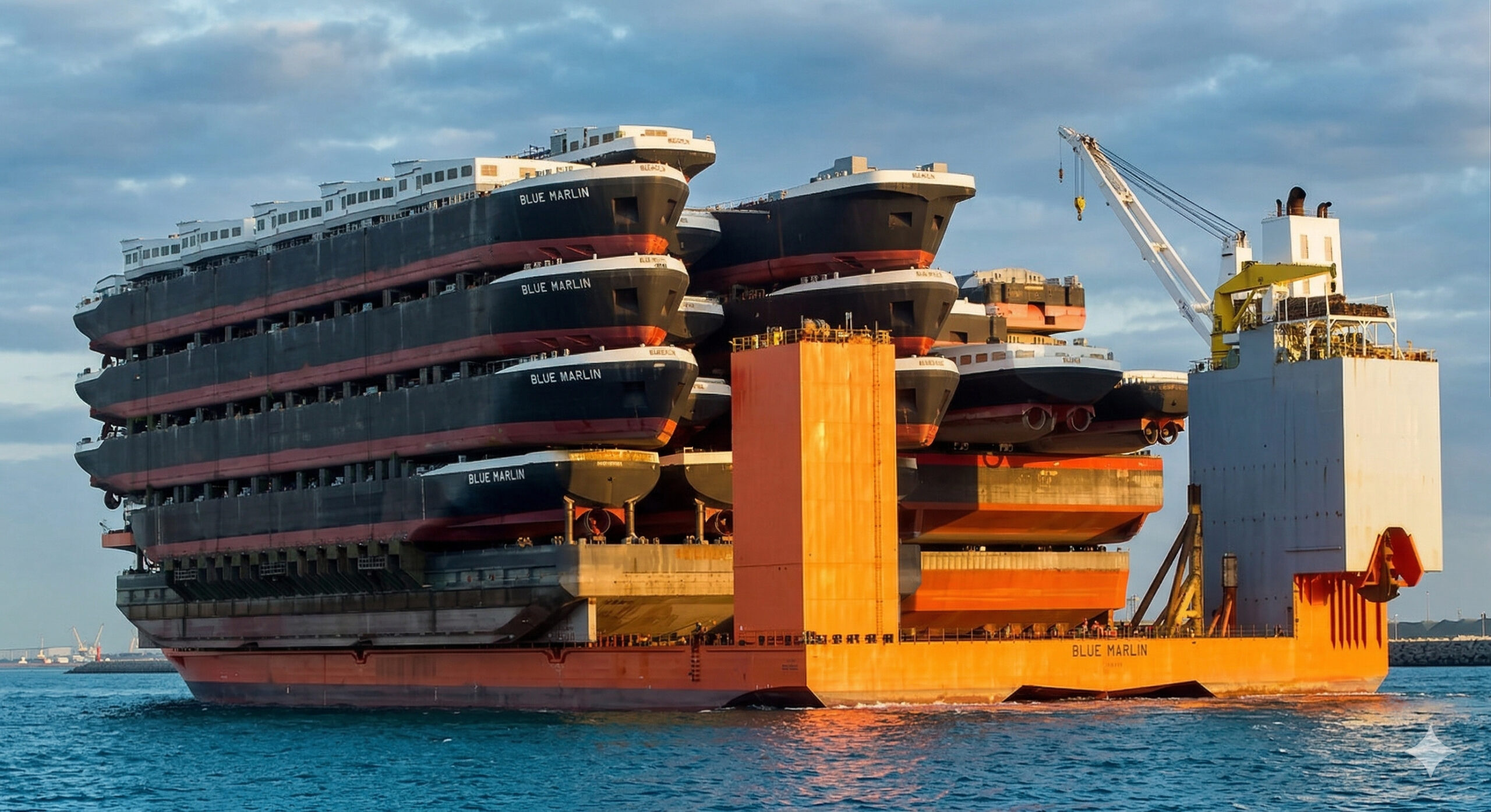
With a length of 225 meters and a capacity of 76 thousand tons, this ship “sinks” its own deck down to 28 meters deep to accommodate war destroyers, oil platforms, and giant radars floating above, and then emerges with everything intact on top like a colossal tray crossing oceans.

In war scenarios, its primary mission is the control of maritime areas and acting as a deterrent instrument.
Construction and Origin of the Rademaker Frigate
The Rademaker Frigate was built by Yarrow Shipbuilders Ltd., in Scotstoun, Scotland. Before joining the Brazilian fleet, it was known as HMS Battleaxe (F 89) and belonged to the Royal Navy, the United Kingdom’s Navy.
The purchase contract was signed between the Brazilian government and the British Ministry of Defence on November 18, 1994.
The transfers of the Greenhalgh Class ships occurred as the vessels were decommissioned by the British navy.
Robust Structure and Powerful Armament
Measuring 131 meters in length, 14 meters in beam, and a draft of 6.5 meters, the Rademaker Frigate displaces up to 4,400 tons when fully equipped. Onboard, it operates a crew of 274 military personnel.
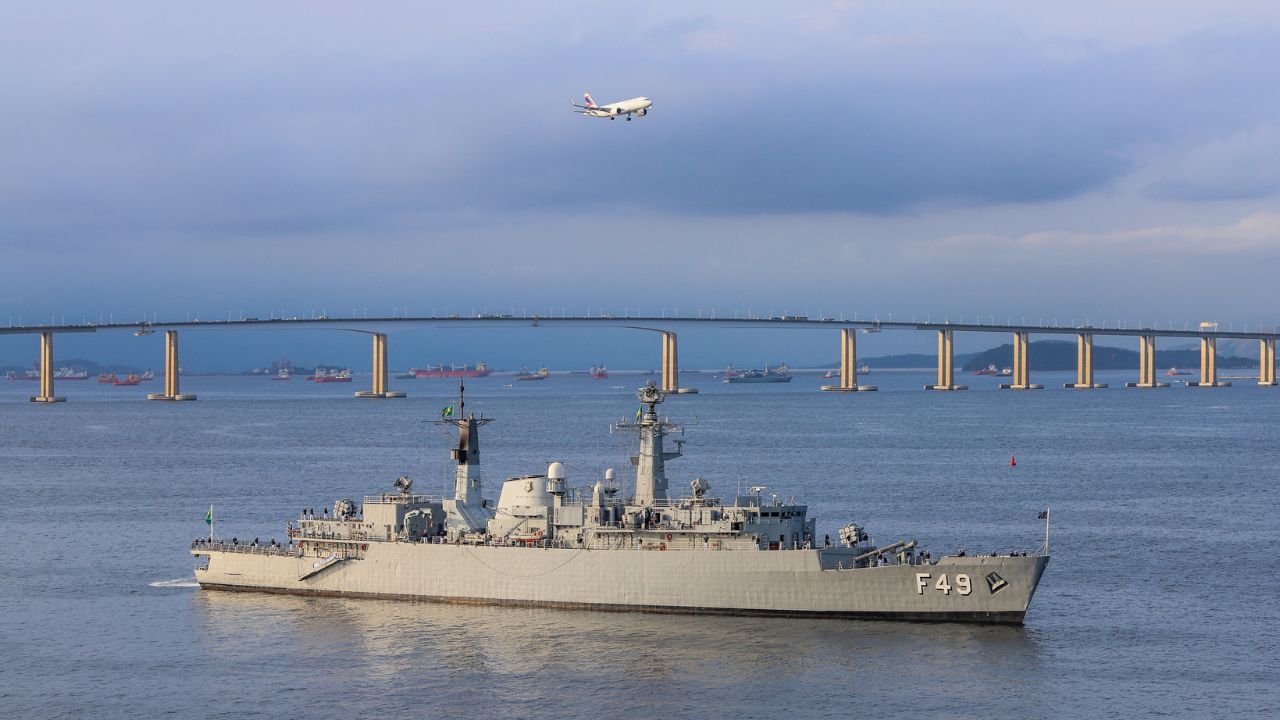
Its arsenal includes Exocet MM-40 missiles, two triple torpedo launchers, two 40 mm guns, and 20 mm machine guns.
In addition to the armament, the ship has modern sonar, underwater communication equipment, and capabilities for aerial operations.
Performance in Strategic Missions and International Exercises
The Rademaker Frigate has been selected on several occasions to participate in complex operations, such as ATLANTIS IV, conducted in partnership with the Uruguayan Navy.
Being close to the coast of Montevideo during the operation, the frigate was able to act quickly in support of Search and Rescue (SAR).
The vessel meets all technical and logistical requirements for prolonged presence in operational zones, making it essential in patrolling actions, humanitarian support, and deterrent presence in international waters.
Strategic Role of the Rademaker Frigate in Brazilian Naval Power
In addition to its operational versatility, the Rademaker Frigate represents an essential component of Brazilian naval power.
Its presence in maneuvers and missions reinforces the Navy’s capacity to protect the country’s maritime sovereignty and contribute to the security of navigation in the South Atlantic.
The robustness of the Rademaker Frigate, combined with its technological capability, keeps it as one of the pillars of Brazil’s naval defense system.
Its performance demonstrates the importance of continuous investments in modernization and strategic presence at sea.
Source: Brazilian Navy








Seja o primeiro a reagir!