





 Portuguese
  English
  Spanish
  3 min of reading
  0 comments


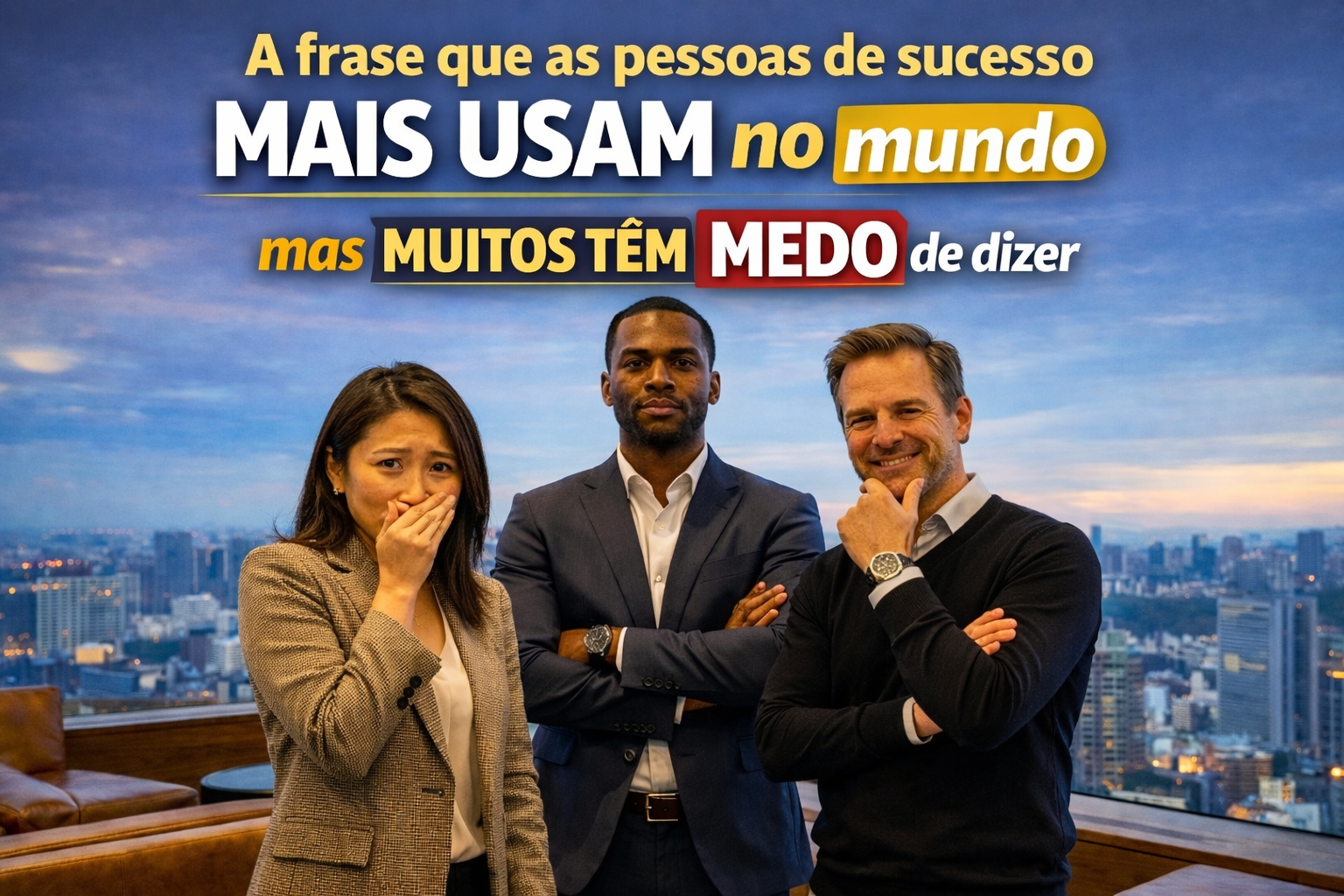
In Relationships And In Daily Life, Scott Shigeoka, Renowned Psychologist Who Has Spoken At Pixar And Google, Argues That A Short 3-Word Phrase To Recognize Failures Promotes More Confidence, Opens Space For Learning And Changes How People Perceive You In Relationships And At Work.
Scott Shigeoka has a degree in psychology and has become a reference by studying a topic that draws attention in companies and universities: curiosity. He has given lectures at Pixar, IDEO, Airbnb, Google, and at universities in various countries, and is also the author of the book Seek: How Curiosity Can Transform Your Life And Change The World.
However, among so many communication tools, the psychologist highlights one that seems simple and at the same time difficult for many people. According to him, there is a 3-word phrase that successful people often use, even though many feel afraid to pronounce it.
The phrase is direct, short, and touches anyone’s ego: “I Was Wrong.”
-
With a cost per shot close to zero, the DragonFire laser could change naval warfare in 2027 and provide British ships with nearly unlimited defense against drones.

-
A British startup creates tires that generate electricity in electric vehicles when passing over potholes, speed bumps, and cracks.

-
Scientists have created robots made with living cells that have their own nervous system, swim on their own, explore the environment, and self-organize without any genetic engineering, and now they want to do the same with human cells.

-
Students create a solar-powered ambulance that operates without a plug, without fuel, and still keeps medical equipment running in remote areas.


The 3-Word Phrase That, According To Psychologist Scott Shigeoka, Appears Frequently Among Successful People
According to Scott Shigeoka, admitting a mistake is something that successful people and those considered “cooler” do more naturally. They don’t shy away from saying “I Was Wrong,” even when it feels uncomfortable.
The detail that stands out is that this habit is not about diminishing oneself. For the expert, making a mistake does not measure anyone’s worth, and no mistake defines a person completely.
When someone can accept their own failure, take responsibility, and learn from the situation, the impact doesn’t just stay in the moment. It tends to become a pattern that strengthens relationships and improves interaction in personal and professional environments.
Why Admitting A Mistake Changes How Others Perceive You
Many people still associate mistakes with a lack of intelligence or lack of capability. It’s as if failing meant “being worth less.” However, according to what Shigeoka argues, the opposite happens.
Good people and intelligent people often use expressions like “I’m sorry” and consider the act of admitting mistakes as part of daily life. This does not erase authority but signals maturity and responsibility.
There is also a common fear of judgment. Some people think they will be viewed worse if they admit a failure. However, according to the psychologist, when someone acknowledges that they were wrong, others tend to see that person as more intelligent, a better companion, and friendlier.
What This Attitude Proves In Practice: Learning, Growth, And A Shift In Attitude
Shigeoka connects this behavior to the idea of prioritizing learning and growth. He cites a phrase attributed to Winston Churchill that summarizes this point well: “Success Is Learning To Go From Failure To Failure Without Despair.”
In the logic presented by the expert, failing can be one of the best ways to learn. And recognizing a mistake, instead of hiding it, shortens the path to improving behavior.
Another important point is the feeling of control. It is more likely to admit having erred when a person believes they have the power to change their own behavior. This turns the mistake into a starting point, not a sentence.
Curiosity Acts As The Engine For Change When Someone Says You Are Wrong, Says Scott Shigeoka
There is a behavior that tends to appear along with “I Was Wrong,” according to Shigeoka: curiosity. And this is where many discussions could change course.
When someone tells you that you are wrong, the tendency is to become defensive. The expert proposes another reaction: to try to understand the reason. Rather than automatically rebutting, it’s worth using a simple and direct question like “Tell Me More.”
This posture changes the atmosphere of the conversation, reduces conflict, and opens up space for real adjustment, not just to win a discussion.
In the end, Scott Shigeoka emphasizes that “I Was Wrong,” which sometimes costs so much to say, also serves as a reminder that human beings are made to forgive, even strangers.








Seja o primeiro a reagir!