





 Portuguese
  English
  Spanish
  4 min of reading
  0 comments


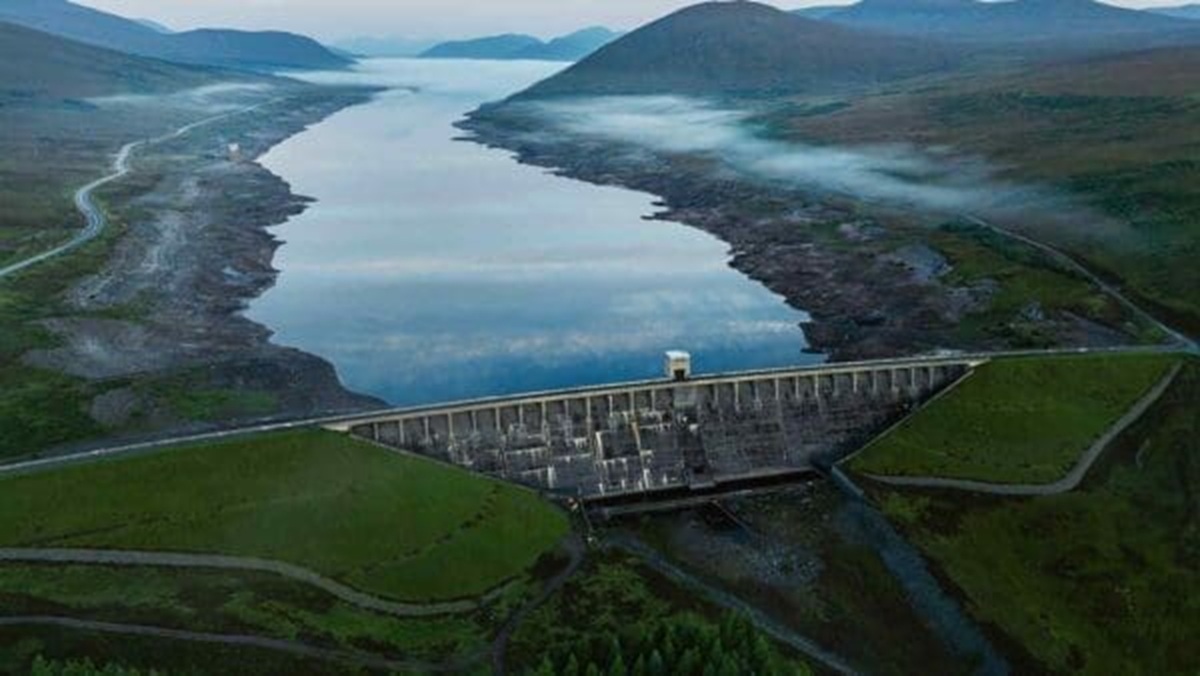
The Motuo Hydropower Station, a Chinese project of US$ 170 billion in the Himalayas, was planned to generate 300 billion kWh per year, but also raises concerns about population displacements, emissions in reservoirs, and water risks for 1.8 billion people downstream.
The Motuo Hydropower Station, planned by China in the Himalayas, was presented as a centerpiece of the carbon neutrality goal by 2060, but the US$ 170 billion project also increases the risk of population displacements, emissions associated with reservoirs, and water tensions for millions of people downstream.
The project is expected to produce 300 billion kWh per year and will surpass, in scale, the structure of the Three Gorges Dam. To achieve this, it will exploit a stretch of the Yarlung Zangbo River that descends 6,561 feet in just 30 miles, turning this extreme drop into a basis for large-scale energy generation.
Global water crisis increases the weight of the dam
The advancement of the dam occurs amid a scenario of water collapse described as a result of decades of accelerated consumption of freshwater. Ancient aquifers have been exploited beyond their replenishment capacity, while chemical runoff has contaminated important basins, further reducing the availability of this resource.
-
Nikola Tesla said that intelligent people tend to have fewer friends, and now science partially confirms this: a study with over 15,000 people showed that for the more intelligent, socializing too much can even reduce life satisfaction.

-
A superyacht worth US$ 17 million is delivered in impeccable condition, sets out to sail, and hits a bridge in the Bahamas just two hours later.

-
Residents of Australia woke up to a sky completely red like blood before the arrival of Cyclone Narelle, which hit the coast with winds of 250 km/h, tearing off roofs and lifting iron dust in a scene they described as apocalyptic.

-
New 100% clean fuel produced in Brazil could retire diesel.


The scale of the crisis has been summarized in numbers showing the annual loss of nearly 324 trillion liters of freshwater. This volume is equivalent to the disappearance, each year, of four of the largest continuous-flow rivers in Western Europe.
At the same time, 43% of the United States faces some level of drought, but the described situation goes beyond a temporary dry spell. The reference is to a departure from the hydrological patterns that sustained modern civilization, with impacts affecting different regions of the planet.
The melting of so-called high-altitude water towers has made this process even more delicate. Glaciers have lost about 25% of their mass since 1970, directly affecting billions of people who depend on meltwater from the mountains.
Billion-dollar project transforms Himalayan river into strategic axis
In this context, China has advanced from a management logic to a strategy of water consolidation. The future dam in the Himalayas has been described as the center of this effort, bringing unprecedented scale, strong generation capacity, and a decisive role within the country’s energy planning.
The Motuo Hydropower Station will cost US$ 170 billion and is expected to surpass the Three Gorges Dam in size. The plant is part of China’s goals for 2060 and was designed to take advantage of a stretch of the Yarlung Zangbo marked by a steep drop in altitude over a short distance.
The project appears as a response to a moment when mountains and glaciers gain increasing weight in water and energy security. With billions of people dependent on this natural system, control over large volumes of water becomes even more strategically valuable.
The scale of the dam reinforces this shift in scale. The proposal combines clean energy production in record volume with the retention of an increasingly pressured resource, at a time when the global alert about the availability of freshwater intensifies.
Human, environmental costs and risk for downstream regions
The expansion of large dams in Tibet has already been associated with human impacts even before the completion of this new project. Since 2000, the 193 planned or constructed projects in the region could displace up to 1.2 million Tibetans.
Moreover, the classification of these works as “green” structures is under pressure due to a direct environmental effect. New reservoirs can become methane emitters due to the decomposition of submerged vegetation after the flooding of the areas.
Concerns also reach the geopolitical plan. Control of water in this area of the Himalayas is presented as an instrument capable of affecting 1.8 billion people living downstream, especially in India and Bangladesh.
In this scenario, the dam could favor episodes of drought in the dry season or sudden releases of large volumes of water. The Chinese gain in clean energy and freshwater, within this logic, is described as a loss for millions of people located downstream.
The Motuo project thus combines energy promise and regional risk in the same equation. Amid the advancement of the global water crisis and the weakening of the so-called Asian Water Tower, the dam stands as a symbol of a struggle for survival, control, and security over an increasingly scarce resource.









Seja o primeiro a reagir!