Portuguese
  Spanish




The Minister of Finance, Fernando Haddad, Criticizes Javier Milei’s Management and Raises Concerns About Economic Impact in Argentina.
Powerful, spacious, and very durable. These words summarize the impact of the Chevrolet C10, one of the most remarkable pickups from Brazil.
Created during a period of economic and technological transition, the C10 became a favorite among farmers and rural workers. But what made it an icon that, even decades later, is still fondly remembered?
Chevrolet C10 — The Roots of Success in Brazil
The story begins in the 1960s when Chevrolet sought to compete in the large pickup segment.
-
Fiat Strada Becomes Top Seller in June, Surpassing Onix, Polo, Hilux, and T-Cross with 107 HP Engine and 732 km Range.

-
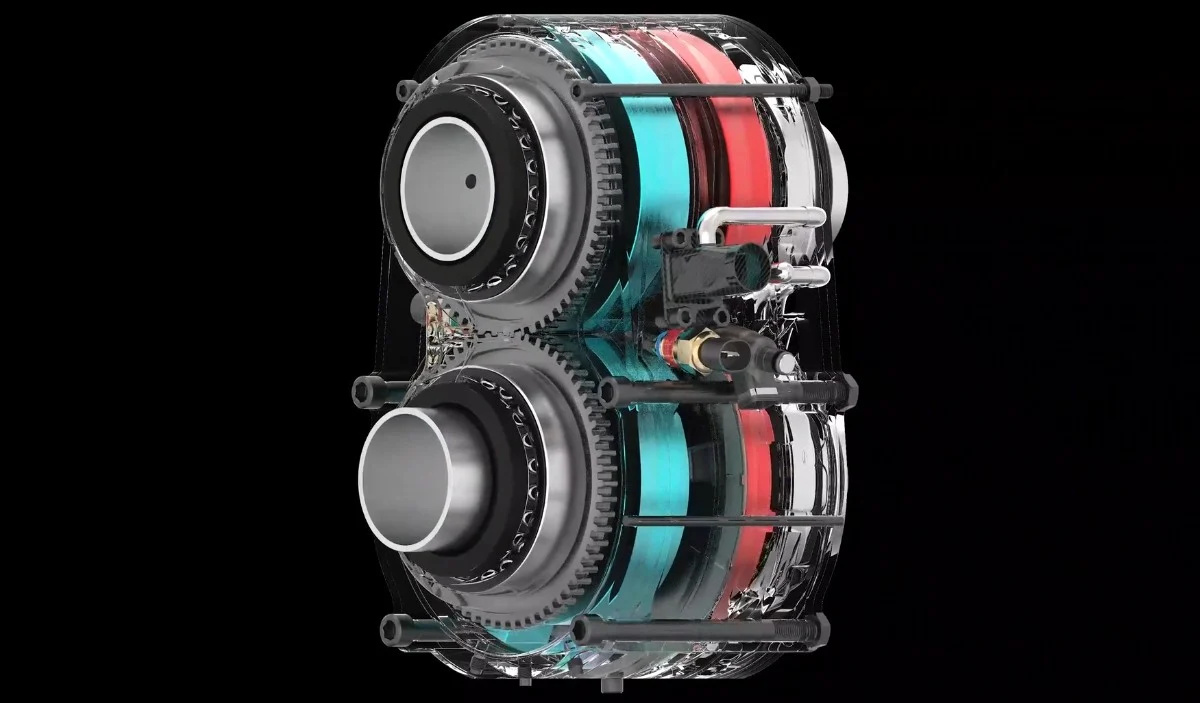
Suitcase-sized hydrogen engine spins at 25,000 rpm, nearly doubling the efficiency of conventional cars and replacing exhaust smoke with water vapor

-
1983 Chevrolet Runs Over 100,000 km Without Gasoline, Powered by Wood Chips, Reaches 125 km/h in Airport Test

-
Workshop Converts Giant Tractor Tire Tricycle into a Three-Wheel Drive Hybrid with 36,000-Watt Electric Motor Capable of Climbing Hills




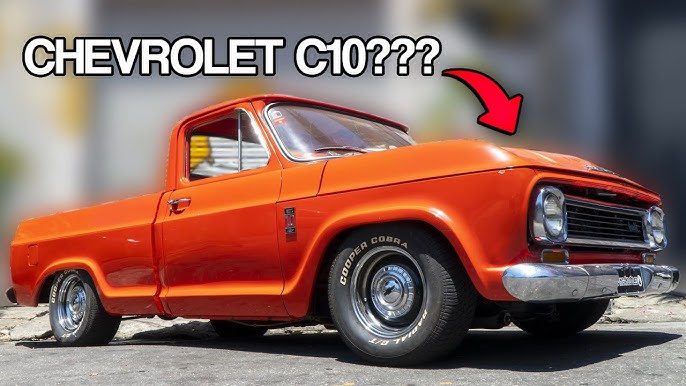
Initially launched as C-14 and C-15, the line gained strength with the introduction of the C10 in 1974.
It replaced the previous models, unifying design and functionalities, and brought innovations that captivated the Brazilian public.
With robust lines and a design inspired by American models, the C-10 appealed both aesthetically and functionally.
The chrome grille, round headlights, and wedge-shaped hood gave it an imposing look. It was a pickup that drew attention, both on dirt roads and city streets.


An Engine for Every Situation
At the heart of the C-10 was a six-cylinder, 4.3-liter engine that produced an impressive 151 horsepower.
Its torque of 32 mkgf was ideal for transporting heavy loads, such as sacks of grains and agricultural equipment. For many farmers, it was the perfect solution for tackling tough roads and transporting goods efficiently.
On the other hand, fuel consumption was high. In the city, the average was 3.5 km/l, while on the highway it ranged from 4.5 to 6 km/l.
Despite this, the C-10 was seen as more economical compared to its competitors, such as the Ford F-100 and the Dodge D100, which were known for even higher consumption.
Comfort and Robustness of the Chevrolet C10
One of the major strengths of the C-10 was its suspension. In the front, the independent system with coil springs provided comfortable handling, while the rigid axle in the rear, with semi-elliptical springs, ensured resilience even under maximum load.
This combination made the C10 a reliable choice for daily work as well as family trips.
Another highlight was the single bench seat in the cabin, which accommodated up to three passengers comfortably. The interior design was simple but efficient, focused on functionality.
For drivers, the three-speed column-mounted transmission provided a unique driving experience, although it required some skill.
Popularity of the C10 Among Farmers
Brazil in the 1970s and 1980s was a rural country. Farmers and ranchers sought vehicles that combined strength and durability to tackle the challenging conditions of dirt roads.
The C10, with its payload capacity of 750 kg, became indispensable on many farms. Additionally, its versatility was evident: it could be used to transport people, goods, and even livestock in adapted beds.
Donizetti Pinto, an agronomist and owner of a C-10, highlights that the pickup was a true partner in the field. “It never let me down. It’s a vehicle that can handle any type of job,” he states. The robustness of the engine and the durability of the steel body made the C-10 a symbol of reliability.
Adaptations and Special Models
Chevrolet also launched customized versions of the C-10, such as the double cab, which accommodated up to six passengers, and military models intended for the Army and Navy.
These versions, without a rigid roof and with a foldable windshield, were designed to meet specific military use needs.
In addition, motorization options varied to meet different demands. The gasoline six-cylinder engine was the most popular, but there were diesel versions, such as the 3.9-liter Perkins engine, launched in the late 1970s. These variants helped broaden the appeal of the C10 in the market.
The End of an Era
Despite its success, the Chevrolet C-10 did not withstand the oil crisis of the 1980s. High fuel consumption and the growing preference for diesel engines ultimately impacted its sales.
Even with improvements, such as the introduction of disc brakes in the front and a four-speed transmission, the C-10 could not maintain its leadership.
In 1981, production was halted, marking the end of a cycle. However, the C10 had already left its mark. For many, it represented more than a vehicle; it was a symbol of hard work, achievements, and memories of a transforming Brazil.
Legacy and Nostalgia
Today, the Chevrolet C10 is considered a classic. Antique car meetings frequently showcase impeccable examples, restored with care and passion.
Owners like José Gilberto Alves Braga Júnior, a judge and collector, highlight the pleasure of driving this relic. “It’s a unique experience. You feel the history in every detail,” he remarks.
The relationship of Brazilians with the C-10 goes beyond utility. For many, it evokes a time when life was simpler but filled with challenges met with determination. The pickup, with its strength and durability, was a crucial ally in this context.
There is no need to conclude this story with reflection, for the Chevrolet C-10 speaks for itself. Its impact on agriculture and rural life in Brazil is undeniable. A true icon that, even after decades, continues to accelerate the hearts of enthusiasts for pickups and automotive history.