





 Portuguese
  English
  Spanish
  5 min of reading
  0 comments


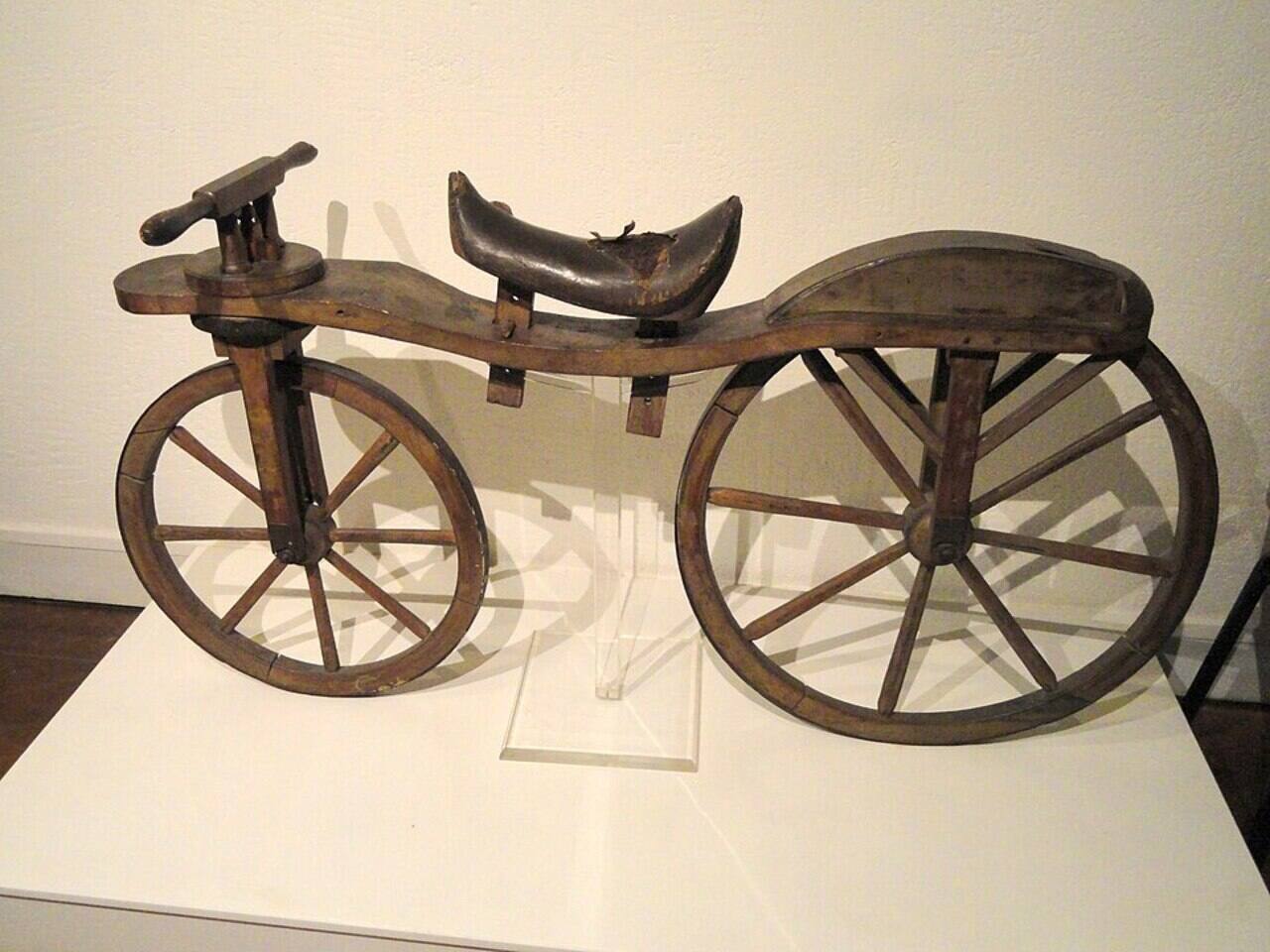
The Bicycle Was Born Without Pedals, Made of Wood and Guided by Feet — and Faced Falls and Oddities Until It Became a National Passion
A wooden structure with two aligned wheels and no pedals. Guided by feet on the ground, this gadget was strange, uncomfortable, and attracted attention wherever it went. But this is how it all began. In the 19th century, what would become one of the most popular means of transportation on the planet emerged: the bicycle.
Today, a symbol of freedom and health, it had a beginning marked by improvisation, falls, and eccentric models.
The Invention of the Bicycle: Where It All Began
In 1817, on the streets of Mannheim, Germany, a novelty caught attention. It was the draisine, created by Baron Karl Drais.
-
He started running at 66 years old, broke records at 82, and is now a subject of study for having a metabolic age comparable to that of a 20-year-old, in a case that is intriguing scientists and inspiring the world.

-
Oldest tree on the planet reappears after 130 years of searches: Wattieza, 385 million years old, was 10 meters tall and had no leaves or seeds; Gilboa fossils in New York solved the mystery in 2007.

-
A 48-square-meter house assembled in hours with 4,000 bricks made of recycled plastic that does not absorb moisture, has natural thermal insulation, and costs less than 90,000 reais in a complete kit.

-
Luciano Hang revealed that Havan’s air fleet has already accumulated more than 20,000 landings, 10,000 flight hours, and 6 million kilometers traveled, and he says that without the planes, the company would never have grown so quickly.


Without pedals, chains, and made of wood, the vehicle was propelled by feet. The creation emerged as an alternative to the use of horses, which became scarce in Europe after the eruption of Mount Tambora, which caused famine and crop destruction in 1815.
Even simple, the draisine represented something new. The front wheel had a steering function, which provided some stability.
Despite this, the vehicle lacked brakes and a shock absorber, making it dangerous to use on uneven streets.
Still, the invention spread across European countries, facing resistance but paving the way for the future of bicycles.
The Pedal Revolution: The Emergence of the Velocipede
It was in France, around 1861, that the bicycle gained its biggest advancement so far: pedals. Pierre Michaux and his son Ernest adapted pedals to the front wheel of the old draisine.
The velocipede was born. The model still had a wooden frame, iron wheels, and a rigid seat, but the novelty of the pedals increased speed and improved control.
Despite the intense vibrations on cobbled streets — which earned it the nickname “bone shaker” — the velocipede became a craze among the wealthy.
Races and fairs began to showcase the vehicle as a symbol of innovation. The pedal fixed to the front wheel already pointed to what would be the basis of modern bicycles.
The Oddities on Wheels: Strange and Dangerous Models
Between one innovation and another, many bizarre ideas emerged. One of the strangest models was the Penny-Farthing, from the 1870s.
It had a huge front wheel and a small rear wheel. The height was such that falls could cause serious injuries. Even so, the model became fashionable in Victorian England.
Other prototypes defied logic. There were bicycles with square wheels, inverted handlebars, and even pedals activated by cranks.
Some were made of solid iron, while others used leather in parts of the structure. These inventions, despite being impractical, helped understand the ideal functioning of the vehicle.
The search for balance, lightness, and control went through many mistakes. Each strange model served as a lesson, bringing the bicycle closer to the form we know today.
The Bicycle Arrives in Brazil: From the Elite to National Production
At the end of the 19th century, bicycles began to appear on the streets of Brazil. They were imported from Europe and circulated in cities like Rio de Janeiro and São Paulo.
The first users were members of the elite: doctors, politicians, merchants. Cycling was a sign of sophistication.
In 1892, the Club Olympio Paulista was founded, the first cycling club in the country. The practice began to gain ground among athletes and the curious.
Even with dirt streets and few conditions for daily use, interest continued to grow. Brazil was beginning its trajectory on two wheels.
As the years passed, use spread. Bicycles ceased to be the exclusive domain of the rich and reached new audiences. The first initiatives towards national production began to emerge.
Caloi, Monark, and the Bicycle That Became Culture
In the following decades, the scene changed. Starting in 1940, brands like Caloi and Monark began large-scale production.
Caloi, active since 1945, grew in the 1960s. Monark was founded in 1948. Both helped make bicycles more accessible and present in the lives of Brazilians.
Two models stood out. The Caloi 10, launched in 1972, became a craze. With a 10-speed gearbox and a sporty style, it became the object of desire for young people and adults.
The Monareta, from Monark, was foldable and compact. Ideal for children and families, it marked generations.
These bicycles were not just vehicles. They were part of childhood, play, and memories. They became emotional symbols of an era. They were in parks, on sidewalks, and during Sunday strolls.
The Legacy and Current Passion for Pedals
The bicycle never left the scene. Over the years, it has reinvented itself. Today, it represents more than just transportation. It’s a lifestyle choice, a healthy option, a sustainable choice.
The increase in bicycle use has many reasons. The price of fuels, the cost of public transportation, and the quest for quality of life have led to a growth in the number of cyclists.
In addition, environmental awareness has further boosted the movement.
Groups for cycling, night rides, and cultural events have emerged. The bicycle has also become a form of expression. A symbol of mobility, health, and freedom.
Cities began to respond. Bike lanes, exclusive lanes, bike rentals, and bike racks are becoming increasingly common.
There is still much to be done, but the advances are already visible. The cycling culture has solidified.
Security and Traceability: The Role of Bike Registrada
With more bicycles on the streets, the number of thefts has also increased. To tackle this problem, Bike Registrada was created.
The platform offers free registration and helps recover stolen bikes. It functions as a national database.
The system facilitates identification and combats illegal trade. It is simple, practical, and effective. A resource that strengthens the security of those who choose to cycle.
A Story in Motion
The bicycle emerged as a solution to a crisis, went through clumsy models, faced falls, and became a passion.
In Brazil, it won over children, families, athletes, and workers. Today, it is synonymous with health, freedom, and transformation.
Each pedal has a story. From the German baron to today’s Brazilian cyclists, the journey has been long. And it continues.
The bicycle remains firm, adaptable, and necessary. An icon that moves with time — and continues to advance.
With information from Bike Registrada.








Seja o primeiro a reagir!