





 Portuguese
  English
  Spanish
  5 min of reading
  0 comments


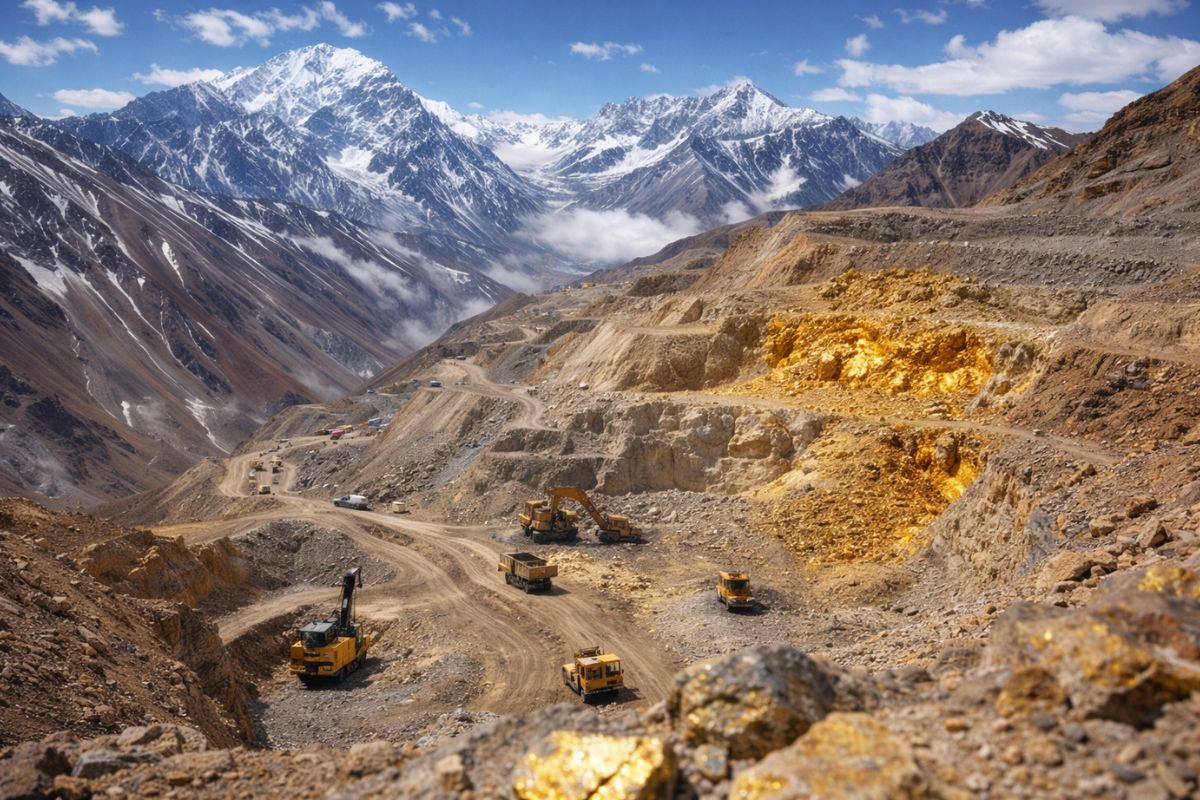
The gold deposit of approximately 32 million ounces found in the Vicuña mineral district in the Andes Mountain Range is operated by BHP and Lundin Mining and accompanies giant reserves of energy transition copper and silver on the border between Chile and Argentina
A gold deposit valued at approximately R$ 771 billion has been identified in the Andes Mountain Range, over 4,000 meters above sea level, on the border between Chile and Argentina. The discovery is part of the Vicuña mineral district, considered one of the largest unexplored deposits of gold, copper, and silver in the world, and is being developed by a joint venture formed by the mining companies BHP and Lundin Mining.
According to UOL, in addition to the approximately 32 million ounces of gold, geological studies indicate reserves of approximately 13 million tons of copper and 659 million ounces of silver, valued at R$ 247.5 billion. Energy transition copper is the most strategic metal in the complex because it is essential for electric vehicles, renewable energy, and transmission networks, and the size of the reserves found in the Vicuña mineral district is attracting the attention of the global mining industry and governments around the world.
The Vicuña mineral district brings together two giant projects in the Andes Mountain Range

The gold deposit and the other reserves are distributed across two large projects called Filo del Sol and Josemaría, both located within the Vicuña mineral district in the Andes Mountain Range.
-
With just joint compound, white glue, and pigment, you can make a homemade paint that yields double the conventional amount, saves up to 70%, and leaves the wall with a finish that no one would believe wasn’t store-bought paint.

-
Home environment can influence the brain, mood, and well-being: studies indicate an increase of up to 15% in productivity, a reduction of 12% in stress with plants, and a direct impact of the circadian rhythm on the 24 hours of the day.

-
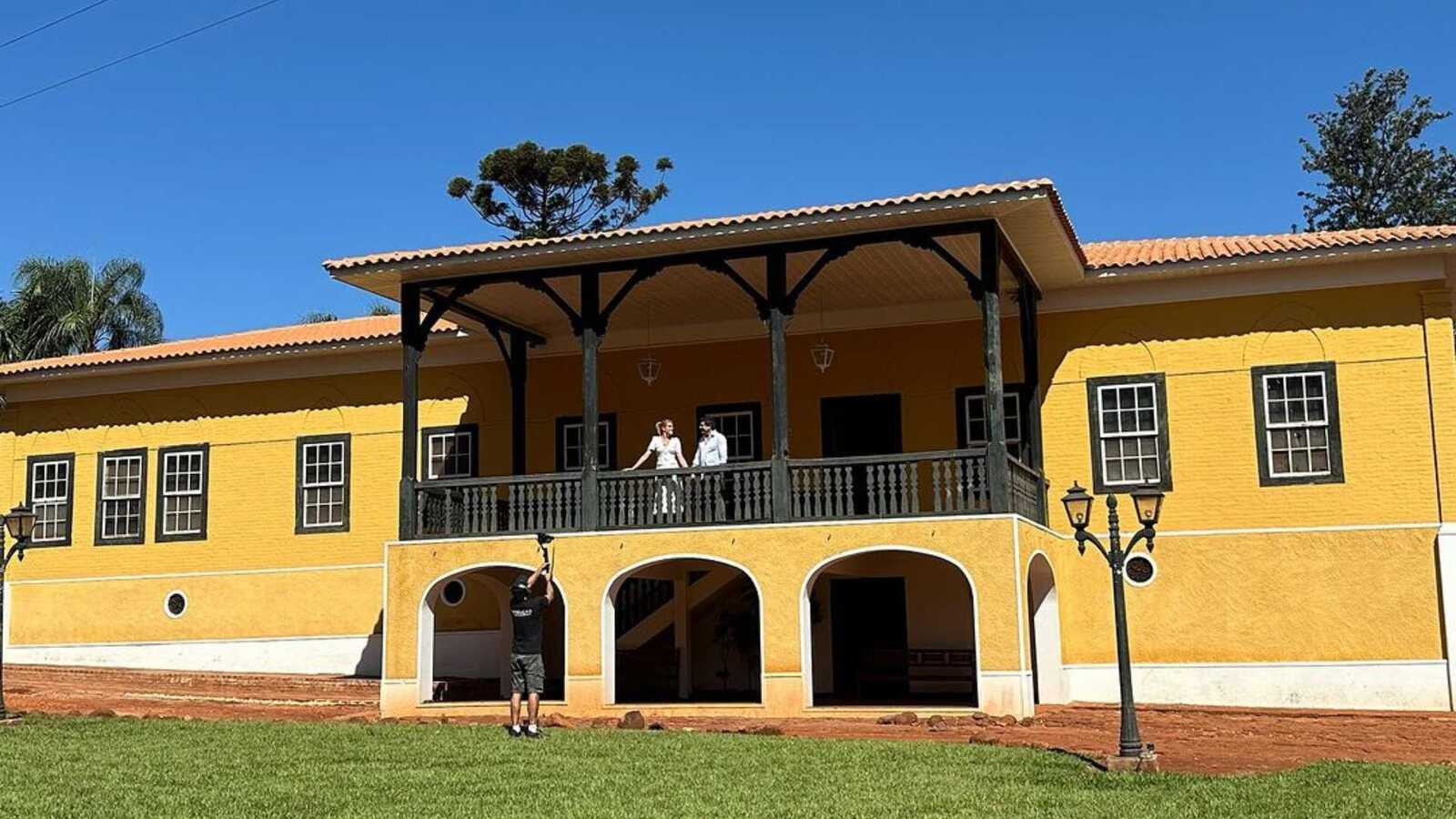
A Brazilian millionaire couple restores a farm over 150 years old in the interior of São Paulo and transforms the historic property with Portuguese tiles, antique furniture, and new spaces into a refuge that blends tradition, comfort, and sophistication.
-
Submerged city in a lake in Minas reveals intact streets, preserved vehicles, and houses after more than 60 years, impressing divers.


The joint venture between BHP and Lundin Mining is responsible for the development of the two projects, and the work carried out in recent years has revealed mineralizations much deeper and more extensive than the initial geological analyses had identified.
The most recent assessment was based on hundreds of new drillings that significantly expanded knowledge about the potential of the underground.
What started as a promising estimate has turned into one of the largest mineral discoveries of the last decades, with volumes of gold, copper, and silver that position the Vicuña mineral district as a global reference.
The exact size of the economic potential still depends on new studies, but the numbers already disclosed by BHP and Lundin Mining impress any parameter of the industry.
Investments could reach US$ 15 billion over the implementation
The project has been treated as a strategic bet by the industry. Vicuña Corp., responsible for the development of the projects in the Andes Mountain Range, invested about US$ 400 million in 2025 and is evaluating doubling that amount to approximately US$ 800 million in 2026, signaling the acceleration of operations in the region of the gold deposit.
In the long term, total investments could be much larger.
Initial estimates point to investments close to US$ 5 billion, but local authorities and industry sources mention amounts that could reach US$ 15 billion over the full implementation of the mineral complex.
If the estimates are confirmed, commercial production could begin around 2030, with a central processing plant in the Josemaría area and an initial lifespan of about 25 years, making BHP and Lundin Mining protagonists of an operation that will redefine the mining map in South America.
Energy transition copper is the most strategic metal in the complex
Although the gold deposit of R$ 771 billion is the most attention-grabbing figure, copper is the metal that gives the Vicuña mineral district its long-term strategic importance.
Energy transition copper is considered essential for global electrification: without it, electric vehicles cannot be manufactured, solar panels cannot be installed, and renewable energy transmission networks cannot be built.
The estimated 13 million tons of copper in the complex appear at a time when global demand for the metal is growing every year.
For Argentina, the development of the district has additional economic importance: the country has not produced copper since 2018, when the La Alumbrera mine was closed, and the project in the Andes Mountain Range represents the opportunity to resume production on a significant scale.
The energy transition copper found alongside the gold deposit makes Vicuña a doubly valuable asset.
Operating at 4,000 meters above sea level in the Andes Mountain Range is an extreme challenge
The location of the deposits imposes obstacles that go far beyond conventional engineering. The exploration areas of the Vicuña mineral district are located over 4,000 meters above sea level in a remote region of the Andes Mountain Range, where thin air, unstable weather, and great distances make large-scale operations difficult.
Visitors and workers must undergo medical evaluations before ascending to the region due to the risk of altitude-related problems.
The construction of roads, power lines, and industrial infrastructure in mountainous areas represents a logistical challenge that significantly increases the cost of each stage of the project.
For BHP and Lundin Mining, resolving these operational limitations is as important as confirming the reserves because it is of no use to have a gold deposit of R$ 771 billion if logistics make extraction unfeasible.
Glaciers and freshwater are at the center of the environmental debate
The advancement of mining in the Vicuña mineral district also raises serious environmental concerns.
Organizations such as the Fundación Ambiente y Recursos Naturales warn of potential impacts on glaciers and freshwater reserves in the Andes Mountain Range, resources that are vital for both local communities and agriculture in Chile and Argentina.
The large volume of water required for metallic mining activities is another sensitive point. Similar projects in the region have already been criticized for their intensive use of water resources in areas of extremely dry climate, and the gold deposit at Vicuña will not be an exception to this scrutiny.
The balance between exploring reserves worth over R$ 1 trillion combining gold, energy transition copper, and silver and preserving fragile ecosystems is the central dilemma that BHP and Lundin Mining will have to face publicly in the coming years.
Does this discovery change the map of global mining?
The gold deposit of R$ 771 billion found in the Vicuña mineral district in the Andes Mountain Range is one of the largest mineral discoveries of the last decades.
With reserves of gold, copper energy transition, and silver that together exceed R$ 1 trillion, and investments from BHP and Lundin Mining that could reach US$ 15 billion, the project has the potential to reshape the global mining landscape.
Do you think exploration should proceed despite environmental risks? Do copper and gold justify an operation at 4,000 meters above sea level in the Andes? Leave your opinion in the comments.






Seja o primeiro a reagir!