





 Portuguese
  English
  Spanish
  5 min of reading
  3 comments


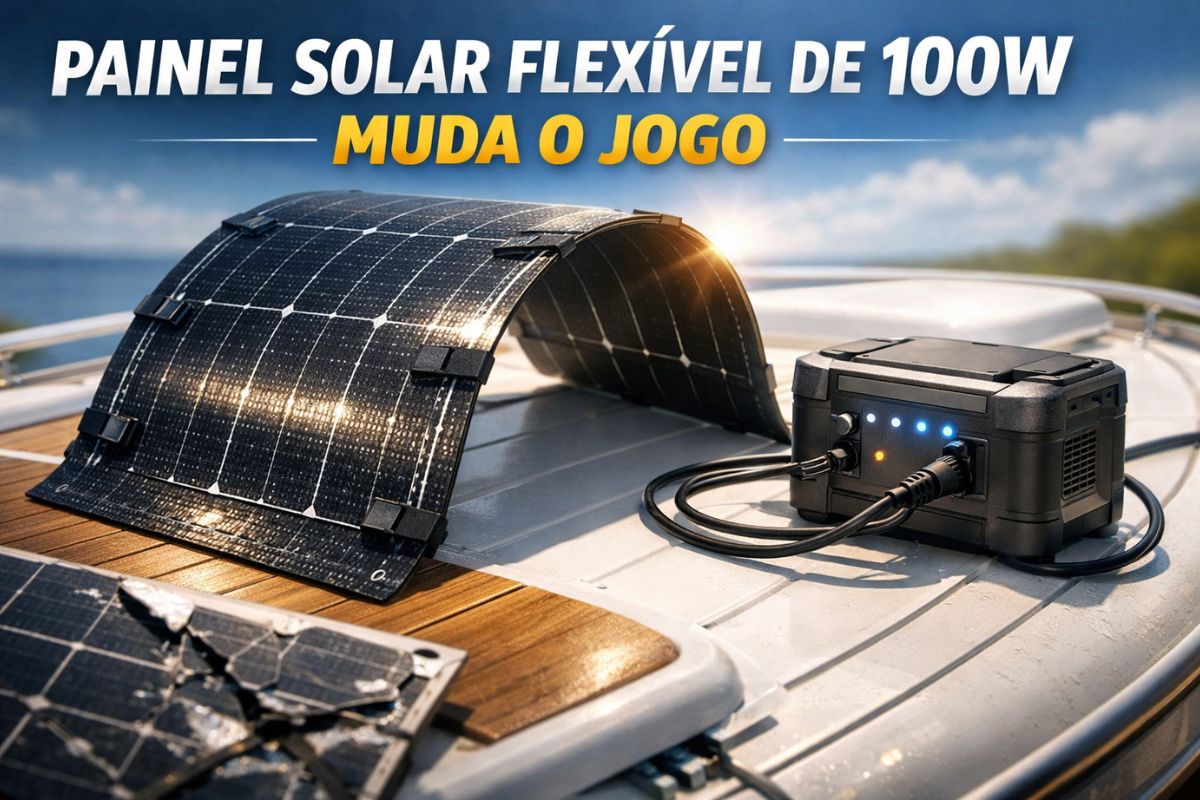


Study On EcoFlow’s Flexible Panel And Rain-Powered Film Experiment Reveals A New Generation Of Lightweight, Foldable And Mobile Solutions For Homes, Trailers, Portable Kits And Emergency Operations In Areas Vulnerable To Prolonged Blackouts In Major Urban Centers
A technical article on a 100 W flexible solar panel from EcoFlow has brought to the forefront the feeling that humanity has been stuck for decades with rigid, heavy, and difficult-to-install solar panels. At the same time, research led by a physicist at the University of Massachusetts presented a rain-powered film, a sponge-like material that converts the impact of raindrops into electrical current through what are called hydrovoltaic cells.
Together, the 100 W flexible solar panel and the rain-powered film suggest a future where distributed generation no longer relies solely on flat roofs and metal structures. The promise is to make energy portable, modular, and adaptable, catering to everything from compact residences to trailers, boats, tents, and makeshift shelters after climate disasters, with less weight, fewer penetrations, and simpler installation than traditional systems.
From Rigid Panel To 100 W Flexible Kit

For years, the dominant standard has been the flat, rigid, glass-covered, heavy panel, which requires a suitable roof, metal structure, and professional installation.
-
Seen from space, a colossal volcano nearly 5,000 meters high in Russia has released 1,600 km of smoke over the Pacific, forming “devil’s horns” of lava and revealing the brutal force of the Ring of Fire.

-
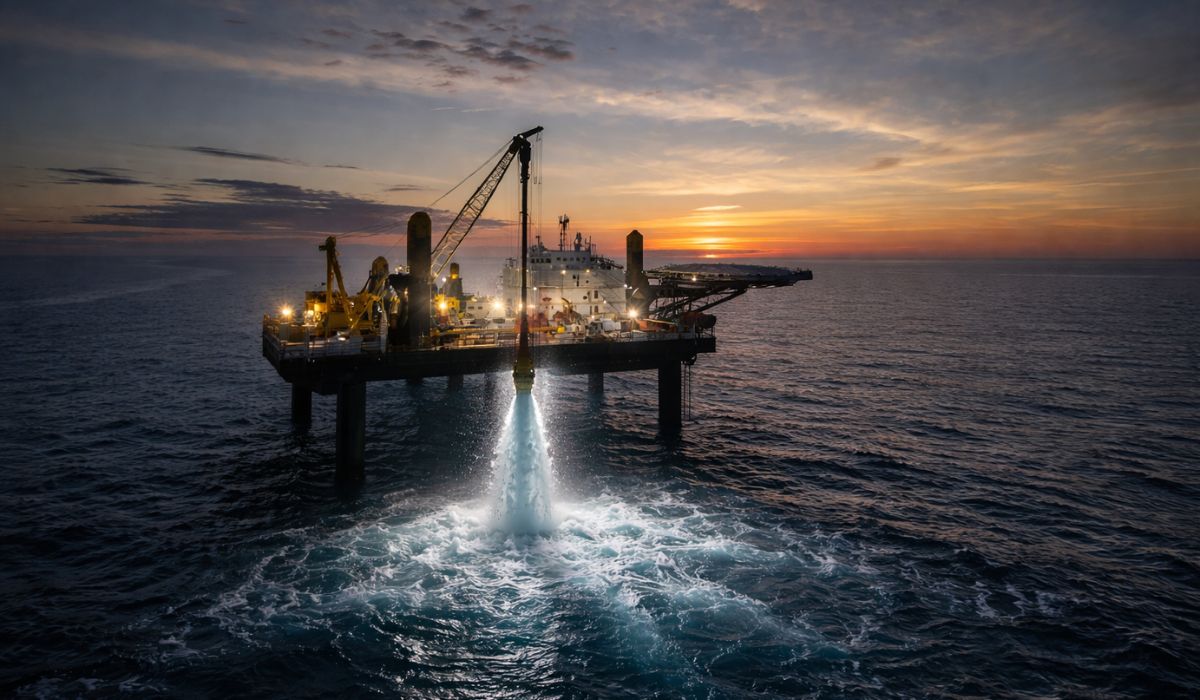
Expedition 501: Scientists drill into the ocean floor and discover a giant reserve of fresh water hidden beneath the sea, extracting nearly 50,000 liters and revealing an invisible system that could reshape the map of water scarcity.
-
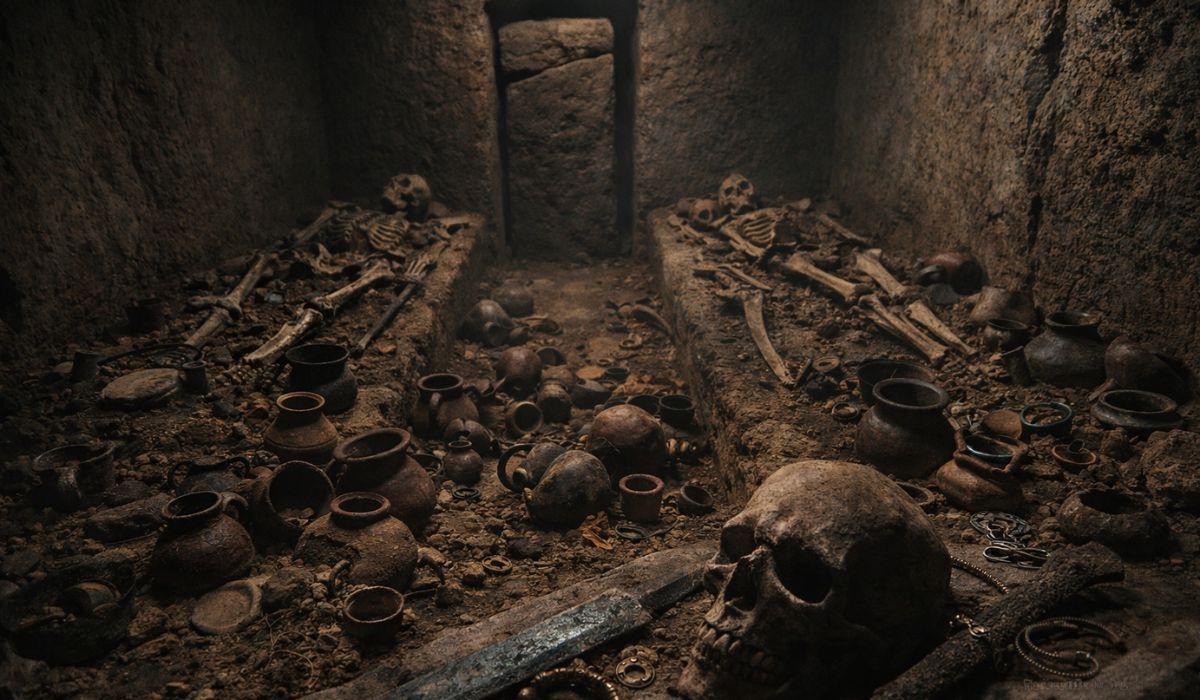
Archaeologists find an intact tomb over 2,500 years old, with more than 100 preserved objects, weapons, jewelry, and human remains never touched.
-
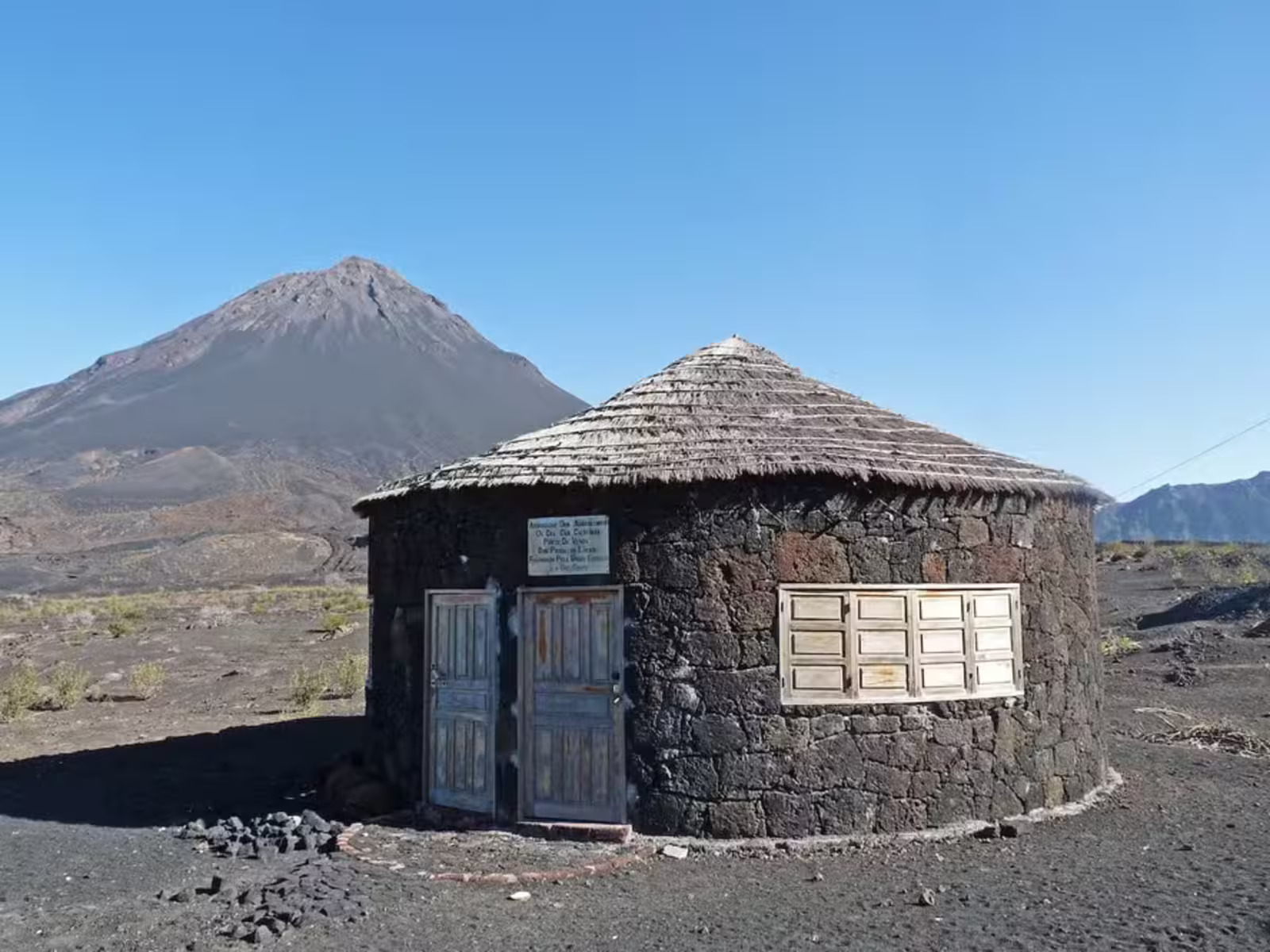
Volcanic lava transforms into threads as fine as human hair that travel over 30 kilometers by wind and fall like cutting rain on roofs and backyards in Hawaii and Iceland.


It works, but limits where and how solar energy can be used, especially in makeshift housing, vehicles, at-risk areas, and situations where the physical structure is fragile or temporary.
The 100 W flexible panel from EcoFlow emerges precisely at this point.
Manufactured from high-tech fiberglass, with a lamination process designed to protect the cells and maintain performance, it can be bent up to about 258 degrees, according to the manufacturer, without losing structural integrity.
The IP68 rating indicates resistance to water and dust, making it suitable for use in damp or exposed environments.
Instead of being stuck on a fixed roof, the panel follows the user.
What 100 W Can Really Deliver At Home Or On The Road
From a technical standpoint, a 100 W panel is not a magic solution for an entire residence.
The material itself emphasizes that it would be unrealistic to expect a single panel of this size to power air conditioning, washing machines, or dishwashers.
The available power is modest when compared to traditional residential systems of several kilowatts.
Where the flexible panel shines is in tactical applications: keeping lights, cell phones, laptops, portable batteries, and small refrigerators running, especially when combined with MPPT controllers and battery banks.
In periods of strong sunlight, the set can sustain a higher power output for a few hours, recharging energy reserves that will be used at night or on cloudy days.
It is a high-efficiency spot solution, not a direct replacement for a medium-sized home’s electrical grid.
Fiberglass, 23% Efficiency And Mounting On Complex Surfaces
The performance data mentioned in the study points to efficiency around 23%, a rate considered competitive within a saturated market of photovoltaic modules.
The 100 W flexible panel stands out not only for its power but for its combination of efficiency, reduced weight, and the ability to be folded or curved to fit irregular surfaces.
This allows installation on van roofs, boat decks, curved roofs, temporary shelters, tents, and reinforced tarp structures.
In disaster contexts, the fact that the panel is lightweight, compact, and removable facilitates transport in rescue vehicles and field setup, without the need for complex metal profiles. Instead of a rigid infrastructure, the system resembles more of a mobile power kit.
Power Kit And Integration With Batteries And Portable Equipment
Perhaps the most relevant point of the system is the concept of a “power kit”, where the 100 W flexible panel works alongside portable batteries and other robust equipment.
EcoFlow presents the idea of an ecosystem where the user can start with a single panel and, as needed, integrate multiple modules, expanding generating capacity.
In practice, the panel works both as a standalone unit and as part of a larger set, capable of powering routers, basic lighting, small medical devices, and charging points for phones in emergency situations.
Versatility is the differentiator: the same panel can be removed from a van roof, stored, transported, and reinstalled in another location, without the constraints of a fixed structure.
Rain-Powered Film And Hydrovoltaic Cells
While the flexible panel explores sunlight better, the rain-powered film targets a historical gap in renewable energy: what to do when the sky is overcast, raining, or when light is insufficient.
Research from UMass describes a sponge-like film that converts the impact of raindrops into electricity, creating what researchers call hydrovoltaic cells.
The logic is to harness the mechanical energy contained in the movement of droplets falling on a specially designed surface.
Instead of merely running off, the water interacts with the material, generating an electric potential difference.
Still in the research stage, the rain-powered film is presented as a complement, not a substitute for solar panels, as it depends on the presence of precipitation and does not currently provide large amounts of continuous power.
Urban Potential In Rainy Regions And Combined Use With Flexible Solar
In cities with long periods of rain, roofs, facades, and bus shelter coverings could, in theory, host layers of rain-powered film over or alongside flexible solar panels.
The combination would allow for energy extraction even on days when solar irradiance is low, reducing the fluctuation between periods of high and low renewable generation.
The technical literature cited, however, highlights that we are dealing with an emerging technology, with challenges in scalability, durability, and cost.
It will be necessary to test how the film behaves on surfaces exposed for years to acid rain, urban pollution, hail, and sudden temperature variations. The real gain can only be measured when prototypes are installed outside the controlled environment of a laboratory.
Portable Energy, Disaster Response, And The Limits Of The Announced Revolution
In disaster situations, the 100 W flexible panel and, in the future, the rain-powered film can represent the difference between having or not having minimal energy for communication, lighting, and refrigeration of medications.
The ability to charge critical equipment without relying on diesel generators is a strategic factor for rapid response teams, especially in hard-to-reach areas.
At the same time, it’s important to relativize the discourse of “total revolution.” A 100 W panel does not replace a city’s electrical grid, and a hydrovoltaic film still in the research phase does not eliminate the need for a robust matrix with solar, wind, hydropower, and other sources.
The structural change will come from the sum of complementary technologies, not from a single product or miraculous prototype. The real gain lies in the flexibility to offer distributed energy in places where traditional systems do not reach.
Given this scenario, in your opinion, do you foresee more impact in the near future coming from the 100 W flexible panel or the rain-powered film in the cities where you live?





Para compre mande cntato
Fantástico transportar a tecnologia dos celulares, notebooks, etc para espaços que necessitam de flexibilidade e menor peso. Esse avanço levará em breve ao uso em janelas de prédios que também vão gerar eletricidade ….
How do we order for the Eco flexible 100 Watt Solar Panels? Do you have an agent or Warehouse for purchase and pick up in Nigeria?
I am interested to try the panel in the North Central Region of Nigeria