





 Portuguese
  English
  Spanish
  3 min of reading
  0 comments


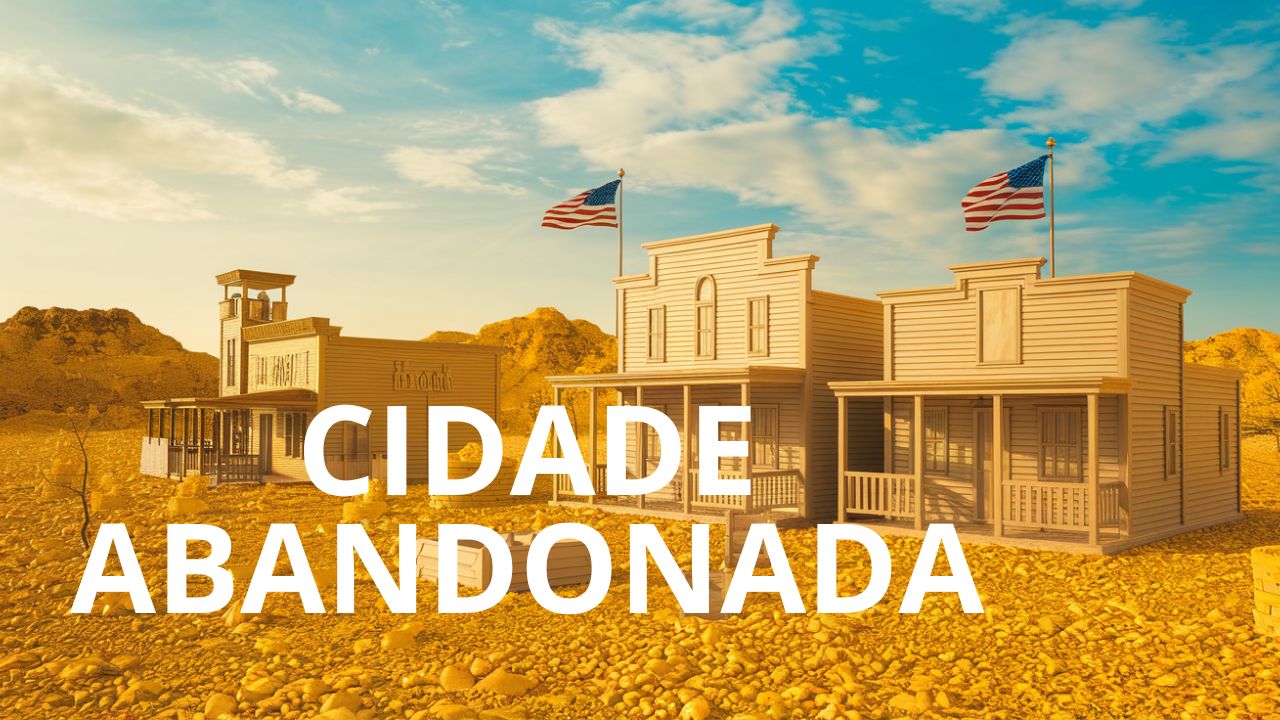
An Old Mining Town That Thrived Between 1890 and 1938, Haynes Was One of the Largest Gold Mining Centers in the United States. With an Industry That Generated the Equivalent of US$ 1.4 Billion, Today Only Ruins, Old Vehicles, and Rusty Machines Remain, Preserving the History of a Lost Empire in the Arizona Desert.
At the end of the 19th century, Arizona was experiencing the height of gold mining. Founded in 1890 by the Haynes Copper Company, the town started with copper exploration but soon found something even more valuable: gold. This transformed Haynes into a bustling mining center, with hundreds of miners working tirelessly to extract wealth from the ground.
The Gold King Mine was the economic heart of the town, attracting investments and workers from all over. By 1901, Haynes had a population of 304, had its own post office, and was establishing itself as one of the most promising gold mining towns in the country.
The Decline and Abandonment of the Mining Town

Like any town that depends on a single resource, Haynes could not withstand the depletion of gold. As the decades passed, extraction became less viable, and the town began to lose its inhabitants. By 1950, there was no one living there anymore.
-
Larger than entire cities in Brazil: BYD is building a 4.6 km² complex in Bahia with a capacity for 600,000 vehicles per year, but the discovery of 163 workers in conditions analogous to slavery has shaken the entire project.

-
With an investment of R$ 612 million, a capacity to process 1.2 million liters of milk per day, Piracanjuba inaugurates a mega cheese factory that increases national production, reduces dependence on imports, and repositions Brazil on the global dairy map.

-
Brazilian city gains industrial hub for 85 companies that is equivalent to 55 football fields.

-
Peugeot and Citroën factory in Argentina cuts production by half and opens a layoff program for more than 2,000 employees after Brazil drastically reduced purchases of Argentine vehicles.


What was once a center of opportunity and growth turned into a ghost town, with abandoned machines, deteriorating buildings, and a silence that replaced the sounds of workers and the explosions of the mines.
The Renaissance as a Historical Attraction
Although it was forgotten for decades, in 1970, Haynes was rediscovered by Don Robertson, who recognized the historical value of the site and decided to preserve it. He gathered old mining equipment, restored vehicles, and transformed the ghost town into a true time capsule of gold mining.
Today, Haynes houses over 180 restored vehicles, historic machines, and even an operational sawmill. The town also has a small zoo for kids, making it an attraction for both history enthusiasts and curious tourists.
The Importance of Gold Mining and Its Economic Impact
Gold mining was one of the economic pillars of Arizona in the early 20th century. In 1912, the state had 445 active mines, generating about US$ 67 million, which, adjusted for 2006 standards, amounts to an impressive US$ 1.4 billion.
This industry not only generated wealth but also shaped the development of the region, financing infrastructure and attracting investments that helped transform Arizona into an important economic hub in the United States.
Haynes Today: A Time Capsule of Gold Mining
Today, visitors to Haynes can explore the ruins of the Gold King Mine, observe old mining machines up close, and immerse themselves in the history of the gold rush in Arizona. Despite the abandonment, the town still carries the traces of a time when gold was the fuel of progress.
If Haynes once was synonymous with prosperity, it has now become a reminder of how gold mining shaped the fate of entire towns. Who knows, among the ruins, there might still be a last treasure waiting to be discovered?






-

-

2 pessoas reagiram a isso.