





 Portuguese
  English
  Spanish
  5 min of reading
  0 comments


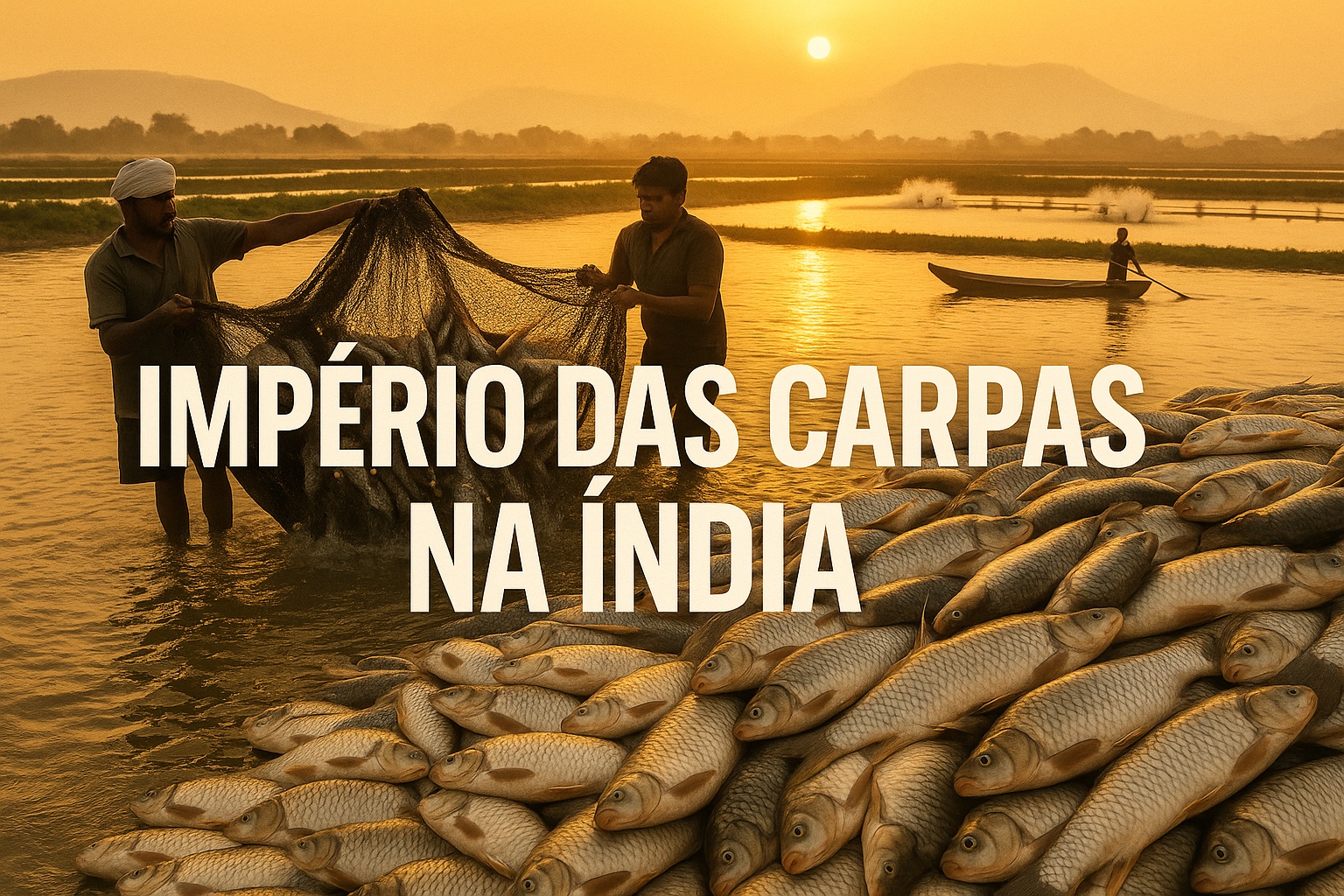
India Has Become the World’s Largest Producer of Carps, Exceeding 1.9 Million Tons Per Year and Driving One of the Largest Aquaculture Systems on the Planet.
India has always been among the giants of aquaculture, but in recent years the country has taken a position that few outside the sector know: it has become the world’s largest producer of carps, with over 1.9 million tons annually, an absolute volume confirmed by FAO in the report The State of World Fisheries and Aquaculture. This dominance did not happen by chance. The country integrated simple technology, great availability of freshwater, incentive policies, and millions of small producers who transformed entire regions into highly efficient fish production systems. The result was the construction of an empire that grows every year, feeds the domestic population, and supplies international markets with almost industrial regularity.
More than numbers, India’s rise is a demonstration of how accessible techniques, combined with favorable climate and community organization, can generate a monumental production chain.
Why India Dominates Carp Farming in the World
Unlike other species, such as tilapias, salmons, or pangas, Indian dominance is concentrated in freshwater cultivated carps, especially three traditional species of the country:
-
The rise in oil prices in the Middle East is already affecting Brazilian sugar: mills in the Central-South are seeing their margins shrink just as ethanol gains strength.
-
Rain gains strength in April, potentially exceeding 150 mm, placing the North, Northeast, and the coasts of the South and Southeast at the center of the heaviest forecast of the week.

-
A fish that survives out of water, crawls on land until it finds another river, and whose female lays 80,000 eggs at once is infesting rivers and lakes in Brazil, and no one can stop this invasion.
-
WEG took its technology to Spain to create a solar irrigation system that operates independently without needing an electrical grid, and now farmers control everything remotely via their mobile phones.

- Rohu (Labeo rohita)
- Catla (Catla catla)
- Mrigal (Cirrhinus cirrhosus)
These species form the so-called “Indian Major Carp System“, an efficient model replicated in thousands of villages.
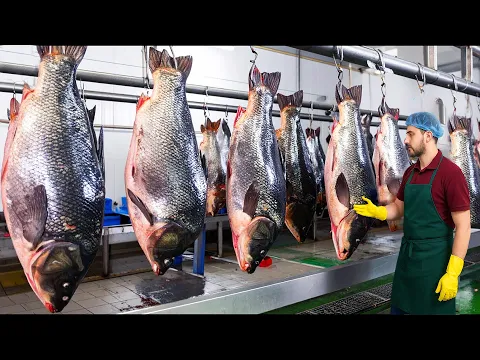

Production is especially concentrated in the states of Andhra Pradesh, West Bengal, Assam, Odisha, and Bihar, where the presence of rivers, lakes, and reservoirs has formed the ideal base for intensive cultivation systems.
The secret to success lies in the combination of factors:
Tropical Climate
Allows for continuous production throughout the year, without the need for winter cycles.
Low Operating Costs
Feeding is based on agricultural by-products, drastically reducing expenses.
Abundant Workforce
Entire communities participate in the activity, creating a massive productive network.
Simple Infrastructure
Excavated tanks and traditional nurseries produce at scale without relying on expensive structures.
Government Support
Programs like the Blue Revolution Scheme have financed small producers and encouraged management techniques.
The result is an aquaculture system deeply rooted in culture and economically powerful.
A Billion-Dollar Industry That Supports Millions of Families
India has surpassed the mark of 1.9 million tons of carps per year, but the economic impact goes far beyond that.

Studies by the Indian Council of Agricultural Research (ICAR) indicate that more than 28 million Indians are directly or indirectly involved with fishing and aquaculture. A significant portion is in the carp belts.
In entire villages, carps represent:
- the main source of family income,
- the food security of the region,
- and the basis of the local economy.
Urban markets like Kolkata, New Delhi, and Hyderabad consume tons of fish daily from these small tanks spread throughout the country. Domestic demand is so huge that, even being the world’s largest producer of carps, India imports fish from Asian markets to meet the demand.
In dollars, the sector generates billion annually, especially when considering exports to countries like Bangladesh, Sri Lanka, and the United Arab Emirates.
The Intensive Farming That Transformed Small Villages Into Giant Production Hubs
The Indian method is considered one of the most efficient freshwater aquaculture systems ever recorded. It is based on three technical pillars:
Strategic Polyculture
Instead of raising just one species, producers combine rohu, catla, and mrigal in the same tank. Each occupies a different ecological niche, which reduces competition and increases yield per hectare.
High Stocking Rates
Indian nurseries operate with densities well above the global average. One-hectare nurseries can produce between 3 and 6 tons per cycle, depending on management.
Gradual Increase in Feeding
The diet of the carps grows as the weight of the fish evolves. Many small producers mix agricultural leftovers, vegetable flour, and harvest by-products — something that is accessible and low-cost.
This set of factors generates a multiplier effect: high production with reduced investment, allowing families with limited resources to thrive quickly.
The Silent Revolution: Why the World Underestimated India
India’s rise has not received the same global attention as China’s advance in aquaculture. This has occurred for three reasons:
Fragmented Production
Millions of small tanks, rather than highly industrialized mega-farms.
Focus on the Domestic Market
While other countries announce giant exports, India consumes internally most of what it produces.
Structural Simplicity
The popular image is of rustic tanks, but the numbers show an extremely efficient production machine.
Today, however, international organizations recognize:
no country in the world produces more carps than India.
And this leadership tends to grow.
The Future: How India Can Double Its Production in the Coming Decades
The FAO forecasts that by 2040, India’s demand for fish will rise by almost 70%. This means massive expansion of the production chain.
New technologies are already beginning to emerge:
- Low-complexity biofloc systems prepared for rural areas
- Low-cost circular tanks
- Feeds with better feed conversion
- State programs for microcredit to small producers
If these measures are implemented on a large scale, experts estimate that India could easily surpass 3 million tons annually of carps in the coming decades.
The India That the Brazilian Public Almost Never Knows
When we think of India, the image often involves agriculture, technology, and spirituality. Few imagine the country as a gigantic fish meat machine, run by millions of families and responsible for one of the largest food chains on the planet.
But the numbers leave no doubt:
- Largest producer of carps in the world
- More than 1.9 million tons annually
- Millions of workers
- Expanding domestic market
- Production systems that surprise with their efficiency
It is an empire quietly built, tank by tank, family by family.
And it now defines the course of freshwater aquaculture in the world.







-

-

3 pessoas reagiram a isso.