





 Portuguese
  English
  Spanish
  5 min of reading
  0 comments


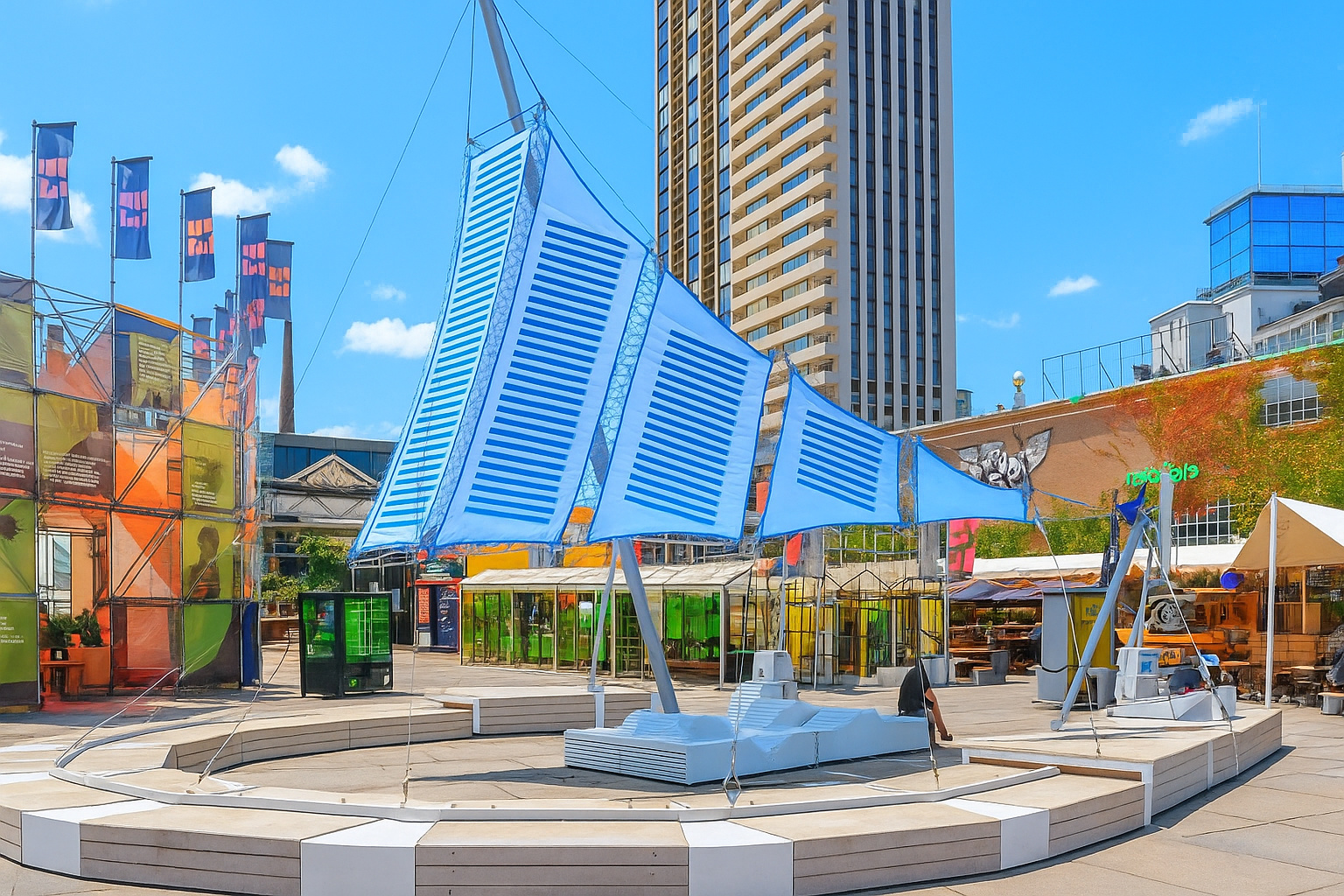
Discover How Textile Solar Architecture Transforms Urban Spaces into Sources of Clean and Accessible Energy, Uniting Design, Sustainability, and Technology.
Textile solar architecture represents one of the most promising innovations in the global energy transition landscape. By combining design, technology, and sustainability, it creates lightweight and intelligent structures capable of generating solar energy directly from fabrics integrated into the urban environment. This fusion of aesthetics and efficiency redefines how cities can self-supply with clean energy, while also providing creative solutions for public space.
Inspired by architectural movements that have always sought to integrate function and beauty, this technology arises as a response to the environmental urgencies of the 21st century. The growing demand for electricity and the need to reduce carbon emissions drive solutions that reconcile innovation and ecological responsibility. Thus, textile solar architecture emerges as a bridge between sustainable design and decentralized energy generation.
A Concept That Unites Aesthetics and Sustainable Energy
The history of textile solar architecture begins with the research of flexible and lightweight materials capable of capturing sunlight without compromising visual comfort or design. Unlike conventional solar panels, solar fabrics transform architectural surfaces into discreet and efficient electricity generators.
-
Seagri’s headquarters invests in solar energy with Neoenergia Coelba and promises to cut electricity costs, highlighting a strategic advance in sustainability and energy efficiency within state public administration.

-
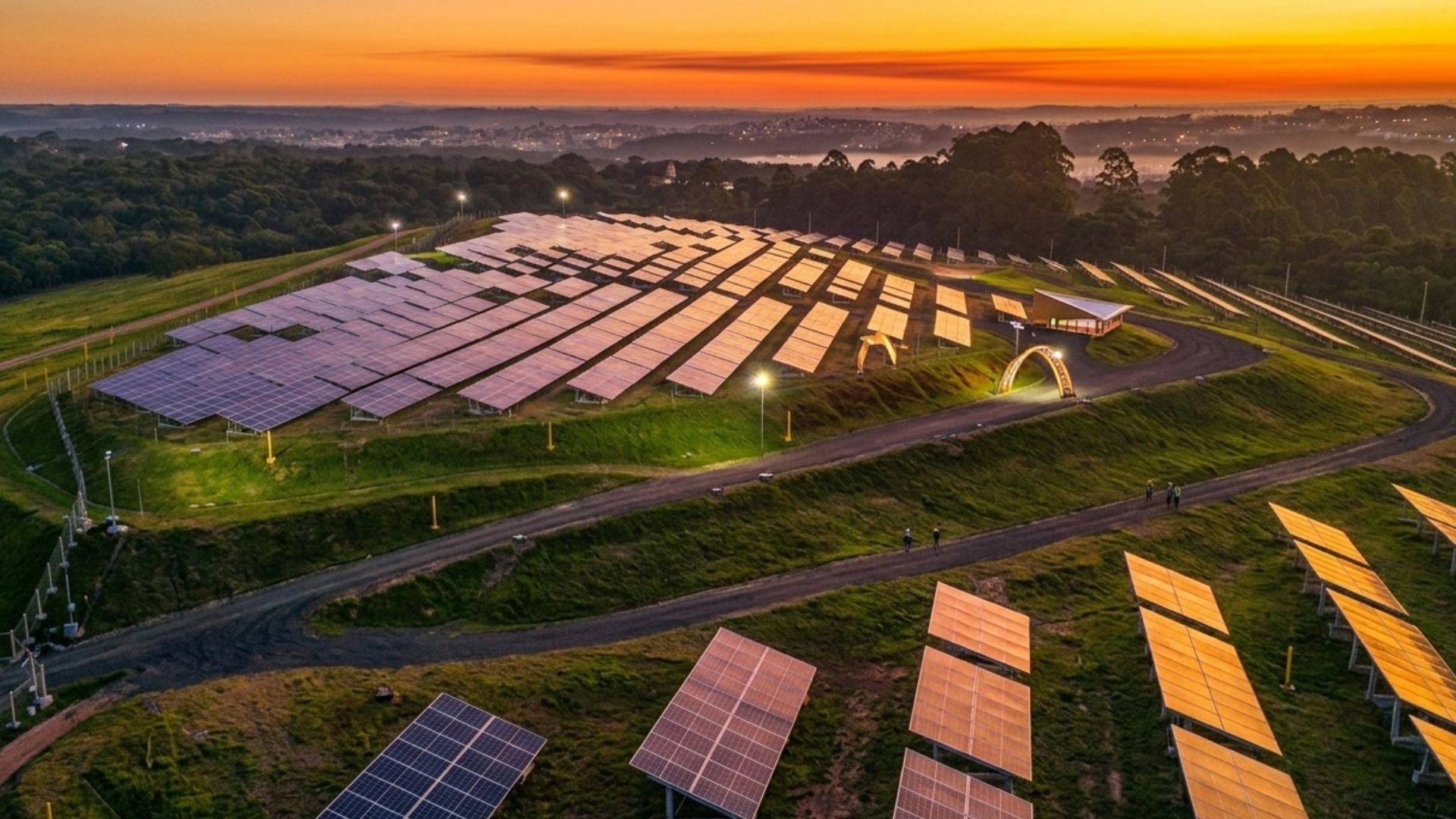
Solar Pyramid draws attention by converting solar energy into million-dollar savings and repositioning the City Hall of Curitiba as an example of innovation, sustainability, and intelligent use of public resources.
-
Europe records strong euro economy with solar energy in March and sparks curiosity about which country leads growth that redefines the energy market and reduces costs.

-
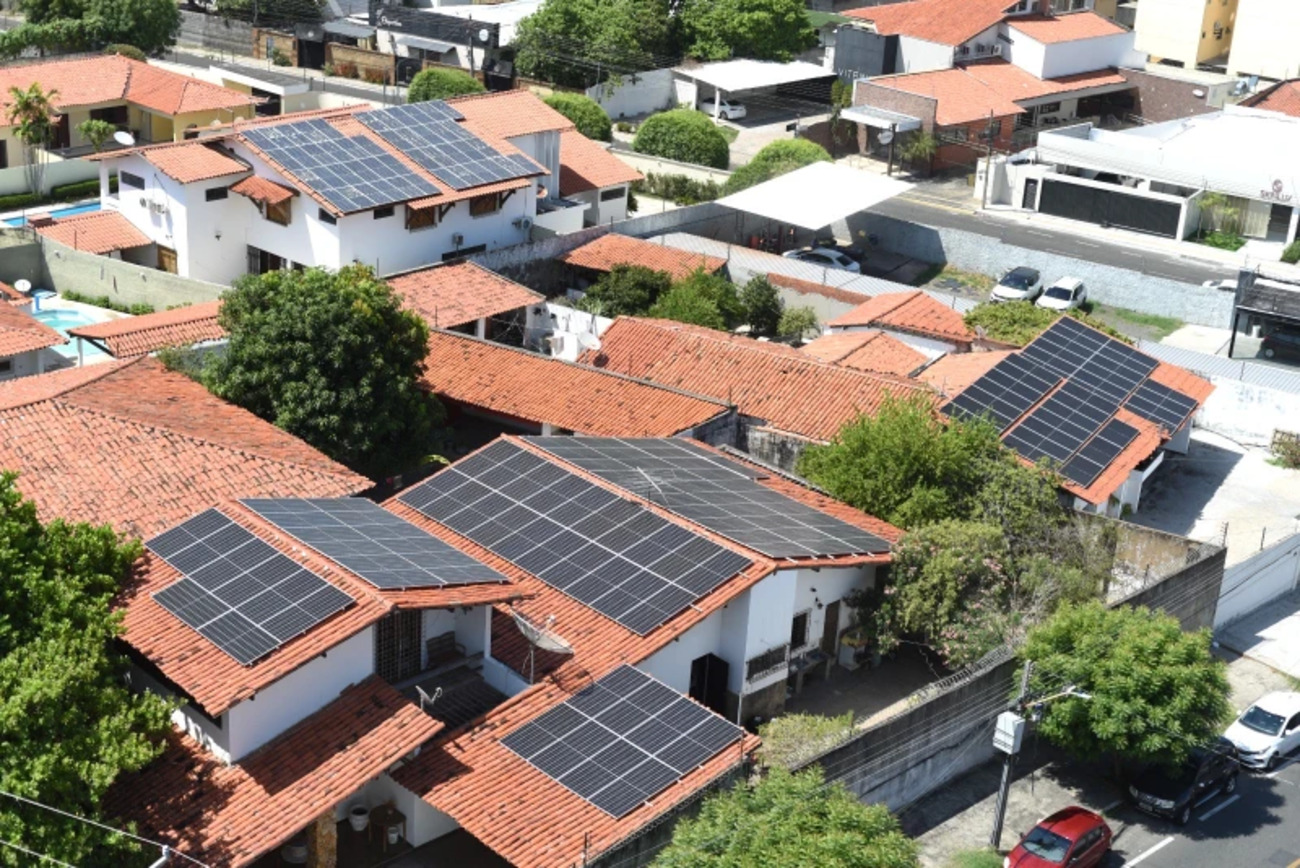
Piauí reaches a historic milestone in energy transition: State records nearly 160,000 households powered by solar energy and leads growth in the Northeast.

A notable example is the Umbra Pavilion, presented by Dutch designer Pauline van Dongen during Dutch Design Week 2025. The installation uses Heliotex, a solar fabric made up of 150 organic cells interwoven with recycled polyester, creating a 40 m² canopy that can store up to 3,000 watts. This project not only demonstrates the technical viability of the concept but also shows how energy can be beautiful and functional at the same time.
Heliotex transforms the way we understand urban solar energy use. Being flexible, lightweight, and recyclable, it can be applied in facades, movable roofs, and temporary structures, converting previously idle spaces into active energy-generating surfaces.
The Evolution of Technology and Its Application in Urban Space
Historically, the idea of uniting architecture and solar energy is not new. Since the 1970s, after the oil crisis, architects and engineers began to rethink the use of natural resources. However, only in recent decades, with the advancement of organic solar cells and smart textile materials, has this concept become truly viable.
Today, textile solar architecture goes beyond rooftop panels. It allows for adaptable installations, which mold to different urban contexts, from public squares to temporary events. Every square meter of solar fabric can become a point of clean energy, reducing dependence on fossil fuels and encouraging energy decentralization.
Moreover, the efficiency of Heliotex, estimated at 53 W/m², may seem modest compared to traditional silicon, but its advantage lies in its ability to be used in places where conventional panels could not be installed. Recent research in Denmark has already managed to double this performance, revealing an impressive growth potential for the coming years.
Responsible Design and Environmental Commitment
The true innovation of textile solar architecture lies not only in generating energy but in doing so in an ethical and sustainable manner. The solar fabrics developed follow principles of responsible design, considering not only aesthetics but also the lifecycle of materials.
These fabrics offer protection against UV rays, climate resistance, and are free of PVC and toxic substances. This concern reflects a paradigm shift: it is not enough to produce clean energy if the process generates new environmental impacts. Thus, the focus shifts to creating regenerative solutions that respect both the environment and urban aesthetics.
This philosophy translates into healthier, more creative, and sustainable urban spaces. Every textile solar architecture installation represents a small step toward cities that breathe clean energy, instead of relying solely on traditional power grids.
From Smart Clothing to Solar Cities
The path to this innovation has curious roots. Pauline van Dongen began her research by developing solar clothing, such as the Solar Shirt, capable of charging electronic devices using sunlight. Over time, the designer expanded this concept into the field of architecture, transforming technological fashion into sustainable urban infrastructure.
The Umbra Pavilion, therefore, symbolizes this transition. It brings together art, science, and sustainability in a sensory experience that invites the public to interact with solar energy in a visible and tangible way. By integrating into public spaces, this technology fosters collective awareness about the importance of clean and accessible energy.
Smart Cities and the Future of Urban Energy
The applications of textile solar architecture are vast. With it, it is possible to rehabilitate old buildings without invasive works, create self-sufficient urban furniture, and build ephemeral structures with positive environmental impact. Furthermore, the use of solar fabrics in charging stations, awnings, and intelligent canopies reinforces the concept of cities that not only consume but also produce energy in a decentralized manner.
This new urban vision brings sustainability closer to everyday life. Instead of hiding technology, it becomes part of the scenery, integrating aesthetics and function. In this way, public space transforms into a living laboratory of innovation and environmental awareness.
As the world seeks to reduce its emissions and achieve carbon neutrality, textile solar architecture stands out as one of the most elegant and efficient solutions for the future of cities. It represents a model of urban development where every surface can actively contribute to the production of clean energy.
A Future Shaped by Light
The revolution of textile solar architecture shows that the future of urban energy lies in the simplest and most creative ways to harness the sun. Smart fabrics that capture and transform solar light can redefine how we live and design our cities.
The Umbra Pavilion is not just an artistic installation but a manifesto of regenerative design, proposing a harmonious coexistence between technology, nature, and society. By uniting innovation, environmental awareness, and aesthetics, it inspires new ways to build a cleaner, more connected, and sustainable world.
Thus, textile solar architecture is not just a design trend but a symbol of hope and creativity, showing that it is possible to power cities with clean energy without sacrificing beauty and functionality.










Seja o primeiro a reagir!