





 Portuguese
  English
  Spanish
  4 min of reading
  0 comments


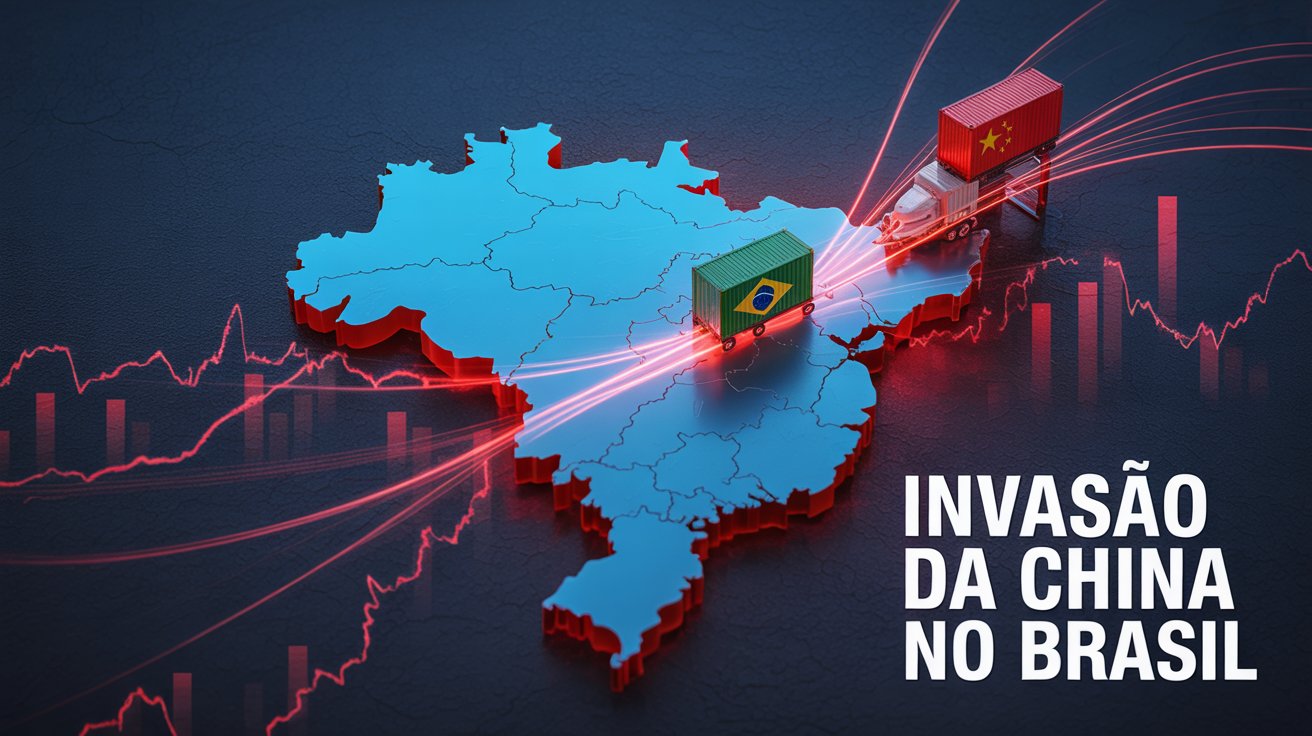
Unprecedented Growth of China in Brazilian Imports Redefines the National Economic Scenario in 2025, Directly Impacting Strategic Sectors and the Country’s Trade Balance.
The first half of 2025 marked an unprecedented change in the Brazilian trade balance, consolidating China as the absolute leader in the country’s imports.
Between January and June, 26.3% of Brazil’s external purchases came from the Asian country, establishing a new historical record, according to data from the Secretariat of Foreign Trade of the Ministry of Development, Industry, Commerce, and Services.
This growth represented a significant increase of 37.2% compared to the same period the previous year, even surpassing the global performance of Brazilian imports, which grew 16.7% in the same interval.
-
Larger than entire cities in Brazil: BYD is building a 4.6 km² complex in Bahia with a capacity for 600,000 vehicles per year, but the discovery of 163 workers in conditions analogous to slavery has shaken the entire project.

-
With an investment of R$ 612 million, a capacity to process 1.2 million liters of milk per day, Piracanjuba inaugurates a mega cheese factory that increases national production, reduces dependence on imports, and repositions Brazil on the global dairy map.

-
Brazilian city gains industrial hub for 85 companies that is equivalent to 55 football fields.

-
Peugeot and Citroën factory in Argentina cuts production by half and opens a layoff program for more than 2,000 employees after Brazil drastically reduced purchases of Argentine vehicles.


China Expands Dominance in Brazilian Imports in 2025
By establishing itself as the largest supplier of imported products to Brazil, China not only expanded its presence in the national market but also promoted strategic changes in trade relations between the two countries.
The average prices of imported Chinese products fell by 8.1% in the first six months of 2025, becoming even more competitive compared to other international markets.
This factor spurred the replacement of traditional suppliers and encouraged Brazilian companies to diversify their acquisition channels, with the Asian giant as the main partner.
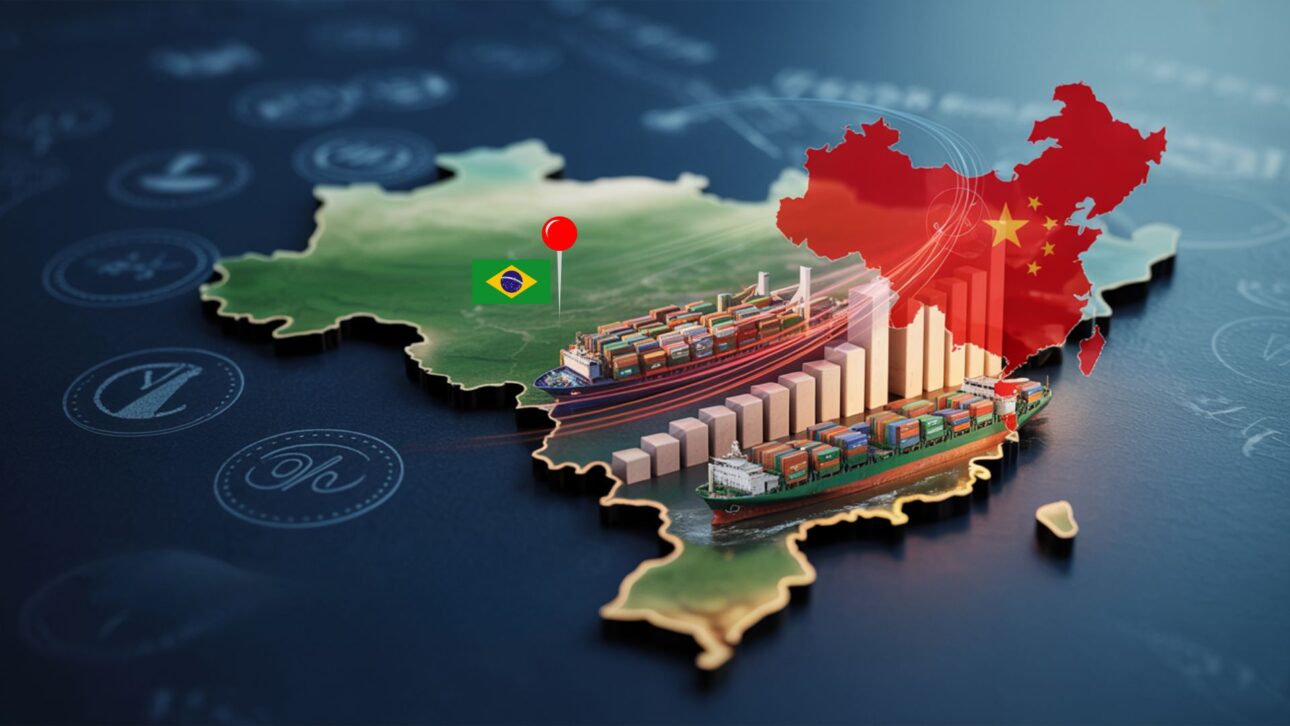
Factors Driving Chinese Advancement
The increasing presence of China in Brazilian imports can be attributed to a combination of factors.
Among them, the greater understanding of the specifics of the Brazilian market by Chinese companies stands out, which have been investing heavily in infrastructure, logistics, and local operations.
According to Target Trading, a national company with 28 years of experience in the foreign trade sector, the establishment of factories and presence in strategic Brazilian ports directly contributes to the expansion of trade exchanges.
Moreover, the improvement in the quality of Chinese products has facilitated access and acceptance in the national market.
Infrastructure and Logistics Strengthen Trade Relations
Companies like Target Trading have expanded their operations with China, especially in the import of large industrial machines and auto parts.
With their own maintenance and inspection centers, the company seeks to ensure the quality standards of the items sold, closely monitoring the growth of the Sino-Brazilian partnership.
Experts believe that logistical robustness and constant quality monitoring are differentiators that enable Brazilian companies to meet the demands of clients in various sectors.
Import Performance and Impact on the United States
The Chinese advancement contrasts with the declining share of the United States in Brazilian imports.
In the first six months of 2025, American products accounted for 16% of national external purchases, marking the second lowest percentage in a decade.
Although the United States remains a relevant partner, the growing gap reinforces the trend of shifting Brazil’s commercial axis towards the East.
Chinese Participation Creates Opportunities and Challenges
For the business sector, the Chinese rise in Brazil’s imports presents both new opportunities and considerable challenges.
As noted by Carlos Campos Jr., CEO of Target Trading, the scenario opens space for business expansion in various segments, but it requires increased attention to avoid excessive dependence on a single country.
Experts recommend adopting policies for supplier diversification and monitoring the impacts of this concentration on the national industry.
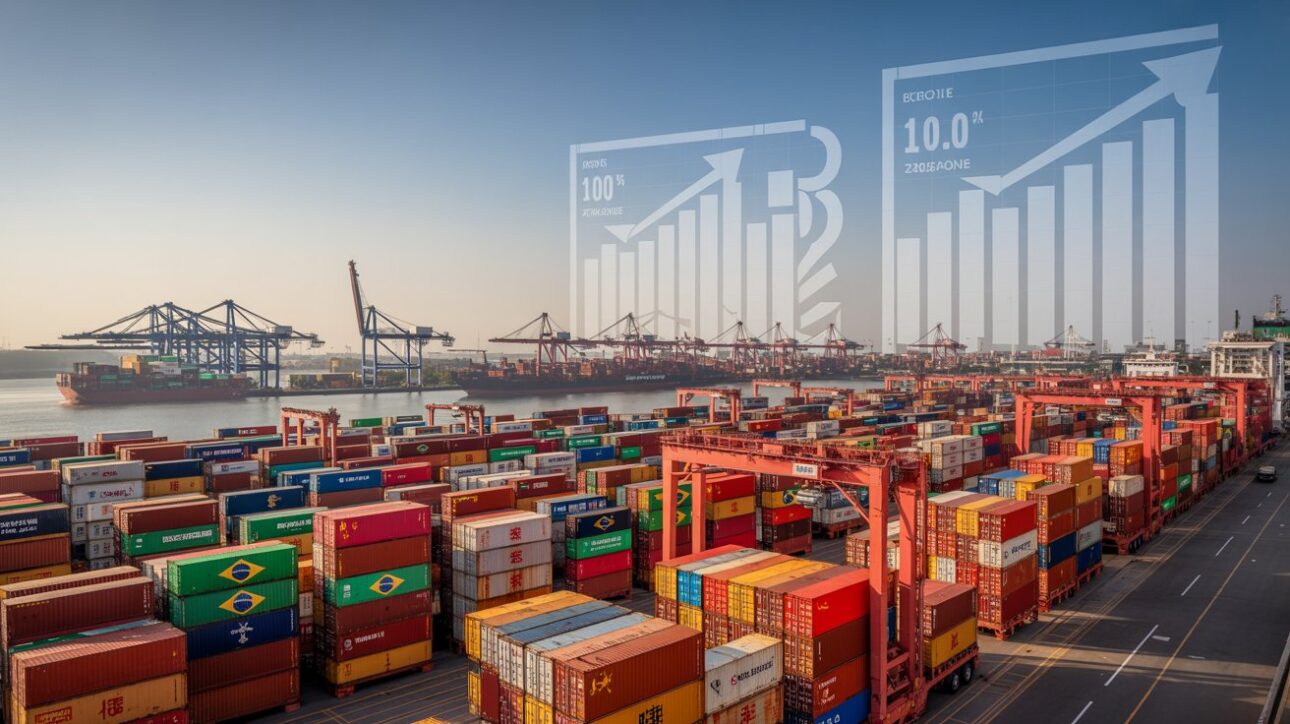
Sectors Most Impacted by Chinese Leadership
The strong Chinese presence is already being felt in strategic areas of the Brazilian economy.
The sectors of machinery, equipment, electronics, industrial components, clothing, footwear, and consumer products have been registering substantial increases in imports from China.
This expansion not only alters the competition dynamics in the national market but also pressures Brazilian companies to reinvent themselves to maintain competitiveness.
International Scenario and Changes in the Trade Balance
The “silent invasion” promoted by China occurs in a context of international economic instability and global trade disputes.
The strengthening of China’s position in Brazil follows a trend observed in other Latin American countries, where the Asian country has invested in infrastructure, energy, technology, and transportation.
This movement generates debates about the consequences of an increasingly China-dependent trade balance, both economically and strategically.
Imports from China Reach Historic Record in Brazil
The year 2025 is marked by the highest percentage of Chinese participation in Brazilian imports ever recorded, exceeding all previous projections.
The data reinforces China’s central role in supplying inputs and consumer goods to the Brazilian market, highlighting it as a key player for national industry and commerce.
Challenges for Brazilian Trade Policy
In light of this new scenario, experts and foreign trade entities advocate the importance of Brazil seeking balance in its trade relations, promoting ongoing dialogues with other strategic partners.
The goal is to strengthen bilateral agreements, encourage innovation, and ensure the sustainability of economic development, without giving up on diversifying external suppliers.
With China’s advancement and the relative decline of other traditional partners like the United States, Brazil enters a phase of adjustments and repositioning in its import policy.
The market’s expectation is that the growth trend in imports from China will continue in the coming semesters, with a direct impact on various sectors of the national economy.
In light of the accelerated growth of the Chinese presence in Brazilian imports in 2025, what should be the country’s strategy to balance the opportunities brought by this new scenario with the need to ensure its commercial autonomy in the long term?







Seja o primeiro a reagir!