





 Portuguese
  English
  Spanish
  3 min of reading
  0 comments


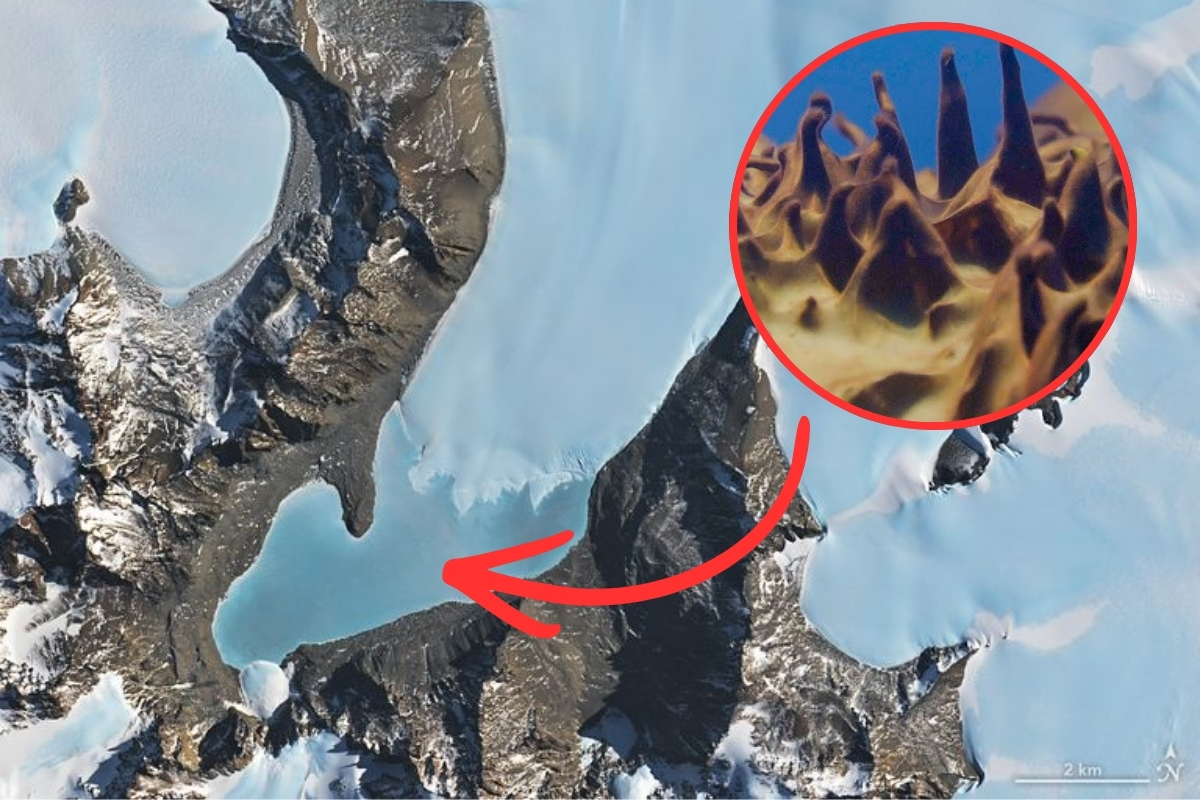
Scientists analyzed Lake Unter See in Antarctica, which is nearly 170 meters deep, to understand extreme conditions and their effects on astrobiology
A lake covered by ice year-round, with brine water beneath a thick layer and unusual chemistry, draws the attention of researchers in Antarctica. The setting features a high concentration of dissolved oxygen and methane, low dissolved carbon dioxide, and water with a high pH.
This combination makes Lake Unter See one of the most unusual environments on the planet. Besides its scientific value, the site helps to understand how simple life forms can persist in extreme conditions, directly impacting studies that attempt to read signs of life beyond Earth.
Permanent ice keeps water isolated year-round
Even in the Antarctic summer, the lake remains frozen at the surface. The waters are trapped under a cover of 2 to 4 meters of ice, while sunlight penetrates this barrier and warms the water just below.
-
Elon Musk is trying to transform Starlink into the new standard for in-flight Wi-Fi, and the orbital war between giants is changing the sky of commercial aviation.

-
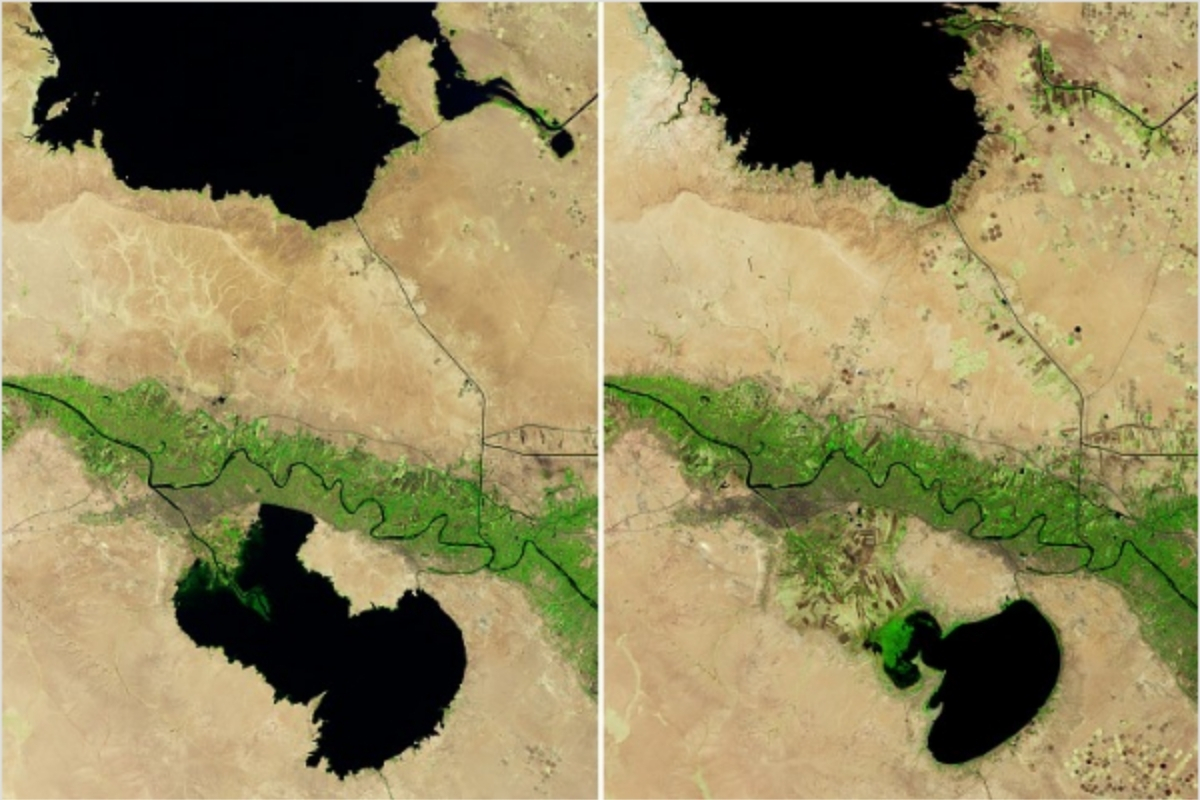
Collapse in sight in Iraq: satellite images captured by NASA show the country’s largest reservoir dramatically drying up.
-
Archaeologists open a tomb in Luxor and find 3,000-year-old papyri still sealed in a ceramic vessel, alongside colorful coffins stacked in 10 rows and linked to the mysterious singers of Amon.

-
Before the space shuttle existed, NASA put a “wingless airplane” made of wood to fly at over 190 km/h towed by a car and then launched from a C-47, and this strange experiment practically proved that it was possible to re-enter the atmosphere and land on a runway like a conventional airplane.

At the same time, the intense cold and strong winds prevent broader melting at the top. The average annual temperature in the region hovers around minus 10 degrees Celsius, which helps maintain this isolation for long periods.
Depth of nearly 170 meters increases uniqueness of the environment

In addition to its rare chemical composition, the lake impresses with its size. Its maximum depth reaches nearly 170 meters, placing it among the deepest and most significant surface lakes in Antarctica.
This combination of depth, constant ice, and water with unusual characteristics creates a very stable environment in appearance. Still, internal processes and external events can alter this balance quickly and significantly.
Microbial structures resemble some of the oldest fossils on Earth
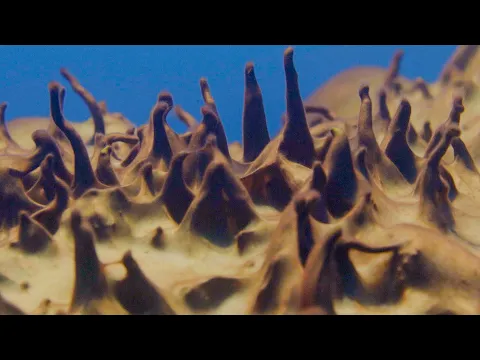
At the bottom of the lake, researchers identified large conical structures called microbialites. They are formed by photosynthetic microorganisms that trap and organize sediments over time.
These formations are seen as living examples comparable to the oldest stromatolites known on the planet. In some places, they rise up to 70 centimeters above the bottom, something rare in modern environments and that increases the scientific weight of the discovery.
Lake became a reference for studies on Mars and Enceladus

According to NASA Earth Observatory, this environment is also treated as a model for understanding locations where life could persist or leave traces on other worlds.
The dark, stratified, and anoxic southern basin of the lake serves as a reference for research on the subsurface ocean of Enceladus. Meanwhile, the ice-sealed waters reinforce comparisons with covered lakes that may have existed on Mars in the past, which changes the strategic reading.
Event in 2019 raised water level by 2 meters
Despite its stable appearance, the lake underwent a sudden change during fieldwork in 2019. Researchers recorded a rapid rise in the water level and later confirmed that the increase was 2 meters.
The explanation came from a sudden discharge of meltwater from the nearby lake, Lake Ober See. The episode showed that even extreme and seemingly isolated systems can undergo significant changes in a short time.
Flood released 17.5 million cubic meters and changed water chemistry
The discharge released about 17.5 million cubic meters of meltwater into the lake. As a result, there was a change in pH and a replenishment of water rich in carbon dioxide in a system that is normally poor in this compound.
This influx may have increased microbial productivity in the environment. For researchers, periodic events of this type can act as biological stimuli in Antarctic ecosystems that are very low in carbon.
The combination of these characteristics places the lake in a rare position in current science. High depth, permanent ice, unusual chemistry, and giant microbial structures make the environment a key point for understanding the limits of life.







Seja o primeiro a reagir!