





 Portuguese
  English
  Spanish
  5 min of reading
  0 comments


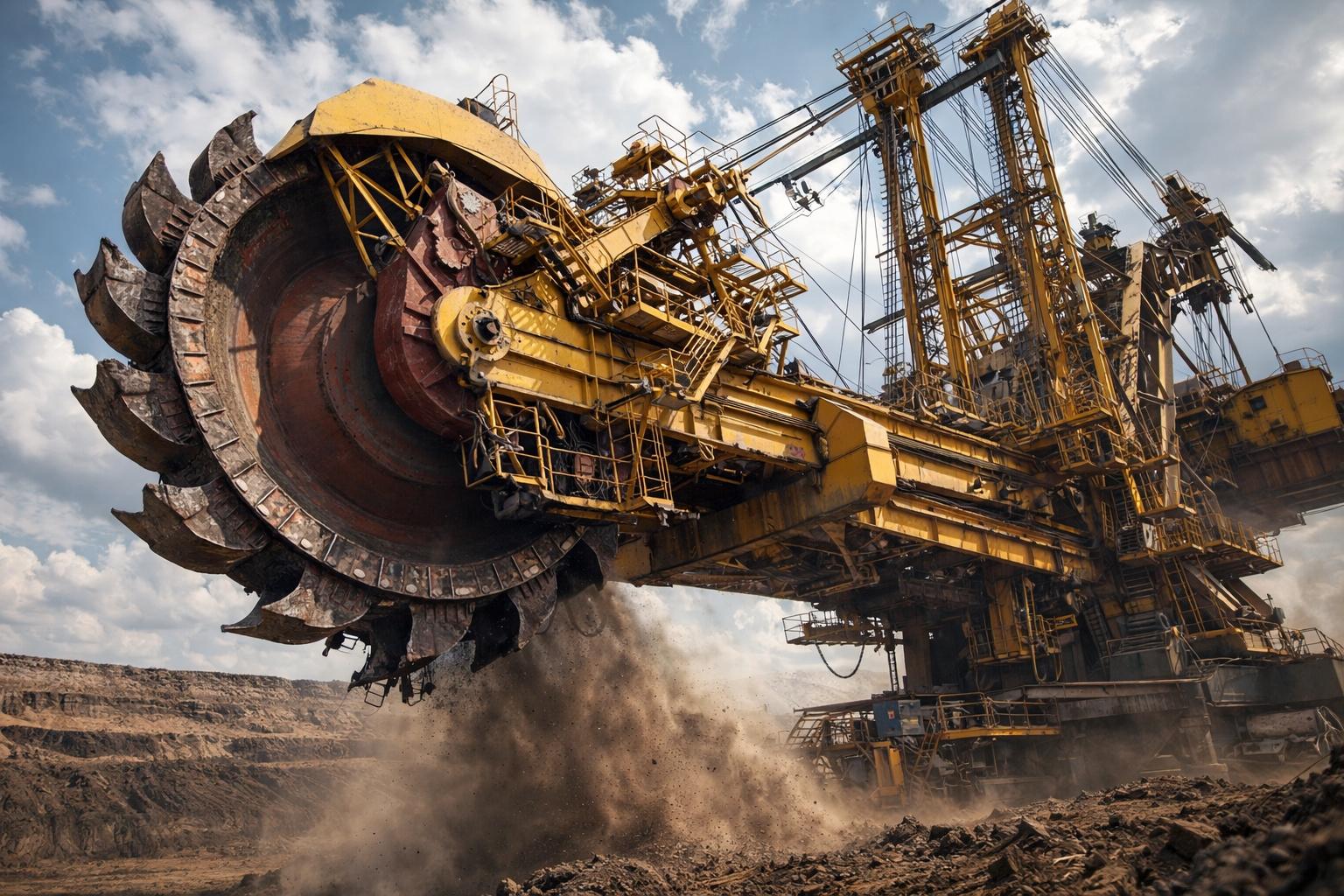
Giant machine that removes up to 12 thousand m³ of earth per hour sustains part of Europe’s energy and reveals the invisible cost of electricity.
In various regions of Europe, especially in Germany and countries that still use lignite coal as an energy base, a specific type of machine silently dominates the industrial landscape: the so-called bucket-wheel excavators. These machines are responsible for extracting gigantic volumes of material in open-pit mines and play a direct role in generating electrical energy.
According to technical data compiled by sources such as Encyclopaedia Britannica and mining industry operators, these machines can remove up to 12 thousand cubic meters of material per hour, a level of productivity that places them among the largest land equipment ever built by human engineering. Despite this impressive scale, they rarely appear in public discussions about energy, which tend to focus only on power plants and renewable sources.
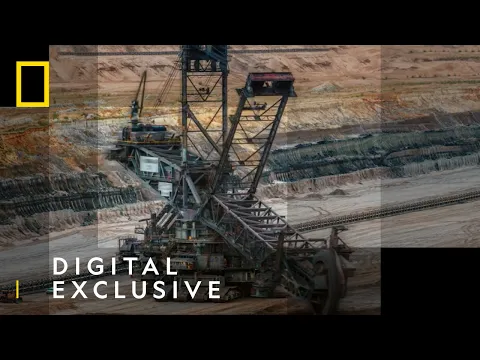
Bucket-wheel excavators are among the largest mobile machines ever built
The bucket-wheel excavators are designed to operate continuously in large-scale mines. Unlike conventional excavators, they use a rotating wheel equipped with multiple buckets that constantly rotate, removing material continuously. Some models reach extreme dimensions. Machines like the Bagger 293, for example, can exceed:
-
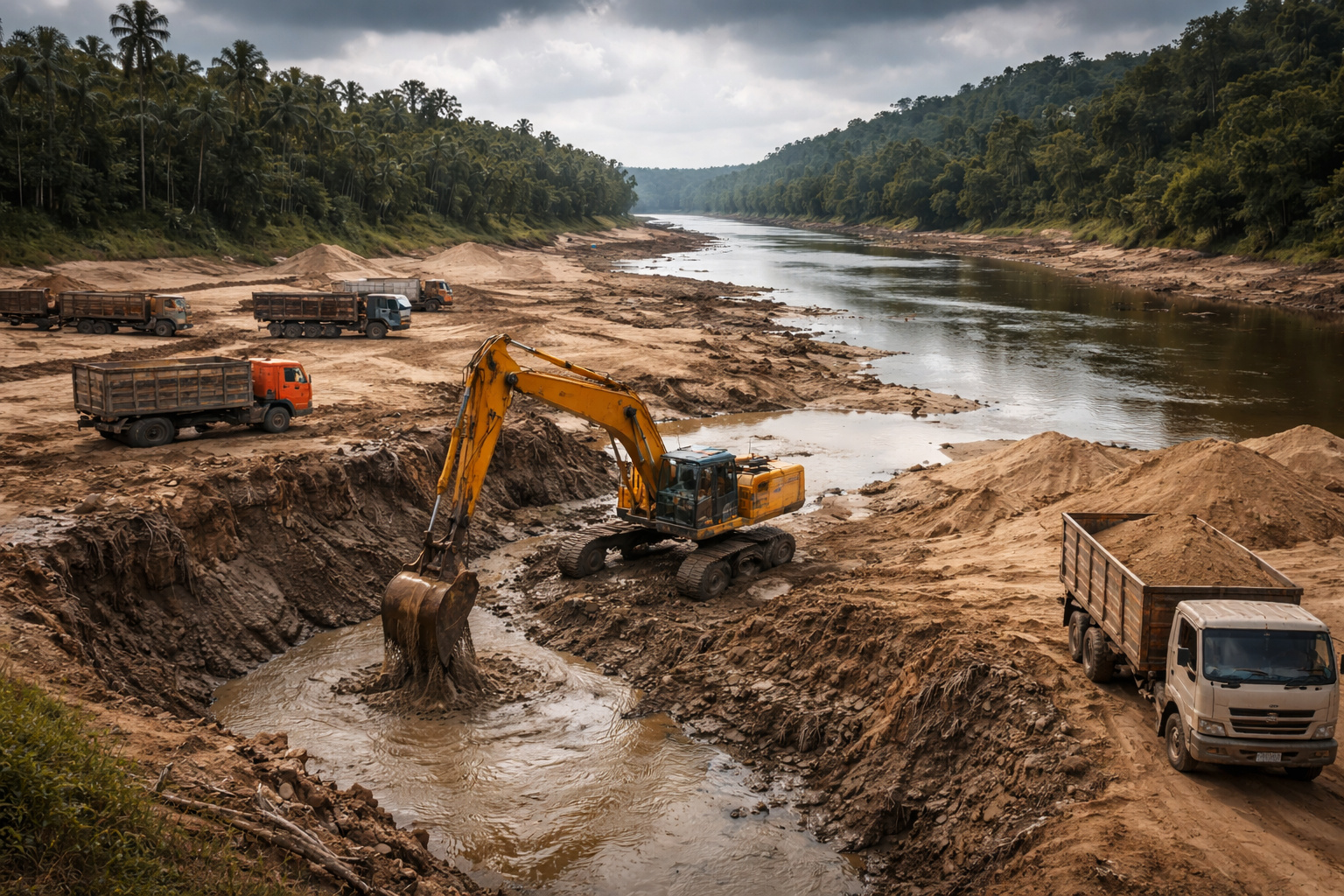
In Kerala, India, known as “the land of God,” dredging machines are extracting sand from rivers 40 times faster than nature can replenish it, riverbeds have already dropped nearly 2 meters, rivers have begun to dry up, and scientists who investigated the floods of 2018 discovered that decades of uncontrolled mining have weakened the rivers to the point where they can no longer contain the water.
-
USA and China compete for Brazil over resources that could be worth trillions — rare earths put the country at the center of a global dispute

-
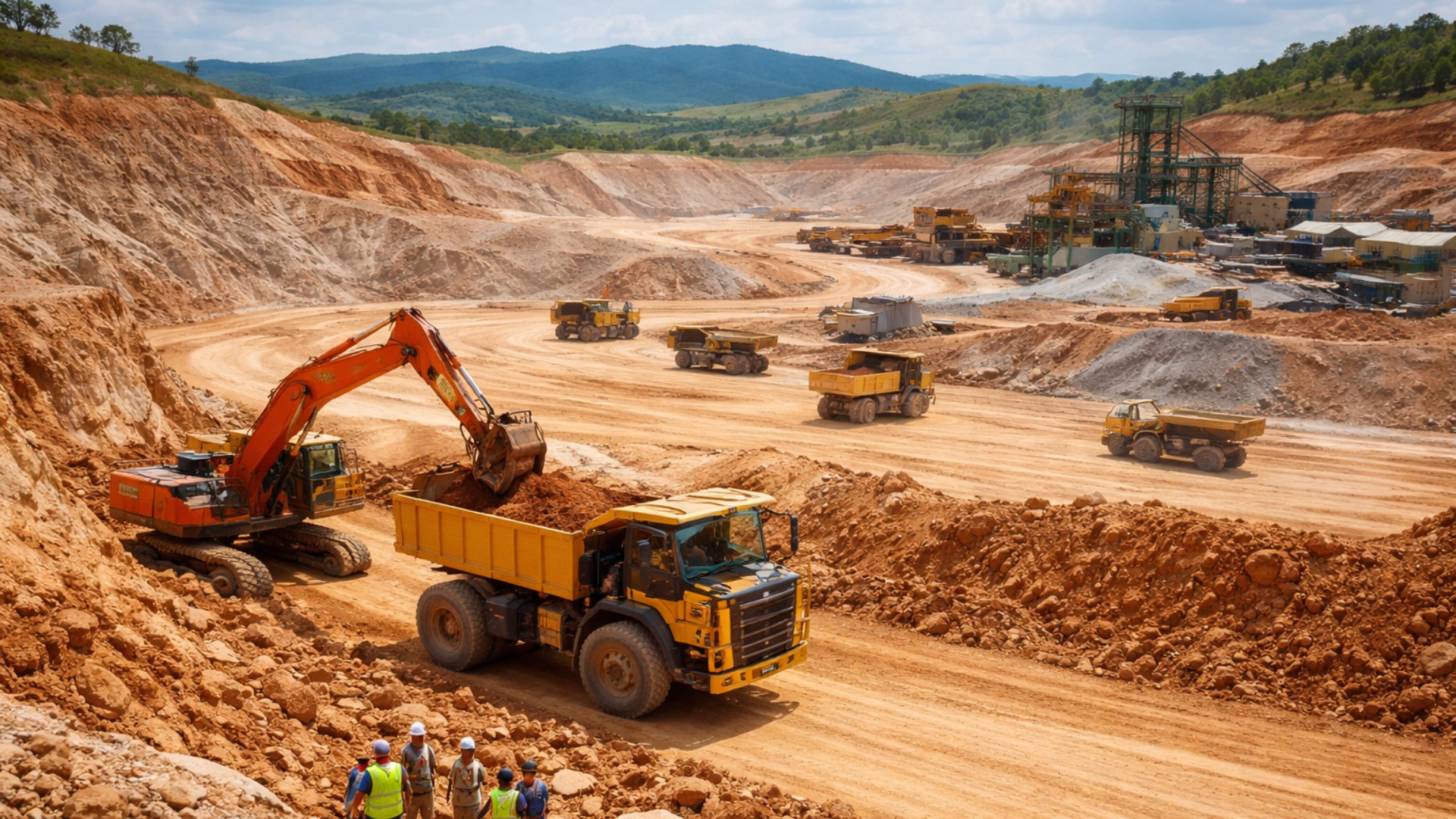
After China, it’s now the turn of the USA to ‘secure’ a share of Brazil’s natural resources: the country buys critical rare earths for R$ 3 billion and enters the center of the global technology dispute.
-
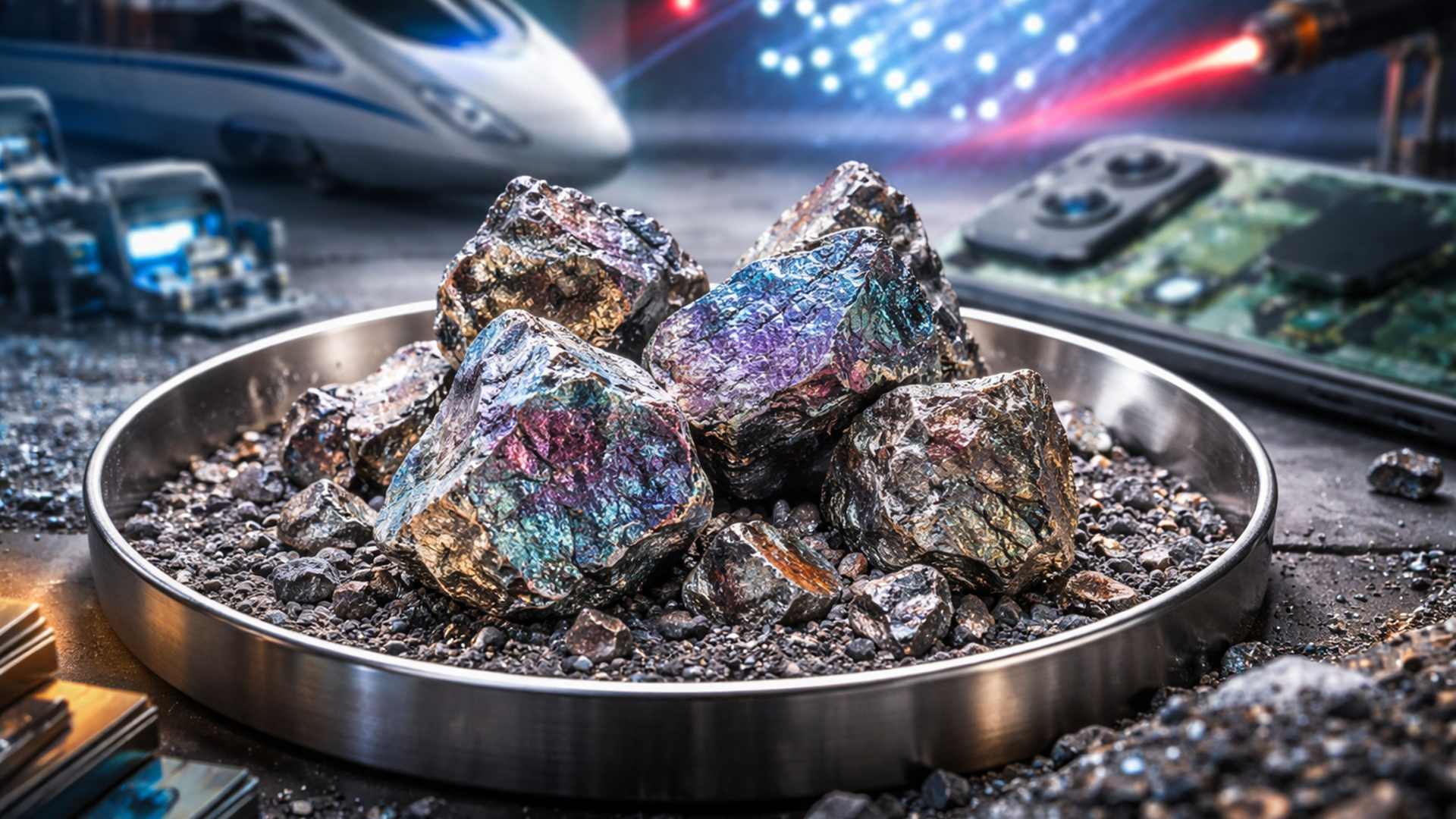
Rare earths are in everything, from cell phones to bullet trains, and what almost no one realizes is why they have become the target of such a delicate global war.
- 220 meters in length;
- 90 meters in height;
- more than 14 thousand tons in weight.

These numbers place these machines at the same level of structural complexity as large ships or aircraft, but operating on the ground and in extreme industrial environments. The continuous movement of the wheel allows material to be extracted and transported simultaneously by belt systems, eliminating the need for loading and unloading cycles typical of smaller equipment.
Large-scale extraction supplies plants that still sustain part of the energy matrix
The main use of these machines is in the extraction of lignite, a type of coal with lower calorific power, but abundant in regions of Europe. This material is primarily used in thermal power plants, which convert the chemical energy of the fuel into electricity.
The operation of these excavators is directly connected to energy production, as the continuity of lignite supply depends on the capacity for large-scale extraction. In many cases, the mines and power plants are integrated, forming industrial complexes where the material is extracted and consumed almost immediately.
This structure reduces logistical costs and increases efficiency, but also highlights the dependence on large industrial systems to maintain energy supply.
Continuous production transforms mining into an almost automated process
One of the most striking features of these machines is their ability to operate continuously. Unlike traditional equipment, which works in cycles, the bucket-wheel excavators function practically without interruption.
The removed material is transported by belts to processing points or directly to storage systems. This constant flow transforms mining into an almost automated process, where production can be maintained for long periods with minimal intervention.
This operational efficiency is essential to meet the constant demand of power plants, which need a continuous supply of fuel to maintain energy generation.
Operation scale completely alters the landscape around the mines
The presence of these machines not only impacts industrial production but also transforms the surrounding environment. Open-pit mines operated with this type of equipment can reach dimensions that completely alter the local geography.
Entire areas are excavated, creating gigantic craters visible from space. In some cases, villages and infrastructures are relocated to allow for the expansion of operations.
This transformation of the landscape reveals the physical cost of energy production based on fossil fuels, an aspect often absent in the public debate about the energy matrix.
Energy consumption of the machines is part of the industrial system
Although they are essential for fuel extraction, these machines also consume large amounts of energy to operate. Electric motors power the rotation, transport, and movement systems.
This consumption is part of a larger cycle, where the energy generated by power plants also supports the very infrastructure that enables extraction. The system functions as an integrated chain, where each component depends on the other to maintain operation.
This interdependence reinforces the complexity of the energy sector and the need to consider the entire production chain when analyzing costs and impacts.
Strategic role in an energy transition scenario still underway
Despite the advancement of renewable sources, lignite coal still plays a relevant role in some European countries. The energy transition, although underway, has not occurred uniformly across all regions.

The bucket-wheel excavators remain key players in this context, ensuring stable fuel supply while new energy sources are developed and integrated into the system. This scenario shows that the energy transition involves not only the replacement of sources but also the adaptation of existing infrastructures.
Extreme engineering combines resistance, precision, and continuous operation
The development of these machines involves significant technical challenges. Gigantic structures must maintain stability and precision even under intense loads and continuous operation.
Advanced control systems monitor performance and adjust operational parameters in real-time. The combination of structural engineering and automation allows these machines to operate in extreme conditions with a high level of reliability.
This level of complexity places the bucket-wheel excavators among the most advanced examples of applied industrial engineering.
Energy debate rarely includes large-scale extraction infrastructure
Discussions about energy often focus on generation sources, such as solar, wind, or hydroelectric. However, the infrastructure necessary to extract and process fossil fuels is a fundamental component of the system.

The absence of these machines in public debate creates an incomplete view of the energy reality, where the costs and impacts of extraction are not fully considered. By bringing these structures to the center of analysis, it is possible to better understand the scale and complexity involved in energy production.
Future of heavy mining depends on changes in the global energy matrix
As the energy transition advances, the role of these machines may transform. Reductions in coal use may decrease the demand for large-scale extraction, altering the relevance of these structures.
On the other hand, similar technologies may be adapted for other types of mining or industrial applications. The engineering developed for these machines can continue to be used in different contexts, even with changes in the energy matrix.
Leave your opinion in the comments and tell us if structures like these should have more visibility in the debate about energy and sustainability.









Seja o primeiro a reagir!