Portuguese
  Spanish



Country analyzes unconventional reserves, forms scientific committee and projects production increase by 2030 to face energy dependence
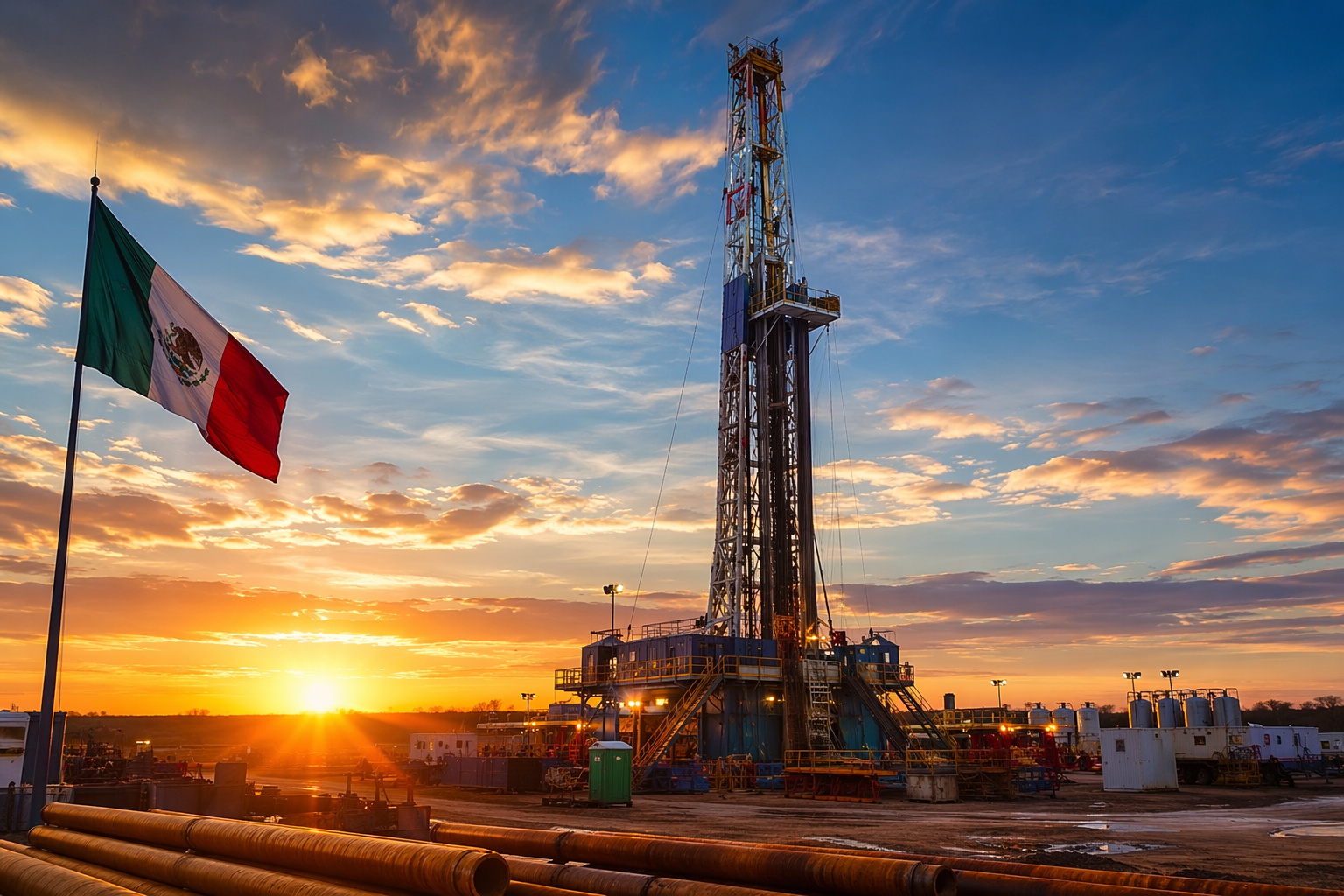
The Mexican government, in 2026, began to evaluate the resumption of the exploration of unconventional gas, including shale gas.
The measure aims to reduce dependence on natural gas imports from the United States, especially from Texas.
As previously highlighted by the magazine Fórum, Brazil and Mexico, despite being major oil producers, still depend on North American hydrocarbons.
This reality reinforces the need for strategic changes in the energy sector.

High consumption and structural dependence raise concerns
Mexico consumes about 9 billion cubic feet of natural gas per day. Domestic production, however, reaches only 2.3 billion cubic feet per day.
-
As Brazil Expands Social Welfare, Survey Reveals 40% Blame Poverty on Laziness, While 58% Cite Lack of Opportunities

-
China Tightens Control on Antimony, Driving Prices from $22,000 to Nearly $40,000 per Ton as U.S. Rushes to Bolster Strategic Reserves

-
BlackRock Freezes $1 Billion in Brazilian Renewable Energy, Impacting 1.5 GW of Planned Projects and Highlighting Investor Concerns Over Infrastructure Bottlenecks Cutting Up to 25% of Solar and Wind Generation
-
Labor Shortage: Despite Record Average Salary, 90% of Brazilian Bar and Restaurant Owners Struggle to Hire Key Roles Like Sushi Chefs and Head Cooks


Between 75% and 80% of total consumption is met by imports. This volume mainly comes from the state of Texas in the United States.
External dependence is considered high. Therefore, the country seeks alternatives to enhance energy security.
Unconventional reserves expand energy potential
Data from Pemex released in 2026 shows that unconventional reserves exceed conventional ones. Proven traditional reserves total about 83 trillion cubic feet.
Unconventional resources, in turn, exceed 140 trillion cubic feet. This volume indicates a significant internal energy potential.
The exploration of these resources could transform the energy landscape. It could also reduce external dependence in the medium term.
Scientific committee evaluates new extraction technologies
President Claudia Sheinbaum announced the creation of a scientific committee. The group will evaluate available technologies for the extraction of unconventional gas.
The focus includes the use of less harmful substances and recycled water. The proposal aims to minimize environmental impacts.
According to the announcement made in 2026, the committee is expected to present recommendations within two months. Strategic decisions may be made in the short term.
Energy policy change marks a new phase
During the government of Andrés Manuel López Obrador, hydraulic fracturing was rejected.
This position kept the country dependent on imported gas.
The new administration signals a significant change. Mexico is starting to consider new energy alternatives.
The debate over shale gas is gaining momentum. Energy policy is becoming more flexible.
Expansion of the electricity sector increases gas demand
The Mexican electricity sector heavily depends on natural gas. Seven combined cycle plants are being put into operation.
Another five units are planned. All use gas as the main energy source.
Domestic demand is expected to grow. This intensifies the need to increase domestic production.
Production targets indicate growth by 2030
Projections from Pemex indicate that domestic production should exceed 4 billion cubic feet per day by 2030. The long-term goal is to reach 8.6 billion cubic feet per day in the next decade.
The estimates include the contribution of unconventional gas. Technological advancement will be decisive.
The country seeks to gradually reduce its external dependence. However, this process will be progressive.
Imports will remain relevant in the short term
The increase in domestic production does not eliminate the need for imports. Mexico will continue to depend on foreign gas for several years.
The strategy combines internal expansion and maintenance of imports. Energy balance will be built gradually.
The country is moving towards energy security, but still faces structural challenges — will this strategy be able to reduce external dependence in the long term?