





 Portuguese
  English
  Spanish
  6 min of reading
  0 comments


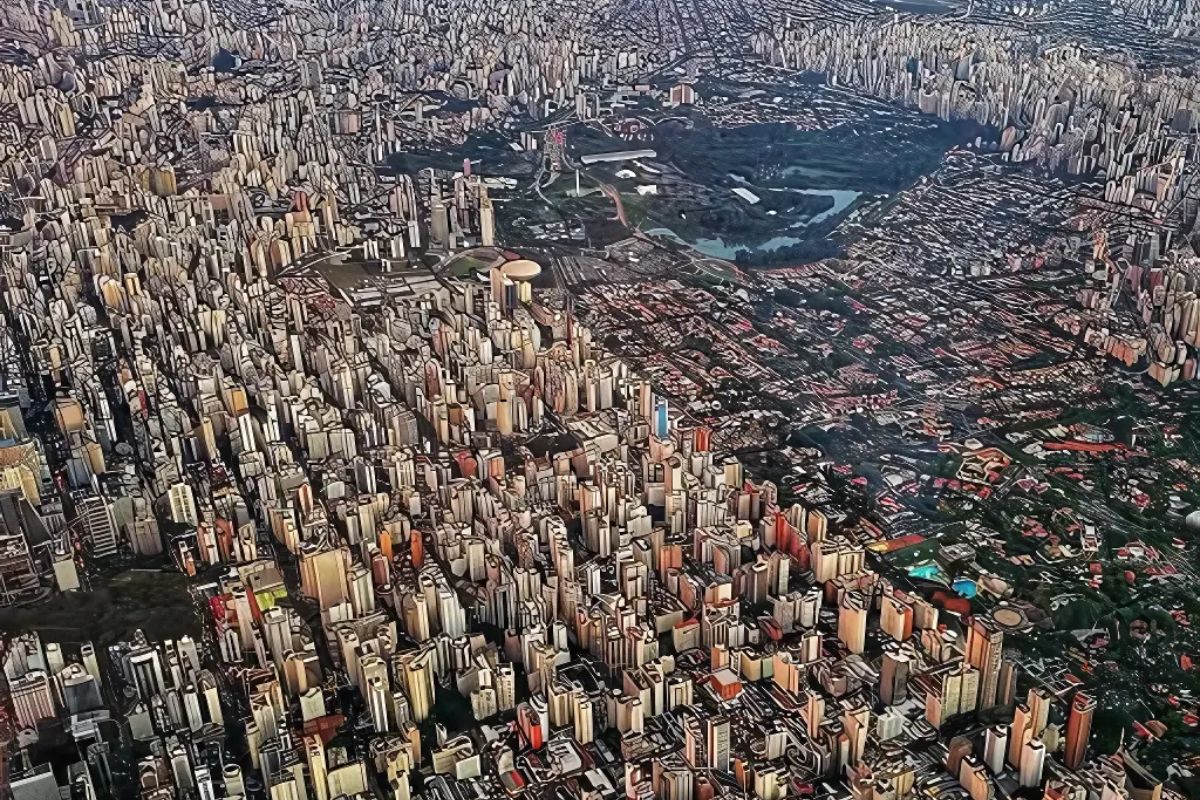
The Current Water Situation of São Paulo, the Lessons of the 2014-2015 Crisis, and the Risks That the Largest Brazilian City Faces in the Face of a Possible New Period of Scarcity.
The São Paulo Metropolitan Region (RMSP), one of the largest urban agglomerations on the planet and the largest Brazilian city, faces the constant challenge of securing water for millions of people and a vast industrial park. This balance is delicate, dependent on finite resources and climatic variations, making water security a dynamic process rather than a definitive achievement.
The shadow of the 2014-2015 water crisis still looms, serving as a warning about the system’s vulnerabilities. This report investigates the possibility of a return to a critical scenario, assessing whether the lessons from that decade were learned or if the largest Brazilian city risks “forgetting” them in the face of new and intensified threats.
The Pulse of the Reservoirs: The Current Water Situation of the Largest Brazilian City (May 2025)
The water security of the largest Brazilian city depends on a complex set of interconnected production systems. In mid-May 2025, the situation warrants attention. The Cantareira System, the largest one, was operating at 58% of its useful volume, according to CEMADEN, a significant drop from 74% in the same period of 2024. This condition places it in the “Attention” range, restricting the maximum extraction flow to 31 m³/s, while the average in April was approximately 32 m³/s.
-
Heineken’s factory in Brazil produces 300 million beer cans in just 4 months, reaches 1 million hectoliters, received R$ 2.5 billion, and is already projecting an annual capacity of 5 million with sustainable technology.
-
Inside an active volcano in Africa, residents use volcanic rocks to build houses in an impressive setting.
-
After 14 years of waiting, a rammed earth mansion built in 1702 in the North Zone of São Paulo will become a park with leisure facilities and green areas, with a million-dollar investment.

-
With 2 unfinished nuclear reactors, up to 25 billion in costs, and proven fraud, the Nukegate case has left 800,000 consumers still paying today for energy that will never be produced.


Despite above-average rainfall in April 2025 in the basin (157%), inflow to the reservoirs was only 78% of the average, classifying the system in moderate hydrological drought. Projections from CEMADEN, considering average rainfall, indicate that the Cantareira could reach 45% by the end of September 2025, remaining in “Attention” and dependent on the transposition of the Paraíba do Sul basin. Data from Sabesp and ANA showed distinct numbers in mid-May (Sabesp with 44.6%-44.8%; ANA with 22.21% for Cantareira), possibly due to different methodologies.
The Alto Tietê System, the second largest, recorded 44.74% on May 15, 2025, with reports of a drop in the Ponte Nova reservoir to 44.16%. Specific information about Guarapiranga in May 2025 was not detailed, but its stability is crucial. The Billings Reservoir, multifunctional, transfers water to Guarapiranga and Rio Grande. A piece of data from Sabesp on May 15, 2025, indicated 44.74% for Billings, curiously identical to Alto Tietê on the same date, which requires verification. The levels of the Rio Grande and Rio Claro systems are also monitored by Sabesp.
Despite these indicators, the president of SP Águas stated on May 18, 2025, that “there is no forecast of a severe water crisis for the state of São Paulo this year,” but emphasized the need for caution due to below-average rainfall and a recent increase in consumption. This “Attention” scenario at Cantareira and levels below those of 2024 contrasts with a vision of normality and deserves in-depth analysis, especially the mismatch between precipitation and inflow, which may indicate dry soils, intense evaporation, or basin degradation.
Reviewing 2014-2015: The Bitter Lessons of the Crisis in the Largest Brazilian City
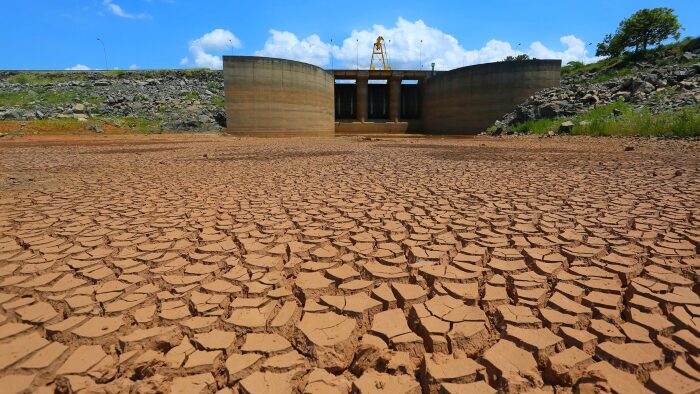
The 2014-2015 water crisis in the largest Brazilian city was a watershed moment. Triggered by a severe drought – the most intense since 1961 in Cantareira, associated with unique atmospheric conditions and possibly climate change – its roots ran deeper. The excessive dependence on vulnerable sources like Cantareira, high losses in the network, insufficient diversification of the water matrix, and inadequate planning for extreme events were crucial systemic deficiencies. Governance issues, such as delayed response, limited transparency, and lack of collective awareness for the rational use of water, exacerbated the situation.
The impacts were vast and cascading. Millions of people faced rationing, the industry was severely affected, especially water-intensive sectors, and there was an increase in food prices and energy tariffs. Concerns about public health emerged, and significant environmental damage occurred, such as fish mortality and a 150% increase in fire outbreaks in the state due to the drying of vegetation. Hydroelectric power production was also compromised.
In response, a comprehensive Contingency Plan was activated, including supply cuts, incentives for consumption reduction, and the use of the “dead volume” of Cantareira. Strategically, investments were made in system interlinking, preparing new sources, loss reduction programs, and awareness campaigns.
The crisis also led to debates and some changes in governance of water resources, such as improvements in transparency and representativeness in basin committees like Alto Tietê, although the path to ideal integrated management remains long. The 2014-2015 crisis was not just a climatic event but a systemic collapse that required a holistic approach for future prevention.
Forgotten Lessons? Assessing Progress and Deficiencies Post-Crisis in the Largest Brazilian City
One decade after the crisis, it is vital to analyze whether the lessons were translated into sustained actions in the largest Brazilian city. Water loss reduction, one of the most cost-effective measures, remains a concern. Sabesp has a program for this, but concrete data on targets and results post-2015 in RMSP are scarce. A loss rate of 23.10% was reported in 2021, but with no clarity on the scope. The lack of detailed and public information on the evolution of this rate hampers the evaluation of program effectiveness.
The diversification of the water matrix, crucial for enhancing resilience, also shows questionable progress. Water reuse, foreseen in the Contingency Plan from the crisis, has been considered “slow” in its expansion. Plans for the first desalination plant in São Paulo exist, but its direct impact on the RMSP and feasibility are uncertain.
The exploration of deep aquifers for public supply is also advancing slowly, contrasting with “free access” for businesses and agribusiness, suggesting failures in integrated water governance. The apparent slowness in the large-scale implementation of these alternatives constitutes an “implementation gap” and persistent vulnerability.
Protecting the watersheds from urbanization and pollution is another ongoing battle. Although there has been investment and improvements in governance in some basins, urban pressure and the discharge of untreated effluents continue to pose threats. Projects to de-pollute the Tietê and Pinheiros rivers are large-scale and long-term.
The Tietê Project achieved increases in sewage collection and treatment, and the Novo Rio Pinheiros Project seeks to improve water quality in the latter. However, the transformation of these rivers into safe sources of raw water for large-scale supply still seems a distant prospect. Despite advances, the realization of transformative results in source diversification and loss reduction appears to be below what is needed.
Converging Pressures: Threats to the Water Security of the Metropolis


The water security of the largest Brazilian city is challenged by a set of enduring and growing external pressures. Climate change is already altering the hydrological regime, with projections indicating a greater frequency of extreme events (droughts and heavy rains) and rising temperatures, increasing evaporation and demand for water. The 2014-2015 crisis is an example of the kind of extreme event expected.
The Amazon connection is another source of concern. Deforestation in the Amazon weakens the “flying rivers,” which transport moisture from the forest to the Central-South of Brazil, impacting the rainfall regime in RMSP. The drought in the Amazon in 2023, intensified by deforestation and climate change, illustrates this interdependence.
Internally, population growth and the urban expansion of the metropolis impose a constant and increasing pressure on water resources, raising total demand. Effective demand management becomes as critical as supply management. Additionally, there is the risk of “post-crisis amnesia,” where public awareness about water conservation may fade with the apparent normalization of supply. The recent increase in consumption mentioned by SP Águas in May 2025 suggests that this concern is valid.
The convergence of these pressures – climate change, Amazon deforestation, urban growth and the risk of relaxation in conservation – creates a scenario of heightened vulnerability for the largest Brazilian city.




Seja o primeiro a reagir!