





 Portuguese
  English
  Spanish
  3 min of reading
  0 comments


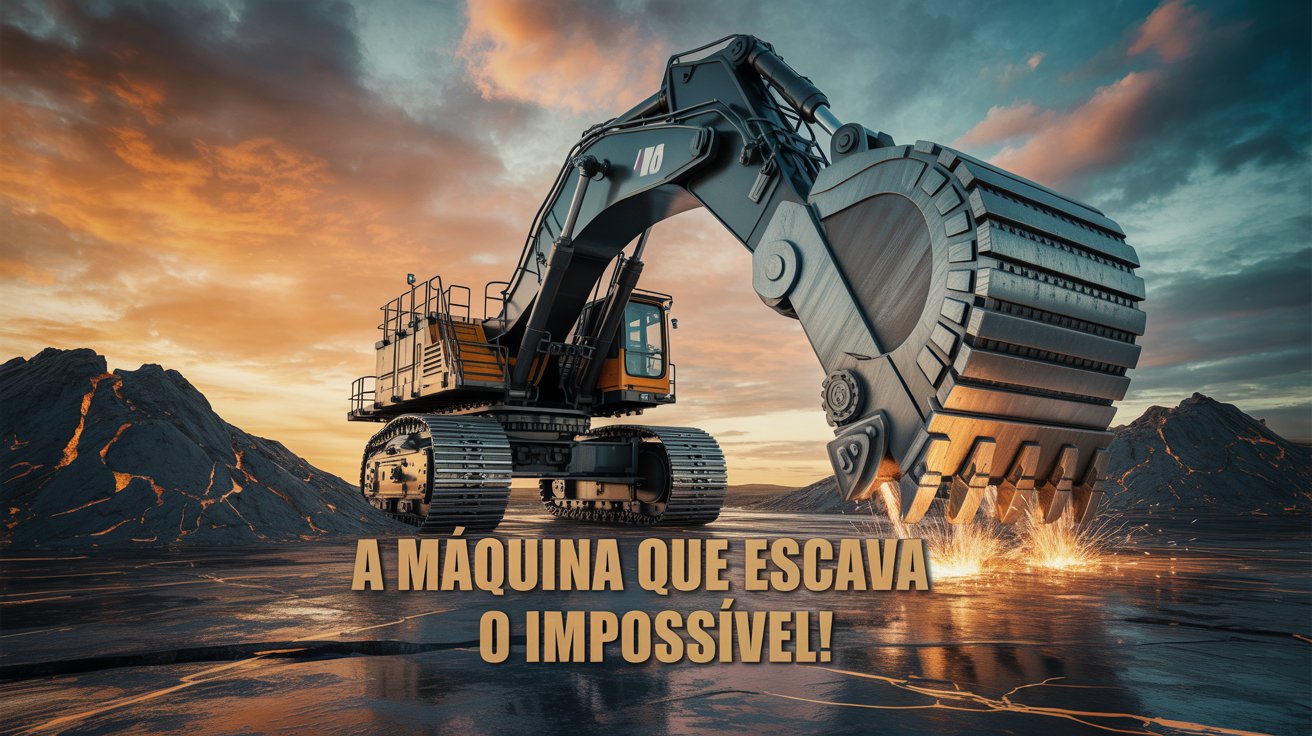
Meet the Bagger 293, a Colossal Excavator That Digs Like a Titan and Transforms Tons of Soil Daily with Insane Efficiency.
In the North Rhine-Westphalia region of Germany, one of the largest machines ever built by human engineering operates: the Bagger 293.
With a height of 96 meters and a length of 225 meters, this bucket-wheel excavator can dig up to 240,000 cubic meters of soil per day, equivalent to approximately 218,880 tons of material.
Its continuous operation and ability to replace the work of thousands of miners make it a centerpiece in lignite mining at the Hambach mine.
-
These living root bridges and ladders are over 700 years old and help indigenous people survive in one of the rainiest regions in the world.

-
From sertanejo star to international investor: Ana Castela invests millions in a mansion in the USA, creates a themed accommodation in Orlando, and shows that the “boiadeira” also wants to grow away from the stage.

-
The 10 most stunning motorhomes in the world: a $3 million trailer with a rooftop nightclub and garage for a Ferrari, “palaces on wheels” with Italian marble, private cinema, and five-star hotel luxury for billionaires.

-
Trump wanted to spend $400 million on the White House, but the courts prohibited the million-dollar construction.


Impressive Dimensions and Capacity
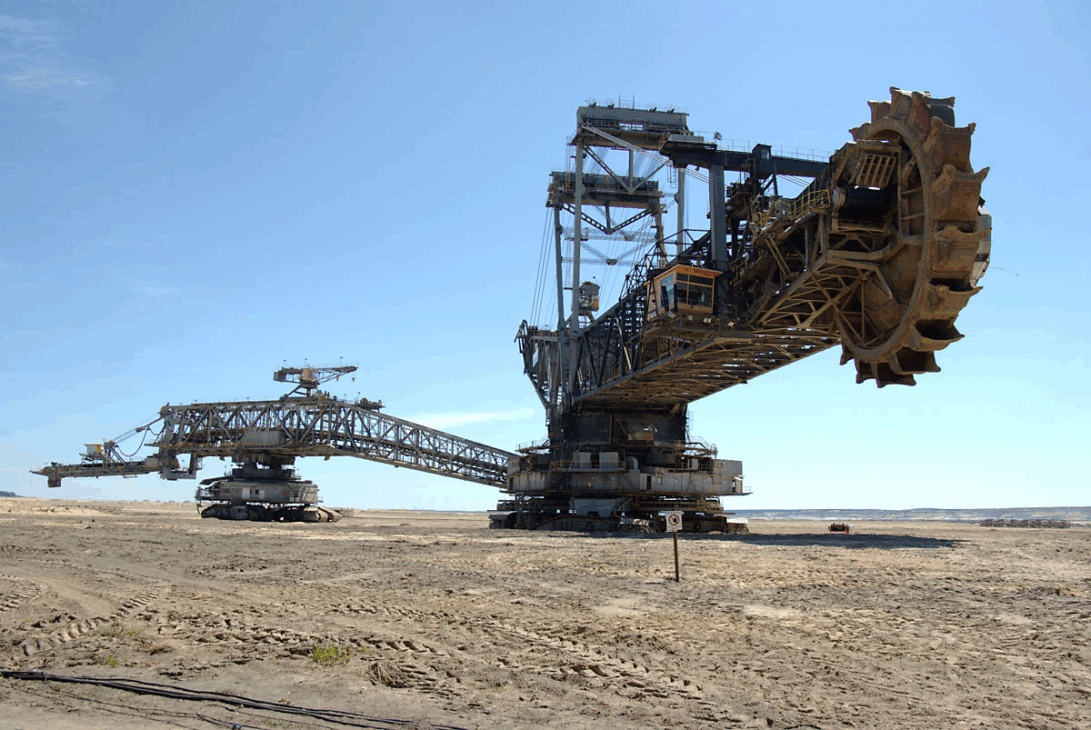
Built in 1995 by the German company TAKRAF, the Bagger 293 is a bucket-wheel excavator with numbers that challenge the imagination:
- Height: 96 meters (equivalent to a 31-story building)
- Length: 225 meters (more than two football fields)
- Weight: 14,200 tons
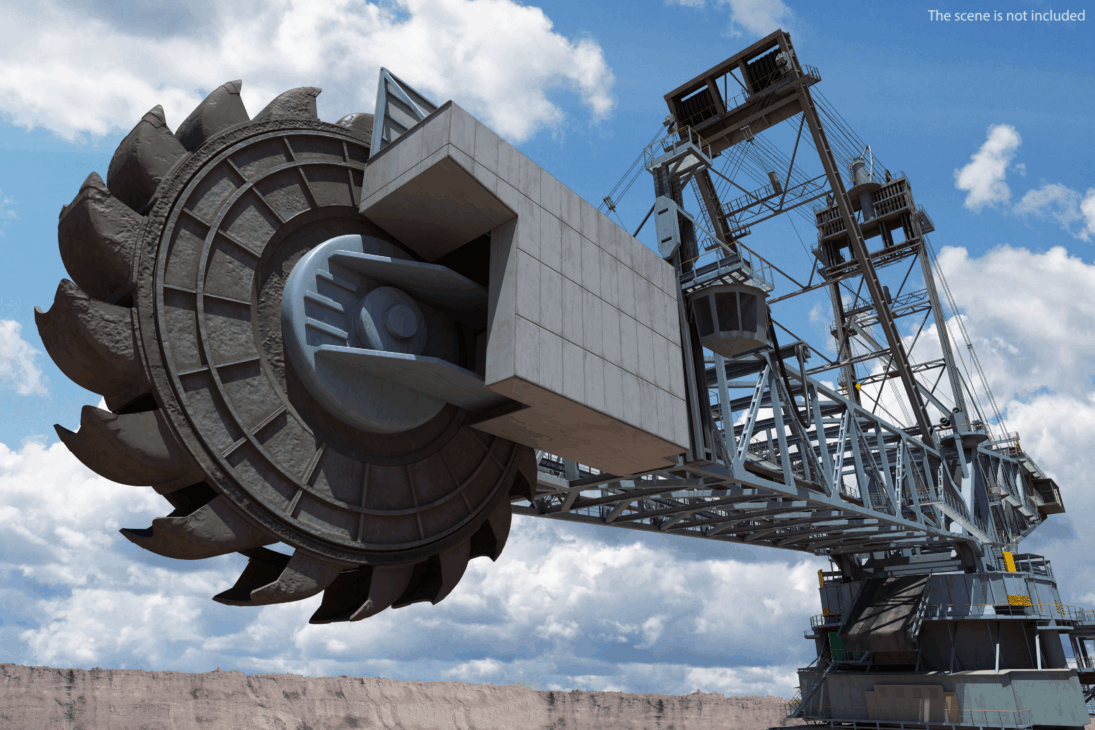
- Bucket Wheel Diameter: 21.6 meters
- Number of Buckets: 18, each with a capacity of 15 m³
- Excavation Capacity: 240,000 m³ per day, which corresponds to about 218,880 tons of material
- Operating Speed: 0.6 km/h
- Crew: between 5 and 6 operators per shift
- Power Consumption: 16.56 megawatts, supplied by direct external power connections
For comparison, the volume moved by this machine in one day could fill almost 100 Olympic-sized swimming pools.
Operation and Functioning
The Bagger 293 operates at the Hambach mine, one of the largest in Europe, located in North Rhine-Westphalia, Germany.
This mine specializes in the extraction of lignite, also known as brown coal.
The excavator removes tons of surface soil to expose the lignite layers, which are then transported by gigantic belts to the power plants.
Due to its colossal size, the Bagger 293 is constructed directly at the operational site, a process that can take between 18 months to 3 years.
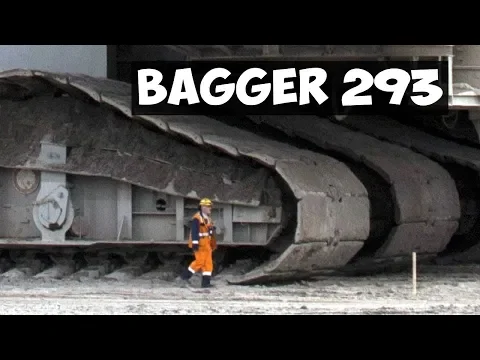
Its movement is accomplished via 12 steel tracks, designed to distribute the weight and prevent sinking into the soil.
These tracks operate under controlled pressure and are electronically coordinated to allow smooth turns on uneven terrain.
Environmental Impact and Uncertain Future
Despite its impressive efficiency, the operation of the Bagger 293 raises significant environmental concerns.
The extraction of lignite is highly polluting, significantly contributing to carbon dioxide emissions.
Moreover, open-pit mining causes the destruction of local ecosystems and the relocation of entire communities.
With European Union environmental policies imposing strict emission reduction targets, the future of lignite mining and consequently the Bagger 293 is under constant review.
Still, until new solutions are implemented, it remains fully operational.
Curiosities and Legacy
World Record Holder: The Bagger 293 is in the Guinness Book as the largest land vehicle ever built.
Energy Consumption: its 16.5 MW consumption would be enough to power a city of 20,000 inhabitants.
Pop Culture: it has appeared in documentaries from the BBC, Discovery Channel, and in construction and simulation video games.
Alternative Name: it is also known as “Excavator 293” or simply “the Monster of Hambach”.
Comparison with Other Giant Machines
| Machine | Weight (tons) | Height (m) | Daily Capacity | Power Source |
|---|---|---|---|---|
| Bagger 293 | 14,200 | 96 | 240,000 m³ | Electric (16.5 MW) |
| Bagger 288 | 13,500 | 95 | 240,000 m³ | Electric |
| Big Muskie (USA) | 12,000 | 67 | 115,000 m³ | Electric |
| NASA Crawler | 2,721 | 40 | N/A | Electric (6 MW) |
| Komatsu PC8000 | 752 | 9.8 | 40,000 m³ | Diesel |
The Bagger 293 is more than the largest excavator in the world; it is a symbol of human capacity to build monumental machines.
However, it also represents the challenges and dilemmas of dependence on fossil fuels.
As the world seeks more sustainable alternatives, the Bagger 293 remains a testament to what we are capable of achieving — and the responsibilities that come with such feats.
Do you believe technology can find a balance between industrial progress and environmental preservation? Share your opinion in the comments!








-

Uma pessoa reagiu a isso.