





 English
  Francês
  Alemão
  Italiano
  Japonês
  Norueguês
  Portuguese
  Spanish
 3 min of reading


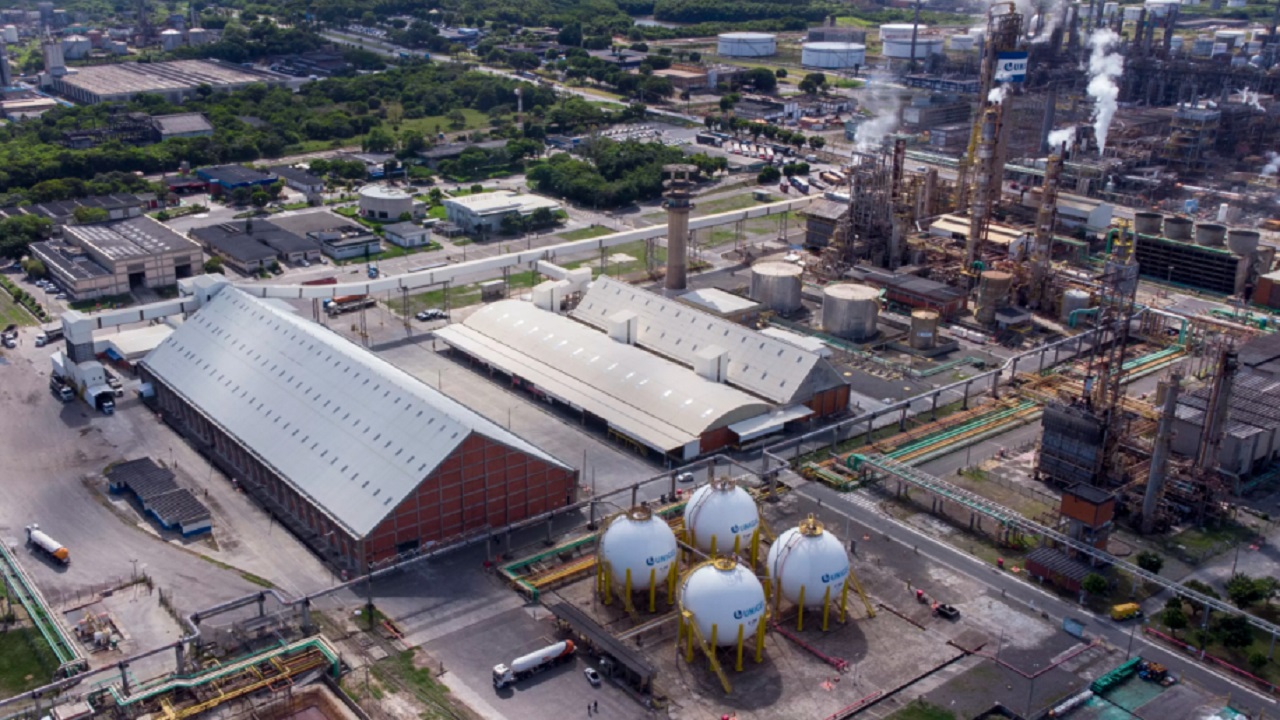
Unigel Is Investing R$ 660 Million in the Construction of a New Green Hydrogen Plant in Brazil. The Unit, Which Will Be the Largest in the World, Will Be Built in Bahia.
Unigel, one of the largest chemical industries in Latin America and a leader in sectors such as ammonia and fertilizers, is investing US$ 120 million, equivalent to R$ 660 million, in the construction of Brazil’s first green hydrogen plant, a product that serves as a substitute for fossil fuels. The goal is for this green hydrogen plant in Brazil to be the largest in the world.
New Green Hydrogen Plant Will Produce 10 Thousand Tons Per Year
Thus, Unigel will invest in the production of ammonia and green hydrogen, products that are gaining prominence in the global race towards decarbonization. The project, which is the first on an industrial scale, was announced this week in Camaçari, Bahia, where the new plant will be installed alongside other units that produce styrene and ammonia.
Brazil could become one of the world’s leading producers of fuel. The unit is expected to be operational by the end of next year, with an estimated production of 10 thousand tons of the product annually. A large part of the Green Hydrogen will be transformed into 60 thousand tons of green ammonia each year.
-
Renewable energy advances over protected areas in Brazil, and a survey by the Energy Transition Observatory reveals silent impacts that challenge environmental conservation and pressure sensitive traditional territories.

-
Rio Grande do Sul accelerates energy transition: State invests in renewable technologies and consolidates decarbonization strategies and pathways to attract billions in new industrial investments.

-
With 160,000 m² of collectors, an area larger than 20 football fields, Silkeborg, in Denmark, hosts a solar thermal plant that heats 19,500 homes and could become the largest solar heating plant in the world.

-
A study reveals the expansion of renewable energy procurement in Brazil and shows how companies are taking advantage of opportunities to reduce expenses, ensure energy efficiency, and strengthen strategic environmental commitments.


According to Roberto Noronha, president of Unigel, this is an initiative that will position the company at the forefront of decarbonization in the country. Thus, the hydrogen plant will feature technology and the industrial system of the German Thyssenkrup Nucera. Therefore, a new factory will be installed in Camaçari that will produce 10 thousand tons per year of green hydrogen, utilizing clean energy, and converting it into 60 thousand tons of ammonia.
With interest already shown by clients, and believing in a more rapid expansion of demand, Unigel plans to quadruple its production capacity by 2025, including for export.
Unigel Comment on Green Hydrogen Production
According to Roberto, the hydrogen plant in Brazil is an innovative project for Unigel, which will be at the forefront, as it will be the largest in the world when it begins operations at the end of 2023. According to Noronha, green hydrogen is produced using water and electricity generated by a clean energy source, such as solar or wind.
The goal is to replace the product currently used, gray hydrogen, which is produced with fossil fuels such as natural gas. Green hydrogen will be the energy source of the future, as it is fundamentally clean.
Hydrogen can be used in its pure form or converted into ammonia, an important raw material for the steel, fertilizers, and oil refining sectors, and used in thousands of products.
It can also be utilized in the transportation of vessels, airplanes, and even in vehicles such as trucks and buses. The availability of green hydrogen will assist various other sectors of the industry in the neutrality process.
Equipment for the Largest Green Hydrogen Plant in Brazil
Thyssenkrupp will provide the electrolyzers, which function as the “heart” of the plant. They apply high electrical current and separate the molecules from the solutions. In the case of water, they will separate hydrogen and oxygen.
The equipment will be produced by Thyssen in Italy and shipped in modules by sea to be sold by its subsidiary. According to Paulo Alvarenga, president of Thyssenkrupp for South America, the company has had expertise in electrolyzer technology for a long time, but previously had other industrial applications.
The wind energy that will be used in the new plant will come from Casa dos Ventos, one of the largest companies in the country in terms of clean energy generation. The company will install three electrolyzers, which perform the separation of hydrogen from the water molecule, each with 20 MW, supplied by Nucera.







Seja o primeiro a reagir!