





 Portuguese
  English
  Spanish
  6 min of reading
  81 comments


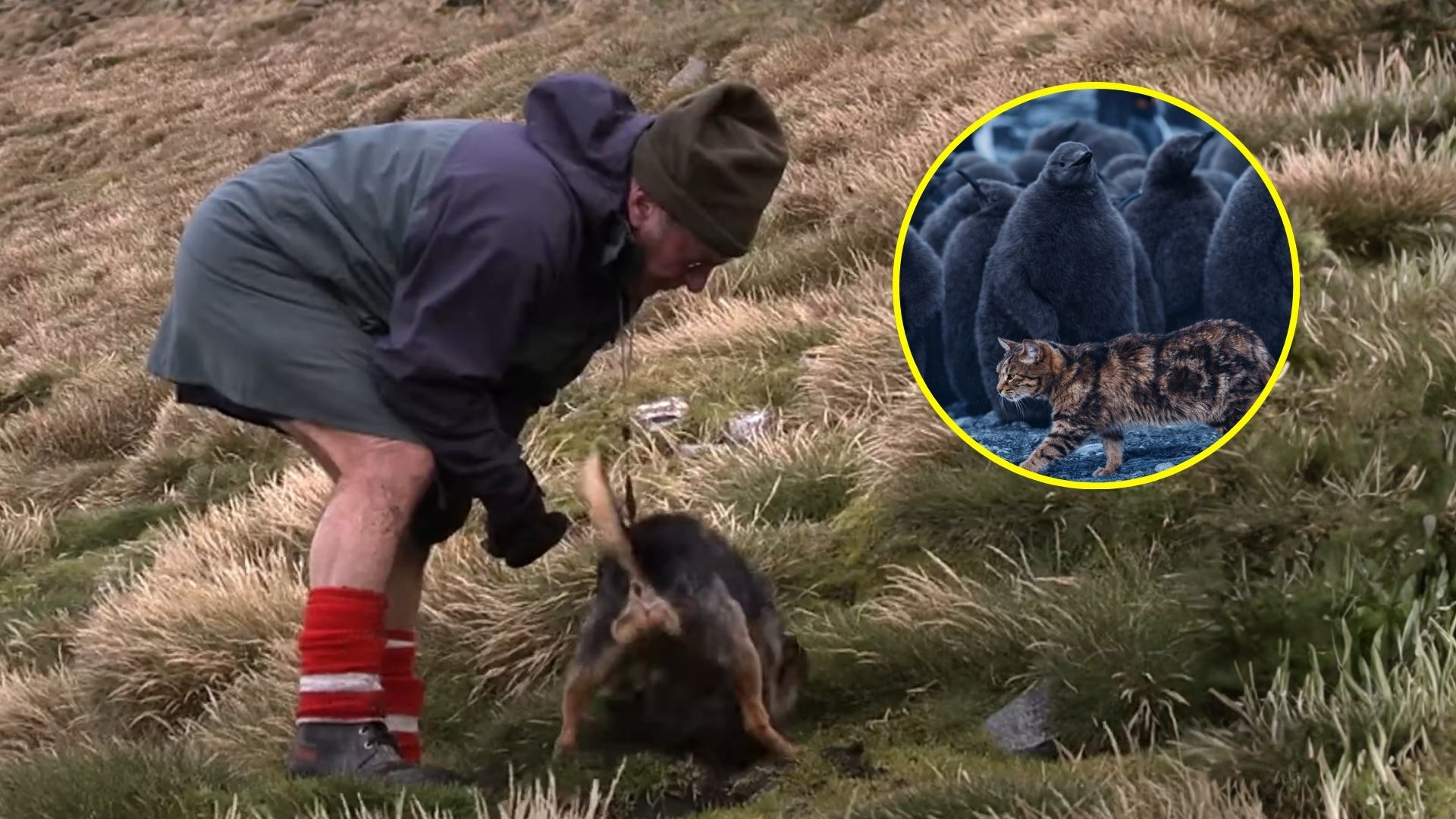


Extreme Conservation Case on Remote Island Shows How Total Eradication of an Invasive Predator Can Transform Fragile Ecosystems, Requiring Decades of Continuous Effort, Complex Logistics, and Rigorous Monitoring to Allow the Gradual Recovery of Ground-Nesting Seabirds.
On remote islands, nature often operates under its own rules, shaped by isolation and the absence of certain groups of animals over thousands of years.
In this context, many seabirds began nesting directly on the ground, in holes or burrows, relying more on the distance from the continent than on defenses against hunters.
This balance, however, can change rapidly. The introduction of a single generalist predator is enough to alter entire dynamics, putting pressure on species that have not evolved with this type of constant threat.
-
He started running at 66 years old, broke records at 82, and is now a subject of study for having a metabolic age comparable to that of a 20-year-old, in a case that is intriguing scientists and inspiring the world.

-
Oldest tree on the planet reappears after 130 years of searches: Wattieza, 385 million years old, was 10 meters tall and had no leaves or seeds; Gilboa fossils in New York solved the mystery in 2007.

-
A 48-square-meter house assembled in hours with 4,000 bricks made of recycled plastic that does not absorb moisture, has natural thermal insulation, and costs less than 90,000 reais in a complete kit.

-
Luciano Hang revealed that Havan’s air fleet has already accumulated more than 20,000 landings, 10,000 flight hours, and 6 million kilometers traveled, and he says that without the planes, the company would never have grown so quickly.


It was this type of disruption that transformed Macquarie Island, a sub-Antarctic territory of Australia in the South Pacific, into a global reference for invasive species management.
In an environment marked by intense cold, persistent winds, and limited access, a long and technically complex campaign successfully removed all feral cats that had established themselves there.
When the last known individual was eliminated in June 2000, the island entered a new phase. It transitioned from ongoing containment efforts to observing the recovery of seabirds that depend on the ground and burrows for breeding.
Introduction of Domestic Cats and the Collapse of Ecological Balance

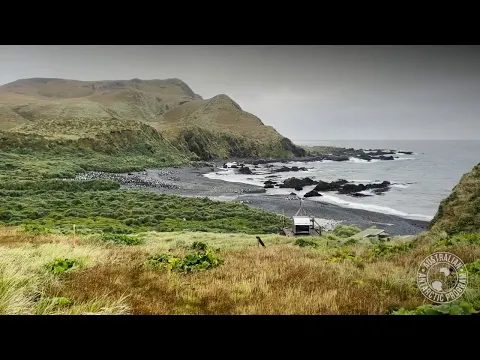
Macquarie Island was recorded by Europeans in the early 19th century, and with the advance of human activities, it began to receive introduced mammals.
Among them, domestic cats brought by humans eventually formed a feral population adapted to the hostile environment over time.
The impact of this introduction was not limited to isolated hunting episodes. On islands where birds evolved without similar terrestrial predators, the presence of an opportunistic hunter creates continuous pressure on adults, eggs, and chicks, affecting various phases of the reproductive cycle.
The consequences appear at the base of the system. Colonies cease to grow, nesting areas are abandoned, and reproduction begins to fail repeatedly, often without immediate signs of total collapse.
As the years passed, constant predation transformed the problem into a matter of survival. Some species remain, but in smaller numbers and with more restricted distribution.
Others quietly lose ground until disappearing from entire stretches of the island.
Population Control Was Not Enough to Protect the Birds
The fight against cats on Macquarie Island did not start as a single, definitive operation. Initially, the strategy was control, with prolonged and intermittent actions over decades aimed at reducing the most visible damage.
Even so, this effort already required constant human presence in a distant and hostile territory, where each operation demanded careful logistical planning.
Over time, however, it became clear that reducing the population would not solve the underlying problem.
As long as cats remained on the island, vulnerable colonies would continue to be at risk. In light of this, the strategy evolved to seek total eradication, a point at which no individual remained capable of repopulating the area.
This change elevated the degree of difficulty. The first animals removed are usually easier to locate, while the last survivors tend to avoid contact, change routes, and become progressively more wary.
At this final stage, each capture takes more time, more attempts, and greater persistence, making progress slower and more costly.
Eradication Strategy in an Extreme Environment
In the intensified stage of the program, eradication combined field methods aimed at both rapid removal and precise identification of remaining individuals.
Cage traps and shooting were used in the initial phase of population reduction.
As the number of animals decreased, specific traps for capturing more elusive individuals gained prominence.
The goal shifted from merely removing individuals to locating any residual signs of presence.
The island itself imposed additional obstacles. The severe weather reduced working windows, while the terrain and vegetation hindered the identification of traces left by the animals.

Therefore, the operation began to pursue two simultaneous objectives. To eliminate the cats and maximize detection, minimizing the chance of invisible survivors in hard-to-reach areas.
Technical records indicate that between 1996 and 2002, 761 cats were captured during the eradication and verification stages.
In a subsequent institutional count, the total number of cats destroyed throughout the program reached 1,689 individuals, a number that helps to quantify the scale and persistence of the effort.
Rigorous Monitoring After the Last Capture
In eradications carried out on islands, eliminating the last known animal does not conclude the work. The credibility of the result depends on prolonged monitoring, as absence is always harder to prove than presence.
After June 2000, Macquarie Island entered a phase dedicated to systematically searching for signs. Tracks, feces, carcasses, and any indication of survival began to be continuously investigated.
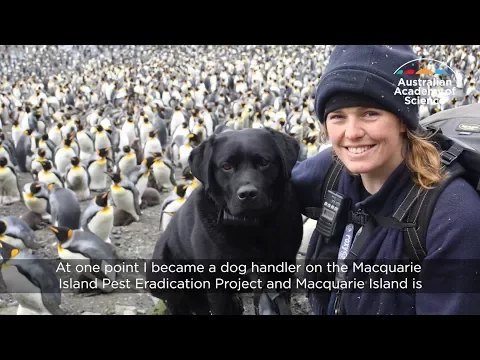
Institutional reports describe the use of trained detection dogs, employed to sweep extensive areas and reinforce verification. The caution was warranted, as a single remaining animal would be enough to recolonize the island and undo years of work.
Since then, the control of invaders has become part of a permanent policy. It includes continuous surveillance and rapid response capability in the face of any suspicion of reintroduction.
Gradual Recovery of Seabirds
Macquarie Island has established itself as a reference because the eradication of cats was associated with observable changes in fauna, especially among seabirds that nest on the ground or in burrows.
Without an active terrestrial predator, these species began to recover breeding areas, increasing the chances of chick survival. In monitoring reports, the first signs emerge in behavior.
There is more activity in the colonies, occupation of previously abandoned burrows and hollows, and gradual expansion into areas that had been avoided for years. Over time, the expectation is that these signs will translate into more stable populations.
Still, restoration on islands rarely follows a straight line. The return of birds depends on adequate shelter, stable soil, and food availability in the sea, factors that may also have been affected by other introduced species.
Side Effects and New Environmental Challenges
Another reason why the case of Macquarie Island frequently appears in studies is the warning about indirect consequences. Assessments associated with the Australian government show that the removal of cats occurred in a broader context of invasive species management.
After eradication, there were periods of increased rabbits, with a direct impact on vegetation and soil. Vegetative degradation is not a trivial side effect.
It affects slope stability, compromises burrow formation, and reduces natural protection for nests in exposed areas, creating new obstacles to the recovery of birds.
This scenario helps explain why the island’s story is not told as a simple before and after. The eradication of the cats was a milestone, but restoration required subsequent actions against other invaders, such as rabbits and introduced rodents.
Why Macquarie Island Became a Global Reference
Macquarie Island brings together three rare elements in a single case. An invasive predator with a severe impact on birds, a prolonged effort that led to total eradication, and sufficient documentation to guide similar projects on other islands.
The episode also helps differentiate concepts that are often confused. Control reduces damage but maintains the active risk, while eradication requires persistence until the end, including when each capture becomes more difficult and costly.
At the same time, the case reinforces a central point for public policy. Removing an invader can unlock the recovery of threatened species, but planning must consider the entire ecological system.
Otherwise, the gains made may be partially lost due to existing imbalances in the environment. On a planet where islands concentrate some of the most vulnerable biodiversity, how many ecosystems are still blocked by an introduced predator that remains off the radar?








E por causa “da praga chamada homen” que se espalhou por todos os cantos esse problema foi causado, aí quando a situação está catastrófica o jeito é tomar essas decisões drásticas, obviamente é necessário que se preservei as espécies nativas mas ainda assim essa solução foi cruel como só o ser humano consegue ser, os felinos não tinham culpa de terem sido introduzidos na ilha, e será que não havia uma solução menos drástica? afinal, os reais culpados são a espécie “boazinha” que tenta salvar as aves, realmente o ser humano é um projeto que não deu certo.
Os pássaros são os principais disseminadores de toxoplasmose em gatos e também contamina outros animais.Exemplo disso, os pássaros defecam e contaminam a ração de bovinos, suínos, etc…, E infelizmente, quando humanos consomem a carne de porco ou carne de cordeiro mal passadas (essas as carnes podem transmitir toxoplasmose para humanos) podem estar contraindo a doença (toxoplasmose). Testar os animais de criadouros é muito caro para os produtores rurais, por isso, é mais fácil fazer o controle dos pássaros.
A toxoplasmose do gato contaminado, só é transmitida para humanos por meio das fezes, alguém normal come b*st* de gato?
Os pássaros são úteis apenas para disseminar sementes na natureza (só isso mesmo) e me acordar 04:00h da manhã, bichos infernais!
Es un horror!! Todas las vidas valen pero la vida de los gatos es mas valiosa que la de las aves, los gatos son seres sintientes capaz de darnos carin̈o y compan̈ía cotidianamente. Es una salvajada asesinar gatos!!