





 Portuguese
  English
  Spanish
  5 min of reading
  0 comments


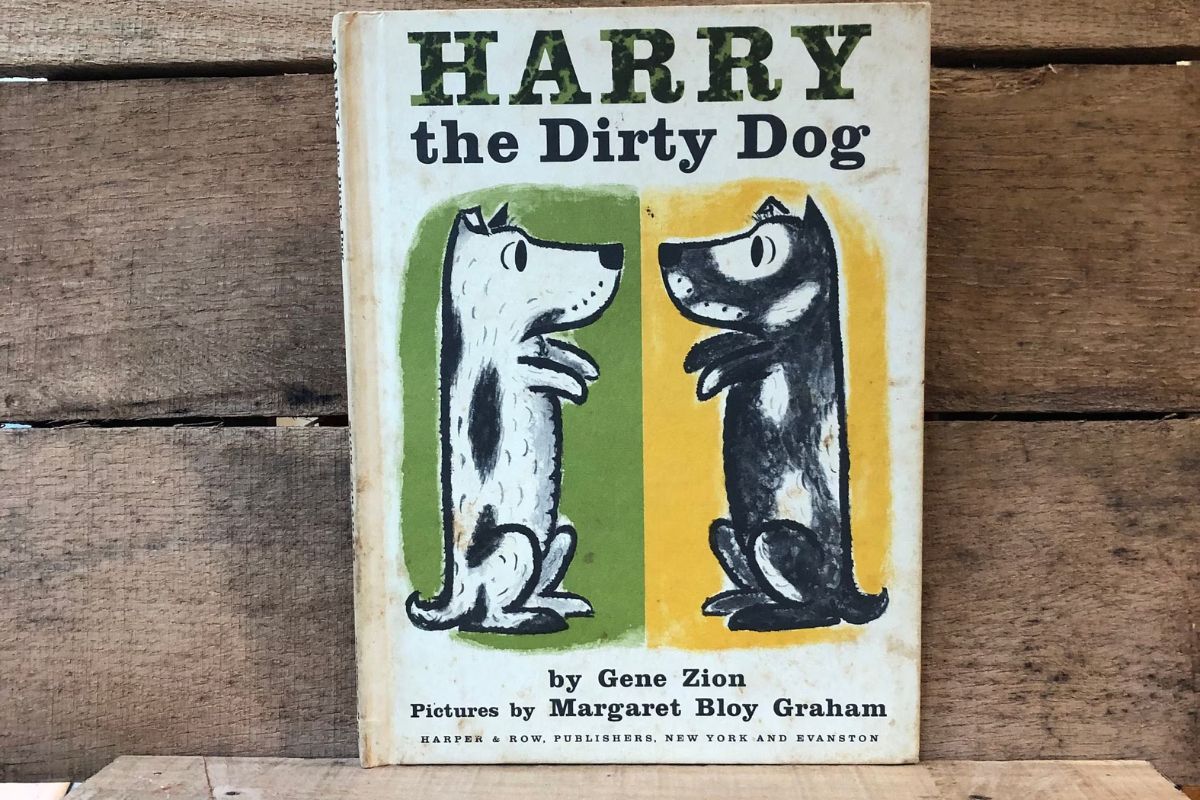
A children’s book borrowed in 1989 from the Chantilly Regional Library in Virginia traveled through Syria, Japan, the Netherlands, and Greece for 36 years until Dimitris Economou found it at his father’s house and decided to return it, generating excitement at the library that no longer charges late fees.
A copy of the children’s book “Harry, the Dirty Dog” by Gene Zion has just completed a journey of 36 years and thousands of miles to return to the shelf from which it should never have left. Dimitris Economou found the book while visiting his parents in Greece and looking for something to read to his 7-year-old son. Upon reaching the end of the story, he realized it was a copy from the public library of Fairfax County, Virginia. The book was supposed to have been returned on November 6, 1989, when Economou was only 5 years old.
The decision to return it required no reflection. “I felt I had to return it. It just seemed like the right thing to do,” Economou told Northern Virginia magazine. The children’s book had accompanied the family for decades without anyone realizing that it belonged to an American library. Economou’s parents were diplomats based in Washington D.C. at the time of the loan, and when the family moved to Greece seven years later, the book went along. And it kept traveling.
The 36-year journey of the children’s book through Syria, Japan, the Netherlands, and Greece
According to Smithsonian, Dimitris Economou’s father took the book with him on each move throughout his diplomatic career. After leaving Virginia, the copy of “Harry, the Dirty Dog” passed through Syria, Japan, and the Netherlands before finally returning to Greece, where it was kept at the family home.
-
The Federal Revenue Service raises a warning signal for heirs.

-
Rubberized paint made with four inexpensive ingredients creates a rubberized paint that waterproofs exterior walls, withstands sun and rain, and also covers small cracks.

-
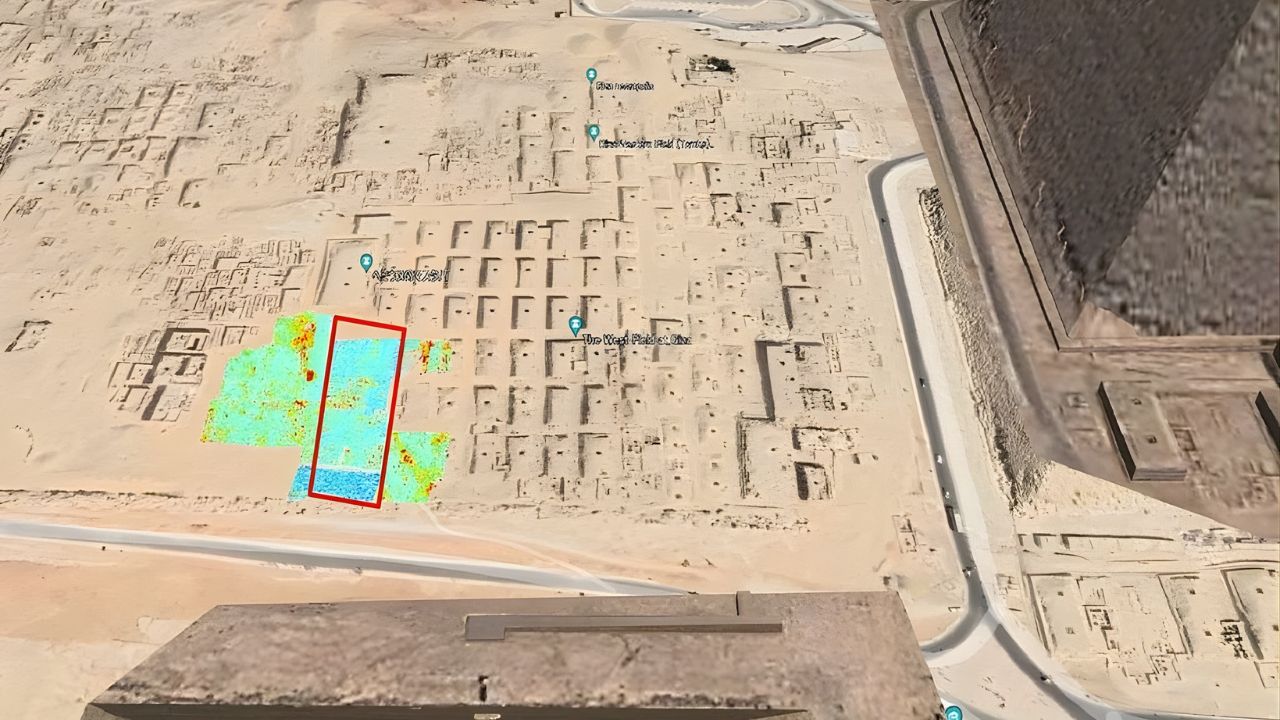
An archaeologist announces that scanning technology has found an unknown structure in the depths of the Great Pyramid of Khufu, a 30-meter void with a sealed door that has not been opened for 4,500 years, hidden within the last of the Seven Wonders of the Ancient World still standing, and says that the full revelation will come in 2026.
-
Scientists in China have discovered more than 700 animal fossils that should not exist and that lived millions of years earlier than science believed was possible for complex life on Earth.

For three and a half decades, the children’s book crossed continents and time zones without anyone in the family realizing it should have been on a library shelf thousands of miles away.
The story of the book curiously echoes the plot it tells. Published in 1956, “Harry, the Dirty Dog” narrates the adventures of Harry, a dog who runs away from home to avoid taking a bath. Throughout his escapades, Harry gets so dirty that he becomes unrecognizable when he finally returns home.
The children’s book also became unrecognizable as library property after 36 years of travel, but like Harry, it eventually found its way back.
The moment Economou realized the children’s book belonged to a library
The discovery happened unexpectedly during a visit to his parents’ house. Economou was looking for something to read to his 7-year-old son when he found the copy among his father’s belongings.
It was when he reached the last pages that he noticed the stamp and labels identifying the book as property of the Fairfax County public library system in Virginia.
The children’s book was supposed to have been returned on November 6, 1989, a date recorded on the loan card. Economou was 5 years old when his parents borrowed the copy, probably to read to him on any given night at the family home in Washington.
Thirty-six years later, that same son, now an adult and a father, held the same children’s book and decided it was time to end the longest loan that library had probably ever recorded.
The library’s reaction to receiving the children’s book back after 36 years
Economou took advantage of a trip to Northern Virginia during the holidays to personally return the book to the Chantilly Regional Library. Ingrid Bowers, the branch manager, was working when he appeared with the copy in hand.
“People really care about library books, and most care a lot about getting them back. This proves that they really cared about returning the book to us,” Bowers told the Washington Post.
The Fairfax County library system has not charged late fees for several years, but Economou said he would have gladly paid in support of the cause. The public library system shared the story in a Facebook post that generated immediate attention.
The children’s book that traveled through four countries and two continents for 36 years became a symbol of something that goes beyond a late loan: the connection between people and the books that have marked their lives.
World records for books returned with decades and even centuries of delay
Economou’s story is remarkable, but it is not the most extreme. In June 2025, a copy of the book “Your Child, His Family, and Friends” by psychologist Frances Bruce Strain was returned to the San Antonio Public Library after nearly 82 years.
The book had been borrowed in 1943 and returned more than eight decades later, surpassing any delay that most libraries have ever recorded.
The most impressive record belongs to a German text consulted around 1667 or 1668 that was returned to Sidney Sussex College at the University of Cambridge in 1956, nearly 300 years later. In 2024, the book “Ivanhoe” by Walter Scott returned to the Poudre River Public Library 105 years after the due date.
The inflation-adjusted fine would have been about $14,000, but fortunately, the library had already eliminated late fees. Economou’s children’s book, with its 36 years of travel, joins this gallery of late returns that prove no loan is truly lost.
What this story says about the relationship between people and libraries
Economou’s gesture might seem insignificant in an age of digital books and online collections. But the library’s reaction and the response on social media show that returning a children’s book after 36 years carries a meaning that goes beyond the object.
It is an act of responsibility that connects today’s adult with the child who flipped through those pages for the first time in 1989, and that connects a Greek family with a community in Virginia that they left decades ago.
Libraries around the world have eliminated late fees precisely to encourage returns like this. The logic is simple: it is better to receive the book back after decades than to never receive it at all.
The copy of “Harry, the Dirty Dog” that Economou returned will likely not return to regular circulation, but its return reinforces something that librarians have repeated for centuries: books have the power to create connections that transcend time, distance, and borders.
Have you ever returned a book years late or have a forgotten library copy at home? What would you do in Economou’s place: return it or keep it as a memento? Share in the comments. Stories like this prove that a children’s book can carry much more than a story about a dog.








Seja o primeiro a reagir!