






 Portuguese
  Spanish


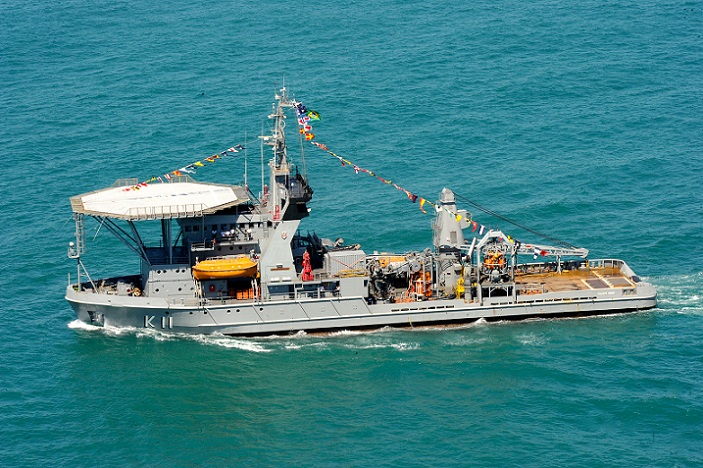

The Brazilian Navy Signed a Contract for the Acquisition of the Former Commercial Diving Support Vessel Adams Challenge, Which Will Serve as Its New Submarine Rescue Ship (SRS).
In its new role, the Adams Challenge, purchased by the Brazilian Navy, will replace the current Navy SRS Felinto Perry, which was commissioned in 1988. The new ship is currently in Abu Dhabi, United Arab Emirates, and will be transferred to Brazil by Adams Offshore, the ship’s owner.
The Navy is also sending a crew that will familiarize themselves with the operation of the vessel. The ship is expected to arrive in Rio de Janeiro in December this year. Measuring 85 meters in length, the dynamically positioned vessel features a MoonPool and a helipad.
The 344 Openings for the Latest Exam Announced by the Brazilian Navy Closed Yesterday
Last Monday (04), the applications for the latest Navy exam to serve the northeastern coast closed. See Here the Positions Offered. The current government has already indicated that it intends to intensify protective, support, and rescue operations in Brazilian waters, and there will likely be more opportunities for aspiring naval military careers in 2020.
-
Over 2,000 Tons of Discarded Fishing Nets Since 2020 Repurposed into Durable Caps, Fins, and Parts

-
Seals and Sea Lions Lose Habitat and Food as Climate Change Advances, Impacting Ice, Prey, and Coastal Communities

-
Brazilian Innovator Uses 3D-Printed Device to Cool Two Rooms with One Air Conditioner
-
China Uses 432 Robots to Move a 7,500-Ton Historic Building in Shanghai, Preserving Architecture While Creating Space for Underground Center


