





 Portuguese
  English
  Spanish
  5 min of reading
  0 comments


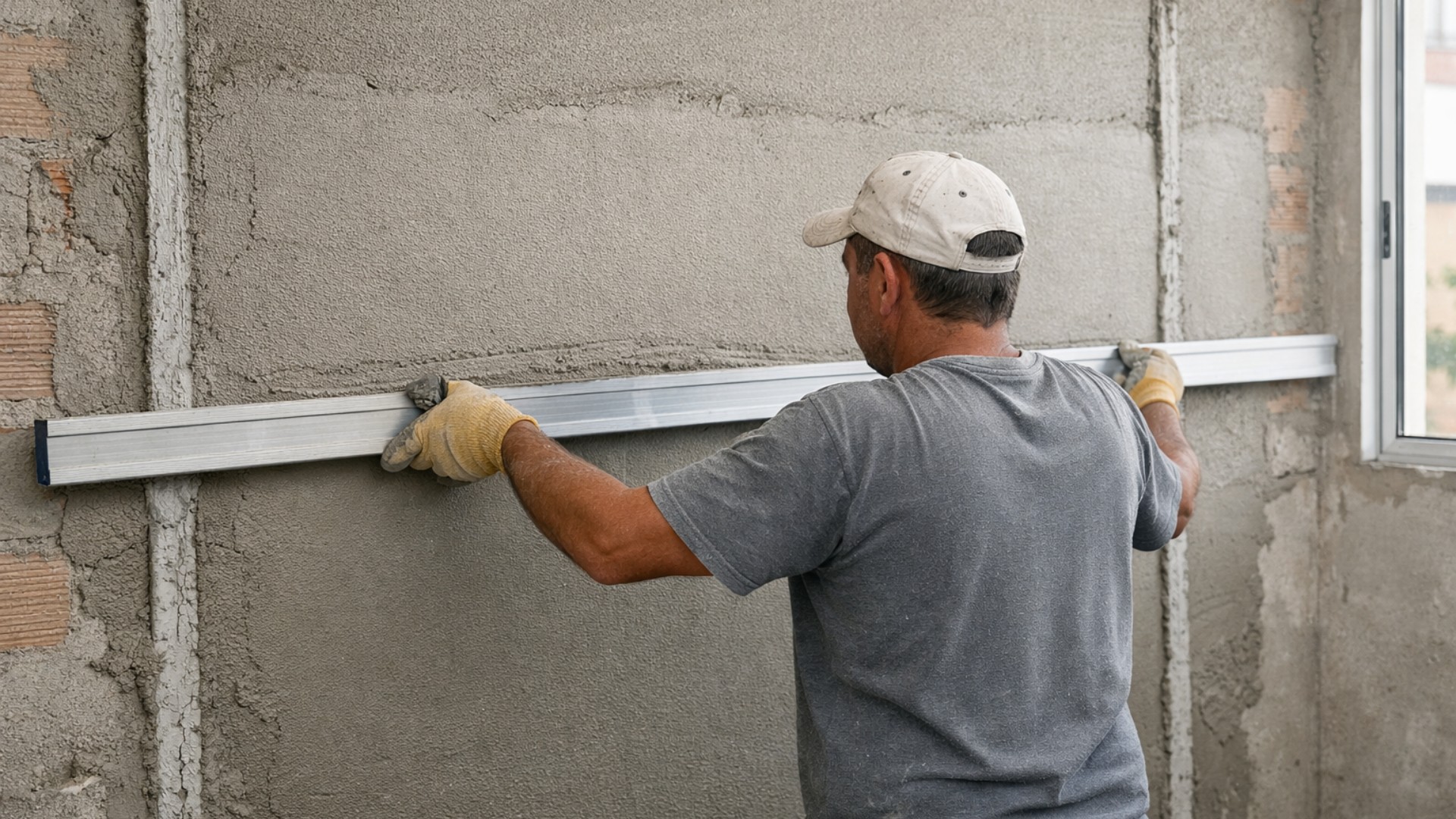
Method of plastering with aligned guides and long level catches attention for precision, speed, and uniform finish, highlighting the importance of planning, the correct use of tools, and continuous execution to reduce rework and ensure a surface ready for painting.
A plastering method presented by a mason from the channel Eu na Obra Tô Chegando gained attention by showing the execution of an entire wall with aligned guides, use of a 3-meter level, and continuous finishing.
In the demonstration, the service appears to be completed in about three hours, with the proposal to reduce marks, control the thickness of the mixture, and maintain a more uniform surface plane.
Plastering technique with guides ensures alignment and uniform thickness
The central point of the procedure is the preparation of the so-called guides, strips of mortar that serve as a reference for the rest of the wall.
-
Giant underwater pipeline begins to take shape with a R$ 134.7 million project at the Port of Santos: the 1.7 km structure uses 12-meter and 700 mm pipes to supply water to 450,000 people in Guarujá.

-
The project that was supposed to be ready for the 2014 World Cup in Brazil debuted with a 12-year delay and nearly R$ 6 billion invested: the Line 17-Gold of the São Paulo monorail opened with reduced hours and is only expected to operate fully in October.

-
Neither the Pyramids nor the Great Wall of China, this gigantic construction in Spain is the human mark on planet Earth that intrigues the most when seen in images from space.

-
Surrounded by cliffs, mist, and chilling stories, the ancient Hotel del Salto has been reborn as a museum while still unable to shake off its reputation as a haunted place.


Instead of spreading the mixture all over the wall and correcting unevenness later, the professional first structures these guides, which then determine the thickness and alignment of the coating.
This initial care changes the logic of execution.
When the guides are on the same plane, the filling between them ceases to be a trial-and-error stage and begins to follow a predefined line.
As a result, the plaster tends to come out more regular, with fewer subsequent corrections and a lower risk of undulations spread across the surface.

In the practice shown in the recording, the long level is placed against the reference points to check if all the strips are aligned.
From there, the mixture is applied between the guides and pulled continuously.
The displayed result catches attention precisely because the wall seems to form a single panel, without visible interruptions between one strip and another.
3-meter level improves leveling and finishing of the plaster
The tool used in the video does not appear as a secondary detail.
The 3-meter level acts as both a checking and finishing element at the same time, because it spans the distance between the guides and helps to remove excess while indicating if the wall is on the same plane.
In larger jobs, this expands the mason’s control field in a single pass.
While a smaller level requires more fragmented checks, the longer version allows for observing larger sections of the wall at once.
This reach facilitates the reading of deviations that could go unnoticed in short measurements, especially in extensive walls, where small differences in thickness become visible only after the material dries.
Still, the tool alone does not solve the execution.
What the video suggests is that the level only delivers the effect of a continuous surface when the guides have already been well positioned and when the application of the mortar follows a uniform rhythm.
Without this foundation, the level may help reveal errors, but it does not prevent them from occurring.
Quick plaster depends on organization and continuous execution
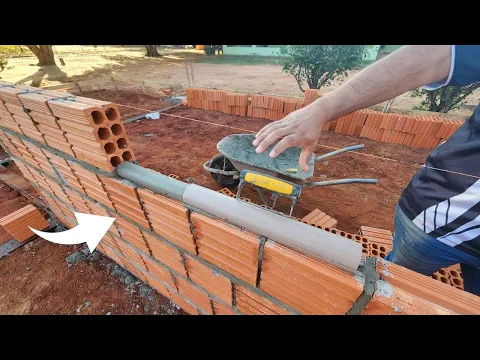

The promise of speed, presented as a plaster done in about three hours, depends less on improvisation and more on organization.
The professional sets up the references, fills the wall between the guides, and executes the finishing while the mixture is still workable, reducing pauses that usually generate joints and texture differences.
This chaining has a direct effect on the schedule.
When the wall is filled all at once and the alignment is already resolved by the guides, the chance of going back later to correct bulges, shadows, or localized excess tends to decrease.
The cleaner appearance shown at the end of the process reinforces exactly this idea of time gain with less rework.
On the other hand, the material itself indicates an important limit.
The execution time should not be treated as an automatic standard for any job, because factors such as area size, base preparation, support moisture, mixture consistency, and application rhythm directly interfere with the result.
The technique helps to organize the work, but it does not turn any scenario into a three-hour job.
Finishing in corners and windows defines the final result of the plaster
One of the most observed sections of the demonstration is in the cuts near the window and the edges of the plastered wall.
There, the professional works the corners and the frame while the wall is still wet, precisely to avoid marks of resumption and visual differences between the main filling and the side finishes.
This care usually defines the final reading of the service.
A wall may be reasonably flat in the center and still lose visual quality when the junctions with frames, corners, and edges appear crooked, stained, or misaligned.
In the video that went viral, the finishing at these points appears as an inseparable part of the method, and not as a touch-up left for another moment.
Moreover, the continuity of the application helps explain why the joints are less apparent.
When the filling is done in very separate stages or at different drying times, the surface usually reveals the difference.
By maintaining the same line of work between the guides and completing the cuts in sequence, the professional tries to avoid exactly this type of visible transition.
Technique highlights importance of method in professional plastering
The main lesson drawn from the method is not in an isolated trick, but in the discipline of the process.
The video suggests that speed and acceptable finishing come from the correct preparation of references, the use of a tool compatible with the size of the wall, and execution without long breaks between one phase and another.
It is also noteworthy that the “secret” does not appear linked to an uncommon material.
The emphasis is on the combination of guides on the same plane, constant checking with a long level, and attention to sensitive points, such as corners, edges, and openings.
Instead of presenting a miraculous solution, the demonstration reinforces the importance of method, wall reading, and thickness control throughout the execution.
For those observing construction, the procedure helps to understand why an apparently simple wall can require so much precision.
The smooth surface that appears at the end does not depend only on the last pass of the tool, but on decisions made from the beginning, when the guides define the direction of the plaster and reduce the margin for improvised corrections later on.







Seja o primeiro a reagir!