





 Portuguese
  English
  Spanish
  4 min of reading
  0 comments


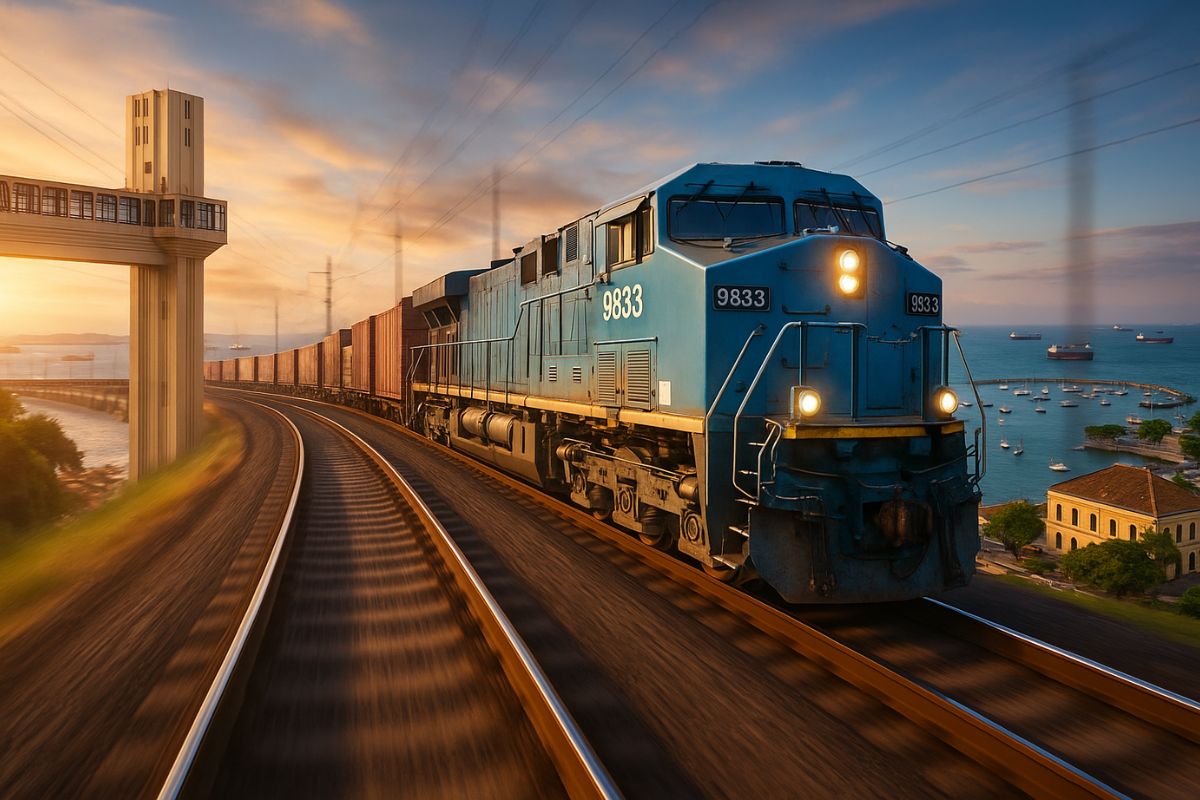
Driven by the Lula Government, the Project to Link the Atlantic to the Pacific Awaits a Chinese Investment Decision During the BRICS Summit in July 2025, Amid Financial and Environmental Risks.
A long-dreamed infrastructure project, the Bioceanic Railway, received a new and decisive political boost in 2025. Led by the government of President Luiz Inácio Lula da Silva, the initiative to build a mega railway in Brazil to connect the Atlantic Ocean to the Pacific in Peru has entered a critical negotiation phase. The goal is to create a new and more efficient export corridor for Brazilian commodities destined for Asia, primarily China.
The future of what may become one of the largest infrastructure works in South America, however, depends on a definitive commitment to investment from Chinese state-owned companies. The Brazilian government has set a deadline for this response: the BRICS Summit, which takes place in Rio de Janeiro on July 6 and 7, 2025.
The Origin of the Project and the New Silk Road in South America
The idea of a land bridge between the two oceans is not new. Its origins date back to the Initiative for the Integration of Regional Infrastructure in South America (IIRSA), launched in 2000. The concept gained momentum in May 2015, with the signing of a Memorandum of Understanding between Brazil, China, and Peru to study the technical feasibility of the railway.
-
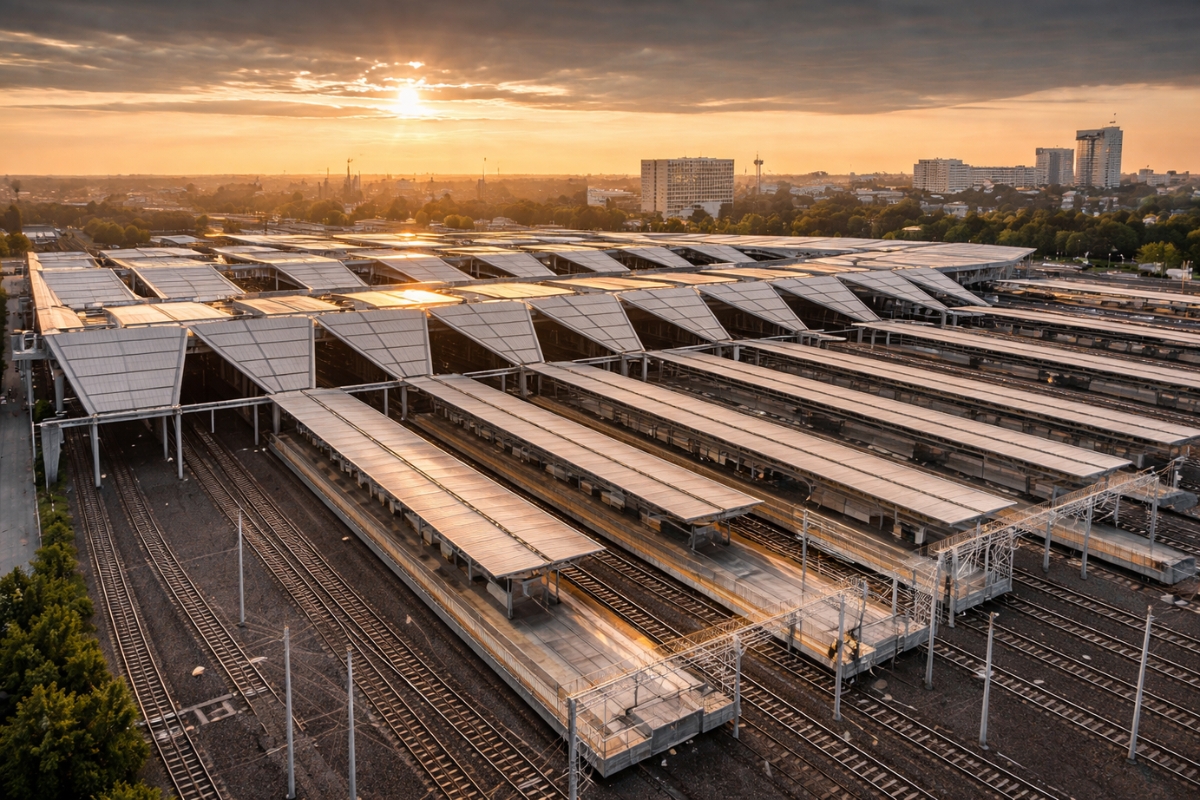
In A European City, The Country’s Largest Railway Junction Was Modernized Without Closing Its Doors, Kept Trains Running During Years Of Construction, Now Serves Up To 60,000 Passengers Per Day, And Installed Solar Panels That Generate About 30% Of Its Energy
-
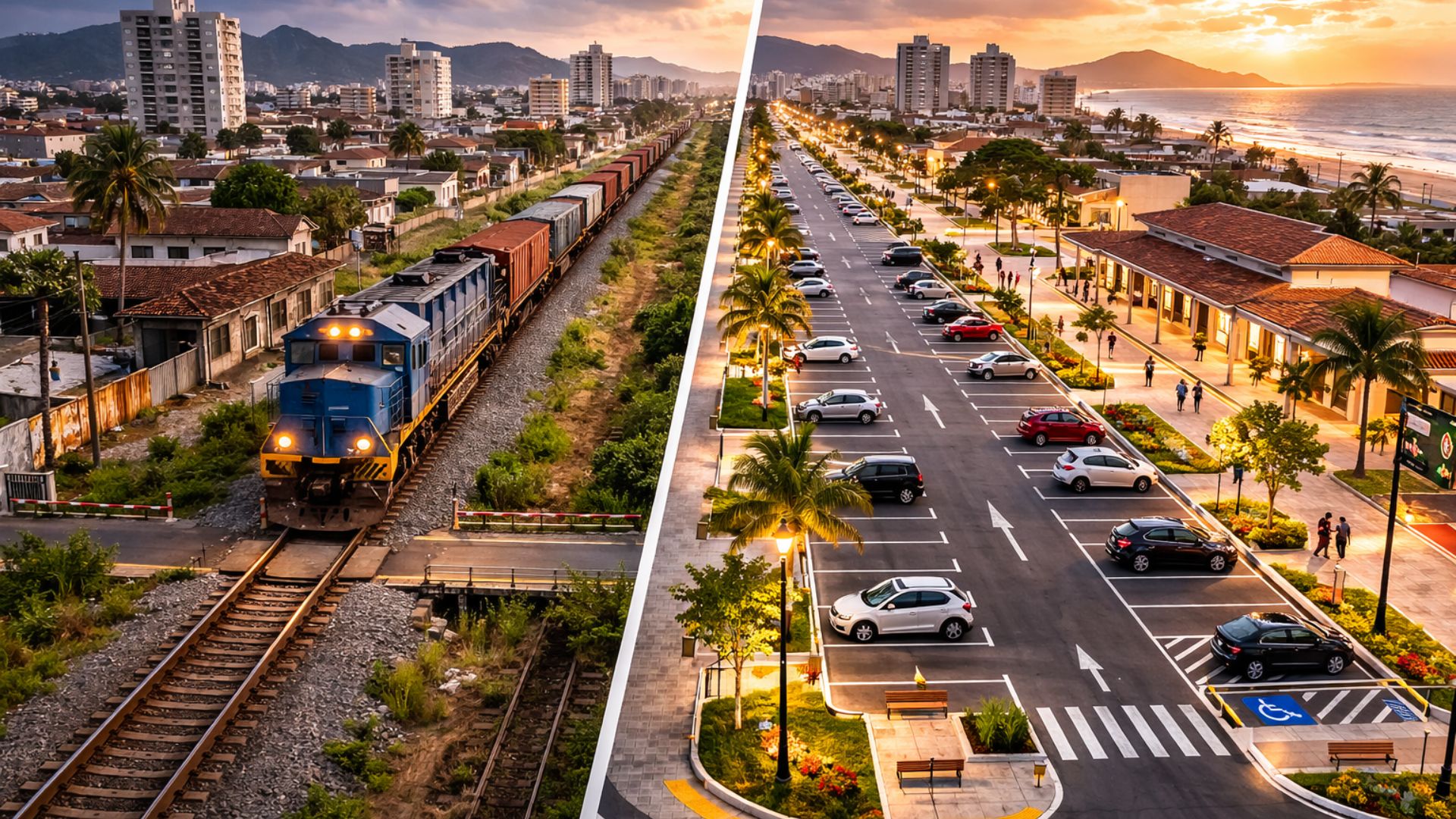
Famous Brazilian Railway May Become a Parking Lot
-
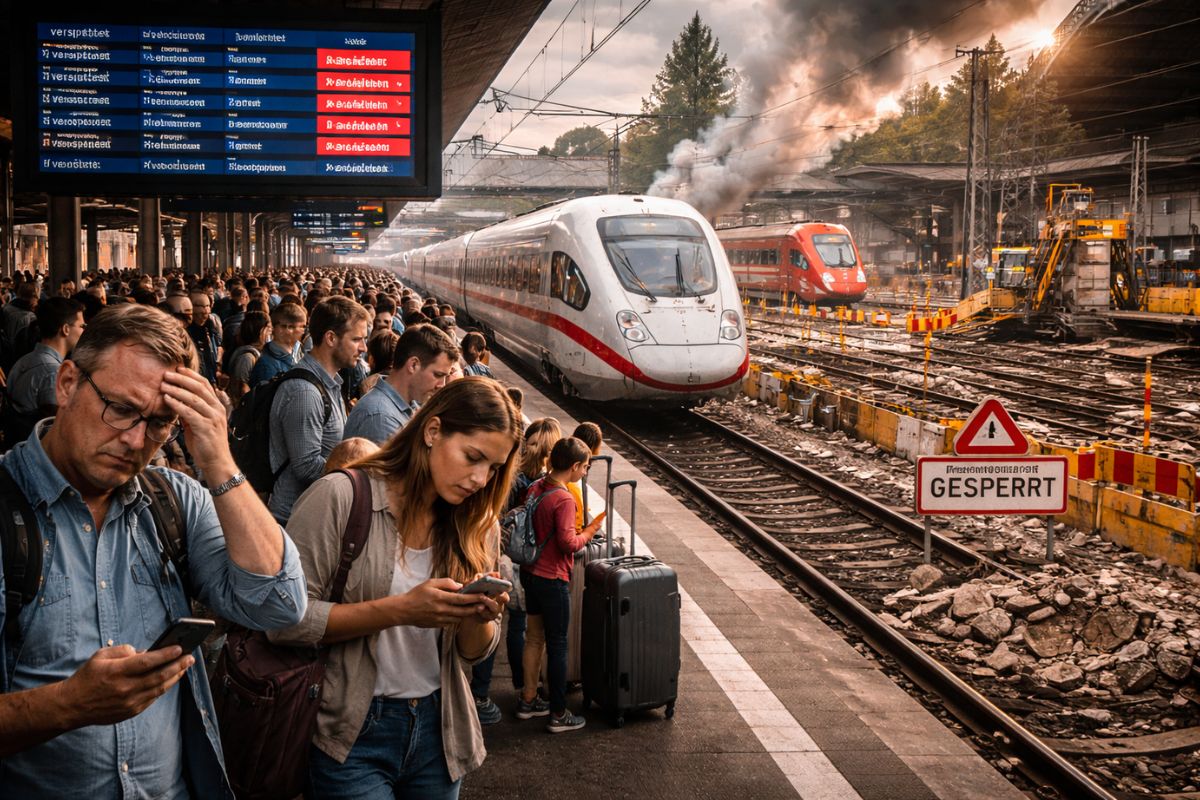
The Country of “Punctual As a Train” Admits It Has Lost Control: High-Speed Trains Delay, Stop, Disappear from the Map and Turn 6-Hour Trips into 10, While Deutsche Bahn Promises Restructuring in 2026 But Faces 19th Century Infrastructure, Staff Shortages and Sections Closed for Months
-
With an Investment of R$ 700 Million in One of the Country’s Main Rail Networks, VLI Reinforces Infrastructure, Receives 8 New Locomotives, and Expands the Corridor Connecting 7 States, Boosting Jobs and the Transportation of Grains, Ore, and Oil Products to the Port of Santos
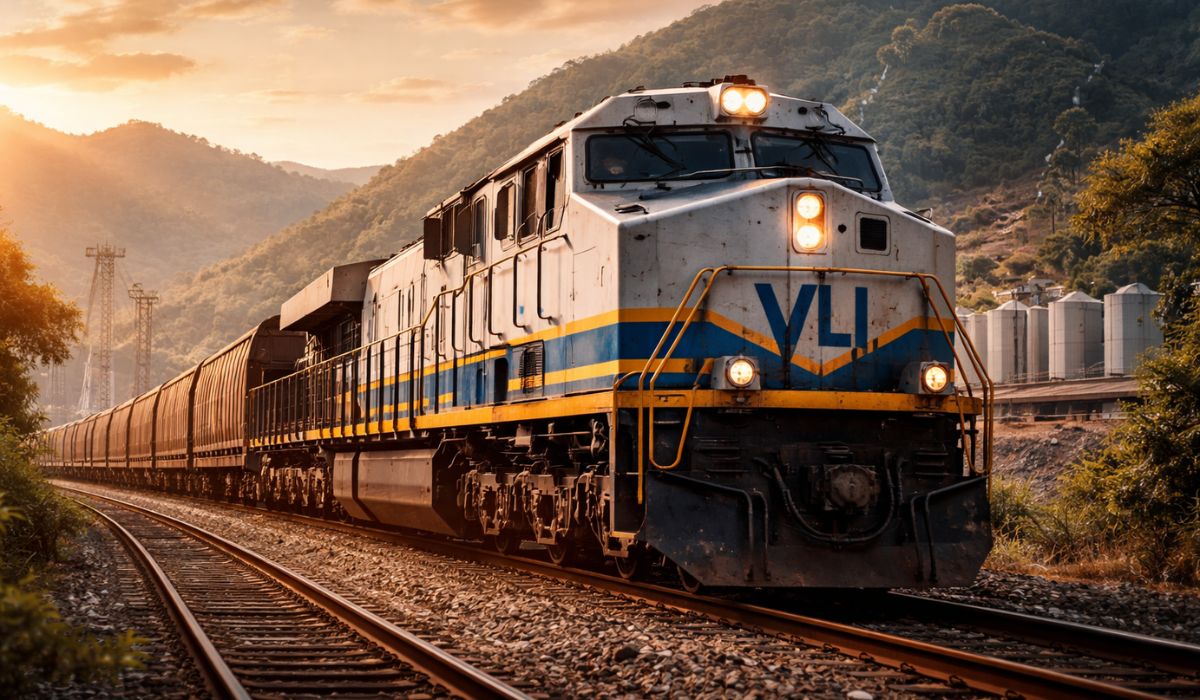

The project was revitalized under Lula’s administration and aligns perfectly with China’s “Belt and Road” Initiative (BRI), a global infrastructure development strategy. One of the main catalysts for its revival was the inauguration of the Port of Chancay in Peru in 2024. The megaproject, largely funded by Chinese capital, provides a modern, high-capacity terminal on the Pacific, making the connecting railway an indispensable logistics piece.
The Connection Between FIOL, FICO, and the Port of Chancay
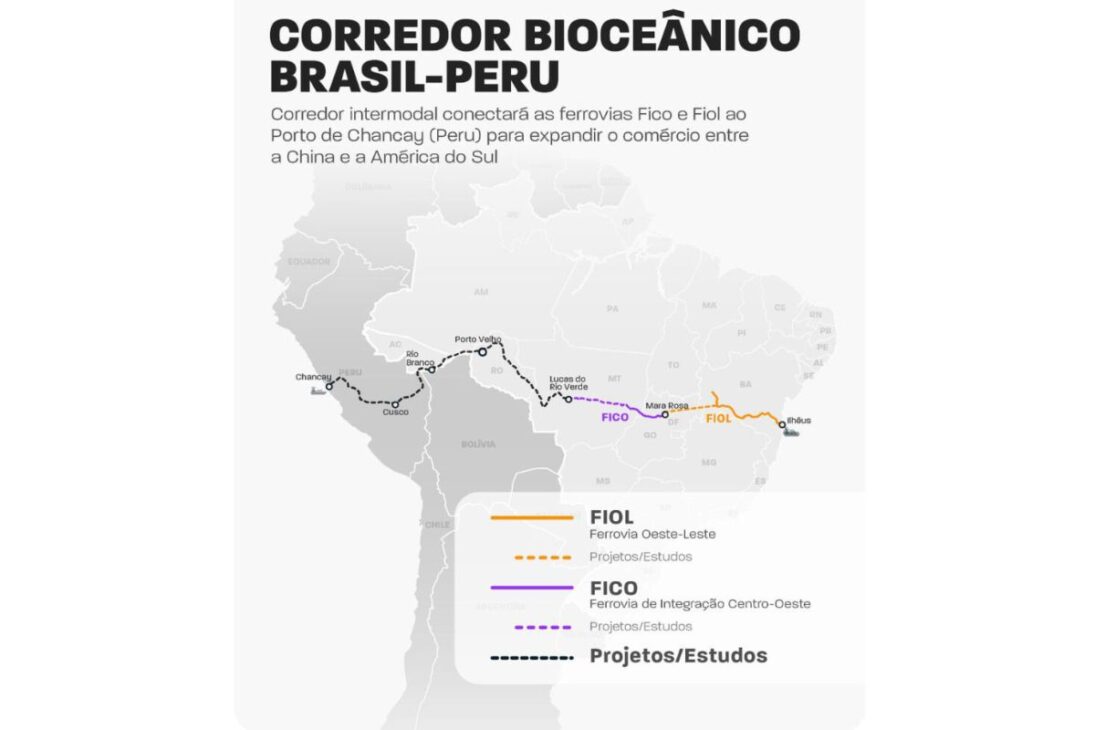
The current proposal for this mega railway in Brazil focuses on a corridor linking the Porto Sul in Ilhéus, Bahia, to the Port of Chancay in Peru. To achieve this, the project relies on the integration of two other major domestic railways, both priorities in the New PAC:
West-East Integration Railway (FIOL): extending from Ilhéus (BA) to Figueirópolis (TO).
Center-West Integration Railway (FICO): connecting Mara Rosa (GO) to the heart of agribusiness in Mato Grosso and Rondônia.
From Rondônia, the route would continue westward, crossing the state of Acre and the Andes mountain range to reach the Peruvian coast. This more southern route was insisted upon by Brazil to avoid the more sensitive areas of the Amazon rainforest.
The Complex Financial Engineering, Costs Ranging from US$ 10 Billion to US$ 80 Billion
The cost to build the mega railway in Brazil is one of the greatest uncertainties of the project. Estimates vary drastically, ranging from US$ 10 billion to over US$ 80 billion. This huge difference indicates that the project’s scope is still not fully defined and that different stakeholders may be considering different sections and costs.
The financing model depends on massive investment from China, likely through its state-owned companies, such as the China Railway Construction Corporation (CRCC), and mechanisms like the China-Brazil Fund. The lack of a single credible cost estimate makes assessing the financial viability a challenge and signals that the project is still in a more political phase than a technical one.
The July 2025 Deadline, Brazilian Diplomatic Pressure at the BRICS Summit
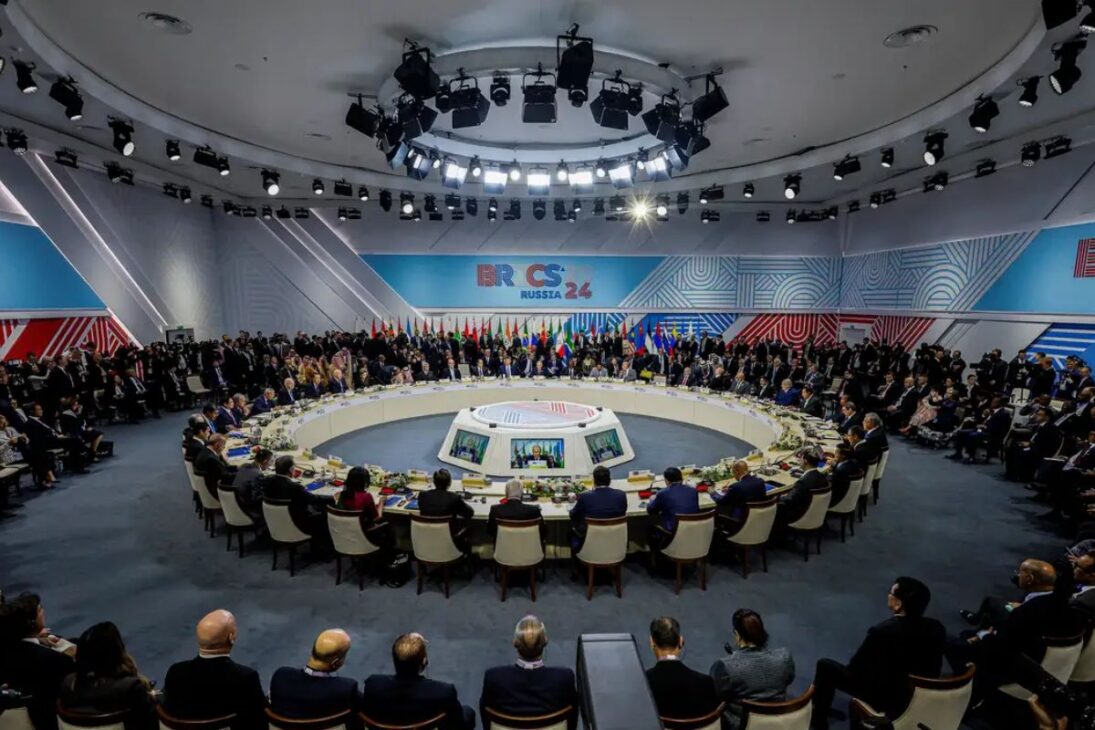
To expedite a decision, the Brazilian government adopted a high-risk diplomatic tactic. High-level delegations, including President Lula and Minister Simone Tebet, traveled to China in May 2025 to “unlock” the project. Publicly, the government set the BRICS Summit in July 2025, in Rio de Janeiro, as the deadline for a definitive response from China.
By tying the decision to the event, Brazil, as the host, increases pressure on the Chinese to deliver a concrete outcome, transforming an infrastructure negotiation into a test for the strategic partnership between two of the main members of the bloc.
From Deforestation in the Amazon to Tension with the USA
Despite the economic potential, the project faces monumental risks. The main one is the socio-environmental impact. The route crosses critical biomes such as the Amazon and the Cerrado, and affects indigenous territories, which requires an extremely complex environmental licensing process and could generate strong opposition from national and international NGOs.
Additionally, the project is a point of geopolitical tension. The United States views the railway as a major advance in Chinese influence in South America and may exert diplomatic pressure on the countries involved. This combination of risks—financial, environmental, and geopolitical—makes the path for the mega railway in Brazil uncertain, with the BRICS Summit being the next decisive chapter in this long story.








-

-

2 pessoas reagiram a isso.