





 Portuguese
  English
  Spanish
  7 min of reading
  0 comments


Dominican Lawyer Challenges Two Thousand Years of Egyptology by Searching for Cleopatra’s Tomb at the Temple of Taposiris Magna, 48 Km from Alexandria
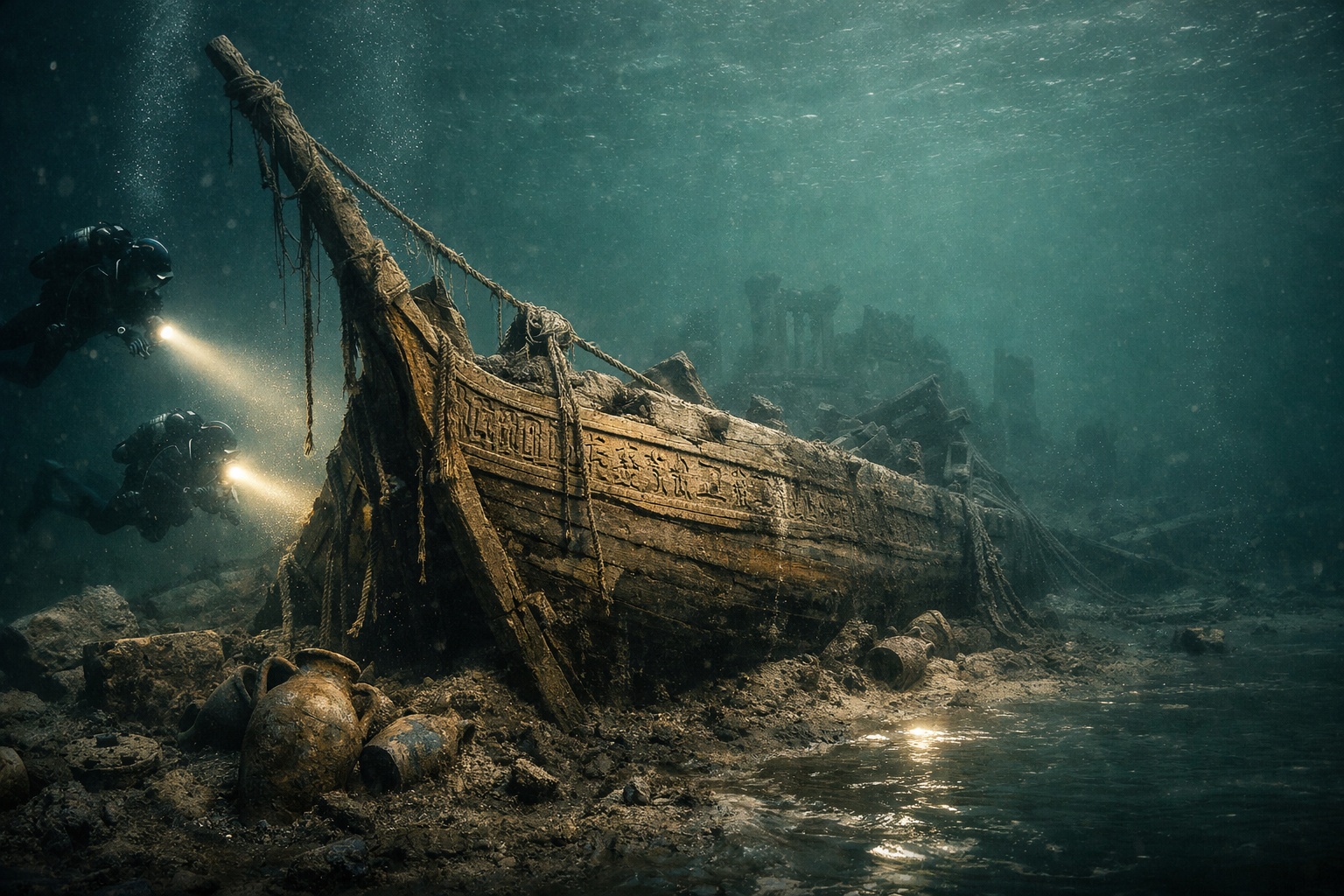
In 1990, Kathleen Martínez was 24 years old, had a law degree, and an obsession that no one around her took seriously: finding Cleopatra’s tomb, which according to her theory might be hidden at the Temple of Taposiris Magna, about 48 kilometers from Alexandria — a hypothesis that gained new strength after the discovery of an ancient submerged port with remnants of a 2,000-year-old Egyptian vessel linked to the period of the last queen of Egypt.
During a discussion with her father — a professor and jurist in Santo Domingo, Dominican Republic — she defended a very different view from the popular image of Cleopatra. For Martínez, the queen was not just the seductive figure portrayed by Roman propaganda, but one of the most complex and intellectually sophisticated leaders of Antiquity. Cleopatra VII, she argued, was a polyglot in at least nine languages, a scholar of philosophy, alchemy, and medicine, and a political strategist who financed military campaigns of Julius Caesar and Mark Antony.
The family discussion never reached a definitive conclusion, but it planted an idea that would mark the rest of Martínez’s life.
-
A scientist proved with a thermal camera that the fan does not cool the environment but reduces the temperature of your skin by up to 6 degrees thanks to a natural mechanism of the human body that almost no one understands how it really works.
-
Scientists find a new explanation for the origin of Earth, which may have formed solely from material close to the Sun, changing an old theory and indicating that Jupiter may have been the cause of it all.

-
Brazilian beaches are among the most contaminated in the world by cigarette butts, with levels up to 40 times above the global average and areas where this waste already represents the majority of all the trash found.

-
2,000-Year-Old Machine Gun: Roman weapon found in Pompeii fires arrows at 109 m/s with an automatic gear mechanism, leaving perfect geometric patterns on the walls and proving its real use in the siege of 89 B.C.

Decades later, this theory would lead to one of the most persistent archaeological investigations of the 21st century. In September 2025, the team led by Martínez announced the discovery of an ancient submerged port near the temple, an archaeological structure that could completely alter the historical understanding of Cleopatra’s final resting place and the possible sea route used to transport her body after her death.
The Lawyer Who Became an Archaeologist to Find Cleopatra’s Tomb
Kathleen Martínez initially followed the professional path expected by her family. She graduated in law at 18 and began working as a lawyer in the Dominican Republic. Despite this, her fascination with Cleopatra’s story never faded.
For fifteen years, she conducted extensive bibliographic research on the last queen of Egypt. During that time, she analyzed classical documents and found an apparently simple detail in a text by the Roman historian Plutarch that caught her attention.


According to Plutarch, after Mark Antony’s death, Cleopatra supposedly visited his tomb and returned to the palace “on the same day”. For Martínez, this phrase contained a crucial geographic clue. If the trip indeed took only a few hours, the burial site of Mark Antony — and possibly Cleopatra’s final resting place — should be within a relatively short radius of Alexandria.
Initially, she estimated a possible radius of around 100 kilometers. With further refinements, she reduced this distance to approximately 45 kilometers. Within this area was an archaeological site often overlooked: the Temple of Taposiris Magna, dedicated to the god Osiris.
“Great Tomb of Osiris”
The very name of the temple has relevant symbolic significance. In Greek, Taposiris Magna can be translated as “Great Tomb of Osiris”, the Egyptian god associated with death, resurrection, and the underworld.
At the time Martínez presented her hypothesis, the archaeological site was widely considered explored and was on the verge of being transformed into a mere tourist attraction. Still, she decided to take her theory to the Supreme Council of Antiquities of Egypt.
In 2005, after presenting her project to a committee composed of about 100 Egyptian university professors, Kathleen Martínez received official authorization to begin excavations at Taposiris Magna — becoming the first Latin American researcher to lead an archaeological mission of this kind in Egypt.
Archaeological Discoveries at Taposiris Magna Strengthen the Theory About Cleopatra’s Tomb
In the following two decades, the Egyptian-Dominican archaeological mission transformed Taposiris Magna from a secondary site into one of the most important locations for the study of the Ptolemaic period.
During this period, archaeologists discovered 27 different tombs containing at least 10 mummies, two of which were covered with gold leaf — an indicator associated with extremely high status within ancient Egyptian society. Furthermore, hundreds of coins bearing Cleopatra’s face were found, reinforcing the direct link of the temple with the final period of the Ptolemaic dynasty.
Among the most curious finds were mummies with gold tongues, a rare phenomenon in Egyptian archaeology. These metal pieces were placed in the mouths of the dead so they could “speak” before the gods in the afterlife.
Throughout the excavations, more than 1,800 archaeological artifacts were recovered, including busts, statuettes, ceremonial objects, and architectural pieces associated with Cleopatra’s reign.
Another detail that caught researchers’ attention was that several burials were found with their faces oriented toward the temple. In Egyptian funerary tradition, this orientation could indicate that the deceased believed that a figure of great importance — possibly royalty — was buried in that location.
Discovery of 1.3 Km Underground Tunnel Expanded the Archaeological Investigation
In 2022, the team led by Martínez found a structure that completely changed the scale of the investigation. About 13 meters below the temple, archaeologists discovered an underground tunnel approximately 1,305 meters long. The passage, partially flooded with seawater, contained jars and ceramics dated to the period when Cleopatra ruled Egypt.
The tunnel seemed to head directly toward the Mediterranean Sea. The discovery raised a new possibility: the temple might have been connected to ancient port structures via underground corridors. However, there was a significant technical problem.
The tunnel ended in the sea. To continue the investigation, Martínez needed specialists capable of exploring the Mediterranean seabed.
Robert Ballard, Discoverer of the Titanic, Joins the Search for Cleopatra’s Tomb
Robert Ballard is one of the world’s most well-known oceanographers. In 1985, he led the team that found the wreck of the Titanic on the bottom of the North Atlantic. Throughout his career, he has also participated in the discovery of historical ships such as the German battleship Bismarck.
When Kathleen Martínez contacted Ballard, he was already in his eighties and had a distinguished career in ocean exploration. Still, he showed immediate interest in the project. Ballard even remarked that he would like his epitaph to mention not only the discovery of the Titanic but also the possible location of Cleopatra’s tomb.
The collaboration between Martínez and Ballard was supported by the Egyptian Navy and Larry Mayer, director of the Coastal and Ocean Mapping Center at the University of New Hampshire. Using sonar and advanced underwater mapping technologies, the team investigated approximately 10 square kilometers of the seabed off Taposiris Magna.
Discovery of Submerged Port in the Mediterranean Could Change Cleopatra’s History
In September 2025, the results of this investigation were officially announced by the Egyptian Ministry of Tourism and Antiquities and documented in a National Geographic special. About 12 meters deep, divers identified the ruins of an ancient port that had not been mentioned in any known historical sources.
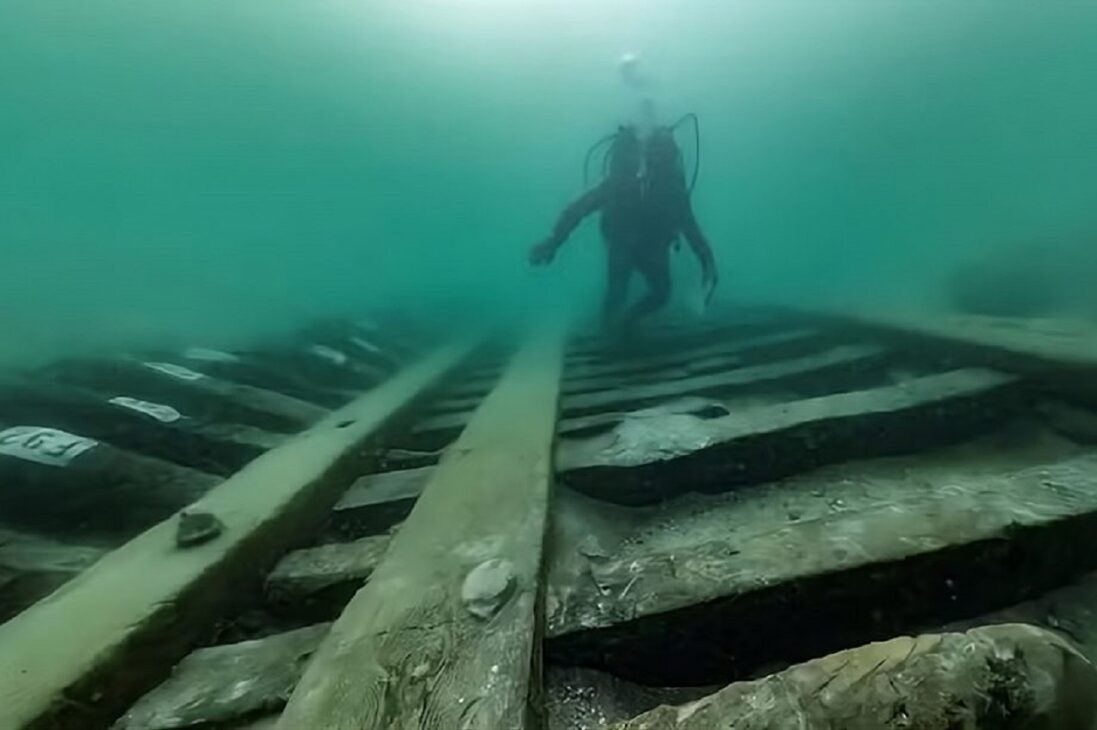
The submerged structures rise up to 6 meters high and include stone blocks, columns, polished stone floors, anchors, and amphorae dated to the Ptolemaic period.
Researchers also identified that the ancient coastline was about 4 kilometers further out than the current coast, a result of centuries of geological changes and at least 23 recorded earthquakes between 320 and 1303 A.D. that altered the Egyptian coastline.
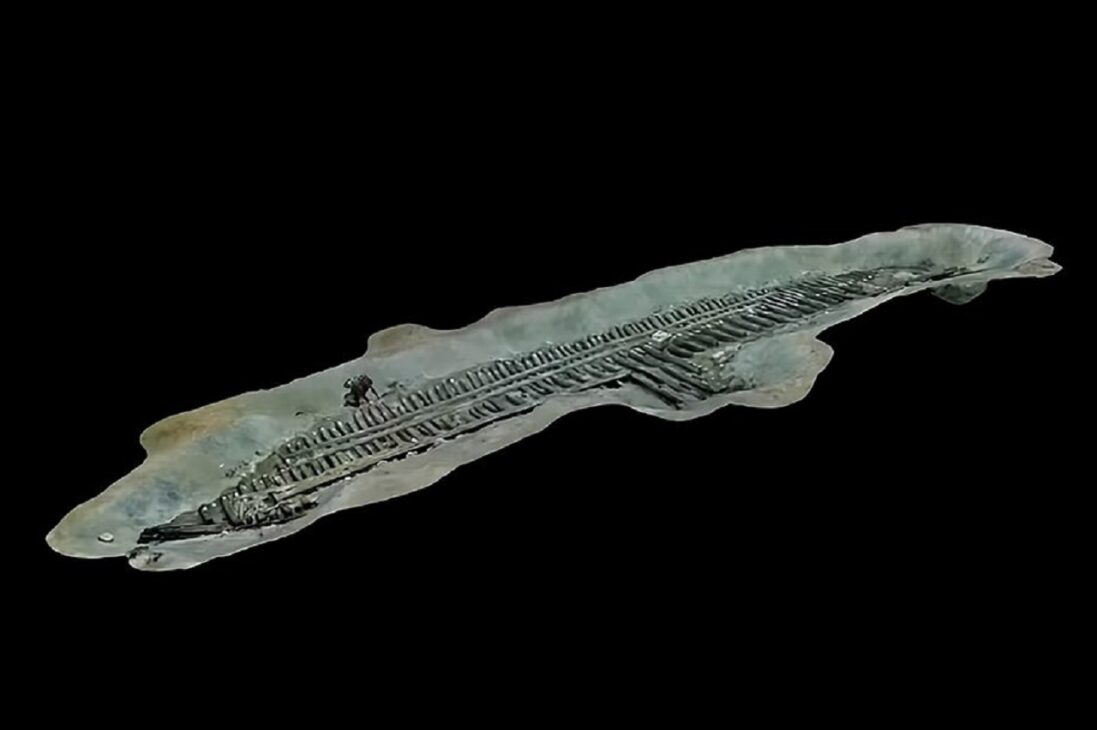
Even more surprising was the underwater continuation of the tunnel discovered in 2022. Following the path of the underground corridor toward the sea, divers found rectangular stone structures and basalt pedestals similar to those inside the temple.
Among these formations is a structure known as “Three Sisters”, composed of three aligned pillars, now covered by sediments and corals.
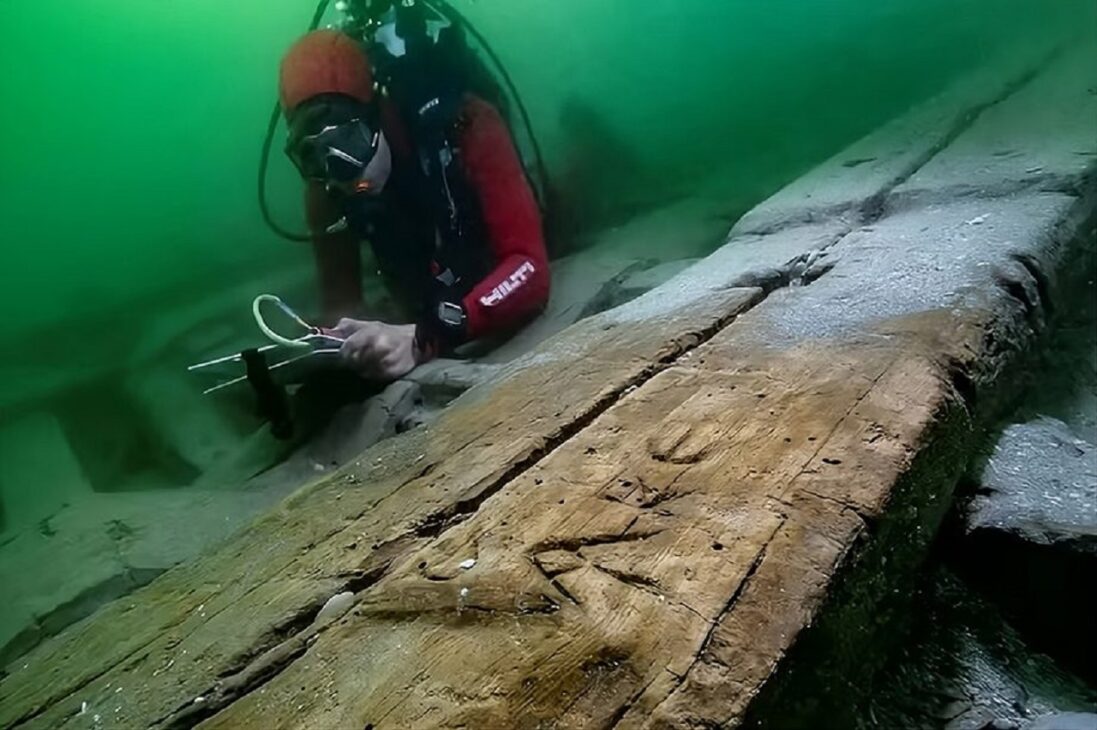
For Martínez, this set of structures suggests that the port was not just a commercial point, but part of an architectural system that connected the temple directly to the sea.
Debate Among Archaeologists About the True Location of Cleopatra’s Tomb
Cleopatra died in 30 B.C., after Mark Antony’s defeat to Octavian — the future Emperor Augustus — at the Battle of Actium. Ancient accounts claim that the queen committed suicide to avoid being taken prisoner to Rome. However, the fate of her body remains one of archaeology’s greatest mysteries.
Kathleen Martínez’s theory suggests that Cleopatra, who was often symbolically associated with the goddess Isis and the god Osiris, chose to be buried at Taposiris Magna. According to this hypothesis, the temple dedicated to Osiris — associated with rebirth and the afterlife — would have been the ideal location for the queen’s burial.
The underground tunnel and the newly discovered port could represent the route by which Cleopatra’s body was secretly transported from Alexandria to the temple. Despite the amassed evidence, many experts remain cautious. Paul Cartledge, emeritus professor of Greek culture at the University of Cambridge, argues that Cleopatra was likely buried in Alexandria, possibly in the city’s royal cemetery.
Other archaeologists acknowledge that the discoveries at Taposiris Magna are extremely relevant for studying the Ptolemaic period, but still consider the location of the tomb an ongoing hypothesis.
Upcoming Excavations May Reveal Cleopatra’s Tomb
New archaeological expeditions are planned for 2026. The team intends to use specialized drilling equipment to investigate buried structures in the underwater area known as Salam 5. The detailed maps produced by Robert Ballard will serve as a guide for these future explorations.
After more than twenty years of excavations, the mission led by Martínez has already identified possible burial areas within the temple complex. The big question now is whether Cleopatra’s tomb is located on the land portion of the archaeological site or if it sank into the Mediterranean following the medieval earthquakes that altered the coastline.
Regardless of the final answer, one thing is already clear to the scientific community: Taposiris Magna was an active power center during Cleopatra’s reign and had a functional port that remained hidden underwater for nearly two thousand years.
And the search continues. As Kathleen Martínez said when commenting on the latest discoveries:
“I won’t stop. For me, it’s just a matter of time.”





Seja o primeiro a reagir!