





 Portuguese
  English
  Spanish
  4 min of reading
  0 comments


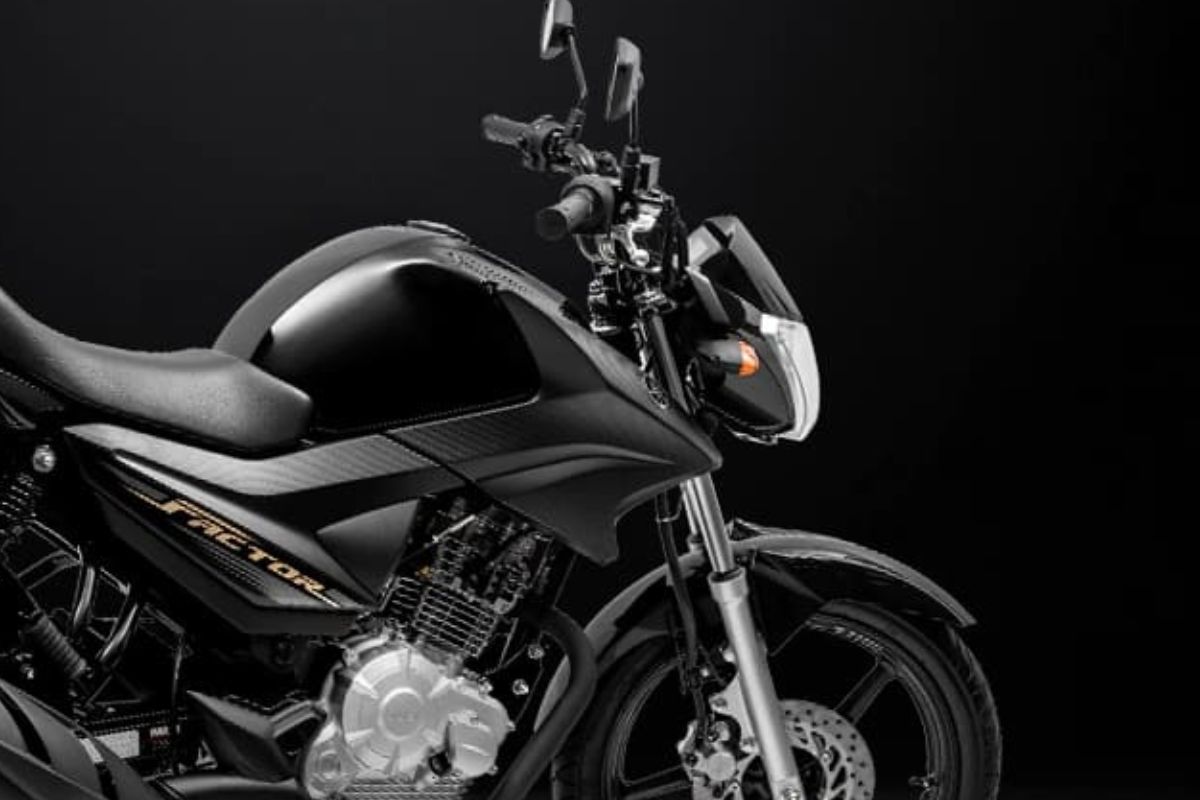
With Unmatched Urban Consumption and Free Initial Services, Yamaha Bets on Economy to Challenge Honda CG 160’s Leadership in the Utility Motorcycle Segment.
The Yamaha Factor 125i UBS positions itself in the market in 2025 as a strategic option for the Brazilian worker. Focused on the work bike segment, Yamaha bets on a clear value proposition: fuel economy, low-cost maintenance, robustness, and accessible parts. These are the pillars the brand uses to face the competition in one of the country’s most competitive markets.
For those who rely on the motorcycle as a source of income, every penny saved on fuel and maintenance makes a difference. The Factor 125i promises to be a budgeting ally, but does it deliver on its promises? We analyzed its strengths and weaknesses and compared it side by side with its main competitor to find out if it is truly the best choice.
The Promise of 46 km/l: Is the Factor 125i Really Economical?
Yamaha claims the Factor 125i can achieve up to 45 km/l, but practical tests show it can go beyond that.
-
A retired IT professional built a 22-meter boat in his backyard in Oklahoma with a school bus engine, light pole masts, and handmade watertight doors to become the redneck version of Jacques Cousteau.

-
China is building a city in Brazil: a complex with an investment of R$ 5.5 billion comes to light, but allegations involving workers draw attention.

-
While Argentina buys old war equipment, Brazil is keeping an eye open and joins the select group of nations with advanced military technology by investing $5.2 billion, producing 36 Gripen fighters in the country, and reducing operational costs.

-
Brazil on alert? Why invading Brazil is a NIGHTMARE for the USA: 8.5 million km², 213 million inhabitants, Amazon covering 60% of the territory, trillion-dollar war, and resistance that even 13,000 aircraft could not control.


In an urban scenario, with gentle riding and low-rev gear shifts, the motorcycle demonstrated exceeding 46 km/l. The dashboard features an “ECO” function, which helps the rider maintain a more economical driving style.
However, this efficiency is more apparent in the city. On highways, where the 125cc engine is more challenged to maintain high speeds, consumption rises to around 35 km/l.
One of the Factor’s major advantages is its fuel tank capacity of 15.7 liters, providing it with a range that can exceed 650 kilometers, reducing the frequency of fuel stops.
Maintenance and Costs: What Yamaha Offers for Its Work Bike

Yamaha attracts buyers with the promise of one of the lowest maintenance costs in the category.
An immediate positive point is the free labor for the first and second service, performed at 1,000 km and 5,000 km, respectively. After this period, services should be performed every 5,000 km.
The cost of replacement parts is also competitive, especially in the parallel market. Common wear items, such as brake pads, can be found for prices starting at R$ 28, and transmission kits for about R$ 60.
However, it is important to note that to maintain the warranty, Yamaha requires the use of genuine parts and the performance of services at dealerships, which may come at a higher cost.
The 125cc SOHC Engine: The Engineering Behind Robustness and Reliability
The Factor 125i’s reputation for robustness is supported by its engine. It features a 125cc, 2-valve, air-cooled SOHC single-cylinder engine, delivering 11.1 hp of power on ethanol.
The engine architecture is simple and proven reliable, ideal for a work bike that needs to withstand the rigors of daily use.
Yamaha has a good track record in engineering low-displacement engines, and the Factor lineup has established a reputation for durability over its generations.
The absence of reports of chronic engine problems reinforces this perception of reliability, a crucial factor for those who cannot afford to be sidelined by mechanical failures.
The Battle for the Market: Factor 125i Against Market Leader Honda CG 160 Start
The Factor 125i’s main competitor is the Honda CG 160 Start, the absolute leader in the segment. A direct comparison between the two reveals each bike’s strengths.
Power: The CG 160 Start has an advantage with its 162.7cc engine and 14.4 hp, making it more suitable for those hauling loads or tackling steep inclines.
Economy: The Factor 125i excels in urban consumption, making it more advantageous for those riding extensively within the city.
Maintenance: Honda offers more transparency, with a detailed price list for the paid services at its dealerships.
Resale Value: Historically, the CG 160 Start has higher liquidity and a slightly higher resale value. In June 2025, the value of a 2023 CG in the FIPE Table was R$ 15,899, compared to R$ 14,821 for a 2023 Factor 125i.
Is It Worth Investing in the Yamaha Factor 125i in 2025?


The Yamaha Factor 125i UBS 2025 is an excellent option as a work bike, especially for those prioritizing low daily operating costs. Its incredible fuel economy in the city, significant range, and the safety of the UBS brake system are its main advantages.
However, it is not the ideal choice for everyone. Its lower power compared to its main competitor may be a limiting factor for some types of work.
The final decision will depend on the usage profile: if the focus is riding a lot in urban areas with the lowest fuel cost possible, the Factor 125i is a strong contender. If the need is for more power and higher resale value, the Honda CG 160 Start might be a more solid long-term investment.








-

-

-

-

-

20 pessoas reagiram a isso.